
Find the right electric fireplace for your McNairy County home.
Zone-heat that plugs in and works the same day—no chimney, no gas line, no venting. Find the right unit for a Selmer bungalow or a farmhouse outside Adamsville, and connect with a trusted local dealer.
Every Project Starts From One of These Five Situations
Mild winters, simple heat, no permit hassle.
McNairy County sits in Climate Zone 3A with about 3,444 heating degree days and an average winter low near 30°F—nothing close to the sub-zero stretches that make a wood stove a survival tool up in places like Duluth or Bismarck. Winters here are short and manageable, which is exactly the profile where an electric fireplace makes the most sense: supplemental warmth in a bedroom, a den, or a room addition in Selmer, Adamsville, or out toward Ramer and Finger, without committing a whole weekend to a chimney project.
Plenty of McNairy County households still burn oak, hickory, and maple in a wood stove for that traditional radiant heat, and pellet stoves running Lignetics or Hamer Pellet Fuel product are common in rural pockets of the county. But electric has carved out real ground here too—especially in homes where a family wants a fireplace look and a bit of zone heat in a specific room without touching the gas line or chimney at all. A plug-in or hardwired electric insert installs in an afternoon, runs on the same 15 or 20 amp circuit most rooms already have, and gives you flame effect and heat independent of the home's main furnace.
Three steps. No salesperson until you're ready.
Tell us about your project
Your zip code, your situation, and the fuel you're leaning toward—or let the answers point you to one.
See what's actually available
The brands dealers within 100 miles genuinely carry—real options, never a catalog mirage.
Get your dealer & Project Guide
A trusted local dealer, plus the free Project Guide & Parts List that names every component of the job.
Frequently Asked Questions
How much does an electric fireplace installation cost in McNairy County?
Most electric fireplace and insert installations in McNairy County run $400 to $1,200. A basic plug-in insert that drops into an existing fireplace opening or a wall-mounted unit that just needs a standard outlet sits at the low end. Hardwired built-ins—where an electrician runs a dedicated circuit for a larger unit in a den or great room in Selmer or Adamsville—land at the higher end. There's no chimney work, no venting, and no gas line to budget for, which is a big part of why electric stays the least expensive fireplace fuel to install in the county.
Do I need a permit to install an electric fireplace in McNairy County?
In most cases, no. A plug-in electric insert or a freestanding electric stove that runs off a standard outlet typically doesn't trigger a building permit in McNairy County. If you're having an electrician add a new dedicated circuit or a 240-volt line for a larger built-in unit, that electrical work itself may require a permit through the county, which most licensed electricians pull as part of the job. Either way, there's no EPA certification, no chimney inspection, and no air quality curtailment to worry about—McNairy County has no air quality non-attainment issues, so electric heat carries none of the burning-restriction concerns that come with wood.
Will an electric fireplace actually heat a room in McNairy County?
Yes, for the room it's in. Most electric fireplaces and inserts put out 4,000 to 5,000 BTUs via a built-in fan-forced heater, which is enough to noticeably warm a bedroom, den, or home office—especially given McNairy County's mild winter average of 30°F. What an electric unit won't do is replace central heat for a whole house; it's built for zone heating a specific room, not for carrying a 2,000-square-foot home through a cold snap the way a properly sized wood or gas system would. For most McNairy County homeowners, that's exactly the job they want it to do—supplemental warmth in the room where the family actually sits.
What's the difference between an electric insert and an electric fireplace?
An electric insert is sized to slot into an existing wood-burning fireplace opening in an older Selmer or Adamsville home, giving you flame-effect visuals and heat without touching the existing masonry or flue. A standalone electric fireplace (or wall-mounted unit) doesn't need an existing opening at all—it can go into a new build, a room addition, or a wall that's never had a fireplace. Both run on standard household power, and both can be installed in a single visit by an electrician or a local hearth dealer familiar with electric units.
Can an electric fireplace go anywhere in the house?
Pretty much, which is one of its biggest advantages over wood, gas, or pellet. Since there's no venting requirement and no combustion happening, an electric fireplace can be installed in an interior bedroom, a bathroom (with a model rated for damp locations), an apartment, or a room with no chimney access at all. That flexibility matters in McNairy County's older farmhouses and mobile homes, where adding a vented fuel source to a back bedroom would mean tearing into walls or a roofline. A local dealer can confirm the right unit and circuit for the specific room.
How does electric heat compare to wood heat for someone in McNairy County?
Wood—burning local oak, hickory, or maple—puts out more raw heat per unit and keeps working during a power outage, which matters during the occasional ice storm that knocks out lines in this part of West Tennessee. Electric offers none of that outage resilience since it needs grid power to run, but it also needs no wood stacked, no chimney sweep, no ash removal, and no permit for a masonry install. For a primary heat source in a drafty older home, wood or a wood insert still tends to win in McNairy County. For a clean, simple room-by-room supplement—especially in a newer or well-insulated space—electric is hard to beat on cost and convenience.
Electric vs. gas fireplace—which fits my McNairy County home better?
Gas delivers more real heat output and a more authentic flame, but it requires either a natural gas line or a propane tank, plus venting for most models—meaning a real installation project and a cost typically in the thousands. Electric requires neither: it plugs into existing household power and installs same-day for a few hundred dollars in most cases. If you already have gas service to the house and want serious supplemental heat, gas is worth the investment. If you want fireplace ambiance and light zone heat in a room without any fuel line or venting work, electric is the more practical choice for most McNairy County households.
Are electric fireplaces good for renters or manufactured homes in McNairy County?
Yes—this is one of the strongest use cases for electric in the county. Renters in Selmer or Adamsville can use a freestanding electric stove that requires no installation at all, just an outlet, and take it with them when they move. Manufactured and mobile homes, which make up a meaningful share of housing stock in rural McNairy County, generally can't accommodate a masonry chimney or gas line without significant modification, but a plug-in or lightly hardwired electric unit works within the home's existing electrical system with no structural changes.
What should I look for in an electric fireplace for a McNairy County home?
Look for a unit with a thermostat and adjustable heat settings so you're not stuck choosing between off and full-blast—useful given how mild most McNairy County winters actually run. LED flame technology has improved enough that realistic-looking units are available at most price points, so don't assume you need to spend at the top of the range for good visual quality. If you're installing into an existing wood fireplace opening, get the insert's dimensions checked against your firebox before ordering; a local dealer can measure and confirm fit rather than guessing from a catalog listing.
Can I put a TV above my fireplace?
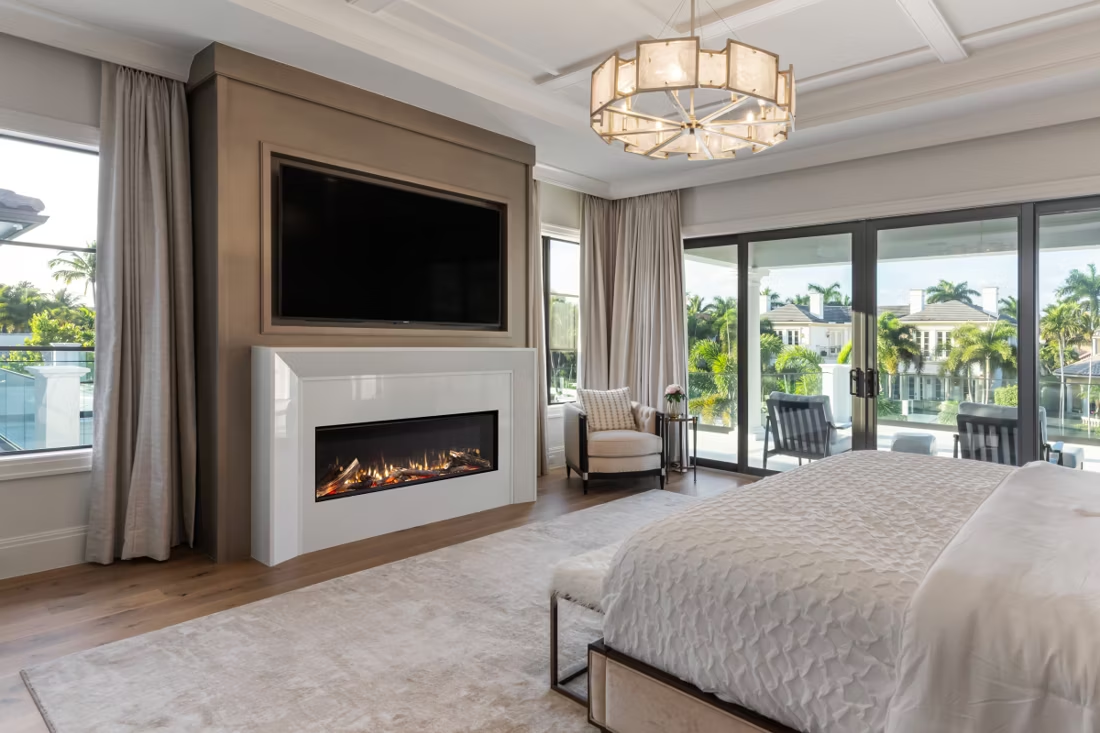
Yes—with an asterisk. Fireplaces are hot and TVs don't like heat. Either put a mantel between them to deflect rising warmth, or choose a fireplace with heat-management technology that creates a cool zone on the wall above—the wall stays around 125 degrees, barely warm, while the room still gets full heat. If you like clean lines and don't want a mantel, heat management is the answer.
Do electric fireplaces actually produce heat?
Yes—most put out around 4,800–5,000 BTUs from a standard outlet, which comfortably warms a bedroom, office, or den as a comfort-zone heater. What they won't do is carry a whole house the way wood, gas, or pellet can. Think of electric as ambiance-first with honest supplemental heat: flames on with no heat in July, flames plus warmth in January.
How much should I budget for a fireplace?
For an average home—covering the fireplace, the vent pipe, and basic installation—a budget between $3,900 and $5,500 gives you a lot of options across wood, gas, and pellet. By the time you add finish work, gas line, and electrical, the average complete installation lands between $5,000 and $12,000 all-in. In a remodel or new build, a good rule is to put about 2.5% of the total project cost toward the fireplace.
Can a fireplace actually lower my heating bill?
Yes—by creating a comfort zone. A furnace heats every square foot of the house just to warm the one room you're in; a gas fireplace on low burns roughly a sixth of the gas a typical furnace does. Set the furnace around 55–60 degrees as a baseline, then heat the rooms your family actually uses. Families who heat this way commonly save $20–$60 a month.
Stove and Fireplace Dealers in McNairy County
Listings include WhyFire partner dealers, dealers we have verified as authorized for the brands we recommend, and established local businesses that carry hearth products. Every listing shows which one it is. The ones marked Preferred run on WhyFire's software, so they can show you real pricing and book your appointment right here. No manufacturer pays for placement. How we verify dealers →
Bell Gas
Pittman Propane
Rogers Lp Gas LLC
Walt Mestan Dba The Fireplace Center
Acme Brick Company
Get your McNairy County electric fireplace Project Guide & Parts List.
Tell us a bit about your home and we'll put together a free Project Guide & Parts List for your electric fireplace project—the exact parts you need and a trusted local dealer near Selmer or Adamsville to install them.
Find Your Fireplace →