
Zone Heat and Ambiance for Every Room in Maryville.
Electric fireplaces and inserts for foothills homes in Maryville, where mild Smoky Mountain winters make supplemental warmth and everyday ambiance more practical than a full wood or gas retrofit. Find the right unit and connect with a trusted local dealer.
Every Project Starts From One of These Five Situations
Mild winters, modern convenience.
Maryville sits at just under 1,000 feet in the foothills of the Great Smoky Mountains, in a 4A climate zone with about 3,528 heating degree days a year and an average winter low around 30 degrees. That's a fraction of what a place like Duluth, Minnesota sees each winter, which is exactly why so few Blount County homes are built or retrofitted around a wood-burning primary heat source. Most homes here already have a functioning HVAC system doing the heavy lifting, so the fireplace question in Maryville is usually about ambiance, zone heat for a chilly bonus room, or replacing a masonry fireplace nobody uses anymore.
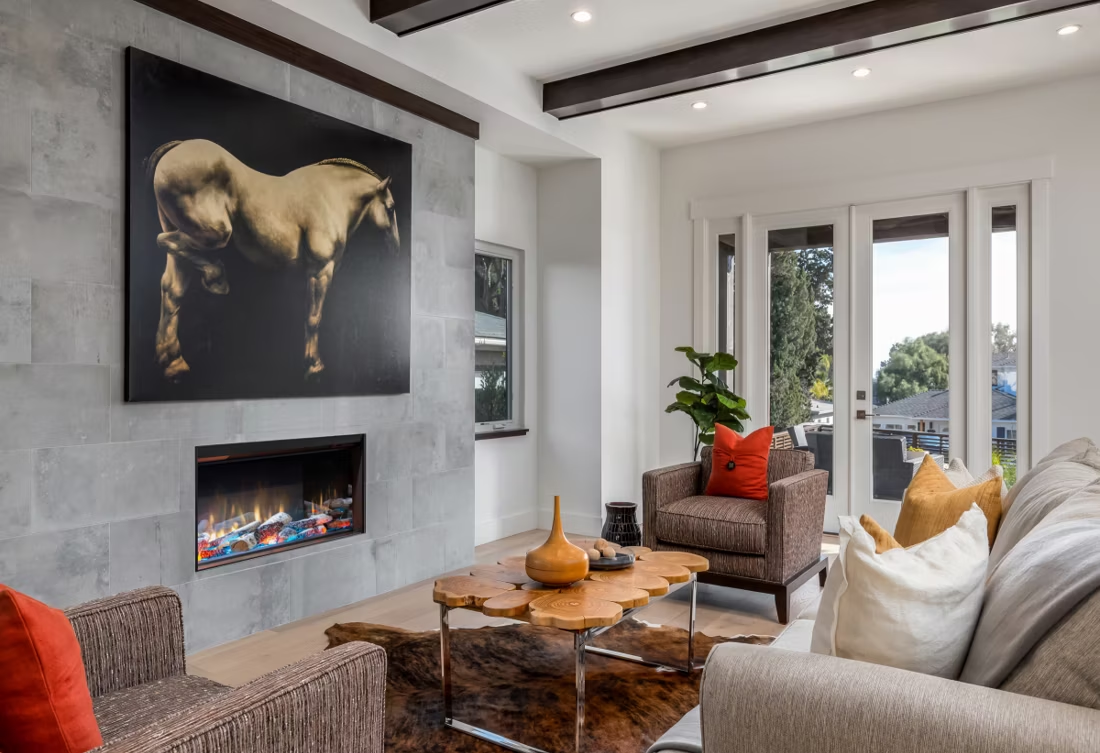
Electric fireplaces fit that need well. Maryville Utilities serves most of the city with a residential rate around 11.3 cents per kWh, which keeps the cost of running a 1,500-watt unit for supplemental heat reasonable during the occasional cold snap. Because electric units don't require venting, a gas line, or a chimney, they're popular in the newer subdivisions around town, in condos and townhomes near Maryville College, and as drop-in inserts for older brick fireplaces that homeowners want to bring back to life without the chimney work a wood or gas conversion would require.
Three steps. No salesperson until you're ready.
Tell us about your project
Your zip code, your situation, and the fuel you're leaning toward—or let the answers point you to one.
See what's actually available
The brands dealers within 100 miles genuinely carry—real options, never a catalog mirage.
Get your dealer & Project Guide
A trusted local dealer, plus the free Project Guide & Parts List that names every component of the job.
Frequently Asked Questions
How much does an electric fireplace installation cost in Maryville?
Plug-in freestanding units and electric log inserts that fit an existing masonry opening typically run $300 to $1,000 installed, since most just plug into a standard outlet and need no electrical work. Built-in wall units or linear electric fireplaces framed into new construction or a remodel run higher, often $1,500 to $3,500, especially if a dedicated 240-volt circuit needs to be run by an electrician. Local dealers around Maryville and Alcoa will usually quote a firm number after seeing the room and the existing wiring.
Do I need a permit to install an electric fireplace in Maryville?
In most cases, no. A plug-in electric fireplace or an insert that uses an existing outlet doesn't typically trigger a building permit. If you're having a built-in unit hardwired or adding a new dedicated circuit, that electrical work generally does require a permit through the City of Maryville Building Department or, if you're outside city limits, the Blount County Building Department. Since there's no venting, gas line, or combustion involved, the permitting process for electric is far simpler than it would be for a wood or gas installation.
Are electric fireplaces worth it in a mild climate like Maryville's?
Given Maryville's roughly 3,528 heating degree days and average winter lows around 30 degrees, most homes here don't need a fireplace to survive the winter—central HVAC already handles that. Where electric fireplaces earn their keep is zone heating a sunroom, finished basement, or home office so you're not running central heat for one occupied space, plus year-round ambiance since most models run the flame effect with the heater off. At Maryville Utilities' residential rate of about 11.3 cents per kWh, running a 1,500-watt unit for a few hours a day costs only a few dollars a month.
Electric vs. gas fireplace—which makes more sense for my Maryville home?
Natural gas service is available through much of Maryville, and a gas fireplace or insert delivers more real heat output and the look of an actual flame, which is why gas remains a common choice in living rooms here. Electric wins on installation simplicity and cost—no gas line, no venting, and often no permit at all for a plug-in unit—which makes it the better fit for a bonus room, bedroom, apartment, or any space where running gas line isn't practical. Many Blount County homeowners end up with gas in the main living area and electric elsewhere in the house for supplemental warmth.
What types of electric fireplaces are available for Maryville homes?
The three most common configurations are electric inserts (built to slide into an existing masonry firebox and use your current mantel), wall-mount linear units (a flush, modern look popular in newer Maryville builds and downtown condos), and freestanding stove-style units that plug in anywhere without any installation at all. Homeowners converting an old wood-burning fireplace that's sat unused for years most often go with an insert, since it reuses the existing opening and mantel surround without any chimney work.
Do electric fireplaces actually put out heat, or are they just for looks?
Most electric fireplaces have a built-in heater rated between 4,600 and 5,200 BTUs, enough to comfortably warm a 400 to 500 square foot room, and the flame effect can be run independently with the heat turned off for warm-weather ambiance. That's plenty for zone heating a single room in a Maryville home, but it's not a whole-house heating solution—for a large open floor plan, you'd need a larger unit or should rely on it purely as a supplement to central HVAC.
Will my electric fireplace work if the power goes out?
No—this is the tradeoff worth knowing before you buy. Unlike a wood stove or even some gas fireplaces with battery-backed ignition, an electric fireplace stops working the moment power drops, since the heater, blower, and flame effect all run on household current. Blount County doesn't see the kind of prolonged winter outages that hit colder regions like Burlington, Vermont, but if backup heat during a storm is a priority for your household, an electric-only fireplace shouldn't be your only heat source.
Can I convert my old wood-burning fireplace to electric?
Yes, and it's a common project for older homes around Maryville with a masonry fireplace that hasn't been used in years. An electric insert slides into the existing firebox opening, plugs into a nearby outlet (or a new one added by an electrician), and requires no chimney cleaning, liner, or cap work—you can even leave the chimney capped off entirely. It's a popular option for homeowners who want the look of their original fireplace back without the maintenance or air quality concerns of restoring it to wood-burning condition.
Why don't more Maryville homes use wood stoves, given all the hardwood forest nearby?
There's plenty of oak, hickory, and maple in the Cherokee National Forest just east of town, and Forest Service cutting permits are available there for about $20 a cord between May and October. But within Maryville and the surrounding Blount County subdivisions, wood-burning primary heat is uncommon—winters are mild enough, at an average low around 30 degrees, that most homeowners don't want the maintenance, chimney upkeep, and smoke that come with a wood stove when a cleaner electric or gas option handles the same room comfortably. Wood heat is more of a rural or cabin-property choice out toward the national forest than a fixture of in-town Maryville homes.
Do electric fireplaces actually produce heat?
Yes—most put out around 4,800–5,000 BTUs from a standard outlet, which comfortably warms a bedroom, office, or den as a comfort-zone heater. What they won't do is carry a whole house the way wood, gas, or pellet can. Think of electric as ambiance-first with honest supplemental heat: flames on with no heat in July, flames plus warmth in January.
Can I put a TV above my fireplace?
Yes—with an asterisk. Fireplaces are hot and TVs don't like heat. Either put a mantel between them to deflect rising warmth, or choose a fireplace with heat-management technology that creates a cool zone on the wall above—the wall stays around 125 degrees, barely warm, while the room still gets full heat. If you like clean lines and don't want a mantel, heat management is the answer.
Can I install a fireplace myself?
If you're putting a fire in your house on purpose, it's best to work with an expert. Unless you're genuinely experienced in framing, gas line, vent pipe, and the national code on clearances to combustibles, have a professional do it—and ideally the same company that sells you the fireplace, so warranty, service, and liability all live under one roof.
How much should I budget for a fireplace?
For an average home—covering the fireplace, the vent pipe, and basic installation—a budget between $3,900 and $5,500 gives you a lot of options across wood, gas, and pellet. By the time you add finish work, gas line, and electrical, the average complete installation lands between $5,000 and $12,000 all-in. In a remodel or new build, a good rule is to put about 2.5% of the total project cost toward the fireplace.
Nearby Dealers
Hearth shops serving Maryville and the surrounding area.
Electric Service in Maryville
An electric fireplace's heater draws about 1,500 watts—pennies per hour at local rates.
Maryville Utilities
Find your electric fireplace in Maryville.
Tell us a bit about your home and we'll match you with a trusted local dealer and send over a free Project Guide & Parts List—the exact unit, mounting or insert kit, and electrical work needed for your Maryville home.
Find Your Fireplace →