
Warm up your Blount County home without the chimney work.
From Maryville and Alcoa out to Townsend at the edge of the Great Smoky Mountains, electric fireplaces bring instant, no-mess heat to rooms where running a flue or gas line isn't practical. Find the right unit and connect with a trusted local dealer.
Every Project Starts From One of These Five Situations
Mild winters, real convenience.
Blount County sits in climate zone 4A with a winter heating season that's fairly light—roughly comparable to Chattanooga's—and a winter low averaging 30 degrees—a far gentler heating season than the mountains just east of it. That means most homes here don't need a full-time primary heat source; they need targeted, reliable warmth for a sunroom, a finished basement, a condo in Alcoa, or a retirement-community unit in Townsend where the homeowners association won't allow a chimney. An electric fireplace fills that gap without any venting, gas line, or masonry work.
Plenty of Blount County homes still have a masonry fireplace built decades ago for oak, hickory, or maple cut on a Cherokee National Forest permit—those $20-per-cord permits run May through October and remain popular. But a growing number of homeowners are retrofitting those same fireboxes with electric inserts, or adding a wall-mount unit in a new addition, because it plugs into power supplied by Appalachian Electric Cooperative and TVA and just works—no ash, no creosote, no annual sweep, and no worry about wildfire-smoke advisories that affect wood burning elsewhere in East Tennessee.
Three steps. No salesperson until you're ready.
Tell us about your project
Your zip code, your situation, and the fuel you're leaning toward—or let the answers point you to one.
See what's actually available
The brands dealers within 100 miles genuinely carry—real options, never a catalog mirage.
Get your dealer & Project Guide
A trusted local dealer, plus the free Project Guide & Parts List that names every component of the job.
Frequently Asked Questions
How much does an electric fireplace installation cost in Blount County?
A plug-in electric insert or freestanding unit that runs on a standard 120V outlet typically costs $300 to $1,500 installed, since there's often no wiring work involved beyond placement. A built-in wall unit or a larger insert that needs a dedicated circuit—common in Maryville and Alcoa additions and basement remodels—runs $1,500 to $4,000 once an electrician runs new wiring and a licensed installer handles the mantel or surround. Retrofitting an existing masonry fireplace built for wood into an electric insert usually falls in the middle of that range, since the firebox opening is already there and no new framing is needed.
What size electric fireplace do I need for my Blount County home?
Most electric fireplaces top out around 5,000 to 6,000 BTU, which is enough to comfortably heat a single room of 400 to 1,000 square feet—plenty for the kind of supplemental heating most Blount County homes actually need given the county's relatively mild, fairly short winter heating season. For an open-concept addition or a great room in a newer Maryville or Alcoa build, you may want two zones or a larger insert with a stronger blower rather than relying on one unit to cover the whole space. A local dealer can walk your room and tell you honestly whether one unit will do the job or whether you need a second heat source.
Do I need an electrician to install an electric fireplace?
Smaller plug-in units don't require an electrician—they run on a standard outlet like any appliance. But any built-in wall unit, any insert pulling more than 1,500 watts, or any installation requiring a new dedicated circuit does need a licensed electrician, and the work should be inspected under a permit through the Blount County Building Codes Department (or City of Maryville/Alcoa codes enforcement, depending on where you're located). Reputable local hearth dealers either employ licensed electricians directly or coordinate with one as part of the install, which keeps the wiring and the mantel installation on the same schedule.
What's the difference between an electric insert, a wall-mount, and a freestanding electric fireplace?
An electric insert is built to slide into an existing masonry firebox—a popular choice for older Blount County homes with a fireplace originally built to burn oak or hickory that the current owners want to convert to low-maintenance heat. A wall-mount unit hangs flush on the wall like a large-format TV and works well in new additions or condos with no existing fireplace. A freestanding electric stove sits on the floor and can go almost anywhere with an outlet, making it a good fit for a finished basement or a rental property where you want heat without any construction at all.
Do I need a permit for an electric fireplace in Blount County?
A simple plug-in unit generally doesn't require a permit since it's treated like any other appliance. But if your installation involves running a new electrical circuit—which is common for built-in wall units and larger inserts—that wiring work needs an electrical permit through the Blount County Building Codes Department or your municipality's codes office. Most local dealers who sell and install larger units handle this coordination for you so you're not left tracking down inspections yourself.
What's the best electric fireplace for a Blount County home?
Because winters here are mild by East Tennessee mountain standards—a 30-degree average winter low and a fairly short, light winter heating season—most homeowners are shopping for ambiance and supplemental warmth rather than a primary heat source, and that changes what matters most. Look at units with a realistic flame effect (Dimplex and Napoleon both make well-regarded models sold through regional hearth dealers) and a quiet, adjustable blower rather than the highest BTU rating you can find. For a retrofit into an old wood-fireplace opening in a Maryville or Townsend home, insert-style units with adjustable trim kits fit the widest range of existing firebox sizes.
How much maintenance does an electric fireplace need?
Very little compared to wood or gas. There's no chimney to sweep, no gas line to inspect, and no creosote to worry about. Maintenance is mostly dusting the unit, occasionally cleaning the glass front, and replacing LED lights on models where the light bank isn't sealed for the life of the unit. That's a real selling point for Blount County homeowners who want fireplace ambiance without the annual chimney inspection that a wood-burning setup in an oak-and-hickory-burning household requires.
Will my electric fireplace work during a power outage, and what does it cost to run?
No—unlike a wood stove, an electric fireplace is entirely dependent on grid power from Appalachian Electric Cooperative, TVA-supplied municipal service, or whichever provider serves your part of the county, so it goes dark in an outage. On the cost side, most units run on the order of 10 to 15 cents an hour at typical East Tennessee electric rates when the heater function is on, and pennies an hour if you're just running the flame effect for ambiance without heat. That's cheap enough that many homeowners run the flame effect year-round and reserve the heater for the handful of genuinely cold nights each winter.
Electric vs. wood—which is right for my Blount County home?
Wood—burned as oak, hickory, maple, or pine cut on a Cherokee National Forest permit for as little as $20 a cord—still makes sense for homeowners who want real primary heat, a working fireplace during a power outage, and don't mind the annual chimney sweep. Electric makes more sense for a room addition, a condo, a finished basement, or a retrofit of an old masonry fireplace where the goal is ambiance and light supplemental warmth without venting or wood handling. Given Blount County's relatively mild, fairly short winter heating season, a lot of homeowners here are well served by electric alone in secondary rooms, keeping wood or gas as the primary heat source in the main living area.
Can I put a TV above my fireplace?
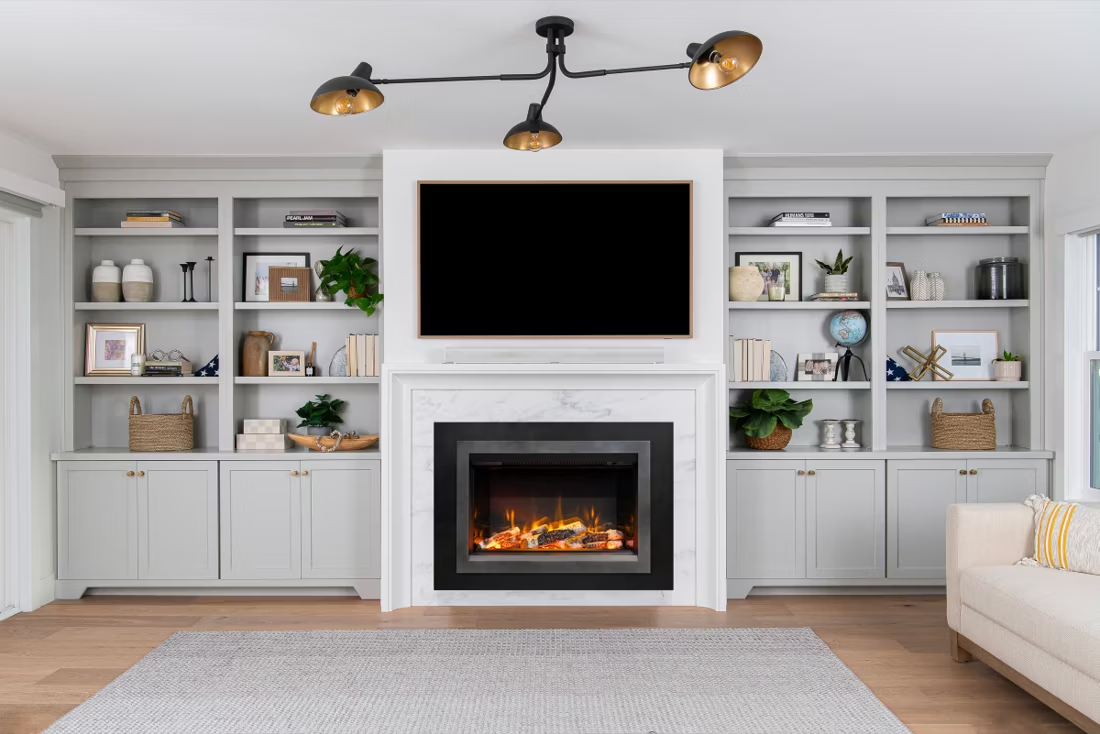
Yes—with an asterisk. Fireplaces are hot and TVs don't like heat. Either put a mantel between them to deflect rising warmth, or choose a fireplace with heat-management technology that creates a cool zone on the wall above—the wall stays around 125 degrees, barely warm, while the room still gets full heat. If you like clean lines and don't want a mantel, heat management is the answer.
Does an electric fireplace need a vent or chimney?
No—that's its superpower. An electric fireplace needs a wall and an outlet, period. No vent pipe, no gas line, no clearances to design around, which is why it works in bedrooms, offices, apartments, and walls where venting a gas or wood unit would be impractical or impossible. Installation is typically the simplest and least expensive of any fireplace type.
How much should I budget for a fireplace?
For an average home—covering the fireplace, the vent pipe, and basic installation—a budget between $3,900 and $5,500 gives you a lot of options across wood, gas, and pellet. By the time you add finish work, gas line, and electrical, the average complete installation lands between $5,000 and $12,000 all-in. In a remodel or new build, a good rule is to put about 2.5% of the total project cost toward the fireplace.
Can I install a fireplace myself?
If you're putting a fire in your house on purpose, it's best to work with an expert. Unless you're genuinely experienced in framing, gas line, vent pipe, and the national code on clearances to combustibles, have a professional do it—and ideally the same company that sells you the fireplace, so warranty, service, and liability all live under one roof.
Stove and Fireplace Dealers in Blount County
Listings include WhyFire partner dealers, dealers we have verified as authorized for the brands we recommend, and established local businesses that carry hearth products. Every listing shows which one it is. The ones marked Preferred run on WhyFire's software, so they can show you real pricing and book your appointment right here. No manufacturer pays for placement. How we verify dealers →
Englands Woodstove Store
Pool Warehouse
Southern Flame
Archies Stone And Fireplaces
American Fireplaces
East Tennessee Fireplace Co.
Find your electric fireplace in Blount County.
Tell us a bit about your home and we'll match you with the right electric fireplace, insert, or wall unit—plus a free Project Guide & Parts List with the exact parts and a recommended local dealer to install it.
Find Your Fireplace →