
Real heat for East Tennessee winters, matched to your home.
Wood, gas, pellet, and electric fireplace resources for every community in Blount County—from downtown Maryville and Alcoa to the cabins around Townsend and Walland near the Great Smoky Mountains. Find the right unit and connect with a trusted local hearth retailer.
Every Project Starts From One of These Five Situations
Mild Tennessee winters at the foot of the Smokies.
Blount County sits in East Tennessee's climate zone 4A, where winters run mild by national standards—average lows near 30°F and a heating season less than half as demanding as a place like Duluth, Minnesota logs in a typical season. But the county's geography varies a lot: valley floor around Maryville and Alcoa sits under 1,000 feet, while the land climbs sharply into the Cherokee National Forest and the edge of Great Smoky Mountains National Park, where elevation and cold pockets push heating needs higher than the county average suggests. Firewood is abundant and cheap here—oak, hickory, and maple are the backbone species for long, hot burns, with pine common as kindling and shoulder-season fuel. Cutting permits for the national forest side of the county go through the Cherokee National Forest ranger district.
What you'll find on this hub: hearth retailers, service technicians, and fuel suppliers serving every corner of the county—from the Maryville-Alcoa urban core out to Townsend, Walland, Louisville, Rockford, and Friendsville. Pick your fuel below to drill into local dealers, installation costs, recommended units, and the resources that fit your specific project. Whether you're heating a full-time home in Alcoa or a weekend cabin near Cades Cove, this is the starting point.
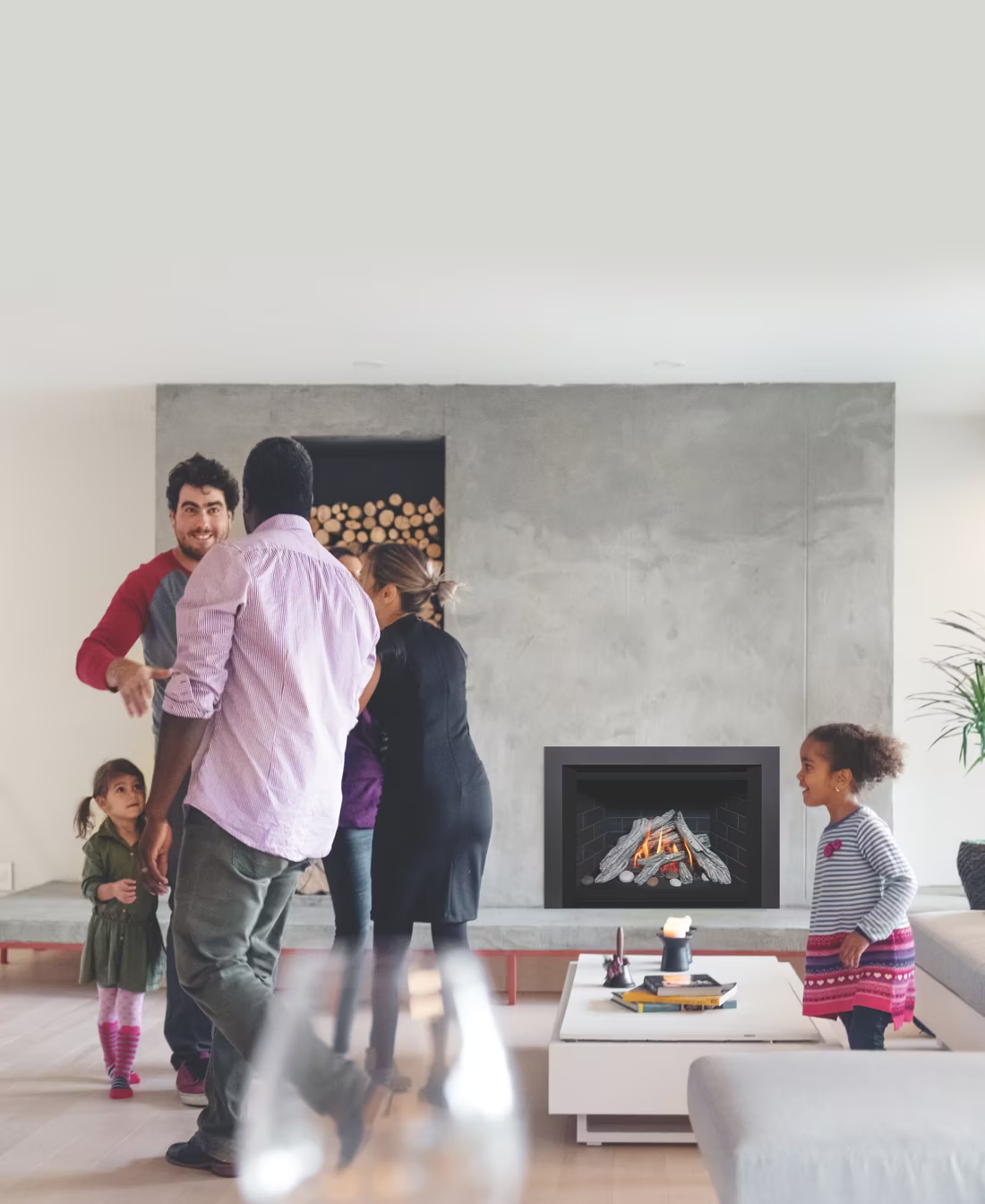
Four fuels. One honest answer for Blount County.
Three steps. No salesperson until you're ready.
Tell us about your project
Your zip code, your situation, and the fuel you're leaning toward—or let the answers point you to one.
See what's actually available
The brands dealers within 100 miles genuinely carry—real options, never a catalog mirage.
Get your dealer & Project Guide
A trusted local dealer, plus the free Project Guide & Parts List that names every component of the job.
Frequently Asked Questions
Which fuel works best in Blount County?
It depends on where you are in the county and what you're trying to solve. Wood is a strong fit for rural and higher-elevation homes near Townsend, Walland, and the Cherokee National Forest boundary—oak and hickory burn long and hot, and a lot of households here already have access to cut-your-own firewood permits through the national forest. Gas is the convenience pick for Maryville and Alcoa homes with gas service—quick heat, no wood handling, and a clean look for a living room remodel. Pellet stoves are a solid middle ground, especially with regional brands like Lignetics and Hamer Pellet Fuel readily available—less labor than splitting wood, similar cozy heat. Electric fireplaces work well as supplemental or ambiance units almost anywhere in the county; given the mild 30°F average winter low, electric can even carry a smaller home or a Smoky Mountain vacation cabin through most of the season on its own. Most full-time Blount County homes end up with one primary fuel and something electric in a secondary room.
Do I need a permit to install a fireplace in Blount County?
In most cases, yes. New wood stoves, wood inserts, gas fireplaces, gas inserts, and pellet stoves typically require a building permit, and gas work needs a separate gas line permit pulled by a licensed installer. Within Maryville or Alcoa city limits, permits run through the respective city's codes department; in unincorporated Blount County, they go through the county's codes enforcement office. If you're cutting your own firewood on national forest land, that's a separate matter—the Cherokee National Forest ranger district issues personal-use firewood permits, which is worth knowing if wood is your fuel of choice. Electric fireplaces generally don't need a permit unless you're hardwiring a built-in unit into a new circuit. Most local retailers handle the permitting paperwork as part of the installation quote.
Are there air quality restrictions on wood burning in Blount County?
No formal burn bans or mandatory curtailment program applies here—Blount County doesn't carry the winter inversion or wildfire-smoke concerns that drive restrictions in places like the Klamath Basin or parts of the Mountain West. That said, the valley floor around Maryville and Alcoa can trap fog and cool air on still winter mornings, and a well-seasoned load of oak or hickory burns cleaner than green wood regardless of local rules. If you're near the Great Smoky Mountains National Park boundary, it's worth checking with the park for any seasonal guidance, since air quality monitoring there is more active than in the rest of the county. Outside of that, wood burning in Blount County is largely unregulated day-to-day.
Can one local hearth retailer handle all four fuel types?
Many hearth retailers in the Maryville-Alcoa area carry three or four fuel types, since wood, gas, pellet, and electric are all standard, workable options in this climate. A multi-fuel dealer can be useful if you're not sure yet whether you want a wood-burning insert for a Townsend cabin or a gas unit for a Maryville living room—they can show working displays and talk through the trade-offs for your specific home and elevation. Smaller shops closer to the Smokies side of the county sometimes specialize more narrowly, often leaning into wood and pellet given the rural, forested surroundings. Check each retailer's fuel coverage on the county + fuel pages before you make the drive.
How does service work in rural areas of Blount County?
Most chimney sweeps and gas technicians are based in the Maryville-Alcoa area and travel out toward Townsend, Walland, and the communities closer to the national park. Expect a modest travel fee for calls further out toward the park boundary, and know that late-summer and early-fall scheduling (before the first cold snap) is easier to book than a mid-January emergency call. This matters more for seasonal cabins near Cades Cove and the park entrance, which sit idle for stretches and benefit from a pre-season inspection rather than a same-day fix once the weather turns.
What's the typical cost range for fireplace installation across all fuel types in Blount County?
Costs run a bit lower here than in harsher-climate markets, since Blount County's mild winters—with lows near 30°F and a heating season less than half as demanding as colder regions—mean smaller units and simpler venting runs are common. Wood stove or insert installation typically falls in the $4,000–$8,000 range, more for full masonry chimney work on new construction. Gas fireplace, insert, or stove installs run roughly $4,000–$10,000 depending on whether a new gas line is needed. Pellet stove or insert installation generally lands around $4,000–$7,000. Electric fireplaces are the most affordable entry point—$200–$3,000 for the unit itself, plus $400–$1,200 in labor for anything beyond a simple plug-in install. See the county + fuel pages above for retailer-specific pricing detail.
Can a fireplace actually lower my heating bill?
Yes—by creating a comfort zone. A furnace heats every square foot of the house just to warm the one room you're in; a gas fireplace on low burns roughly a sixth of the gas a typical furnace does. Set the furnace around 55–60 degrees as a baseline, then heat the rooms your family actually uses. Families who heat this way commonly save $20–$60 a month.
Can I install a fireplace myself?
If you're putting a fire in your house on purpose, it's best to work with an expert. Unless you're genuinely experienced in framing, gas line, vent pipe, and the national code on clearances to combustibles, have a professional do it—and ideally the same company that sells you the fireplace, so warranty, service, and liability all live under one roof.
Does a fireplace add value to my home?
On average, a fireplace adds back to the home about the same amount you spent installing it. Add the monthly savings from heating the rooms you actually use instead of the whole house—often hundreds of dollars a year—and the value case is strong before you even count what a fire does for how your family uses the room.
Should the dealer who sells my fireplace also install it?
Ideally, yes. A fireplace project involves vent pipe, gas line, electrical, and often tile or stone. Hire three or four separate trades and you own the liability and the game of telephone between them. One company selling and installing means one accountable party, start to finish—ask about factory training, on-time completion records, and what happens if an inspection fails.
Stove and Fireplace Dealers in Blount County
Listings include WhyFire partner dealers, dealers we have verified as authorized for the brands we recommend, and established local businesses that carry hearth products. Every listing shows which one it is. The ones marked Preferred run on WhyFire's software, so they can show you real pricing and book your appointment right here. No manufacturer pays for placement. How we verify dealers →
Englands Woodstove Store
Pool Warehouse
Southern Flame
Archies Stone And Fireplaces
American Fireplaces
East Tennessee Fireplace Co.
Find your fireplace in Blount County.
Pick your fuel below and we'll match you with a trusted local dealer and a free Project Guide & Parts List—the exact parts, including the vent kit, for your fireplace project in Blount County.
Find Your Fireplace →