
Steady, thermostat-like heat for Marion County winters.
From the Sequatchie Valley floor up to the bluffs near Monteagle, pellet stoves deliver clean, controllable heat without the splitting and stacking—matched with a trusted local dealer who handles the venting and the paperwork.
Every Project Starts From One of These Five Situations
Steady heat, without the woodpile.
Marion County sits in climate zone 4A with roughly 3,604 heating degree days and a winter low average around 29°F—meaningfully milder than the Cumberland Plateau counties to the north, but still cold enough for regular months of heating from Jasper and South Pittsburg along the Tennessee River up to Whitwell and the plateau edge near Monteagle. Oak, hickory, maple, and pine grow throughout the county, and the Cherokee National Forest issues cutting permits (May through October, roughly $20 per cord) for residents who still cut their own firewood—but a growing number of Marion County homeowners are choosing pellet appliances instead, for the thermostat control and the fact that there's no splitting, stacking, or hauling involved.
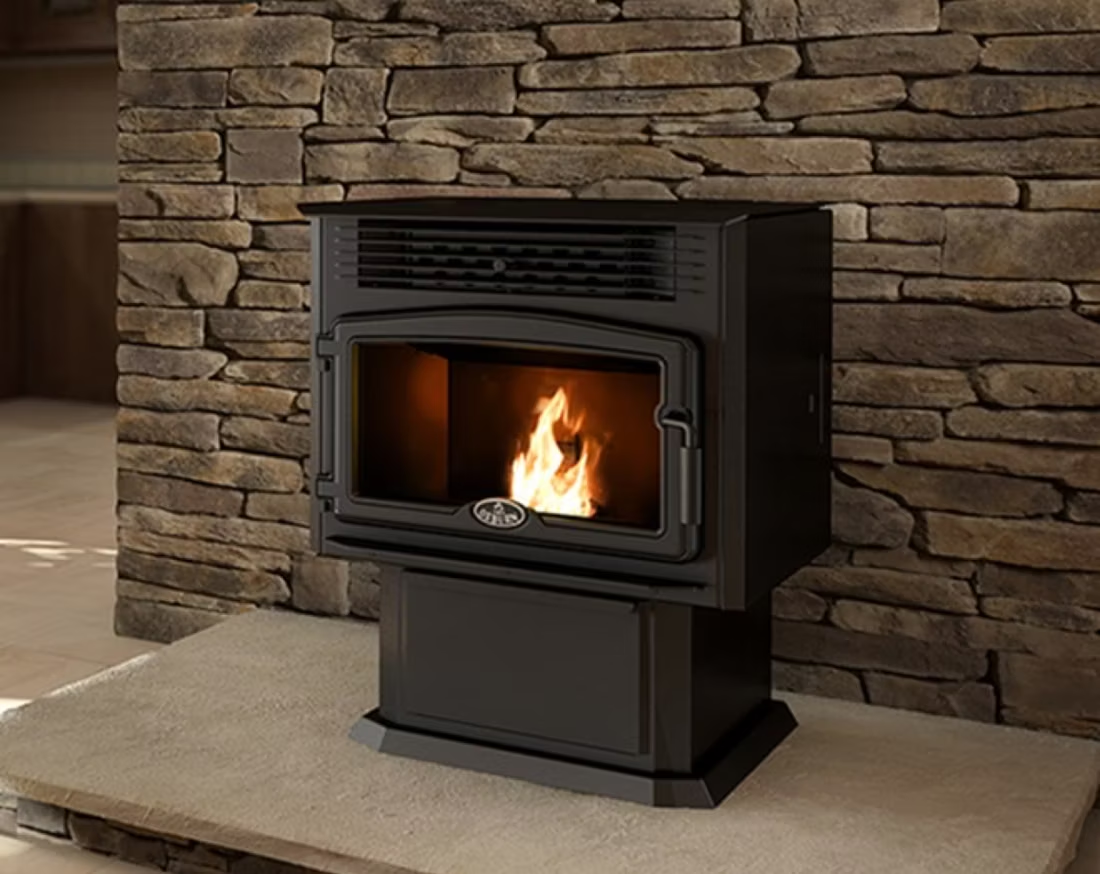
With no local air quality non-attainment issues or winter inversion restrictions, there's nothing stopping year-round burning here the way there is in some western counties—it's simply a matter of picking the right stove for your square footage and getting it vented correctly. Regional pellet brands including Lignetics, Hamer Pellet Fuel, and Greenway Renewable Energy are commonly stocked by dealers serving this part of Tennessee, so fuel supply isn't the issue it can be in more remote counties. What matters more is proper sizing, a hearth pad that meets code, and a hopper large enough that you're not refilling constantly during a stretch of Sequatchie Valley cold.
Three steps. No salesperson until you're ready.
Tell us about your project
Your zip code, your situation, and the fuel you're leaning toward—or let the answers point you to one.
See what's actually available
The brands dealers within 100 miles genuinely carry—real options, never a catalog mirage.
Get your dealer & Project Guide
A trusted local dealer, plus the free Project Guide & Parts List that names every component of the job.
Frequently Asked Questions
How much does a pellet stove installation cost in Marion County?
Most pellet stove installations in Marion County run in the neighborhood of $3,500 to $6,500, depending on the unit, whether you're venting through an exterior wall or an existing chimney, and whether a hearth pad needs to be added or upgraded to meet code. Inserting a pellet unit into an existing masonry fireplace is usually toward the lower end since the chimney chase is already in place; a freestanding stove in a new location—say, converting an unused room in an older Jasper or South Pittsburg farmhouse—can run higher once wall penetration and electrical work for the hopper motor are factored in. A local dealer will give you a firm number after seeing the space.
What size pellet stove do I need for my home?
With Marion County's relatively moderate winters—a 29°F average low and around 3,600 heating degree days—most homes don't need the largest pellet stoves on the market the way a colder climate would. A small to mid-size unit (rated for 1,000 to 1,800 square feet) handles most single-family homes in Jasper, South Pittsburg, and Whitwell as a primary or near-primary heat source. Larger, less-insulated older homes on the plateau near Monteagle, or homes wanting to heat an open floor plan, may want to size up. A dealer will factor in ceiling height, insulation, and floor plan during an in-home visit rather than going off square footage alone.
Pellet stove vs. wood stove—which makes more sense in Marion County?
Wood is genuinely cheap here—Cherokee National Forest cutting permits run about $20 per cord, and oak, hickory, maple, and pine are all available locally for anyone willing to cut and split their own. That makes wood attractive for county residents with land, time, and a truck. Pellet stoves trade that lower fuel cost for convenience: load the hopper, set the thermostat, and walk away, with far less ash and no chimney creosote to manage. Pellet stoves do need electricity to run the auger and blower, so they're not a power-outage backup the way a wood stove is. For in-town homes in Jasper or South Pittsburg where convenience matters more than self-sufficiency, pellet is usually the easier fit.
Will my pellet stove work if the power goes out?
No—pellet stoves rely on electricity to run the hopper auger, combustion blower, and igniter, so a power outage means no heat from the unit even with a full hopper. This is worth planning around in the rural stretches of Marion County served by Sequachee Valley Electric Cooperative, where outages after ice or wind events can run longer than in town. Some homeowners pair a pellet stove with a small backup generator or battery inverter sized to run the stove's low-wattage components, and others keep a wood stove or fireplace as a backup heat source for exactly this reason. Ask your dealer about the stove's actual power draw if backup power is a concern.
Do I need a permit to install a pellet stove in Marion County?
Most pellet stove installations require a building permit, whether you're inside Jasper, South Pittsburg, or Whitwell city limits or in unincorporated Marion County—the specifics depend on which jurisdiction covers your address. Most local hearth dealers handle the permitting as part of the installation, including verifying clearances and venting termination points meet code, so it's rarely something you have to navigate on your own. It's worth confirming with your installer before work starts, especially if you're converting an existing masonry fireplace rather than starting from scratch.
What pellet brands are available near Marion County?
Lignetics, Hamer Pellet Fuel, and Greenway Renewable Energy are all commonly carried by dealers and suppliers serving this part of Tennessee, so fuel availability shouldn't be a concern here the way it can be in more remote parts of the country. Pellet quality varies by brand and even by batch—look for low ash content and consistent pellet size, since a stove that's dialed in for one brand can sometimes run rougher on a different one. Most local dealers can point you toward what runs cleanest in the specific stove model you're considering.
How much maintenance does a pellet stove need?
Pellet stoves need more routine attention than a gas fireplace but less than a wood stove requiring an annual chimney sweep. Plan on emptying the ash pan every few days to weekly depending on use, cleaning the burn pot and glass regularly during the season, and a full professional cleaning and inspection once a year—typically before the county's first cold snap in the fall. Homes running the stove as a primary heat source through a full Marion County winter will need more frequent attention than a home using it just for supplemental warmth on the coldest nights.
How should I store pellet fuel in Marion County's climate?
Tennessee's humidity is the main thing to watch—pellets absorb moisture from the air and will swell, crumble, and burn poorly if stored improperly. Keep bags off concrete floors (which sweat moisture in summer), in a dry garage, shed, or basement, and avoid stacking bags directly against exterior walls where condensation can form. Buying a season's supply at once and storing it properly is usually more economical than buying bag by bag through the winter, and most local suppliers carrying Lignetics or Hamer Pellet Fuel can advise on quantities based on your stove's rated burn rate.
Pellet vs. gas—which is right for my Marion County home?
Gas fireplaces offer instant on-off operation and, with the right ignition system, can run during a power outage—something pellet stoves can't do. Pellet stoves offer a real flame and more radiant heat output, run on a renewable, often locally available fuel, and don't require a gas line or propane tank. For homes in Marion County already set up with propane or natural gas service, gas is often the simpler retrofit. For homes without existing gas infrastructure—common in the more rural parts of the county—a pellet stove avoids the cost of running a gas line or installing a propane tank altogether. A local dealer can walk through both options based on what's already in your home.
What does it take to replace an existing fireplace?
Fireplaces are like icebergs—bigger behind the wall than in front of it. Replacement means removing the surrounding tile or stone (the finish material laps onto the fireplace face), pulling the old unit, setting the new one in the same enclosure, and re-finishing the wall. A hearth professional can determine what's behind your wall without demolition during an in-home preview.
Why is my open fireplace making my house colder?
Open fireplaces suck—literally. As the fire burns, it consumes air your furnace already paid to heat and pulls it out through the chimney, so the house is actually colder after the fire goes out than before you lit it. An insert fixes this: it seals the chimney, puts fixed glass across the front, and turns that hole in your house into a real heat source.
What is an in-home preview and do I need one?
It's a visit where a hearth professional measures your space, confirms the model you picked actually works in your home, and walks the specs—framing, gas line, venting, finish work—before anything is ordered. Some details you just can't know until you see the house. Never make a down payment without one; it's the single most-skipped step that burns buyers.
Can I install a fireplace myself?
If you're putting a fire in your house on purpose, it's best to work with an expert. Unless you're genuinely experienced in framing, gas line, vent pipe, and the national code on clearances to combustibles, have a professional do it—and ideally the same company that sells you the fireplace, so warranty, service, and liability all live under one roof.
Stove and Fireplace Dealers in Marion County
Listings include WhyFire partner dealers, dealers we have verified as authorized for the brands we recommend, and established local businesses that carry hearth products. Every listing shows which one it is. The ones marked Preferred run on WhyFire's software, so they can show you real pricing and book your appointment right here. No manufacturer pays for placement. How we verify dealers →
Smith's Ace Hardware
America's Hearth & Patio Warehouse
Therm-Con, Llc
Pellet Brands Stocked Around Marion County
Manufacturers will point you to the nearest stocking dealer.
Find your pellet stove in Marion County.
Tell us a bit about your home and we'll put together a free Project Guide & Parts List—the right pellet stove or insert, the vent kit it needs, and a trusted local dealer to install it.
Find Your Fireplace →