
Plug-in warmth built for a mild Sequatchie Valley winter.
With a moderate winter heating load and winter lows that average a mild 29°F, Marion County doesn't need a furnace-replacing wood stove in every room—it needs targeted heat where you actually sit. I'll match you with a vetted local dealer who can size an electric fireplace or insert for your Jasper, South Pittsburg, or Whitwell home and send a free plan for the install.
Every Project Starts From One of These Five Situations
A Cumberland Plateau climate that plays to electric's strengths.
Marion County sits where the Cumberland Plateau drops into the Sequatchie Valley in southeastern Tennessee, bordered by the Tennessee River and Nickajack Lake, with Jasper as the county seat and South Pittsburg, Whitwell, and Kimball rounding out the population base of roughly 13,400. Climate zone 4A puts the county in a genuinely moderate heating climate—the winter heating load is less than half what a place like Madison, WI carries, and a winter low averaging 29°F means hard freezes happen but rarely stack up for weeks at a time. That's exactly the kind of climate where a full whole-home wood or gas system can be overkill for a room that's only cold a few hours a day, and where a plug-in or built-in electric unit earns its keep as the heat source you actually use.
Wood still has deep roots here—oak, hickory, maple, and pine are all cut locally, and Cherokee National Forest issues personal-use cutting permits for $20 a cord during the May-through-October season—so plenty of Marion County households split and stack for a primary or backup heat source. But electric fireplaces fill a real gap: no chimney, no gas line trenched across the yard, and no combustion byproducts to vent, which makes them a straightforward fit for the manufactured and modular homes common across the Sequatchie Valley, for lake houses around Nickajack where owners want ambiance without exterior venting, and for anyone on Volunteer Energy Cooperative's TVA power who wants supplemental zone heat without adding a wood stove or propane tank to the property.
Three steps. No salesperson until you're ready.
Tell us about your project
Your zip code, your situation, and the fuel you're leaning toward—or let the answers point you to one.
See what's actually available
The brands dealers within 100 miles genuinely carry—real options, never a catalog mirage.
Get your dealer & Project Guide
A trusted local dealer, plus the free Project Guide & Parts List that names every component of the job.
Frequently Asked Questions
How much does an electric fireplace installation cost in Marion County?
Electric is the least expensive fireplace fuel to install, and the range in Marion County runs wide depending on the unit. A freestanding or wall-mounted plug-in electric stove that just needs a standard 120V outlet can be a same-day, low-cost project. A built-in electric fireplace set into a wall or new cabinetry—the more common request for a living room remodel—typically calls for a dedicated 120V or 240V circuit run by a licensed electrician, plus finish carpentry around the unit, which is where most of the labor cost actually goes. A local dealer can walk your specific room and tell you which category your project falls into before you commit to a model.
Will an electric fireplace actually heat my home through a Marion County winter?
Most electric fireplaces are built for zone heating, not whole-house heating, and that maps well onto this county's climate. With a moderate winter heating load and winter lows averaging 29°F, Marion County doesn't see the extended sub-zero stretches that make supplemental electric heat impractical—a typical 1,500-watt unit putting out 5,000 to 9,000 BTU can comfortably take the chill off a living room, den, or bedroom on a cold night. If you're trying to heat an entire house on electric resistance heat alone, especially an older farmhouse in the Sequatchie Valley with limited insulation, talk to your dealer about whether a heat pump makes more sense as the primary system, with the fireplace as the room you actually live in.
Do I need a permit to install an electric fireplace in Marion County?
A simple plug-in electric fireplace or stove generally doesn't trigger a permit since it's just an appliance in an existing outlet. Once you move to a built-in unit that requires a new dedicated circuit, though, that's electrical work, and the county building department typically wants an electrical permit and inspection on new circuit runs, whether the home is in Jasper, South Pittsburg, or out in the unincorporated county. A licensed electrician working with your hearth dealer usually handles pulling that permit as part of the installation.
Who provides electricity in Marion County, and does that affect running costs?
Most of Marion County gets power through Volunteer Energy Cooperative, a Tennessee Valley Authority distributor, and TVA's rate structure is generally favorable for the kind of intermittent, room-by-room use an electric fireplace sees. Running a 1,500-watt unit for a few hours an evening costs a fraction of heating an entire house, which is part of why electric fireplaces are popular here as a supplemental option rather than a primary heat source—you get the ambiance and the localized warmth without a large jump in your monthly bill.
Electric vs. wood—which makes more sense for my Marion County home?
It depends on what you're solving for. Wood is still a strong option here—oak, hickory, maple, and pine are all available locally, and Cherokee National Forest sells personal-use cutting permits for $20 a cord from May through October, so fuel cost can be very low if you're willing to cut and season your own. Electric wins on convenience and safety: no chimney to maintain, no creosote, no ash, and it works in homes—including manufactured and modular housing common across the Sequatchie Valley—where a wood stove installation would be complicated or against the home's certification. Many households end up using wood as a serious backup or primary heat source and electric for the rooms where they want instant, no-mess ambiance.
Can I put an electric fireplace in a manufactured or modular home?
Yes, and it's one of the more common installs in rural parts of Marion County, where manufactured and modular housing make up a meaningful share of the housing stock. Electric units don't require venting or a chimney, so they sidestep the certification issues that come with adding a wood stove to a manufactured home. Most electric fireplaces just need a code-compliant electrical connection, which a local dealer or electrician can confirm against your home's panel capacity before installation.
How much maintenance does an electric fireplace need?
Very little compared to a wood or gas system. There's no chimney to sweep, no gas line to inspect, and no combustion byproducts to manage. Maintenance is mostly dusting the unit, occasionally replacing the LED ember bed or heating element after years of use, and checking that the electrical connection stays secure. That low-maintenance profile is a big part of why electric fireplaces show up in second homes and lake properties around Nickajack Lake, where owners don't want a system that needs annual servicing between visits.
What style of electric fireplace fits best in a Marion County home?
It depends on the house. In the farmhouse and ranch-style homes common through the Sequatchie Valley, a built-in wall unit from a brand like Dimplex or Napoleon set into existing cabinetry or a new mantel surround tends to look the most intentional. For a lake home near Nickajack where owners want fireplace ambiance without adding venting to a waterfront elevation, a linear built-in or a freestanding electric stove in an entryway or den works well. A local dealer can match the style to your room and your home's existing finish rather than you guessing off a showroom floor model.
Are there any rebates for electric fireplaces or heating upgrades in Marion County?
Electric fireplaces themselves are mostly supplemental heat, so they don't typically qualify for the efficiency rebates aimed at whole-home systems. That said, TVA's EnergyRight program, administered locally through Volunteer Energy Cooperative, does offer rebates and financing for broader efficiency upgrades—heat pumps, insulation, and duct sealing—that can lower your overall heating costs and make an electric fireplace a smarter supplemental add rather than a primary heat source. It's worth a call to the co-op before any larger heating project to see what's currently available.
Can I put a TV above my fireplace?
Yes—with an asterisk. Fireplaces are hot and TVs don't like heat. Either put a mantel between them to deflect rising warmth, or choose a fireplace with heat-management technology that creates a cool zone on the wall above—the wall stays around 125 degrees, barely warm, while the room still gets full heat. If you like clean lines and don't want a mantel, heat management is the answer.
Does an electric fireplace need a vent or chimney?
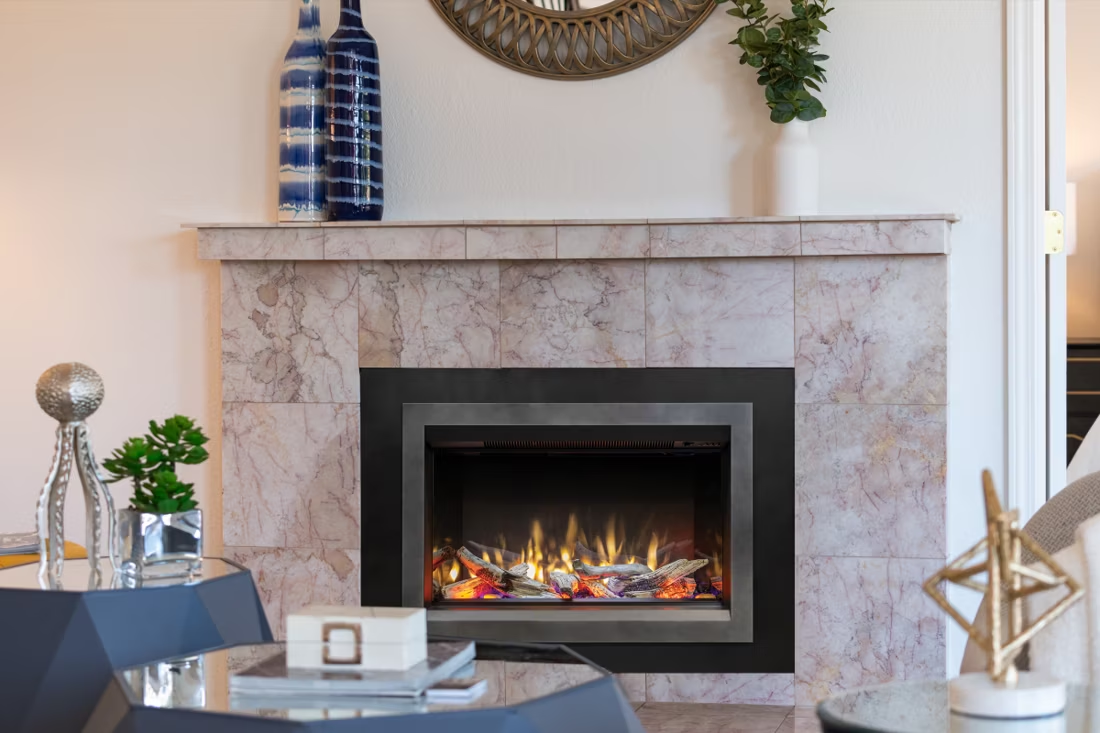
No—that's its superpower. An electric fireplace needs a wall and an outlet, period. No vent pipe, no gas line, no clearances to design around, which is why it works in bedrooms, offices, apartments, and walls where venting a gas or wood unit would be impractical or impossible. Installation is typically the simplest and least expensive of any fireplace type.
How much should I budget for a fireplace?
For an average home—covering the fireplace, the vent pipe, and basic installation—a budget between $3,900 and $5,500 gives you a lot of options across wood, gas, and pellet. By the time you add finish work, gas line, and electrical, the average complete installation lands between $5,000 and $12,000 all-in. In a remodel or new build, a good rule is to put about 2.5% of the total project cost toward the fireplace.
Can I install a fireplace myself?
If you're putting a fire in your house on purpose, it's best to work with an expert. Unless you're genuinely experienced in framing, gas line, vent pipe, and the national code on clearances to combustibles, have a professional do it—and ideally the same company that sells you the fireplace, so warranty, service, and liability all live under one roof.
Stove and Fireplace Dealers in Marion County
Listings include WhyFire partner dealers, dealers we have verified as authorized for the brands we recommend, and established local businesses that carry hearth products. Every listing shows which one it is. The ones marked Preferred run on WhyFire's software, so they can show you real pricing and book your appointment right here. No manufacturer pays for placement. How we verify dealers →
Smith's Ace Hardware
America's Hearth & Patio Warehouse
Therm-Con, Llc
Get your free Marion County electric fireplace Project Guide & Parts List.
Tell us about your room, your home's wiring, and how you want to use the fireplace, and I'll match you with a trusted local Marion County dealer and send a free Project Guide & Parts List—the right unit, the electrical requirements, and a recommended installer for your project.
Find Your Fireplace →