
Keep Your Family Warm and Safe—No Matter What
With winter lows averaging 28°F and a mild, short heating season, Loudon doesn't demand wood heat the way a place like Duluth or Burlington does. Most homeowners here add a stove for backup, ambiance, or a lake cabin—and I'll match you with a trusted local dealer who installs it right.
Every Project Starts From One of These Five Situations
A backup and ambiance fuel, not the default heat source.
Loudon sits at 767 feet in East Tennessee's climate zone 4A, and the numbers explain why wood stoves here are a choice rather than a necessity. An average winter low of 28°F and a mild, short heating season is a fraction of what a genuinely wood-dependent climate sees—nowhere close to the long, brutal winters that keep places like Bozeman or Fargo burning cordwood as primary heat. Most Loudon homes, including the ones spread along Tellico Lake and Fort Loudoun Lake, are built around gas furnaces or heat pumps and stay comfortable that way through the season.
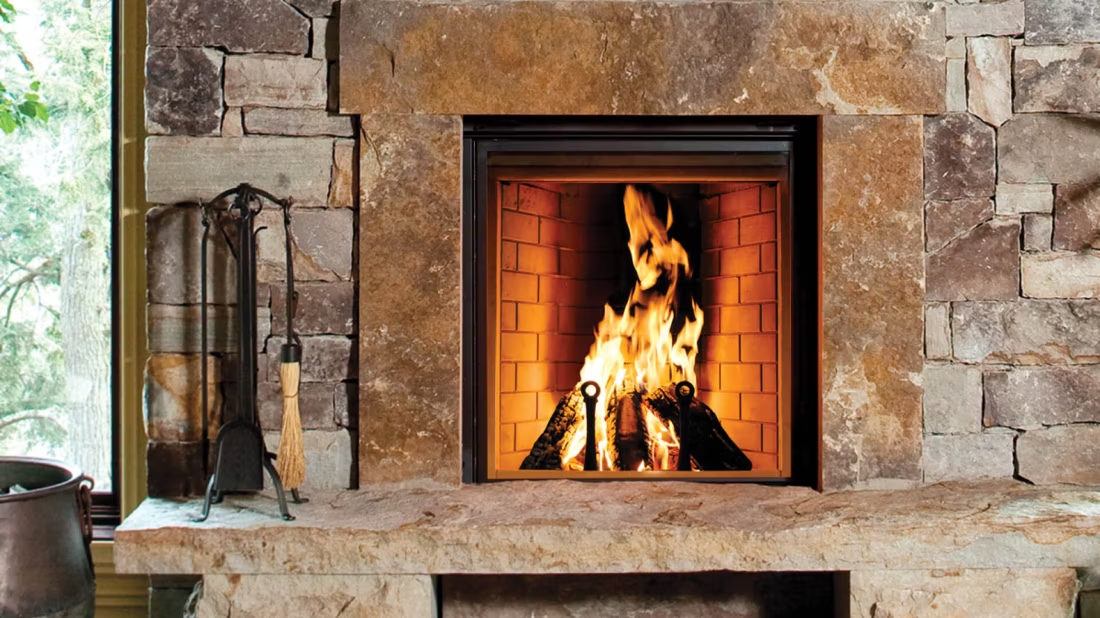
That said, wood isn't absent from Loudon—it's just secondary. Oak, hickory, maple, and pine are the hardwoods that fill this part of the Cherokee National Forest, and permits to cut your own run about $20 a cord from May through October. Homeowners here tend to add a stove or fireplace insert for a specific reason: keeping a lake house warm through a January ice storm when Loudon Utilities Board power lines go down, adding ambiance to a den or great room, or heating a detached workshop where running new gas or electric lines isn't practical. With no local air quality restrictions or non-attainment concerns to navigate, burning wood here is simpler than in a lot of Western markets—it just isn't the backbone of anyone's heating plan.
Firewood Cutting Permits Near Loudon
Three steps. No salesperson until you're ready.
Tell us about your project
Your zip code, your situation, and the fuel you're leaning toward—or let the answers point you to one.
See what's actually available
The brands dealers within 100 miles genuinely carry—real options, never a catalog mirage.
Get your dealer & Project Guide
A trusted local dealer, plus the free Project Guide & Parts List that names every component of the job.
Frequently Asked Questions
How much does a wood stove installation cost in Loudon?
Because most Loudon installs are supplemental rather than whole-house heating systems, they tend to land on the more modest end of national pricing—typically $3,000 to $7,000 for a freestanding stove or insert with a straightforward Class A chimney or liner run. A small stove going into a lake cabin or a single great room usually stays near the low end. Costs climb if the home has no existing masonry chimney and needs a full through-roof venting system built from scratch, which is more common in newer construction around the lake than in Loudon's older in-town neighborhoods.
What size wood stove actually makes sense for a Loudon home?
Given winter lows averaging 28°F, most Loudon households don't need the large, overnight-burn stoves that make sense in genuinely cold climates. A small to mid-size stove rated for 1,000 to 1,500 square feet is usually plenty for supplemental heat in a den, living room, or lake cabin. Sizing up to a larger unit only makes sense if you're heating an uninsulated detached space, like a workshop or boathouse, where you can't lean on gas or electric heat at all.
Do I need a permit to install a wood stove in Loudon?
Yes—new solid-fuel installations need a building permit, handled through the Town of Loudon or Loudon County building department depending on whether your address is inside city limits or out toward the lake. The stove itself needs to meet current EPA emissions standards. Most hearth dealers who work in Loudon County are used to pulling this permit as part of the installation, which is worth confirming before you buy from anyone who isn't local.
Where can I get a firewood cutting permit near Loudon?
The Cherokee National Forest, which stretches along the eastern edge of Loudon County, issues personal-use cutting permits for about $20 per cord, with a season that runs May through October. Oak and hickory are the two hardwoods most permit holders bring home for their density and heat output, while maple splits easier and pine is mostly useful as kindling or shoulder-season fuel rather than a January workhorse.
Wood vs. gas—which makes more sense for a Loudon home?
For day-to-day heating, gas wins in Loudon—it's what most homes are already built around, and with such a mild, short heating season, there's rarely enough sustained cold to justify running a wood stove as a primary system. Wood earns its place as backup: it keeps working through the ice storms that occasionally take down Loudon Utilities Board power lines, when a gas furnace's electric ignition and blower go dark right along with everything else. Most homeowners who install a stove here are adding resilience and ambiance to a gas-heated home, not replacing the furnace.
Will adding a wood stove affect my homeowners insurance in Loudon?
It can, and it's worth checking with your carrier before installation rather than after. Insurers generally want proof of a permitted install, correct chimney clearances, and often a WETT or Chimney Safety Institute-style inspection on file, especially for older lake homes near Tellico or Fort Loudoun that may have an original masonry fireplace being converted rather than a new build. A local dealer who pulls the permit and documents the install to code makes this conversation with your insurer far simpler.
How often does a wood stove need to be swept in Loudon if I only burn occasionally?
Even light or seasonal use—the norm here, where a stove might only run during cold snaps or power outages rather than all winter—still warrants an annual inspection before the first fire of the season, typically in October or November ahead of any early cold fronts. Creosote builds up based on how the wood is burned, not just how much: unseasoned pine or green oak run through a stove that only sees occasional use is actually more prone to buildup than a stove running steadily, so an inspection matters even for backup-only setups.
What's the best type of wood stove for a Loudon lake house?
For a lake property that's occupied part-time or used mainly for backup heat during outages, a smaller non-catalytic stove from a brand like Pacific Energy or Lopi is usually the practical choice—easy to start cold, low-maintenance between uses, and sized right for a single great room rather than a whole house. Catalytic stoves built for 20-hour overnight burns are overkill for Loudon's climate and better suited to genuinely cold, long-heating-season markets.
Does it make sense to install a wood stove just for ambiance in Loudon?
It's one of the more common reasons homeowners here call a dealer at all. With mild winters and reliable gas or electric heat already in most homes, a wood stove or fireplace insert in Loudon is often chosen for the look and feel of a real fire in a den or great room rather than out of heating necessity. That's a perfectly good reason to install one—just size it modestly, since a big stove built for supplemental heating will run you out of a small room fast if you're only lighting it a few evenings a month.
Why won't my new wood stove get going like my old one?
New wood stoves are 70%+ efficient, so far less heat goes up the flue—which also means less draft to get a fire established. The rule: build a genuinely hot fire for about 45 minutes before you choke it down. Skip that and you get smoke in the room, creosote in the chimney, and a fire that never takes off. Most performance complaints trace straight back to this.
Why is my open fireplace making my house colder?
Open fireplaces suck—literally. As the fire burns, it consumes air your furnace already paid to heat and pulls it out through the chimney, so the house is actually colder after the fire goes out than before you lit it. An insert fixes this: it seals the chimney, puts fixed glass across the front, and turns that hole in your house into a real heat source.
Can I install a fireplace myself?
If you're putting a fire in your house on purpose, it's best to work with an expert. Unless you're genuinely experienced in framing, gas line, vent pipe, and the national code on clearances to combustibles, have a professional do it—and ideally the same company that sells you the fireplace, so warranty, service, and liability all live under one roof.
What is an in-home preview and do I need one?
It's a visit where a hearth professional measures your space, confirms the model you picked actually works in your home, and walks the specs—framing, gas line, venting, finish work—before anything is ordered. Some details you just can't know until you see the house. Never make a down payment without one; it's the single most-skipped step that burns buyers.
Nearby Dealers
Hearth shops serving Loudon and the surrounding area. Every listing shows whether it is a WhyFire partner, a dealer we have verified as authorized for the brands we recommend, or a local business carrying hearth products. No manufacturer pays for placement. How we verify dealers →
Southern Flame
Pool Warehouse
Englands Woodstove Store
Get your free Project Guide & Parts List for a Loudon wood stove project.
Tell me whether you're adding backup heat for the next ice storm, warming up a lake house, or just want the ambiance of a real fire, and I'll match you with a trusted local dealer plus a free Project Guide & Parts List sized right for your space—vent kit and parts included.
Find Your Fireplace →