
Warmth and ambiance, no chimney required.
For homes along the Tennessee River and Fort Loudoun Lake, electric heat delivers real flame-look warmth without venting, wood, or a masonry chimney. Find the right unit and connect with a trusted local dealer.
Every Project Starts From One of These Five Situations
The easiest fireplace upgrade for East Tennessee living.
Loudon sits in Zone 4A on the banks of the Tennessee River, where winters are comparatively mild—average lows hover around 28°F and the town has a fairly light overall winter heating load, a fraction of what a place like Duluth MN or Bozeman MT sees. That mild profile is exactly why wood and pellet heat are largely absent here as primary fuel sources: there's simply less need to feed a stove all winter, even with oak, hickory, maple, and pine standing in the surrounding hills and Cherokee National Forest a short drive away.
Loudon Utilities Board serves electric customers here at a residential rate around $0.1145 per kWh, which keeps zone heating with an electric fireplace affordable as a supplement to central HVAC. Because electric units need no gas line, no chimney, and no combustion venting, they're a natural fit for the town's mix of older homes near the historic downtown, newer construction along the lake, and manufactured or mobile homes throughout rural Loudon County. Drop an insert into an existing masonry fireplace, mount a linear unit on a living room wall, or add a freestanding cabinet model—all with a straightforward install and, for many models, no permit at all.
Three steps. No salesperson until you're ready.
Tell us about your project
Your zip code, your situation, and the fuel you're leaning toward—or let the answers point you to one.
See what's actually available
The brands dealers within 100 miles genuinely carry—real options, never a catalog mirage.
Get your dealer & Project Guide
A trusted local dealer, plus the free Project Guide & Parts List that names every component of the job.
Frequently Asked Questions
How much does an electric fireplace installation cost in Loudon?
Plug-in electric fireplaces and inserts that use a standard 120V outlet typically run $200 to $800 installed, since there's no venting or gas line to run. Built-in wall units or larger insert models that require a dedicated 20-amp circuit run higher, generally $1,500 to $4,000, once an electrician sets up the new circuit. Homes near downtown Loudon with older wiring sometimes need a panel upgrade first, which adds to the cost—a local dealer can flag that during an in-home consultation before you buy anything.
Do I need a permit to install an electric fireplace in Loudon?
In most cases, no. A plug-in electric fireplace or insert that runs off an existing outlet doesn't require a permit. If your installation calls for a new dedicated circuit or panel work—common with larger built-in units—that electrical work typically needs a permit through the Loudon County Building Department, and it should be pulled by a licensed electrician. Most local dealers coordinate this as part of the install rather than leaving you to sort it out.
Will an electric fireplace actually lower my heating bill?
It can, if you use it for zone heating instead of running central HVAC to warm the whole house. With Loudon Utilities Board's residential rate around $0.1145 per kWh, running a 1,500-watt electric fireplace for a few hours in the evening costs well under a dollar. Given how mild Loudon's winters run—average lows near 28°F rather than the sustained deep freezes of a place like Fargo ND—many homeowners find they can heat the room they're actually using and leave the thermostat lower elsewhere, which is where the real savings show up.
What's the difference between a plug-in electric fireplace and a built-in unit?
A plug-in model is a freestanding or insert-style unit that runs off a standard outlet and can be moved or removed like an appliance—a good fit for renters or anyone converting an old masonry fireplace without rewiring. A built-in unit is recessed into a wall or custom surround, often wired to a dedicated circuit for full brightness and heat output, and is treated more like a permanent fixture during a remodel. For Loudon's older homes with existing fireplace openings, an insert-style plug-in is usually the simpler path; new construction or full remodels tend toward built-ins.
Electric vs. gas—which is right for my Loudon home?
Gas is available as a standard option in Loudon and delivers higher heat output plus the look of a real flame with actual combustion—a good fit if you want a fireplace that can meaningfully supplement your furnace on a cold night. Electric skips the gas line and venting entirely, costs less to install, and works anywhere you have an outlet or circuit, but its heat output tops out lower and it depends entirely on power. For a mild Zone 4A climate like Loudon's, where deep sustained cold is rare, electric often covers the ambiance-and-supplemental-heat need without the added expense of running or extending gas service.
Why isn't wood heat more common in Loudon?
Wood stoves aren't unheard of in Loudon—Cherokee National Forest issues cutting permits for around $20 per cord during the May-to-October season, and oak, hickory, and maple are all readily available locally—but they're uncommon as a primary heat source. With only a fairly light overall winter heating load and average winter lows around 28°F, Loudon's climate simply doesn't demand the kind of all-winter wood burning you'd see in a place like Burlington VT or Bozeman MT. Most homeowners here who want that ambiance now lean toward electric instead, since it delivers the flame-look effect without cutting, stacking, or chimney maintenance.
What electric fireplace models work well in Loudon homes?
For most Loudon living rooms, mid-size linear models from Dimplex or Napoleon in the 40- to 50-inch range provide solid supplemental heat and a realistic flame effect for open-concept spaces. For retrofitting an existing masonry fireplace opening—common in older homes near downtown—an insert from Touchstone or Dimplex sized to the firebox opening is usually the right call. A local dealer can match unit size to your room's square footage and existing fireplace dimensions during a consultation.
Will my electric fireplace still work during a power outage?
No—electric fireplaces require power to run the heater and flame effect, so they go dark along with everything else during an outage. That's a real tradeoff compared to wood, which keeps working with no electricity at all. For Loudon, where winter lows averaging 28°F mean outages are less likely to turn into a life-safety emergency than they would be in a harsher climate, most homeowners accept that tradeoff for the convenience electric offers day to day. If backup heat during outages is a priority, ask a local dealer about pairing an electric fireplace with a battery backup or a separate wood or gas unit.
Can an electric insert go into my existing fireplace?
Yes—this is one of the most common projects for Loudon's older homes with existing masonry fireplace openings. An electric insert slides into the firebox, plugs into an outlet (or a new dedicated circuit for larger models), and instantly converts a drafty or unused fireplace into a working heat source with a realistic flame display. There's no need to touch the chimney or flue, and in most cases no permit is required if you're using the existing outlet. A local dealer can measure your firebox opening and recommend a properly sized insert.
Can I put a TV above my fireplace?
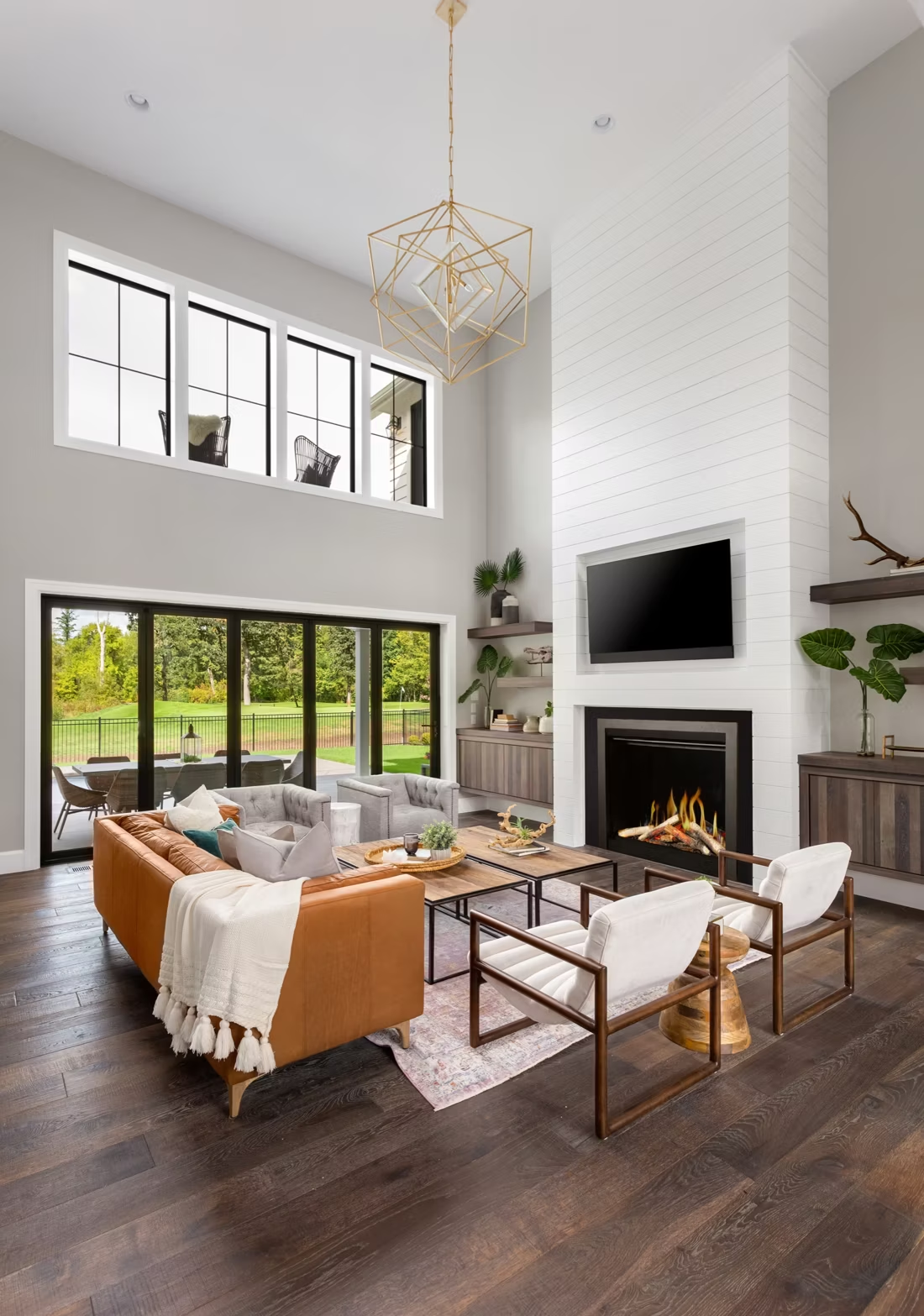
Yes—with an asterisk. Fireplaces are hot and TVs don't like heat. Either put a mantel between them to deflect rising warmth, or choose a fireplace with heat-management technology that creates a cool zone on the wall above—the wall stays around 125 degrees, barely warm, while the room still gets full heat. If you like clean lines and don't want a mantel, heat management is the answer.
Do electric fireplaces actually produce heat?
Yes—most put out around 4,800–5,000 BTUs from a standard outlet, which comfortably warms a bedroom, office, or den as a comfort-zone heater. What they won't do is carry a whole house the way wood, gas, or pellet can. Think of electric as ambiance-first with honest supplemental heat: flames on with no heat in July, flames plus warmth in January.
Can a fireplace actually lower my heating bill?
Yes—by creating a comfort zone. A furnace heats every square foot of the house just to warm the one room you're in; a gas fireplace on low burns roughly a sixth of the gas a typical furnace does. Set the furnace around 55–60 degrees as a baseline, then heat the rooms your family actually uses. Families who heat this way commonly save $20–$60 a month.
How much should I budget for a fireplace?
For an average home—covering the fireplace, the vent pipe, and basic installation—a budget between $3,900 and $5,500 gives you a lot of options across wood, gas, and pellet. By the time you add finish work, gas line, and electrical, the average complete installation lands between $5,000 and $12,000 all-in. In a remodel or new build, a good rule is to put about 2.5% of the total project cost toward the fireplace.
Nearby Dealers
Hearth shops serving Loudon and the surrounding area. Every listing shows whether it is a WhyFire partner, a dealer we have verified as authorized for the brands we recommend, or a local business carrying hearth products. No manufacturer pays for placement. How we verify dealers →
Southern Flame
Pool Warehouse
Englands Woodstove Store
Electric Service in Loudon
An electric fireplace's heater draws about 1,500 watts—pennies per hour at local rates.
Loudon Utilities Board
Find your electric fireplace in Loudon.
Tell us a bit about your home and we'll match you with a trusted local dealer and send over a free Project Guide & Parts List—sized for your space, with the right unit and installation details for your Loudon home.
Find Your Fireplace →