
Add real ambiance to your Loudon County home—with zero venting required.
From the lake homes around Fort Loudoun and Tellico Lake to the neighborhoods of Lenoir City and Tellico Village, electric fireplaces deliver instant warmth and a real flame look without a chimney, gas line, or fuel storage. Find the right unit and connect with a trusted local dealer.
Every Project Starts From One of These Five Situations
Convenient heat built for mild Tennessee winters.
Loudon County sits in climate zone 4A with roughly 3,654 heating degree days and an average winter low near 28°F—a far cry from the sub-zero stretches that make full-time wood heat a necessity in places like Duluth, MN. Winters here are short and generally moderate, bookended by Fort Loudoun Lake and Tellico Lake, with communities ranging from downtown Loudon and Lenoir City to the retirement neighborhoods of Tellico Village. That mild profile is exactly why electric fireplaces have caught on here: most homeowners aren't trying to heat an entire house through a hard winter, they're looking to warm a chilly sunroom, take the edge off a lake-house evening, or add a focal point to a living room without touching the HVAC system.
Electric service throughout the county comes primarily from Fort Loudoun Electric Cooperative and Loudon Utilities, and that reliable grid power is part of the appeal—a plug-in electric fireplace runs off a standard 120V outlet with no chimney, no gas line, and none of the combustion byproducts that come with wood or gas units. Built-in electric fireplaces and inserts, which typically call for a dedicated circuit, still avoid the venting and clearance requirements that drive up cost and complexity for wood or gas installs. For condos in Tellico Village, HOA-restricted lake properties, or any home where a solid-fuel appliance isn't practical, electric is often the simplest path to a real hearth feature.
Three steps. No salesperson until you're ready.
Tell us about your project
Your zip code, your situation, and the fuel you're leaning toward—or let the answers point you to one.
See what's actually available
The brands dealers within 100 miles genuinely carry—real options, never a catalog mirage.
Get your dealer & Project Guide
A trusted local dealer, plus the free Project Guide & Parts List that names every component of the job.
Frequently Asked Questions
How much does an electric fireplace installation cost in Loudon County?
A plug-in electric fireplace or insert that uses a standard 120V outlet typically runs $200 to $1,200 for the unit itself, with no real installation cost beyond mounting or placement. A built-in electric fireplace or insert that requires a dedicated circuit—common for larger units or wall-mounted linear models—usually runs $300 to $2,500 once you factor in an electrician to run new wiring, particularly in older homes around downtown Loudon or Lenoir City where panel capacity can be tight. Lake-house installations in Tellico Village or along Fort Loudoun Lake sometimes carry a bit more if the unit is being built into a custom mantel or feature wall.
What size electric fireplace do I need for my room?
Because Loudon County's mild winters (3,654 heating degree days, average low around 28°F) mean most electric fireplaces are supplemental or ambiance-focused rather than whole-home heat sources, sizing is more about the room than the climate. A 1,500-watt unit comfortably takes the chill off a single room up to about 400 square feet—enough for a den, sunroom, or lake-house living area. Larger open-concept spaces, common in newer Tellico Village and Lenoir City construction, may need a wider linear unit or a second zone-heating source to feel the difference. A local dealer can walk your room and recommend wattage and unit width for your specific layout.
Do I need a licensed electrician to install an electric fireplace?
For a plug-in model, no—it plugs into an existing outlet like any appliance. For a built-in electric fireplace or insert that requires a dedicated 120V or 240V circuit, yes, a licensed electrician should run that wiring, both for safety and because Loudon County's electrical code requires it for new circuits. The hearth and fireplace retailers serving the county typically coordinate directly with a licensed electrician as part of the installation, which keeps the wiring, the mounting, and the finish work under one project rather than juggling separate contractors.
What's the difference between an electric fireplace, insert, and stove?
An electric fireplace is usually a built-in unit set into a wall or custom mantel—popular in newer construction around Lenoir City and Tellico Village. An electric insert is sized to slide into an existing masonry fireplace opening, which works well for older Loudon homes that have an unused wood-burning fireplace they want to convert to something lower-maintenance. An electric stove is a freestanding unit styled like a traditional wood stove but with no venting or fuel needed—a good fit for a room that doesn't already have a fireplace opening. All three plug in or hardwire, and none require a chimney or flue.
Do I need a permit to install an electric fireplace in Loudon County?
A plug-in electric fireplace generally doesn't require a permit since no new wiring or structural work is involved. A built-in unit that requires a new dedicated circuit typically does need an electrical permit through the Loudon County Building Codes Department, since it involves work on the home's electrical system. Most local dealers or the electricians they work with will pull that permit as part of the installation, so it's rarely something homeowners have to handle themselves.
What's the best electric fireplace for Loudon County's climate?
Given the county's mild winters, most homeowners here are choosing an electric fireplace for the look and the supplemental warmth rather than as a primary heat source, so brands like Dimplex, Napoleon, and Touchstone that emphasize realistic flame technology and quiet 1,500-watt heaters tend to be the most popular. Linear wall-mounted units are a common choice in newer lake homes around Tellico Village for a modern look, while insert-style units are more common in older Loudon and Lenoir City homes with existing fireplace openings. A local retailer can match flame style and wattage to your room and your existing wiring situation.
How much does it cost to run an electric fireplace in Loudon County?
Most electric fireplaces draw around 1,500 watts on the heat setting, which at typical rates from Fort Loudoun Electric Cooperative or Loudon Utilities costs roughly 15 to 20 cents per hour to run. Used for a few hours a night as supplemental zone heat in a den or sunroom, that's a modest add to a monthly bill—and often cheaper than running central HVAC harder to heat a room that's far from the thermostat. Flame-only mode with the heater off uses only a few watts, so ambiance without heat costs almost nothing.
Electric vs. wood—which is right for my Loudon County home?
Wood remains a viable option in Loudon County—common species like oak, hickory, and maple burn well, and Cherokee National Forest cutting permits run about $20 per cord during the May-to-October season for homeowners who want to cut their own. But wood requires a chimney, ongoing fuel handling, and annual sweeps, while electric needs none of that. For most Loudon, Lenoir City, and Tellico Village homeowners who aren't relying on wood for backup heat during outages, electric is the lower-maintenance choice for adding a fireplace feature. For rural properties further from town where power reliability is more of a concern, wood or a hybrid approach still has a place.
Electric vs. gas—which is right for my home?
Gas fireplaces put out more heat and can serve as a backup source during a power outage—a real consideration for some rural parts of the county. Electric fireplaces skip the gas line, venting, and combustion byproducts entirely, install in a fraction of the time, and work in condos, lake cottages, and HOA communities like Tellico Village where solid fuel or open combustion isn't allowed. Given Loudon County's mild winter profile, most homeowners choosing between the two are prioritizing ease of installation and ambiance over raw heat output, which tends to tip the decision toward electric unless whole-room heating or outage backup is the primary goal.
Can I put a TV above my fireplace?
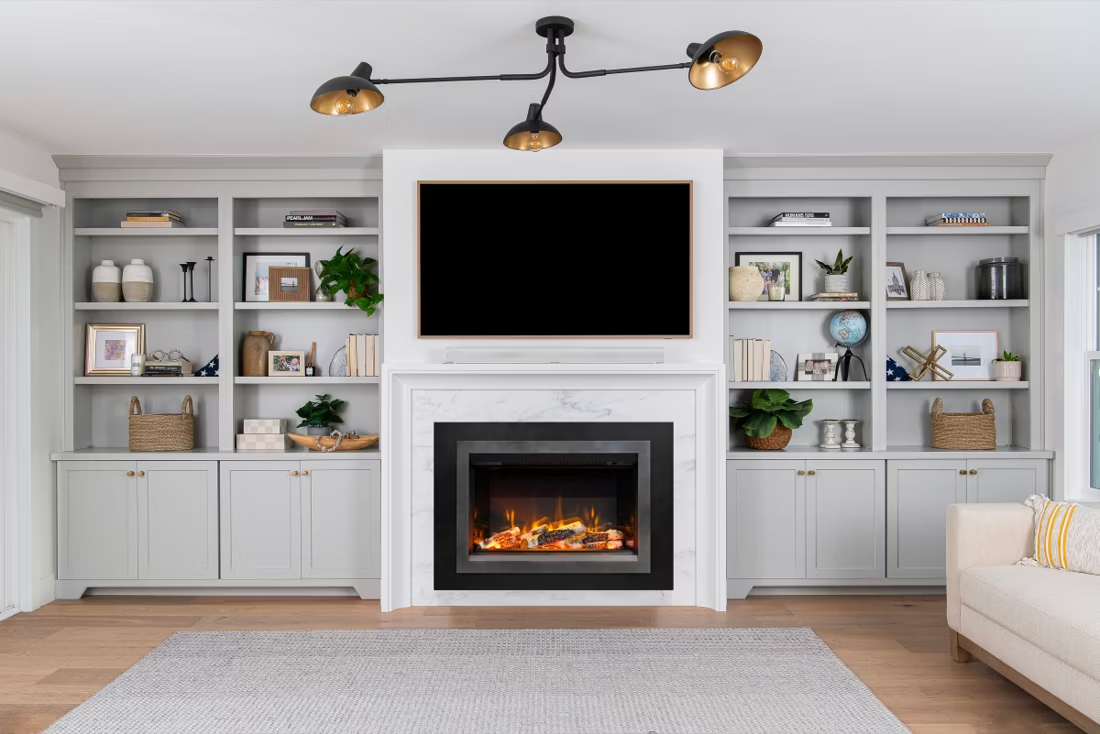
Yes—with an asterisk. Fireplaces are hot and TVs don't like heat. Either put a mantel between them to deflect rising warmth, or choose a fireplace with heat-management technology that creates a cool zone on the wall above—the wall stays around 125 degrees, barely warm, while the room still gets full heat. If you like clean lines and don't want a mantel, heat management is the answer.
Does an electric fireplace need a vent or chimney?
No—that's its superpower. An electric fireplace needs a wall and an outlet, period. No vent pipe, no gas line, no clearances to design around, which is why it works in bedrooms, offices, apartments, and walls where venting a gas or wood unit would be impractical or impossible. Installation is typically the simplest and least expensive of any fireplace type.
Can a fireplace actually lower my heating bill?
Yes—by creating a comfort zone. A furnace heats every square foot of the house just to warm the one room you're in; a gas fireplace on low burns roughly a sixth of the gas a typical furnace does. Set the furnace around 55–60 degrees as a baseline, then heat the rooms your family actually uses. Families who heat this way commonly save $20–$60 a month.
How much should I budget for a fireplace?
For an average home—covering the fireplace, the vent pipe, and basic installation—a budget between $3,900 and $5,500 gives you a lot of options across wood, gas, and pellet. By the time you add finish work, gas line, and electrical, the average complete installation lands between $5,000 and $12,000 all-in. In a remodel or new build, a good rule is to put about 2.5% of the total project cost toward the fireplace.
Stove and Fireplace Dealers in Loudon County
Listings include WhyFire partner dealers, dealers we have verified as authorized for the brands we recommend, and established local businesses that carry hearth products. Every listing shows which one it is. The ones marked Preferred run on WhyFire's software, so they can show you real pricing and book your appointment right here. No manufacturer pays for placement. How we verify dealers →
Southern Flame
Englands Woodstove Store
Pool Warehouse
Find your electric fireplace in Loudon County.
Tell us a bit about your home and we'll match you with the right electric fireplace, insert, or stove—and connect you with a trusted local dealer who will build out a free Project Guide & Parts List, including wiring needs and the exact unit recommended for your Loudon County home.
Find Your Fireplace →