
Keep Your Family Warm and Safe—No Matter What
From Tracy City and Monteagle to Palmer and Beersheba Springs, Grundy County sits atop the Cumberland Plateau surrounded by oak and hickory forest. Find the right wood stove or insert, and connect with a trusted local dealer.
Every Project Starts From One of These Five Situations
Hardwood country, built for the burn.
Grundy County sits on the Cumberland Plateau at roughly 1,800 to 2,100 feet elevation, in a mixed-humid climate zone (4A) with 4,257 heating degree days and winter lows averaging 26°F. That's a meaningfully colder profile than the valley towns below the plateau, without the brutal single-digit stretches you'd see in a place like Duluth or Bismarck. It's steady, moderate cold—the kind that rewards a well-run wood stove night after night through a long Tennessee winter, from the old coal-town streets of Tracy City and Palmer to the ridges above Gruetli-Laager and Beersheba Springs.
The county is thick with oak, hickory, maple, and pine, and burning wood here isn't a novelty—it's a continuation of a self-sufficient mountain tradition that predates the coal mines the region was built on. Cutting permits for public land in the region run through the Cherokee National Forest at $20 per cord, with a May-through-October cutting season, and Grundy County reports no air quality non-attainment issues or winter inversion concerns, so there's no burn-ban season to work around like you'd find in parts of the West. A properly sized wood stove or insert here means lower heating costs, backup heat when ice storms take down power lines on the plateau, and the kind of dry radiant warmth that suits an older farmhouse or a cabin near Savage Gulf equally well.
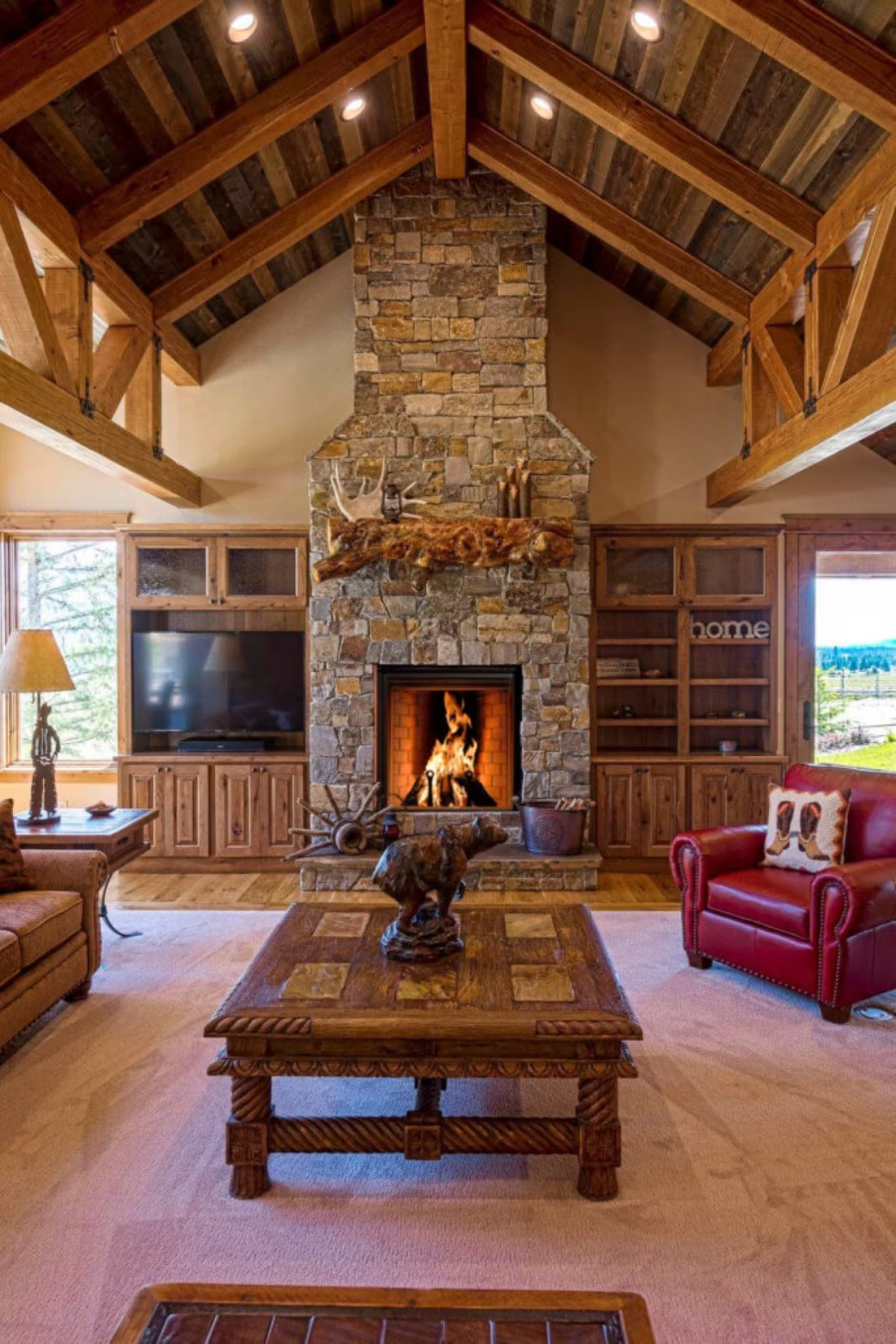
Firewood Cutting Permits Near Grundy County
Three steps. No salesperson until you're ready.
Tell us about your project
Your zip code, your situation, and the fuel you're leaning toward—or let the answers point you to one.
See what's actually available
The brands dealers within 100 miles genuinely carry—real options, never a catalog mirage.
Get your dealer & Project Guide
A trusted local dealer, plus the free Project Guide & Parts List that names every component of the job.
Frequently Asked Questions
How much does a wood stove installation cost in Grundy County?
A typical wood stove or insert installation in Grundy County runs roughly $3,000 to $7,500, depending on the unit, whether an existing masonry chimney can be reused, and whether new Class A chimney pipe and roof penetration are needed. Homes converting an old open fireplace to an insert tend to land on the lower end since the chimney chase already exists. New installations in homes without any existing flue—common in some of the older coal-camp housing stock around Tracy City and Palmer—run higher once full venting is factored in. Local installers can give a firm number after seeing the space and existing chimney condition.
What size wood stove do I need for a Grundy County home?
Sizing depends on square footage, ceiling height, and insulation, but the county's mixed-humid climate and moderate winter lows (26°F average) mean most homes do well with a small-to-medium stove rather than the largest catalytic units built for harsher climates. A stove rated for 1,000 to 1,800 square feet handles most main living areas here, while larger farmhouses or homes on exposed ridgeline lots above Beersheba Springs may want to size up slightly for wind exposure. Because oak and hickory—the county's dominant firewood species—burn dense and hot, a well-sized stove loaded with seasoned hardwood can comfortably carry a home through an overnight burn without oversizing the unit.
Where can I find certified wood stove installers near me?
Look for installers carrying NFI (National Fireplace Institute) certification or CSIA (Chimney Safety Institute of America) credentials, which indicate proper training in clearances, venting, and code compliance for wood-burning appliances. Grundy County is rural, and dealers serving the area are often based in nearby Chattanooga, Winchester, or Manchester and travel into Tracy City, Monteagle, and the surrounding plateau communities for installs. Expect a modest travel charge for jobs in the more remote parts of the county, like Palmer or Coalmont. Avoid handyman-style installs for wood appliances—improper clearances and venting are the leading cause of chimney fires, and a properly permitted, professionally installed unit protects both your home and your insurance coverage.
What's the difference between a wood stove and a wood insert?
A wood stove is a freestanding unit installed on a hearth pad, suited to almost any room with proper clearances to combustibles. A wood insert is built to slide into an existing masonry fireplace opening, converting an old open hearth into a sealed, high-efficiency heater that vents through a stainless liner run up the existing chimney. Grundy County has plenty of older homes with original masonry fireplaces—particularly in and around Tracy City and Monteagle—and for those, an insert is usually the more cost-effective upgrade since it reuses the existing chimney structure. Homes without an existing fireplace, or newer construction, are typically better suited to a freestanding stove.
Do I need a permit to install a wood stove in Grundy County?
Yes—a new wood stove or insert installation generally requires a building permit, and the unit itself needs to meet current EPA emissions standards. Most local installers handle the permitting paperwork as part of the job, so it's rarely something homeowners have to manage on their own. If you plan to cut your own firewood on public land rather than buy it, cutting permits for the region are issued through the Cherokee National Forest at $20 per cord, valid during the May-through-October season—a route a lot of Grundy County residents use given the county's forested terrain.
What's the best wood stove for Grundy County's climate?
Grundy County's climate zone (4A) and winter lows in the mid-20s don't demand the extreme 20-hour-plus catalytic burn times you'd need in a place like Bozeman or Fargo—a well-built non-catalytic stove from a brand like Pacific Energy, Lopi, or Vermont Castings will comfortably heat most homes here through an overnight burn on oak or hickory. Homes at higher points on the plateau or with less insulation can benefit from a mid-size catalytic model for longer, steadier heat on the coldest nights, but for most Grundy County households a mid-size, well-rated non-catalytic stove is the practical choice. A local dealer can match stove size to your specific home and firewood supply.
How often should my chimney be inspected and cleaned?
The CSIA recommends an annual inspection for any wood-burning appliance, and that holds true in Grundy County regardless of how much you burn. Plan on a full sweep and inspection in late summer or early fall, before the burning season starts in earnest. Households using wood as a primary heat source through the winter—common in older homes around Palmer and Coalmont—may need a mid-season check if creosote builds up faster than expected. Given the rural nature of much of the county, skipping this step is a bigger risk than it might seem, since emergency response times on the plateau can be longer than in town.
Where can I get firewood in Grundy County?
Grundy County's forests are heavy with oak, hickory, maple, and pine, and firewood is widely available both from local sellers and self-cut sources. For self-cutting, permits on public land are issued through the Cherokee National Forest at $20 per cord for the May-through-October cutting season—a popular option given how much of the county is wooded. Local sellers and small operators around Tracy City and Gruetli-Laager typically sell by the cord, with hardwood species like oak and hickory commanding a premium over pine for their longer, hotter burn. Buying a season ahead and letting wood dry through the summer is standard practice here, since properly seasoned hardwood burns cleaner and produces less creosote.
Wood stove vs. pellet stove—which is right for my Grundy County home?
Wood stoves run on cordwood, work without electricity, and pair naturally with the oak and hickory that surround most Grundy County properties—a real advantage when ice storms take down power lines on the plateau, which happens more often up here than in the valleys below. Pellet stoves, using regional brands like Lignetics, Hamer Pellet Fuel, or Greenway Renewable Energy, are more convenient day to day—load the hopper, set it, and go—and burn cleaner with less ash, but they require electricity to run the auger and blower, so they won't function during an outage without a generator. For rural properties around Palmer, Coalmont, or Beersheba Springs where power interruptions are a real winter consideration, wood is often the more resilient choice. For in-town homes prioritizing convenience with steady utility service, pellet is a reasonable alternative.
What's the difference between an insert and a zero-clearance fireplace?
An insert is a fireplace that slides into a pre-existing wood-burning fireplace—if you don't have one, there's nothing to insert it into. A zero-clearance fireplace is built into a framed wall, which makes it the answer for remodels and new construction. Simple test: existing masonry fireplace means insert; blank or framed wall means zero-clearance.
Why won't my new wood stove get going like my old one?
New wood stoves are 70%+ efficient, so far less heat goes up the flue—which also means less draft to get a fire established. The rule: build a genuinely hot fire for about 45 minutes before you choke it down. Skip that and you get smoke in the room, creosote in the chimney, and a fire that never takes off. Most performance complaints trace straight back to this.
How much should I budget for a fireplace?
For an average home—covering the fireplace, the vent pipe, and basic installation—a budget between $3,900 and $5,500 gives you a lot of options across wood, gas, and pellet. By the time you add finish work, gas line, and electrical, the average complete installation lands between $5,000 and $12,000 all-in. In a remodel or new build, a good rule is to put about 2.5% of the total project cost toward the fireplace.
Can a fireplace actually lower my heating bill?
Yes—by creating a comfort zone. A furnace heats every square foot of the house just to warm the one room you're in; a gas fireplace on low burns roughly a sixth of the gas a typical furnace does. Set the furnace around 55–60 degrees as a baseline, then heat the rooms your family actually uses. Families who heat this way commonly save $20–$60 a month.
Stove and Fireplace Dealers in Grundy County
Listings include WhyFire partner dealers, dealers we have verified as authorized for the brands we recommend, and established local businesses that carry hearth products. Every listing shows which one it is. The ones marked Preferred run on WhyFire's software, so they can show you real pricing and book your appointment right here. No manufacturer pays for placement. How we verify dealers →
Smith's Ace Hardware
A-1 Chimney Specialist
Factory Furniture
Allgas, Inc. Of Tn - Winchester
All Gas
Middle Tn Natural Gas - McMinnville
Find your wood fireplace in Grundy County.
Tell us a bit about your home and we'll match you with the right wood stove or insert, plus a free Project Guide & Parts List—and connect you with a trusted local dealer serving Grundy County.
Find Your Fireplace →