
Find your electric fireplace in Grundy County.
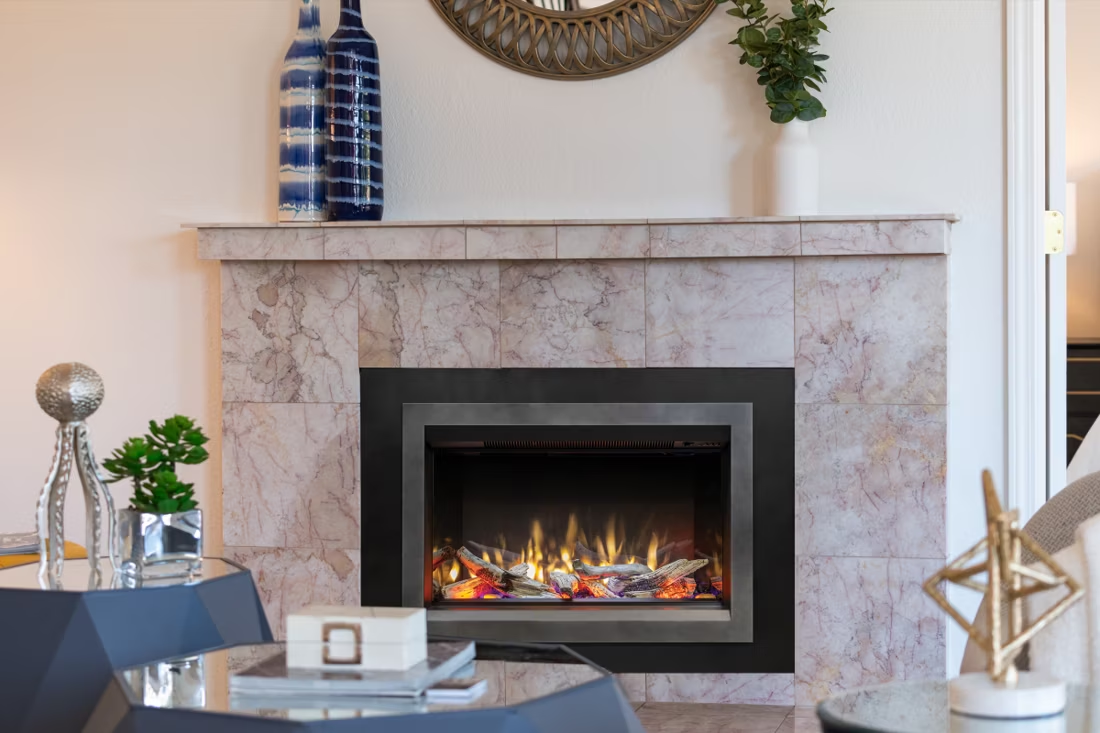
No venting, no chimney, no wood to split—just clean supplemental warmth for homes and cabins across the Cumberland Plateau. Find the right unit and connect with a trusted local dealer.
Every Project Starts From One of These Five Situations
Simple, safe warmth for the Plateau's milder winters.
Grundy County sits atop the Cumberland Plateau at roughly 1,800 to 2,100 feet, and its winters are real but not brutal—an average low around 26°F and about 4,257 heating degree days a year. That's a fraction of what a place like Madison, Wisconsin sees each winter, which is exactly why electric fireplaces work so well here as a primary heat source in smaller spaces or a reliable supplement everywhere else: the Plateau rarely demands the 20-hour overnight burns that colder climates require.
Plenty of Grundy County homes still lean on wood—oak, hickory, and maple cut locally, with Cherokee National Forest cutting permits running about $20 a cord from May through October—but electric fireplaces fill a real gap. They install in an afternoon with no chimney, no gas line, and no building permit for the unit itself, which makes them a natural fit for the manufactured and modular homes common around Tracy City, Palmer, and Coalmont, and for the seasonal cabins scattered near Beersheba Springs and South Cumberland State Park. The tradeoff is honest: they run on Sequachee Valley Electric Cooperative power, so when the lines go down during a winter ice storm, so does the fireplace.
Three steps. No salesperson until you're ready.
Tell us about your project
Your zip code, your situation, and the fuel you're leaning toward—or let the answers point you to one.
See what's actually available
The brands dealers within 100 miles genuinely carry—real options, never a catalog mirage.
Get your dealer & Project Guide
A trusted local dealer, plus the free Project Guide & Parts List that names every component of the job.
Frequently Asked Questions
How much does an electric fireplace cost to install in Grundy County?
Electric fireplaces have one of the widest price ranges of any hearth product, and that holds true in Grundy County. A basic plug-in insert or wall-mount unit can run $150 to $600 installed, since most just need a standard outlet and a mounting bracket. A built-in electric fireplace set into a framed wall, a mantel surround, or a media console conversion typically runs $1,000 to $2,500 once carpentry and electrical work are included. Because these units don't need venting or gas lines, labor costs stay lower than wood or gas installs—the main variable is the finish carpentry, not the appliance itself. A local dealer can give you a firm number after seeing your wall and framing.
Do I need a permit to install an electric fireplace in Grundy County?
In most cases, no—a plug-in or wall-mount electric fireplace that uses an existing outlet doesn't trigger a building permit because there's no venting, gas line, or structural chimney work involved. If your project involves running new dedicated electrical circuits, cutting into a wall for a built-in unit, or converting a manufactured home's existing fireplace opening, an electrician may need to pull an electrical permit through the county. Since Grundy County has no wood-smoke air quality restrictions to navigate either, electric installs are typically the most straightforward hearth project available here.
Will an electric fireplace work as my primary heat source?
For a single room, often yes. A quality electric insert or freestanding unit can put out enough heat for a bedroom, den, or small living area, and with Grundy County's average winter low sitting around 26°F, that's frequently enough for a well-insulated room without a wood stove or gas backup. For a whole manufactured home or a larger farmhouse on the Plateau, electric heat generally works better as zone heat layered on top of central heat pump or propane furnace service rather than as the sole source—it simply can't match the BTU output of a wood stove burning oak or hickory on the coldest nights of the year.
What happens to my electric fireplace during a power outage?
It goes off, full stop—there's no battery backup or standby mode on standard residential units. This matters more in Grundy County than it might elsewhere, since ice storms on the Cumberland Plateau can knock out Sequachee Valley Electric Cooperative service for a day or more in a bad winter. Homeowners who want electric for everyday convenience but also want a real backup heat option often pair an electric fireplace in the main living area with a wood stove or propane heater elsewhere in the house—that combination covers both routine comfort and true grid-down resilience.
Can I install an electric fireplace in a mobile or manufactured home?
Yes, and it's one of the more common installs in Grundy County given how many manufactured and modular homes sit around Tracy City, Palmer, and Gruetli-Laager. Because electric units don't require venting through the roof or wall, they avoid the structural complications that wood or gas installs can run into with manufactured-home construction. Wall-mount and built-in insert models both work, though a licensed electrician should confirm the home's panel has capacity for a dedicated circuit if the unit draws close to 1,500 watts, which most full-size electric fireplaces do.
What size electric fireplace do I need?
Electric fireplaces are sized more by heated square footage and room layout than by the aggressive BTU math used for wood or gas. A 1,500-watt unit (roughly 5,000 BTU) comfortably supplements heat in a 400 to 1,000 square foot room, which covers most bedrooms, dens, and single-wide manufactured home living areas in the county. For open-concept spaces or larger rooms, look at a 36-inch or wider insert, or plan on more than one unit. Since Grundy County's winters rarely demand whole-home electric heating, most homeowners are sizing for comfort and ambiance in a specific room rather than trying to heat an entire house.
Electric vs. wood—which is right for my home?
Wood—burning local oak, hickory, or maple, often cut under a $20-per-cord Cherokee National Forest permit—delivers real heat output, works with no electricity at all, and remains the backbone of winter heat for a lot of long-time Grundy County households. Electric offers none of that self-sufficiency but wins on convenience: no ash, no splitting, no chimney maintenance, and instant on-off operation from a remote. For a primary residence on the Plateau where power can go out during ice storms, wood (or a wood-electric combination) still makes sense as backup. For a guest room, sunroom, or a cabin where ambiance and ease matter more than emergency resilience, electric is the simpler answer.
Electric vs. pellet—which is right for my home?
Pellet stoves burn compressed wood pellets from regional suppliers like Lignetics or Hamer Pellet Fuel, produce real sustained heat, and are efficient enough to serve as a primary source in a Grundy County home—but they still need electricity to run the auger and blower, so they're not a power-outage solution either. Electric fireplaces need less maintenance (no hopper to load, no ash to empty) but produce far less heat per unit, making them better suited to supplemental or single-room use rather than replacing a furnace. If you want lower-maintenance ambiance in a living room, electric is the easier install; if you want a genuine secondary heat source for the whole house, pellet is the stronger choice.
Are electric fireplaces a good fit for cabins and vacation homes on the Cumberland Plateau?
Very often, yes. The seasonal cabins around Beersheba Springs, Monteagle, and near South Cumberland State Park see intermittent use, and owners generally don't want to manage a woodpile or a gas tank for a property that sits empty for weeks at a time. An electric fireplace or insert gives a cabin instant warmth and ambiance the moment you walk in, with no chimney to inspect before each stay and no fuel to stock. The one caveat: if the cabin relies on electric heat as its only source and sits at higher elevation, a pipe-freeze protection plan (or a backup propane heater) is worth discussing with whoever manages the property in your absence.
Can I put a TV above my fireplace?
Yes—with an asterisk. Fireplaces are hot and TVs don't like heat. Either put a mantel between them to deflect rising warmth, or choose a fireplace with heat-management technology that creates a cool zone on the wall above—the wall stays around 125 degrees, barely warm, while the room still gets full heat. If you like clean lines and don't want a mantel, heat management is the answer.
Do electric fireplaces actually produce heat?
Yes—most put out around 4,800–5,000 BTUs from a standard outlet, which comfortably warms a bedroom, office, or den as a comfort-zone heater. What they won't do is carry a whole house the way wood, gas, or pellet can. Think of electric as ambiance-first with honest supplemental heat: flames on with no heat in July, flames plus warmth in January.
How much should I budget for a fireplace?
For an average home—covering the fireplace, the vent pipe, and basic installation—a budget between $3,900 and $5,500 gives you a lot of options across wood, gas, and pellet. By the time you add finish work, gas line, and electrical, the average complete installation lands between $5,000 and $12,000 all-in. In a remodel or new build, a good rule is to put about 2.5% of the total project cost toward the fireplace.
What is an in-home preview and do I need one?
It's a visit where a hearth professional measures your space, confirms the model you picked actually works in your home, and walks the specs—framing, gas line, venting, finish work—before anything is ordered. Some details you just can't know until you see the house. Never make a down payment without one; it's the single most-skipped step that burns buyers.
Stove and Fireplace Dealers in Grundy County
Listings include WhyFire partner dealers, dealers we have verified as authorized for the brands we recommend, and established local businesses that carry hearth products. Every listing shows which one it is. The ones marked Preferred run on WhyFire's software, so they can show you real pricing and book your appointment right here. No manufacturer pays for placement. How we verify dealers →
Smith's Ace Hardware
A-1 Chimney Specialist
Factory Furniture
Allgas, Inc. Of Tn - Winchester
All Gas
Middle Tn Natural Gas - McMinnville
Find your electric fireplace in Grundy County.
Tell us a bit about your home and we'll put together a free Project Guide & Parts List for your electric fireplace project—matched with a trusted local dealer who can size, sell, and install it right.
Find Your Fireplace →