
Keep Your Family Warm and Safe—No Matter What
From Pulaski to Elkton, Ardmore, Minor Hill, and Lynnville, Giles County winters are milder than most—but ice storms and cold snaps still knock out power and chill a farmhouse fast. Find the right stove or insert for your property, and get matched with a trusted local dealer.
Every Project Starts From One of These Five Situations
A Middle Tennessee tradition that still earns its keep.
Giles County sits in the rolling hill country of south-central Tennessee, drained by the Elk River, with the county seat of Pulaski anchoring a landscape of cattle farms, soybean ground, and hardwood woodlots. With a winter heating load roughly half that of a place like Duluth, MN, and a winter low averaging 25°F, this is climate zone 4A—nowhere near the brutal cold of a place like Duluth, MN, but real winter all the same, with January cold fronts and the occasional ice storm that can leave rural roads and power lines down for days.
Most Giles County properties have oak, hickory, maple, or pine growing somewhere on the land, and that matters—oak and hickory are among the densest, longest-burning firewoods available anywhere in the country. Plenty of families here already have a chainsaw and a woodpile; a modern EPA-certified stove or insert just turns that existing wood supply into real, efficient heat instead of a smoky, inefficient old fireplace. And because Giles County has no air quality non-attainment issues or wildfire smoke restrictions to navigate, the barrier to burning here is mostly practical: right-sized stove, sound chimney, correct clearances.
Three steps. No salesperson until you're ready.
Tell us about your project
Your zip code, your situation, and the fuel you're leaning toward—or let the answers point you to one.
See what's actually available
The brands dealers within 100 miles genuinely carry—real options, never a catalog mirage.
Get your dealer & Project Guide
A trusted local dealer, plus the free Project Guide & Parts List that names every component of the job.
Frequently Asked Questions
How much does a wood stove installation cost in Giles County?
Costs vary with the stove itself, whether you're installing into an existing masonry fireplace or starting from scratch, and how much chimney or liner work is involved. A straightforward insert into a working chimney tends to land on the lower end of the typical range; new construction or a home with no existing chimney—requiring Class A pipe and a through-roof installation—runs higher once materials and labor are factored in. Because Giles County is rural and spread out, expect installers to factor in some travel time for jobs outside Pulaski, in places like Ardmore or Minor Hill. A trusted local dealer will give you a firm number after seeing your home, which is the fastest way to get an accurate figure rather than guessing from a general range.
What size wood stove do I need for my Giles County home?
Sizing comes down to square footage, ceiling height, insulation quality, and whether the stove is your primary heat or backup for cold snaps and ice-storm outages. Older farmhouses common throughout the county—tall ceilings, less insulation, older windows—typically need more stove than a newer, tightly built home of the same square footage. Because winters here run milder than in colder parts of the country (roughly half the winter heating load of a place like Minneapolis or Fargo), most Giles County homes don't need the biggest catalytic units on the market—a mid-size stove is often enough, even for a whole-house heating role. A local dealer can size this correctly in an in-home visit, which matters: an oversized stove smolders and builds creosote, and an undersized one won't keep up on the coldest nights.
Where can I find certified wood stove installers near me?
Look for NFI (National Fireplace Institute) or CSIA (Chimney Safety Institute of America) credentials—these indicate real training in venting, clearances, and code compliance for wood-burning appliances, not just general contracting experience. In a county as spread out as Giles—Pulaski, Elkton, Ardmore, Minor Hill, and Lynnville are all a real drive apart—expect a small travel charge for installs outside the county seat. Having the same company that sells the stove also handle the install simplifies warranty coverage if anything needs adjustment down the line. Skip general handyman installs for wood-burning units; improper clearances and venting are the leading cause of chimney fires.
What's the difference between a wood stove and a wood insert?
A wood stove is freestanding, sits on its own hearth pad, and vents through a straight chimney run—it works in homes with or without an existing fireplace. A wood insert is built to slide into an existing masonry fireplace opening, converting a drafty open hearth into a sealed, high-efficiency heat source that still uses your existing chimney (typically with a new stainless liner). Plenty of older Giles County homes and farmhouses already have a working masonry fireplace, which makes an insert the natural upgrade—you keep the existing structure and gain real heat output instead of watching most of the warmth go up the flue. Homes without an existing fireplace, or new construction, are usually better suited to a freestanding stove.
Do I need a permit to install a wood stove in Giles County?
Requirements depend on whether you're inside Pulaski city limits or in unincorporated Giles County, so it's worth a quick call to confirm before work starts—most local dealers handle this coordination as part of the install so you're not chasing it down yourself. Unlike counties in wildfire-prone or non-attainment regions out west, Giles County doesn't have winter burn curtailment periods or air quality advisories tied to wood smoke, so once your stove is installed and inspected, you're free to burn without checking a daily air-quality index. The stove itself should still meet current EPA emissions standards regardless of jurisdiction.
What's the best wood stove for Giles County's climate?
Because Giles County's winters are moderate—a 25°F average low and a winter heating load roughly half that of much colder climates—you generally don't need the biggest 20-plus-hour catalytic stoves built for sub-zero climates. Solid mid-size non-catalytic stoves from brands like Pacific Energy or Lopi handle most Giles County homes well, delivering strong heat during cold fronts and ice-storm outages without being oversized the rest of the season. If you're heating a larger farmhouse or want the longest possible burn times for overnight coals, a catalytic option is still worth discussing with a local dealer—but for most properties here, right-sizing to the home matters more than chasing maximum burn time.
How often should my chimney be inspected and cleaned?
The CSIA recommends an annual inspection for any wood-burning appliance, and Giles County is no exception—plan on a sweep and inspection each late summer or early fall, before the first cold front rolls through. Homes burning dense hardwoods like oak and hickory as a primary heat source, or running the stove heavily during a hard winter, may need a mid-season check if creosote builds up faster than expected. For rural properties well outside Pulaski, an annual inspection is also a good excuse to catch any chimney cap, flashing, or masonry issues before they turn into a bigger repair.
Where can I get firewood in Giles County?
A lot of Giles County wood heat comes from land already in the family—oak, hickory, maple, and pine woodlots are common across the county's farms and hollows, and many residents cut and split their own supply rather than buying it. For those without their own source, local sellers around Pulaski and the smaller communities typically sell by the cord, with oak and hickory commanding a premium for their density and burn time compared to pine. Unlike out west, there's no public-land cutting permit system here—most firewood in Giles County comes from private land, whether that's your own property or a neighbor's woodlot.
Wood stove vs. pellet stove—which is right for my Giles County home?
Wood stoves run on cordwood, work without electricity, and pair naturally with a county where oak and hickory are already growing on a lot of properties—that's a real advantage when an ice storm takes down power lines and you need heat regardless of the grid. Pellet stoves, stocked regionally by brands like Lignetics, Hamer Pellet Fuel, and Greenway Renewable Energy, are easier to run day-to-day and burn cleaner, but they need electricity for the auger and blower, so they go dark in the same outage a wood stove would ride out. For Giles County homes where ice-storm outages are a real winter risk, wood tends to be the more resilient choice; for a low-maintenance secondary heat source in town, pellet is worth a look.
Why is my open fireplace making my house colder?
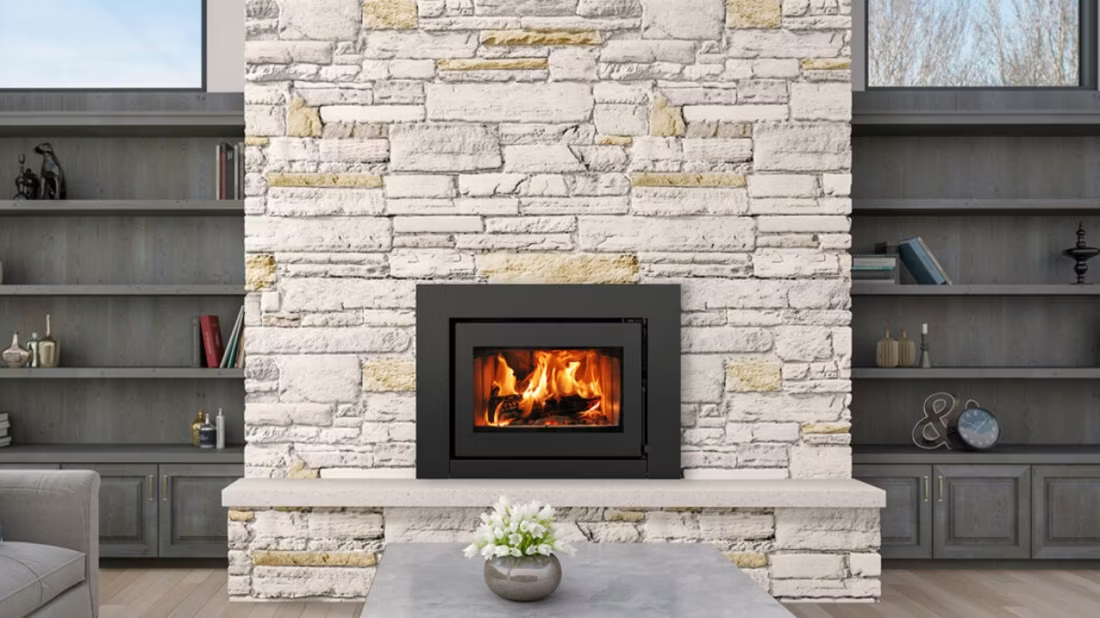
Open fireplaces suck—literally. As the fire burns, it consumes air your furnace already paid to heat and pulls it out through the chimney, so the house is actually colder after the fire goes out than before you lit it. An insert fixes this: it seals the chimney, puts fixed glass across the front, and turns that hole in your house into a real heat source.
What do I measure to size a fireplace insert?
Four numbers tell you what fits: the front width, the front height, the back width, and the overall depth of your existing fireplace opening. Grab a tape measure, jot those down, and snap a photo of the wall—those two things do more to move your project forward than anything else you can do today.
What is an in-home preview and do I need one?
It's a visit where a hearth professional measures your space, confirms the model you picked actually works in your home, and walks the specs—framing, gas line, venting, finish work—before anything is ordered. Some details you just can't know until you see the house. Never make a down payment without one; it's the single most-skipped step that burns buyers.
Does a fireplace add value to my home?
On average, a fireplace adds back to the home about the same amount you spent installing it. Add the monthly savings from heating the rooms you actually use instead of the whole house—often hundreds of dollars a year—and the value case is strong before you even count what a fire does for how your family uses the room.
Stove and Fireplace Dealers in Giles County
Listings include WhyFire partner dealers, dealers we have verified as authorized for the brands we recommend, and established local businesses that carry hearth products. Every listing shows which one it is. The ones marked Preferred run on WhyFire's software, so they can show you real pricing and book your appointment right here. No manufacturer pays for placement. How we verify dealers →
Allgas, Inc. Of Tn - Fayetteville
Consolidated Trade Services
Atnip Design & Supply Center
Allgas, Inc.
Higdon Service, Inc.
Phoenix Sales
Alabama Fireplace & Construction Specialties
Spar-Gas
Find your wood stove in Giles County.
Tell us about your home and we'll match you with a trusted local dealer and send over your free Project Guide & Parts List—the stove, the vent kit, and everything else your Giles County install needs, spelled out.
Find Your Fireplace →