
Pellet heat is the exception, not the rule, in Germantown.
With mild winters and dependable electric and gas service across Shelby County, pellet stoves are a specialty choice here—but if one fits your home, we'll match you with a local dealer who can install it right.
Every Project Starts From One of These Five Situations
A mild Mid-South winter doesn't ask much of a heating system.
Germantown sits in climate zone 3A at just 317 feet of elevation in the Memphis metro, where the average winter low hovers around 31°F and the area logs roughly 3,135 heating degree days a year—less than half the heating load of a place like Duluth, Minnesota. Most homes here lean on central gas furnaces or electric heat pumps sized for the occasional cold snap rather than months of sustained sub-freezing weather, which is a big part of why dedicated pellet-burning appliances never became a standard fixture the way they have in the upper Midwest or interior West.
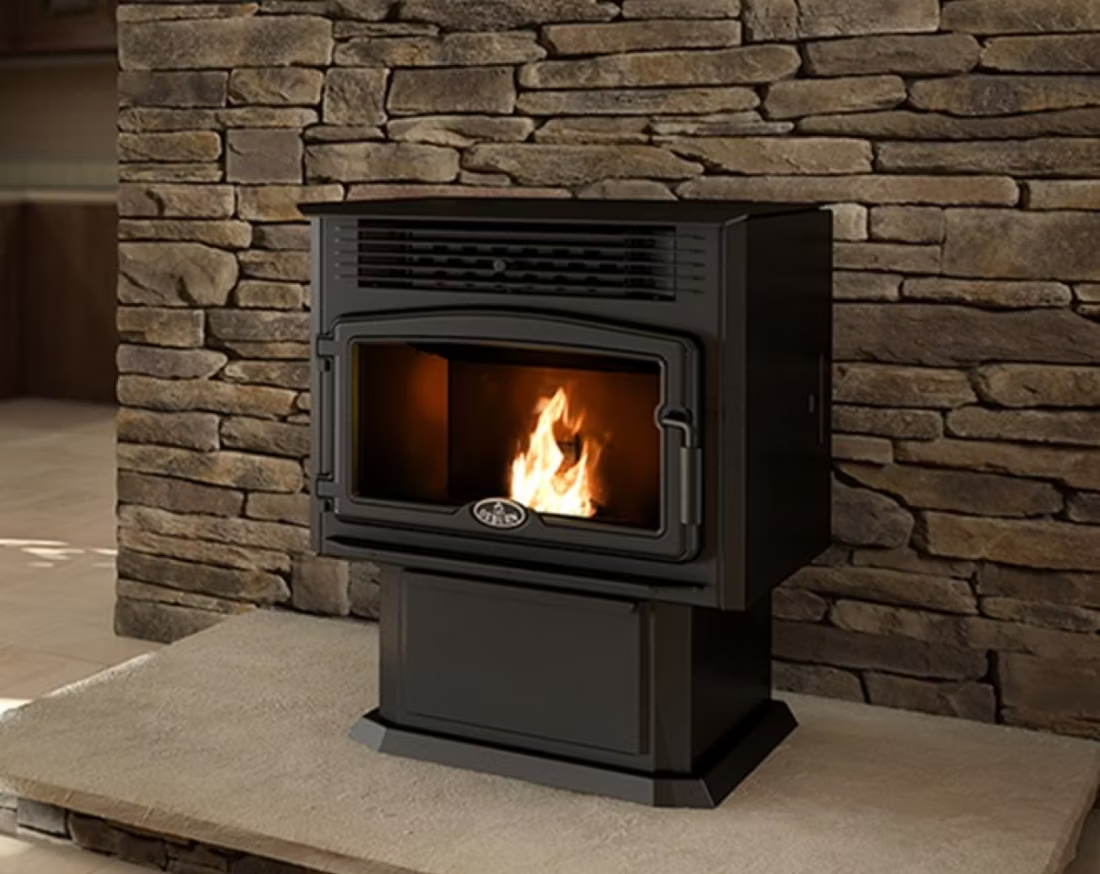
That said, pellet stoves do turn up in Germantown from time to time—usually as supplemental zone heat in a sunroom or finished basement, or in a home where the owner wants the look of a real flame without running a chimney. If you go this route, fuel itself isn't hard to source: regional producers including Lignetics, Hamer Pellet Fuel, and Greenway Renewable Energy distribute bagged pellets throughout the Mid-South. What's thinner locally is the retail and installer network for the appliances themselves, since gas fireplace inserts remain the far more common hearth upgrade in this climate.
Three steps. No salesperson until you're ready.
Tell us about your project
Your zip code, your situation, and the fuel you're leaning toward—or let the answers point you to one.
See what's actually available
The brands dealers within 100 miles genuinely carry—real options, never a catalog mirage.
Get your dealer & Project Guide
A trusted local dealer, plus the free Project Guide & Parts List that names every component of the job.
Frequently Asked Questions
Is a pellet stove a practical heating choice in Germantown?
It can work, but it's rarely the default. With a winter low average of 31°F and only about 3,135 heating degree days a year, Germantown's heating load is closer to a place like Charlotte or Nashville's warmer suburbs than to a genuinely cold-climate market where pellet stoves are a primary heat source. Most local homeowners who install one are after supplemental zone heat, ambiance, or a lower-maintenance alternative to wood—not a whole-home solution. If your goal is dependable primary heat, a gas or electric heat pump system sized by a local pro is usually the more practical fit for this climate.
How much does a pellet stove installation cost in Germantown?
Because pellet stoves are a specialty request here rather than a routine one, there isn't a single going local rate the way there is for gas fireplace inserts. Cost depends heavily on the unit itself, whether you need new venting run through an exterior wall, and any hearth pad or clearance work the install requires. The most reliable way to get a real number is an in-home consult from a dealer who actually stocks pellet appliances—which is exactly what Find My Fireplace's free Project Guide & Parts List is built to set up, so you're working from your home's actual venting path instead of a generic big-box estimate.
Which pellet brands and fuel suppliers serve the Germantown area?
Regional pellet fuel producers including Lignetics, Hamer Pellet Fuel, and Greenway Renewable Energy distribute bagged hardwood and softwood pellets throughout the Mid-South, so keeping a pellet stove fed isn't a logistical problem even in a market where the appliances themselves are less common. Appliance selection is a separate question—since pellet stoves aren't a high-volume product locally, dealer inventory can be thinner than in a cold-climate market, which is another reason to confirm availability with a local dealer before you commit to a specific model.
Why would someone in Germantown choose a pellet stove over gas?
Gas is the mainstream hearth choice in Germantown—it's simple to install where gas service already runs to the home, requires no fuel storage, and starts at the flip of a switch. A pellet stove appeals to a smaller group of homeowners: those who like the visual of a real, moving flame fed by a hopper rather than a gas burner, or who want a heat source that doesn't depend on a gas line at all. It's a legitimate option, just a less common one than gas in this particular climate and market.
Will a pellet stove keep working during a power outage?
Not without help. Pellet stoves rely on an electric auger to feed fuel and an electric blower to distribute heat, so a standard unit shuts down the moment the power goes out—which matters in a metro area served by City of Memphis and City of West Memphis electric utilities that, like any grid, can see outages during Mid-South ice storms. Some owners pair a pellet stove with a small battery backup or generator specifically to keep it running through an outage. If reliable no-power heat is your main goal, that's worth discussing directly with a local dealer before you buy.
What's the real difference between a pellet stove and a gas insert for a Germantown home?
A gas insert taps into existing gas service, lights instantly, and requires very little day-to-day attention—you set it and forget it, which is why it's the more common upgrade in homes with an existing masonry fireplace here. A pellet stove burns compressed wood pellets fed automatically from a hopper, giving you a real flame and radiant heat without hauling cordwood, but it needs periodic hopper refills, ash cleanout, and electricity to run. For most Germantown homeowners weighing convenience against ambiance, gas wins on convenience; pellet wins if you specifically want that live-fire look without burning logs.
Does Germantown's local hardwood—oak, hickory, maple—matter for pellet fuel?
Not directly. Wood pellets are a manufactured product, made by compressing sawdust and wood waste under high pressure rather than burning logs the way a wood stove does—so the oak, hickory, maple, and pine that grow around Shelby County aren't something you'd cut and feed into a pellet stove yourself. Regional mills like Lignetics and Hamer Pellet Fuel produce bagged pellets sourced from wood waste streams and sell them through hardware stores and farm supply retailers across the Mid-South, so local hardwood species end up in the fuel supply chain, just not in a form you'd recognize as firewood.
Do I need a permit to install a pellet stove in Germantown?
In most cases, yes—a solid-fuel appliance installation, including a pellet stove, typically requires a building permit through your local jurisdiction, whether that's the City of Germantown's Building & Codes office or Shelby County depending on the address. Vent penetrations through an exterior wall and any hearth pad work are usually reviewed as part of that permit. A dealer who regularly installs pellet appliances—even in a market where they're not the most common request—will typically handle the permit paperwork as part of the installation rather than leaving it to you.
Pellet vs. electric heat—which makes more sense in Germantown?
Given Germantown's mild winters, a lot of homes here already lean on electric heat pumps for primary heat, with residential electric rates from local providers running around 8 to 12 cents per kWh depending on whether you're served through City of Memphis or City of West Memphis territory. A pellet stove can supplement that system with zone heat in one room and a cost-per-BTU that's sometimes lower than electric resistance heat, but it adds fuel storage, hopper maintenance, and periodic cleaning that a heat pump doesn't require. For most homeowners here, the heat pump remains the backbone system, with a pellet stove considered as an accent or backup rather than a replacement.
What's the difference between an insert and a zero-clearance fireplace?
An insert is a fireplace that slides into a pre-existing wood-burning fireplace—if you don't have one, there's nothing to insert it into. A zero-clearance fireplace is built into a framed wall, which makes it the answer for remodels and new construction. Simple test: existing masonry fireplace means insert; blank or framed wall means zero-clearance.
Why is a fireplace insert so efficient?
An insert does two things: it seals the chimney completely, so you stop losing air you already paid to heat, and it radiates warmth into the room through the firebox and glass. Most add a heat-exchange fan that pulls cool room air underneath, wraps it around the hot firebox, and pushes it back out warm. Your home is more efficient before you've even lit the first fire.
Can a fireplace actually lower my heating bill?
Yes—by creating a comfort zone. A furnace heats every square foot of the house just to warm the one room you're in; a gas fireplace on low burns roughly a sixth of the gas a typical furnace does. Set the furnace around 55–60 degrees as a baseline, then heat the rooms your family actually uses. Families who heat this way commonly save $20–$60 a month.
Should the dealer who sells my fireplace also install it?
Ideally, yes. A fireplace project involves vent pipe, gas line, electrical, and often tile or stone. Hire three or four separate trades and you own the liability and the game of telephone between them. One company selling and installing means one accountable party, start to finish—ask about factory training, on-time completion records, and what happens if an inspection fails.
Nearby Dealers
Hearth shops serving Germantown and the surrounding area.
Pellet Brands Stocked Around Germantown
Manufacturers will point you to the nearest stocking dealer.
Find your pellet stove option in Germantown.
Tell us about your space and we'll give you an honest read on whether pellet makes sense here, match you with a trusted local dealer, and send along a free Project Guide & Parts List with the exact venting and parts your install would need.
Find Your Fireplace →