
Find the right fireplace for your Shelby County home.
With such a short, mild winter heating season, Shelby County runs on gas and electric hearth appliances more than wood or pellet. Find a vetted local dealer serving Memphis, Bartlett, Collierville, Germantown, and the rest of the county, and get matched with the right unit for your home.
Every Project Starts From One of These Five Situations
Mild winters, modern heat, across Shelby County, Tennessee.
Shelby County sits in the mixed-humid climate zone 3A along the Mississippi River in southwest Tennessee, covering Memphis and suburbs like Bartlett, Collierville, Germantown, Millington, Arlington, and Lakeland. Winters here are short and mild—average lows sit around 33°F, and the county's winter heating load is just a fraction of what a colder city like Duluth, MN sees in a typical winter. There's no county-wide wood-smoke non-attainment designation and no mandatory burn curtailment, which is uncommon compared to basin or high-elevation counties out west. The heating season here typically runs a few cold weeks in December through February, not the six-month stretch you'd see farther north.
That mild climate shapes what actually gets installed. Gas fireplaces and inserts are the dominant choice across Shelby County, backed by widespread natural gas service through Memphis Light, Gas and Water. Electric fireplaces are common too—especially in condos, apartments, and secondary rooms where a plug-and-play unit covers ambiance and spot warmth without venting. Wood-burning fireplaces still exist in older Midtown and East Memphis homes, and local oak, hickory, and maple are easy to source for the occasional user, but wood isn't a primary heating strategy here. Pellet stoves are rare for the same reason—the labor of hopper feeding and venting doesn't pencil out against such a short, mild winter heating season.
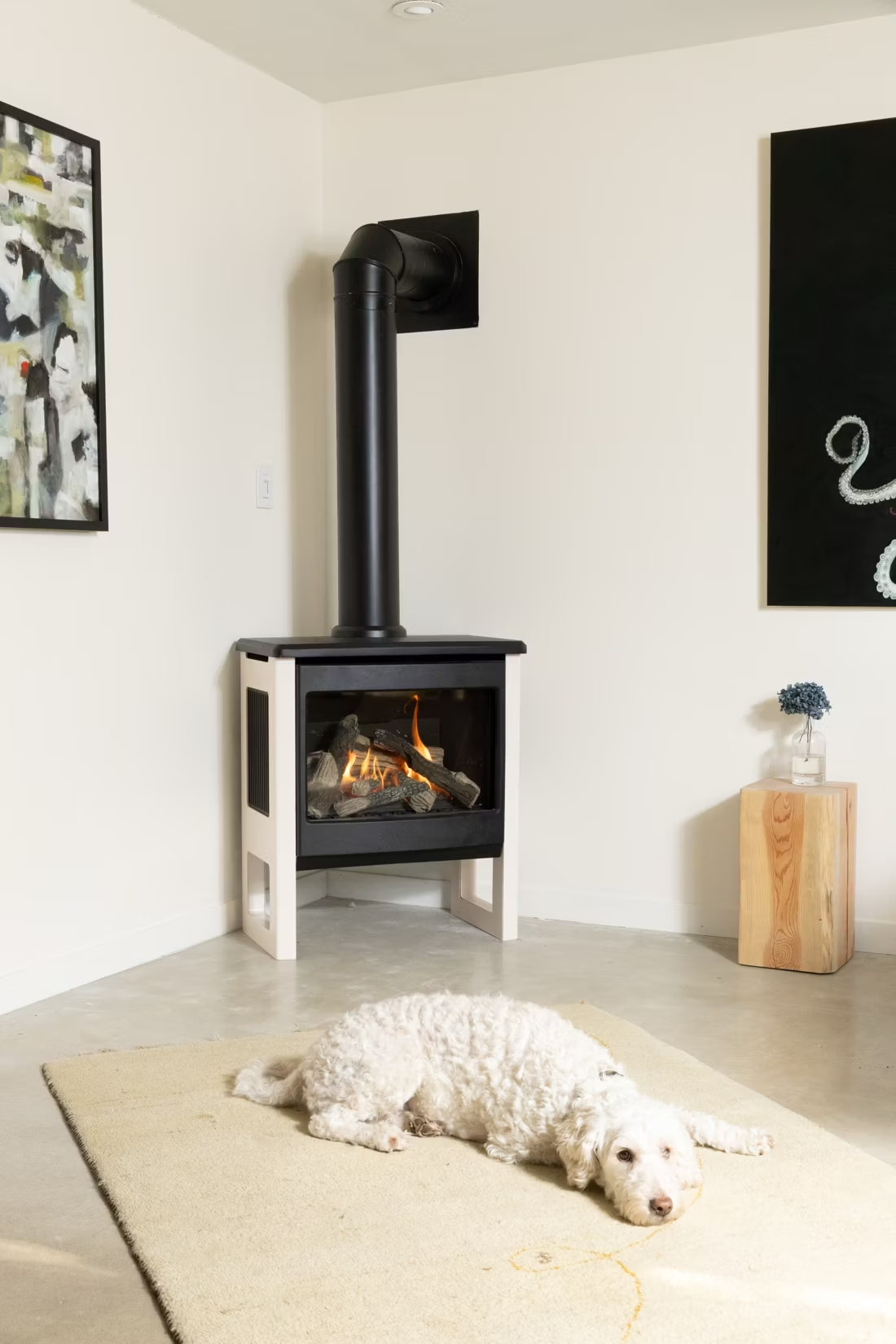
Four fuels. One honest answer for Shelby County.
Three steps. No salesperson until you're ready.
Tell us about your project
Your zip code, your situation, and the fuel you're leaning toward—or let the answers point you to one.
See what's actually available
The brands dealers within 100 miles genuinely carry—real options, never a catalog mirage.
Get your dealer & Project Guide
A trusted local dealer, plus the free Project Guide & Parts List that names every component of the job.
Frequently Asked Questions
Which fuel works best in Shelby County?
Gas is the practical default for most Shelby County homes. Memphis Light, Gas and Water serves natural gas broadly across the county, and a gas fireplace or insert gives instant heat with none of the wood-hauling or ash cleanup that comes with a primary wood setup—which matters less here anyway, since winter lows only average 33°F. Electric fireplaces are the right call for condos, apartments, and secondary rooms in Germantown or Collierville where venting isn't practical. Wood-burning fireplaces are still installed occasionally, especially in older East Memphis and Midtown homes with existing masonry chimneys, and local oak and hickory are easy to source—but wood isn't chosen as primary heat here the way it would be in a colder climate. Pellet stoves are genuinely rare; Shelby County's short, mild winter heating season doesn't justify the hopper-feeding routine, and the regional pellet brands sold here (Lignetics, Hamer Pellet Fuel, Greenway Renewable Energy) move mostly through grills and smokers rather than home heating.
Do I need a permit to install a fireplace in Shelby County?
Usually, yes, for gas and wood-burning installs. Within the City of Memphis, permits go through the Memphis and Shelby County Office of Construction Code Enforcement; in Bartlett, Collierville, Germantown, and the other incorporated suburbs, each city handles its own building permits, while unincorporated areas fall under the county code office. Gas fireplace and insert installs typically require both a building permit and a separate gas line permit pulled by a licensed gas fitter. Electric fireplaces generally don't need a permit for plug-and-play units, but a hardwired built-in with a new circuit usually does. Most local retailers handle this paperwork as part of the installation, so it's rarely something the homeowner has to manage directly.
Are there air quality restrictions on wood burning in Shelby County?
No—Shelby County doesn't carry a non-attainment designation for wood smoke, and there's no mandatory curtailment program like you'd find in a winter-inversion basin out west. That said, any new wood-burning stove or insert installed today still has to meet current EPA emissions certification regardless of local air quality status. Because wood heat is uncommon here to begin with—used mostly for ambiance in older homes with existing masonry chimneys rather than as a primary heat source—smoke complaints and burn-day advisories simply aren't a routine part of winter in Memphis the way they are in colder, higher-elevation counties.
Can one local hearth retailer handle all four fuel types?
Most Shelby County retailers concentrate on gas and electric, since that's what the local climate actually calls for. A handful of full-line dealers in Memphis and Collierville also stock wood-burning inserts for older homes with existing chimneys, but true pellet stove inventory is scarce—you may need to special-order through a dealer or work with a supplier who also handles Lignetics or Hamer Pellet Fuel bagged product. If you're set on wood or pellet, it's worth calling ahead to confirm a showroom actually has a working unit on the floor rather than assuming every dealer carries all four fuels.
How does service work in the suburban and rural parts of Shelby County?
Technicians serving Shelby County are mostly based in Memphis and travel out to Millington, Arlington, Lakeland, and the county's rural fringe for gas inspections, electrical hookups, and the occasional chimney sweep. Because the fleet here is overwhelmingly gas and electric rather than wood, service calls skew toward pilot light and IPI diagnostics, gas line checks, and wiring verification rather than creosote removal. Scheduling is easiest in the fall shoulder season before the first cold snap; during the brief coldest stretch of December and January, gas techs can book up quickly for no-heat emergency calls.
What's the typical cost range for fireplace installation across fuel types in Shelby County?
Gas fireplace, insert, or stove: roughly $4,000–$9,500 depending on whether an existing gas line is already in place or new line work is needed. Electric fireplace: $200–$2,800 for the unit itself, plus $300–$1,000 in labor for anything beyond a plug-and-play install, such as a hardwired built-in. Wood stove or insert: $4,500–$9,000 for a typical retrofit into an existing masonry chimney—on the higher end if flue relining is needed. Pellet stove: $4,500–$7,000 when a homeowner does go this route, though very few installs happen locally given how rare pellet heat is in Shelby County's climate. See the county + fuel pages above for dealer-specific pricing.
What is an in-home preview and do I need one?
It's a visit where a hearth professional measures your space, confirms the model you picked actually works in your home, and walks the specs—framing, gas line, venting, finish work—before anything is ordered. Some details you just can't know until you see the house. Never make a down payment without one; it's the single most-skipped step that burns buyers.
Can I install a fireplace myself?
If you're putting a fire in your house on purpose, it's best to work with an expert. Unless you're genuinely experienced in framing, gas line, vent pipe, and the national code on clearances to combustibles, have a professional do it—and ideally the same company that sells you the fireplace, so warranty, service, and liability all live under one roof.
Wood, gas, pellet, or electric—how do I choose?
Match the fuel to your life, not the other way around. Wood: lowest fuel cost and total power-outage independence, but you're hauling and stacking. Gas: press a button, set a thermostat, no maintenance to speak of. Pellet: wood economics with automatic feeding, in exchange for weekly cleaning and a need for electricity. Electric: plugs in anywhere with honest supplemental heat. Nobody regrets the fuel that fits how they actually live.
How much should I budget for a fireplace?
For an average home—covering the fireplace, the vent pipe, and basic installation—a budget between $3,900 and $5,500 gives you a lot of options across wood, gas, and pellet. By the time you add finish work, gas line, and electrical, the average complete installation lands between $5,000 and $12,000 all-in. In a remodel or new build, a good rule is to put about 2.5% of the total project cost toward the fireplace.
Stove and Fireplace Dealers in Shelby County
Listings include WhyFire partner dealers, dealers we have verified as authorized for the brands we recommend, and established local businesses that carry hearth products. Every listing shows which one it is. The ones marked Preferred run on WhyFire's software, so they can show you real pricing and book your appointment right here. No manufacturer pays for placement. How we verify dealers →
Acme Brick Company
The Chimney Doctor
Bishop Hearth And Home, Inc.
eFireplaceStore.com
Wells Building Supply
Southern Hearth
Installed Building Products Of Memphis
Quality Grills
31w - Mason, Tn
Find your fireplace in Shelby County.
Tell us about your home and I'll match you with a trusted local Shelby County dealer and send a free Project Guide & Parts List—the exact parts, including venting, and the local pro who can install it right.
Find Your Fireplace →