
Keep Your Family Warm and Safe—No Matter What
From backup heat during mountain ice storms to the crackling centerpiece every cabin rental needs, find the right wood stove or fireplace and connect with a trusted local dealer.
Every Project Starts From One of These Five Situations
A cabin in the Smokies isn't complete without a real wood fire.
Gatlinburg sits at 1,453 feet in the foothills of the Great Smoky Mountains, where winter lows average around 27°F and the area logs roughly 4,284 heating degree days a year. That's a far gentler climate than a true cold-weather market like Duluth, MN or Burlington, VT, but Sevier County still sees hard freezes, sudden elevation-driven cold snaps, and the ice storms that occasionally knock out power along mountain roads for days. A wood stove or fireplace isn't just decor here—it's a real backup heat source when the lines go down.
Gatlinburg's economy runs on cabin rentals, and a wood-burning fireplace is one of the most requested features in a Smoky Mountain cabin listing—guests want the crackle and glow as much as the warmth. Locally, oak, hickory, maple, and pine are the woods you'll find seasoned and split at roadside stands and firewood suppliers throughout Sevier County, much of it sourced from the surrounding Nantahala-Pisgah National Forests. Air quality here isn't a limiting factor the way it is in western non-attainment zones, so there are no seasonal burn curtailments to plan around—just good installation, good wood, and a stove sized right for your cabin's great room.
Firewood Cutting Permits Near Gatlinburg
Three steps. No salesperson until you're ready.
Tell us about your project
Your zip code, your situation, and the fuel you're leaning toward—or let the answers point you to one.
See what's actually available
The brands dealers within 100 miles genuinely carry—real options, never a catalog mirage.
Get your dealer & Project Guide
A trusted local dealer, plus the free Project Guide & Parts List that names every component of the job.
Frequently Asked Questions
How much does a wood stove or fireplace installation cost in Gatlinburg?
Most wood stove and fireplace installs in Gatlinburg run in the $3,000 to $7,500 range, and where you land depends heavily on the cabin. A lot of local great rooms have vaulted, tongue-and-groove ceilings, which means a taller chimney chase and more Class A pipe than a standard single-story home would need. Log cabin construction also affects clearances and firestop details around the roof penetration. A local installer familiar with Sevier County's cabin stock will walk the site before quoting, since two cabins of the same square footage can have very different venting paths.
What size wood stove works best for a Gatlinburg cabin?
It depends on the cabin's layout more than its square footage. Many Gatlinburg rental cabins have a single large, open great room with a loft above—a medium to large stove placed as the visual and heat anchor of that room often works better than trying to zone-heat multiple small bedrooms. Owner-occupied homes in the surrounding hills tend to be more conventionally laid out, where a small-to-medium stove supplementing central heat is typical. A local dealer can size the unit correctly after seeing your ceiling height and floor plan.
Where do I find a certified wood stove installer near Gatlinburg?
Look for NFI (National Fireplace Institute) or CSIA (Chimney Safety Institute of America) certification—both indicate the installer has been trained specifically in wood-burning clearances, venting, and code compliance, not just general carpentry. This matters even more in log cabin construction, where wall thickness and combustible log surfaces change how clearances are measured compared to a standard drywall home. Working with a local dealer who's installed in Gatlinburg and Pigeon Forge cabins before saves a lot of guesswork.
Should I get a wood stove or a wood-burning fireplace insert?
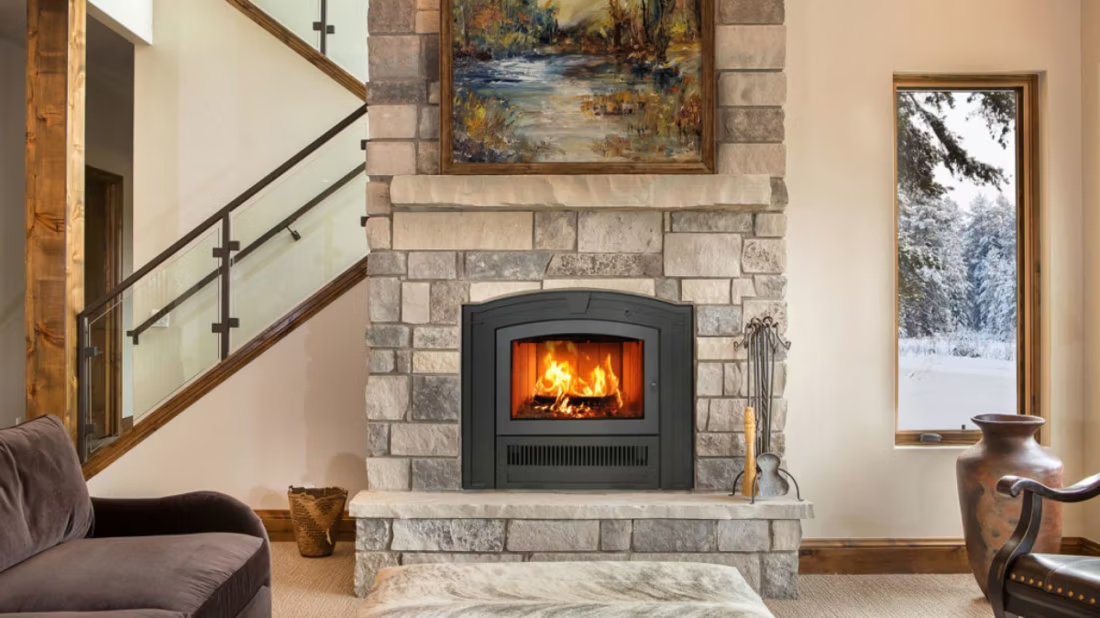
If your cabin already has a masonry or zero-clearance fireplace—common in a lot of Gatlinburg's older cabin stock—an insert is usually the better upgrade. It uses the existing chimney, dramatically improves heat output over an open hearth, and keeps the fireplace opening guests expect to see. If you're building new or converting a room that never had a fireplace, a freestanding stove gives more flexibility on placement and generally the best efficiency per dollar. Cabins built specifically to showcase a fire as the room's focal point often do best with a large-glass zero-clearance wood fireplace instead of either option.
Do I need a permit to install a wood stove in Gatlinburg?
Yes—new wood-burning installations require a building permit through the Sevier County Building Department (or the City of Gatlinburg for properties inside city limits), and the unit needs to meet current EPA emissions standards. Most local dealers handle the permit paperwork as part of the installation. One piece of good news for this area: Sevier County doesn't have the winter inversion or non-attainment air quality issues that trigger burn curtailments in some western markets, so once your stove is installed and inspected, there are no seasonal burning restrictions to track.
What's the best wood stove for a Gatlinburg cabin?
Because winters here are moderate compared to true cold-climate markets, you don't necessarily need an extreme-burn-time catalytic stove built for sub-zero nights. Dense local hardwoods like oak and hickory already burn long and hot, so a well-built non-catalytic stove from a brand like Pacific Energy or Lopi handles most cabins comfortably. For rental properties, ease of operation and a large viewing window matter more than raw BTU output—guests want a fire that's simple to load and beautiful to watch, and a big glass front sells the cabin experience. Owners heating a personal residence through the coldest snaps may still prefer a catalytic model for longer overnight burns.
How often should a cabin's chimney be inspected?
The CSIA recommends annual inspections for any wood-burning appliance, but rental cabins in Gatlinburg deserve extra attention. Guest turnover means the stove gets loaded and operated by dozens of different people a year, some of whom have never run a wood stove before—improper loading and green or unseasoned firewood both accelerate creosote buildup. Property managers running cabins on the rental market often schedule inspections twice a year, once before peak fall/winter booking season and once mid-season, rather than relying on the standard once-a-year timeline.
Where can I get firewood in Gatlinburg, and can I cut my own?
Local firewood stands and delivery services around Sevier County typically sell oak, hickory, and maple by the rick or half-cord, with pine sold separately for kindling and quick-burning fires. If you'd rather cut your own, the Nantahala-Pisgah National Forests issue personal-use cutting permits for $20 per cord, valid during the May-through-October season—plan ahead, since permits don't cover winter cutting and wood needs a season to properly dry before it burns clean.
Wood stove or pellet stove—which makes more sense for a Gatlinburg property?
Wood wins for backup heat: it needs no electricity, which matters when mountain ice storms take down power lines served by Sevier County Electric System, sometimes for a day or more at higher elevations. Wood also fits the rustic cabin aesthetic guests are booking for. Pellet stoves burn cleaner and are easier for an inexperienced renter to operate—load the hopper, set it, done—but they need continuous power for the auger and blower, so they go dark in the exact outage scenario a mountain cabin owner most wants covered. Regional pellet brands like Lignetics and Hamer Pellet Fuel are available locally if a pellet unit fits your situation better, particularly for owner-occupied homes with reliable power.
Why is a fireplace insert so efficient?
An insert does two things: it seals the chimney completely, so you stop losing air you already paid to heat, and it radiates warmth into the room through the firebox and glass. Most add a heat-exchange fan that pulls cool room air underneath, wraps it around the hot firebox, and pushes it back out warm. Your home is more efficient before you've even lit the first fire.
Can a wood stove burn all night?
The right one can. If waking up to a warm house and live coals matters to you, say exactly that when you're shopping—firebox size and burn-rate control determine overnight performance far more than any number on a spec sheet. It's a much more useful question than asking about BTUs.
What is an in-home preview and do I need one?
It's a visit where a hearth professional measures your space, confirms the model you picked actually works in your home, and walks the specs—framing, gas line, venting, finish work—before anything is ordered. Some details you just can't know until you see the house. Never make a down payment without one; it's the single most-skipped step that burns buyers.
Does a fireplace add value to my home?
On average, a fireplace adds back to the home about the same amount you spent installing it. Add the monthly savings from heating the rooms you actually use instead of the whole house—often hundreds of dollars a year—and the value case is strong before you even count what a fire does for how your family uses the room.
Nearby Dealers
Hearth shops serving Gatlinburg and the surrounding area. Every listing shows whether it is a WhyFire partner, a dealer we have verified as authorized for the brands we recommend, or a local business carrying hearth products. No manufacturer pays for placement. How we verify dealers →
Area – Gatlinburg, Tn
East Tennessee Fireplace Co.
American Fireplaces
Heritage Propane
Find your wood fireplace in Gatlinburg.
Tell us about your cabin or home and we'll match you with a trusted local Gatlinburg-area dealer and send over a free Project Guide & Parts List—the exact stove or insert, vent kit, and installation plan for your space.
Find Your Fireplace →