
Cozy, reliable gas heat for Smoky Mountain cabins.
Push-button warmth for Gatlinburg cabins, chalets, and mountainside homes. Find the right gas fireplace or insert and get matched with a trusted local dealer.
Every Project Starts From One of These Five Situations
Cabin heat that guests actually notice.
Gatlinburg sits at 1,453 feet in the Great Smoky Mountains, in climate zone 4A with average winter lows around 27°F and a moderate winter heating season. That's a milder heating load than northern mountain towns like Bozeman, MT, but the Smokies still bring real cold, damp winters, ice on the ridgelines, and the occasional snow event that shuts down the Parkway. In a town built almost entirely around cabin rentals and vacation chalets, gas fireplaces have become the default heat source in new construction and remodels alike—they're the amenity guests search for on a booking site, and they don't require a renter to know anything about tending a fire.
Because Gatlinburg's mountain terrain limits piped natural gas infrastructure, most homes and cabins here run on propane rather than natural gas—tanks are set on the property and refilled by a local propane supplier. That doesn't change how a gas fireplace looks or performs; nearly every direct-vent unit on the market can be configured for propane. It does mean your installer needs to know your tank setup, and it's part of why local expertise matters more here than in cities with a single utility running natural gas to every house.
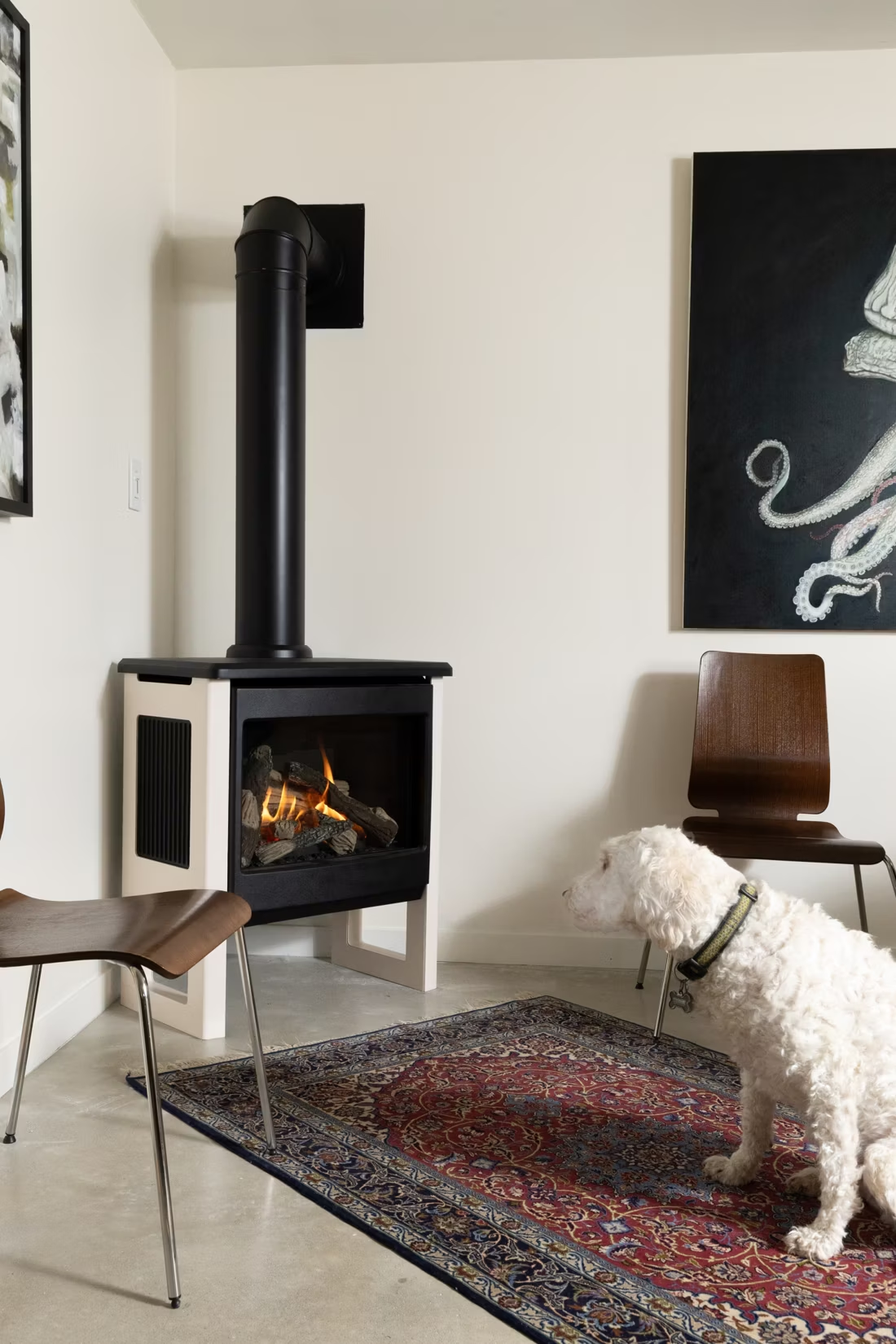
Three steps. No salesperson until you're ready.
Tell us about your project
Your zip code, your situation, and the fuel you're leaning toward—or let the answers point you to one.
See what's actually available
The brands dealers within 100 miles genuinely carry—real options, never a catalog mirage.
Get your dealer & Project Guide
A trusted local dealer, plus the free Project Guide & Parts List that names every component of the job.
Frequently Asked Questions
How much does a gas fireplace installation cost in Gatlinburg?
A propane-fed direct-vent gas fireplace or insert installed in a Gatlinburg cabin typically runs $3,800 to $9,000, depending on the unit, the venting run through log or timber-frame construction, and whether a propane tank is already in place. Cabins with an existing propane tank and appliance hookups land on the lower end. New builds or remodels needing a fresh tank set, gas line run, and venting through thick log walls push toward the higher end. Local dealers who work regularly with Gatlinburg's cabin builders can quote firm numbers after seeing the site.
Can I convert my cabin's existing wood fireplace to gas?
Yes, and it's a common upgrade in Gatlinburg's older stone-chimney cabins. A gas insert drops into the existing masonry firebox and uses a stainless liner run through your current chimney, so the stonework stays intact. For a propane setup, expect roughly $4,000 to $8,500 depending on the insert and whether the cabin already has a propane tank and line nearby. Many cabin owners do this specifically to eliminate wood-hauling and ash cleanup between guest turnovers.
Do I need natural gas, or is propane the standard here?
Propane is the standard fuel for gas fireplaces in and around Gatlinburg. Piped natural gas service is limited in this mountain terrain, so most cabins and homes rely on a propane tank set on the property, refilled by a regional supplier. Nearly every direct-vent gas fireplace model can be set up for propane with the correct orifice and regulator—your installer handles that as part of the job. If you're building new, plan for tank placement and a line run as part of the project budget, not an afterthought.
Will my gas fireplace still work if the power goes out?
Most direct-vent gas fireplaces with intermittent pilot ignition (IPI) run on battery backup, so they'll still light and heat during a Sevier County Electric System outage—which does happen during winter ice storms on the ridges above Gatlinburg. Just keep fresh batteries in the unit; it's easy to forget until you actually need it. Valor's gas fireplaces skip batteries entirely, generating their own power through the pilot's thermocouple, which is worth asking about if you want one less thing to maintain on a rental property you're not checking daily.
Fireplace, insert, or stove—what fits a Gatlinburg cabin best?
A built-in gas fireplace fits new construction or a remodel with fresh framing—common in the newer chalet-style builds going up around town. A gas insert is the right call for cabins with an existing stone or masonry fireplace you want to keep but modernize. A freestanding gas stove works well in smaller A-frame cabins or lofts where there's no existing hearth and floor space is at a premium. Local dealers who work Gatlinburg's cabin market regularly can steer you toward whichever fits your floor plan and rental strategy.
Do I need a permit to install a gas fireplace in Gatlinburg?
Yes. Inside city limits, permitting runs through the City of Gatlinburg's building and codes department; outside the city, it falls to Sevier County's building department. Both require sign-off on the gas line and propane tank work, which needs a licensed gas fitter. Most established local dealers coordinate the permit, the tank or line hookup, and the final inspection as one package—which matters in a town where a lot of installs happen on rental cabins with tight turnaround windows between guest bookings.
Vented vs. vent-free gas fireplaces—which should I choose?
Vented (direct-vent) units draw combustion air from outside and exhaust it back outside through sealed venting—they're the safer, more universally recommended choice, especially in log and timber cabins where indoor air quality and moisture control already matter. Vent-free units burn directly into the room and are legal in Tennessee, but they release some combustion byproducts indoors and carry strict room-sizing and ventilation rules. For rental cabins where you won't be on-site to monitor a unit, direct-vent is almost always the better call—it's lower liability and requires less guest education.
How often should a gas fireplace be serviced in a Gatlinburg cabin?
An annual inspection is standard—checking the burner, pilot, venting, and gas connections, plus cleaning the glass. For owner-occupied homes that's a once-a-year visit, usually $150 to $225. For rental cabins with heavy year-round guest turnover, some property management companies schedule service twice a year, since these units see far more run hours than a typical residential fireplace. Either way, local hearth service techs who work the cabin circuit here know what heavy rental use does to a unit.
Gas vs. wood—which makes more sense for a Gatlinburg cabin?
Wood is plentiful here—oak, hickory, maple, and pine are all common locally, and self-cut firewood permits through the Nantahala-Pisgah National Forests run about $20 per cord during the May-to-October cutting season. For an owner-occupied cabin, a wood stove or fireplace insert delivers authentic ambiance and works without power. But for a rental property, gas wins in almost every case: no wood to stock or haul, no ash cleanup between guests, no fire-tending skill required, and lower liability with a sealed direct-vent unit. Most owners running short-term rentals in Gatlinburg choose gas for exactly that reason.
What's the difference between an insert and a zero-clearance fireplace?
An insert is a fireplace that slides into a pre-existing wood-burning fireplace—if you don't have one, there's nothing to insert it into. A zero-clearance fireplace is built into a framed wall, which makes it the answer for remodels and new construction. Simple test: existing masonry fireplace means insert; blank or framed wall means zero-clearance.
Is my gas fireplace wasting gas?
If it was installed more than 15 years ago, probably. Older gas fireplaces keep a standing pilot light burning all the time, and that little flame can cost a couple hundred dollars a year. Newer models use pilot-on-demand ignition—the pilot lights only when you use the fireplace and goes out when you turn it off.
How much should I budget for a fireplace?
For an average home—covering the fireplace, the vent pipe, and basic installation—a budget between $3,900 and $5,500 gives you a lot of options across wood, gas, and pellet. By the time you add finish work, gas line, and electrical, the average complete installation lands between $5,000 and $12,000 all-in. In a remodel or new build, a good rule is to put about 2.5% of the total project cost toward the fireplace.
What is an in-home preview and do I need one?
It's a visit where a hearth professional measures your space, confirms the model you picked actually works in your home, and walks the specs—framing, gas line, venting, finish work—before anything is ordered. Some details you just can't know until you see the house. Never make a down payment without one; it's the single most-skipped step that burns buyers.
Nearby Dealers
Hearth shops serving Gatlinburg and the surrounding area. Every listing shows whether it is a WhyFire partner, a dealer we have verified as authorized for the brands we recommend, or a local business carrying hearth products. No manufacturer pays for placement. How we verify dealers →
Area – Gatlinburg, Tn
East Tennessee Fireplace Co.
American Fireplaces
Heritage Propane
Find your gas fireplace in Gatlinburg.
Tell us about your cabin or home and we'll put together a free Project Guide & Parts List—the right gas fireplace or insert, the vent kit, and a trusted local Gatlinburg-area dealer to install it.
Find Your Fireplace →