
Is a pellet stove right for Franklin's mild winters?
Franklin's winters rarely demand a heavy-duty biomass heater, but pellet stoves still make sense for a specific set of homes—bonus rooms, basements, and properties without a gas hookup. Let's figure out if yours is one of them.
Every Project Starts From One of These Five Situations
Pellet heat is rare here—and for good reason.
Franklin sits in climate zone 4A at about 655 feet elevation in Williamson County, just south of Nashville. Winters here average a low around 29°F with roughly 3,601 heating degree days a year—a fraction of what a place like Duluth, MN or Burlington, VT sees. Natural gas is widely available throughout the city, and Middle Tennessee EMC serves most homes with reliable electric service at a competitive $0.1176 per kWh. Between the two, most Franklin households heat with a gas furnace, heat pump, or gas fireplace, and rarely need a standalone biomass appliance to get through the season.
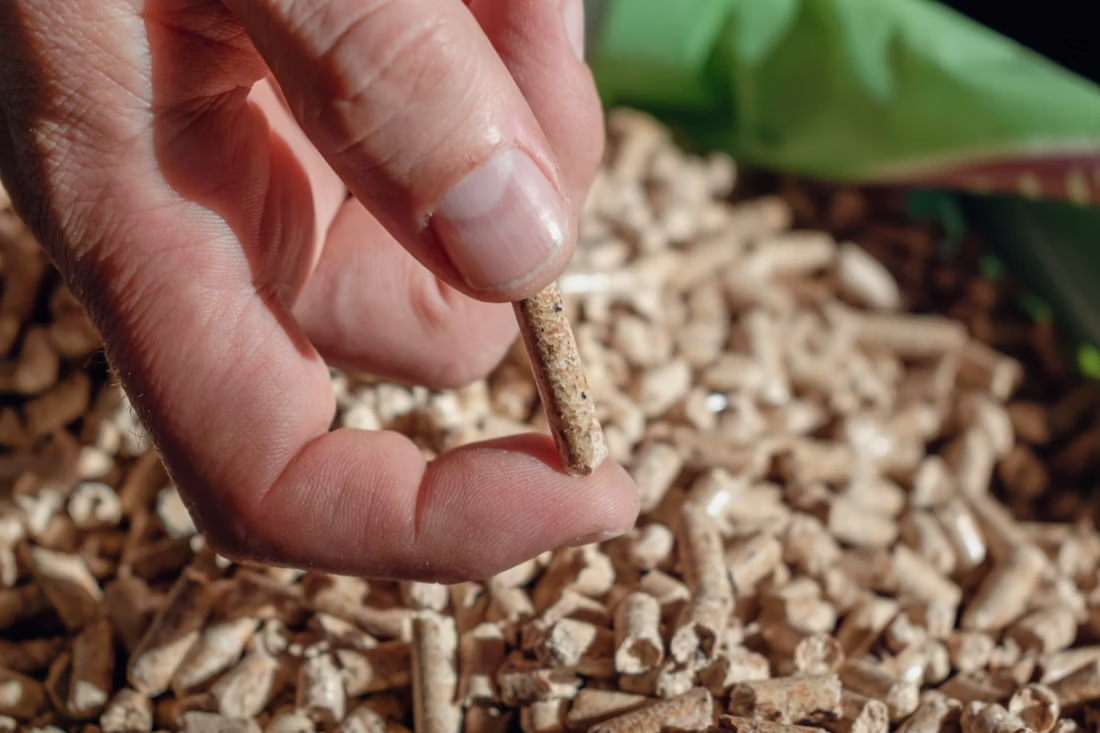
That's why pellet stoves are genuinely uncommon in Franklin—you won't find rows of them at every hearth shop, and dealer inventory tends to be thinner than in colder or more rural parts of Tennessee. Still, a handful of homeowners install one: for a finished basement or bonus room without ductwork, for a farmhouse or acreage property outside the gas main, or simply for the dry, even heat and low ash of a pellet burn. Regional brands like Lignetics, Hamer Pellet Fuel, and Greenway Renewable Energy supply pellets to farm and feed stores across Middle Tennessee, so fuel is available even though the appliance itself is a niche choice locally.
Three steps. No salesperson until you're ready.
Tell us about your project
Your zip code, your situation, and the fuel you're leaning toward—or let the answers point you to one.
See what's actually available
The brands dealers within 100 miles genuinely carry—real options, never a catalog mirage.
Get your dealer & Project Guide
A trusted local dealer, plus the free Project Guide & Parts List that names every component of the job.
Frequently Asked Questions
How much does a pellet stove installation cost in Franklin?
Expect a range of roughly $3,000 to $6,500 for a typical freestanding pellet stove installation in Franklin, and somewhat less—often $2,800 to $5,000—for a pellet insert going into an existing masonry fireplace. Costs run higher when a new electrical circuit is needed for the auger and blower, or when venting has to be routed through an exterior wall in a home that wasn't built with a chimney. Because pellet demand is low here, fewer local dealers stock units on the floor, so many installs involve a special order—budget a bit more lead time than you would for a common gas insert.
Why don't more homes in Franklin have pellet stoves?
Mostly climate and infrastructure. With about 3,601 heating degree days and winter lows averaging 29°F, Franklin's heating season is short and mild compared to places where pellet stoves are a primary heat source. Natural gas service is widespread across the city, and electric heat pumps handle the rest efficiently at Middle Tennessee EMC's residential rate. Pellet stoves shine in colder climates where a homeowner wants 12+ hours of steady, hands-off heat through a long winter night—that need just isn't as pressing in Williamson County, so dealer inventory and installer experience with pellet appliances are thinner here than with gas.
If I still want one, is a pellet stove a good fit for my Franklin home?
It can be, in specific situations. A pellet stove or insert makes sense for a finished basement, bonus room, or detached space that's expensive to extend ductwork or gas line into, for a rural Williamson County property outside the natural gas footprint, or for homeowners who specifically want the low-maintenance, low-ash convenience of pellet fuel over cordwood. It's a poor fit as a whole-home primary heat source here, since Franklin's mild season rarely justifies the appliance size or fuel storage a colder climate would.
Do I need a permit to install a pellet stove in Franklin?
Yes—a building permit is required for any new solid-fuel or biomass appliance installation, typically through the City of Franklin's Building and Neighborhood Services division inside city limits, or the Williamson County Building Codes office for unincorporated areas. Because pellet stoves need a dedicated electrical circuit for the auger and combustion blower, an electrical permit is often part of the package too. A local dealer who regularly installs pellet appliances will usually pull both as part of the install rather than leaving you to coordinate it.
What size pellet stove do I need for my home?
Given Franklin's mild winters, most homeowners here are sizing for a supplemental space—a bonus room, basement, or open living area—rather than whole-house heat. A small pellet stove rated for 1,000 to 1,500 square feet is often plenty for that kind of use. If you're one of the rarer cases heating a full home with pellet in lieu of gas, a mid-size unit rated for 1,500 to 2,200 square feet typically covers a well-insulated Williamson County house. A local dealer can size it properly with an in-home visit—oversizing a pellet stove wastes fuel fast.
Pellet stove vs. gas fireplace—which makes more sense in Franklin?
For most Franklin homes, gas wins on convenience: instant on-off operation, no fuel storage, and broad availability of natural gas service across the city. A gas fireplace or insert typically runs $4,500 to $11,000 installed, higher than a comparable pellet unit, but it requires no hopper loading, no pellet deliveries, and no electricity to operate the flame itself. Pellet stoves make more sense when gas isn't available at the property, or when a homeowner specifically wants the sustainable, wood-adjacent heat pellets provide without cutting or stacking cordwood. If your home already has gas service, that's usually the simpler, more common local choice.
Will my pellet stove work if the power goes out?
No—this is the biggest thing to understand before buying one in Franklin. Pellet stoves rely on an electric auger to feed fuel and a blower to distribute heat and exhaust combustion gases, so they shut down the moment power drops, unlike a wood stove. Middle Tennessee EMC's service is generally reliable, but ice storms do occasionally knock out power across Williamson County for a day or more. If backup heat during outages matters to you, pair a pellet stove with a small battery backup or generator, or consider a wood-burning appliance or vented gas unit with battery-ignition instead.
Where can I buy pellets in Franklin?
Regional brands including Lignetics, Hamer Pellet Fuel, and Greenway Renewable Energy supply bagged pellets to farm supply stores, feed stores, and some hardware retailers across Middle Tennessee, though selection in Franklin itself is thinner than in areas with more pellet stoves in use. Because local demand is modest, it's worth calling ahead before driving out, and buying a season's supply (roughly 100-150 bags for steady use) when you find stock, rather than counting on year-round shelf availability.
What's the difference between a pellet stove and a pellet insert?
A pellet stove is a freestanding appliance that sits on its own hearth pad and vents through a wall or roof—it can go almost anywhere with the right clearances, which is why it's the more common choice for a basement or bonus room in Franklin. A pellet insert is built to slide into an existing masonry fireplace, using the existing chimney chase (with a proper liner) for venting. Since fewer Franklin homes have existing wood-burning masonry fireplaces to convert compared to colder markets, freestanding pellet stoves are the more typical installation here.
Why is my open fireplace making my house colder?
Open fireplaces suck—literally. As the fire burns, it consumes air your furnace already paid to heat and pulls it out through the chimney, so the house is actually colder after the fire goes out than before you lit it. An insert fixes this: it seals the chimney, puts fixed glass across the front, and turns that hole in your house into a real heat source.
How often does a pellet stove need cleaning?
A clean pellet stove is a happy pellet stove. Plan on cleaning the burn pot about once a week when you're burning regularly—ash and clinkers gum up the air holes just like a pellet barbecue. Most pellet stove problems trace back to skipped cleaning that nobody explained up front. Some designs make it easy with a trapdoor burn pot: pull a lever and the gunk drops into the ash pan.
What is an in-home preview and do I need one?
It's a visit where a hearth professional measures your space, confirms the model you picked actually works in your home, and walks the specs—framing, gas line, venting, finish work—before anything is ordered. Some details you just can't know until you see the house. Never make a down payment without one; it's the single most-skipped step that burns buyers.
Does a fireplace add value to my home?
On average, a fireplace adds back to the home about the same amount you spent installing it. Add the monthly savings from heating the rooms you actually use instead of the whole house—often hundreds of dollars a year—and the value case is strong before you even count what a fire does for how your family uses the room.
Nearby Dealers
Hearth shops serving Franklin and the surrounding area.
Pellet Brands Stocked Around Franklin
Manufacturers will point you to the nearest stocking dealer.
Find your pellet stove option in Franklin.
Tell us about your home and where a pellet stove would go, and we'll match you with a trusted local dealer who actually carries and installs them here—plus a free Project Guide & Parts List with the exact venting and parts your project needs.
Find Your Fireplace →