
Find the Right Fireplace for Franklin, Brentwood, and Every Williamson County Address.
Gas and electric fireplaces are the default across Williamson County's fast-growing subdivisions—wood and pellet units are uncommon here. See what's actually available in Franklin, Brentwood, Spring Hill, Nolensville, and beyond, and connect with a trusted local dealer.
Every Project Starts From One of These Five Situations
Suburban growth and mild winters define heating in Williamson County, Tennessee.
Williamson County has grown to nearly 160,000 residents south of Nashville, and its winters simply don't demand the wood heat you'd find in a colder market. At Climate Zone 4A, with an average winter low of 29°F and a relatively short, mild winter heating season, this county sees a fraction of the cold-season load of a place like Buffalo NY or Duluth MN, where the winter heating burden runs two to three times higher. Oak, hickory, maple, and pine grow throughout the county's woodlands, but they're rarely burned as a primary heat source anymore—most Williamson County homes, whether in Franklin's historic core or a new build in Nolensville or Thompson's Station, run on gas or electric heat with a fireplace added for ambiance rather than survival.
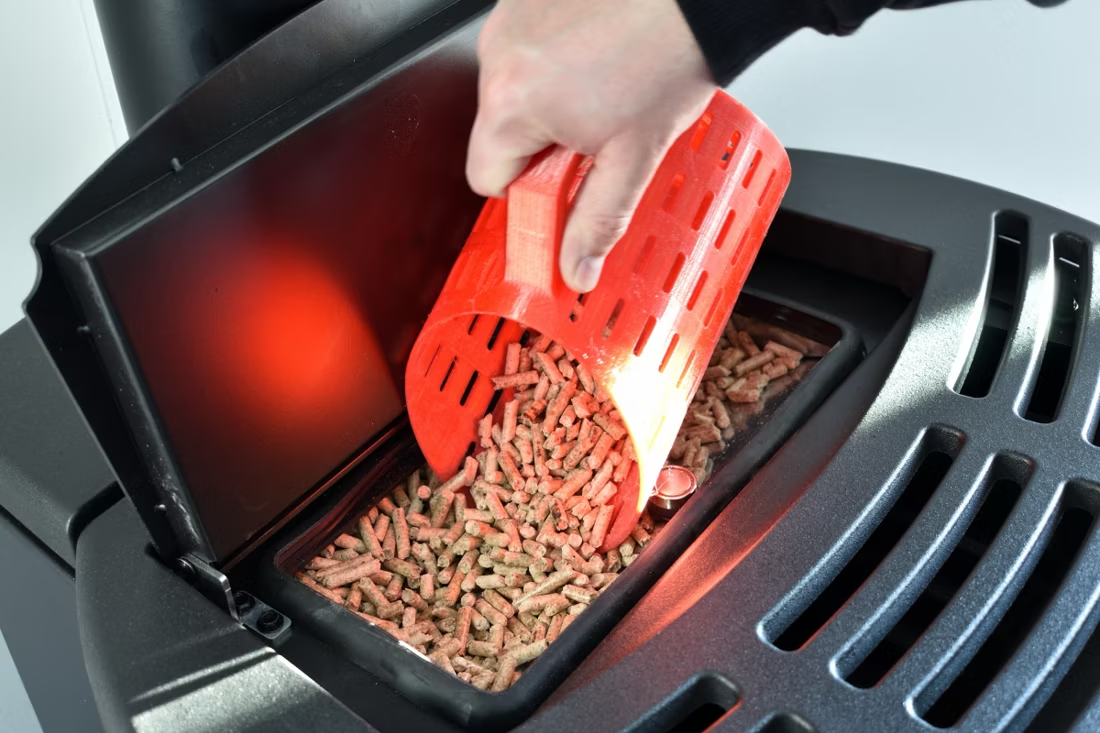
That's why wood and pellet fireplaces show up as niche options on this hub rather than headline categories—many newer subdivisions in Brentwood, Spring Hill, and Nolensville have covenants that discourage wood smoke, and builders typically run gas lines to new construction from day one, making a gas fireplace the path of least resistance. Pellet stoves, despite regional brands like Lignetics and Hamer Pellet Fuel supplying the broader Middle Tennessee market, see little demand here for the same reason. What you'll find below: hearth retailers, service technicians, and fuel suppliers covering every town in the county, plus a directory of Williamson County communities. Pick your fuel to see local dealers, real installation costs, and recommended units for your specific project.
Four fuels. One honest answer for Williamson County.
Three steps. No salesperson until you're ready.
Tell us about your project
Your zip code, your situation, and the fuel you're leaning toward—or let the answers point you to one.
See what's actually available
The brands dealers within 100 miles genuinely carry—real options, never a catalog mirage.
Get your dealer & Project Guide
A trusted local dealer, plus the free Project Guide & Parts List that names every component of the job.
Frequently Asked Questions
Which fuel works best in Williamson County?
For most homes here, it's gas. With an average winter low of 29°F and only a relatively short, mild winter heating season, Williamson County doesn't have the sustained cold that makes wood or pellet heat worth the labor—and most new-construction neighborhoods in Brentwood, Nolensville, and Spring Hill already have a gas line run to the house, so a gas fireplace or insert is usually the simplest, lowest-cost option. Electric fireplaces are the other common choice—zero-clearance installs for bedrooms, basements, and secondary living spaces where venting a gas unit isn't practical. Wood-burning fireplaces still exist in some of Franklin's older homes, and a small number of buyers install a wood stove for cabin-style ambiance or a rural property, but it's the exception rather than the rule. Pellet stoves are rare here for the same reason—the region's mild winters just don't create the demand, despite pellet fuel being regionally available through brands like Lignetics.
Do I need a permit to install a fireplace in Williamson County?
Generally yes, for gas installations. Gas fireplaces, inserts, and gas stoves typically require a building permit plus a separate gas line permit performed by a licensed gas fitter, whether you're in Franklin, Brentwood, Spring Hill, Nolensville, or Thompson's Station—each of those municipalities issues its own permits, while unincorporated parts of the county go through Williamson County's building codes office. Electric fireplaces usually don't require a permit unless you're doing a built-in installation with new wiring or a dedicated circuit, in which case an electrical permit applies. Most local dealers handle the permitting as part of the installation quote, so you typically aren't filing paperwork yourself.
Are there air quality restrictions on burning in Williamson County?
No—Williamson County doesn't have the winter inversion or non-attainment issues you'd see in a basin community out west, and there's no active wood-smoke advisory program here. That's partly a function of how few wood fireplaces and stoves are in active use countywide. Individual municipalities may still have general open-burning ordinances covering yard debris and outdoor fires, but that's separate from fireplace and stove operation, and it doesn't affect gas or electric installs at all.
Can one local hearth retailer handle all four fuel types?
Most Williamson County hearth retailers concentrate on gas and electric—that's where the demand is, and it's what most showrooms are built around. A smaller number of full-line dealers also keep a limited selection of wood-burning or pellet units in stock for buyers who specifically want one, often for a cabin, a hunting property, or a homeowner who just wants the look and smell of a real wood fire despite the mild climate. If you're set on wood or pellet, it's worth calling ahead to confirm a dealer stocks it rather than assuming—gas and electric are the safer default assumption for any retailer in the county.
How does fireplace service work as Williamson County keeps growing?
Most technicians serving the county are based in Franklin or Brentwood and travel out to Spring Hill, Nolensville, Thompson's Station, and Fairview for service calls. Because the county is adding new-construction homes quickly, a large share of service work is first-year gas fireplace startup and warranty calls rather than older-unit repair. That means scheduling can back up during the fall push (October–December) as everyone tries to get their gas fireplace running before the first cold snap. Booking service in September, before the rush, is the easiest way to avoid a multi-week wait.
What's the typical cost range for fireplace installation across fuel types in Williamson County?
Gas fireplace, insert, or stove: roughly $4,000–$9,500 depending on whether new gas line work is needed, with lower costs when a gas stub is already in place from new construction. Electric fireplace: $200–$3,000 for the unit itself, plus $400–$1,200 in labor for anything beyond a simple plug-in, which covers most wall-mount, insert, and built-in installs. Wood-burning or pellet installations are uncommon enough in this county that pricing runs closer to custom-job rates—expect $5,000–$12,000+ if you're adding a wood stove with new chimney or venting work, since it's a less routine job for most local crews here than it would be in a colder market.
Does a fireplace add value to my home?
On average, a fireplace adds back to the home about the same amount you spent installing it. Add the monthly savings from heating the rooms you actually use instead of the whole house—often hundreds of dollars a year—and the value case is strong before you even count what a fire does for how your family uses the room.
How much should I budget for a fireplace?
For an average home—covering the fireplace, the vent pipe, and basic installation—a budget between $3,900 and $5,500 gives you a lot of options across wood, gas, and pellet. By the time you add finish work, gas line, and electrical, the average complete installation lands between $5,000 and $12,000 all-in. In a remodel or new build, a good rule is to put about 2.5% of the total project cost toward the fireplace.
Can a fireplace actually lower my heating bill?
Yes—by creating a comfort zone. A furnace heats every square foot of the house just to warm the one room you're in; a gas fireplace on low burns roughly a sixth of the gas a typical furnace does. Set the furnace around 55–60 degrees as a baseline, then heat the rooms your family actually uses. Families who heat this way commonly save $20–$60 a month.
Can I install a fireplace myself?
If you're putting a fire in your house on purpose, it's best to work with an expert. Unless you're genuinely experienced in framing, gas line, vent pipe, and the national code on clearances to combustibles, have a professional do it—and ideally the same company that sells you the fireplace, so warranty, service, and liability all live under one roof.
Stove and Fireplace Dealers in Williamson County
Listings include WhyFire partner dealers, dealers we have verified as authorized for the brands we recommend, and established local businesses that carry hearth products. Every listing shows which one it is. The ones marked Preferred run on WhyFire's software, so they can show you real pricing and book your appointment right here. No manufacturer pays for placement. How we verify dealers →
Ashbusters Chimney Service
Nashville Fireplace Dist.
Allegiance Chimney Solutions
Find your fireplace in Williamson County.
Tell us about your home and we'll match you with a trusted local dealer and send you a free Project Guide & Parts List—the exact parts, including the vent kit, and the dealer we recommend for your gas or electric fireplace project in Williamson County.
Find Your Fireplace →