
Keep Your Family Warm and Safe—No Matter What
From Smithville to the shoreline of Center Hill Lake, wood heat has always fit this rural stretch of the Cumberland Plateau. Find the right stove or insert for your home, and connect with a trusted local dealer.
Every Project Starts From One of These Five Situations
A county built on hardwood forest and lake living.
DeKalb County sits on the western edge of the Cumberland Plateau in Middle Tennessee, anchored by Center Hill Lake and the county seat of Smithville. It's a small, rural county—just under 7,000 residents spread across farmland, wooded ridges, and lakefront acreage—and the forest here runs to oak, hickory, maple, and pine, the same species that fill most local wood stacks. Winters are moderate by national standards: 4,148 heating degree days and average lows around 26°F, roughly half the heating load of a place like Duluth, Minnesota. Still, that's cold enough that a wood stove does real work here from late November through early March, especially in older farmhouses and lake cabins that were never built with efficient central heat in mind.
A lot of housing around Center Hill Lake started as seasonal cabins, and many still rely on a wood stove as primary heat rather than a backup. DeKalb County has no air quality non-attainment status and no winter burn restrictions, so there's none of the curtailment-period paperwork you'd see in a smoke-sensitive basin out West—just straightforward permitting and a lot of standing hardwood within a short drive of most homes. Whether you're heating a working farm outside Alexandria or a lake house near Sligo, the right stove or insert cuts propane and electric bills through the coldest stretch of winter and keeps the house warm if an ice storm takes down power lines, which happens more often here than most people expect.
Three steps. No salesperson until you're ready.
Tell us about your project
Your zip code, your situation, and the fuel you're leaning toward—or let the answers point you to one.
See what's actually available
The brands dealers within 100 miles genuinely carry—real options, never a catalog mirage.
Get your dealer & Project Guide
A trusted local dealer, plus the free Project Guide & Parts List that names every component of the job.
Frequently Asked Questions
How much does a wood stove installation cost in DeKalb County?
Most wood stove installations in DeKalb County run between $3,500 and $8,000, depending on the stove itself, whether an existing chimney can be reused, and whether a new hearth pad is needed for code clearances. Installing into an existing masonry fireplace with an insert tends to land on the lower end; a freestanding stove in a home with no existing chimney—common in some of the older farmhouses around Liberty and Dowelltown—runs higher once Class A pipe and roof penetration are factored in. Because DeKalb is a small, rural county, expect installers based out of Smithville, Cookeville, or McMinnville to add a modest travel charge for jobs farther out toward the lake or county line.
What size wood stove do I need for my home?
Sizing depends on square footage, insulation, and whether the stove is your primary heat or a supplement to propane or electric. With DeKalb's relatively moderate winters—average lows near 26°F and 4,148 heating degree days—a mid-size stove rated for 1,500 to 2,200 square feet handles most standalone homes and farmhouses without being oversized. Older, less-insulated houses near Smithville or Alexandria sometimes need to size up a step; well-sealed newer construction around the lake can often size down. Lake cabins used seasonally are a special case—a smaller stove focused on quick recovery heat often makes more sense than a large unit built for 24-hour burns. A local dealer can size your specific home during an in-home visit, which is worth doing before you buy.
Where can I find certified wood stove installers near me?
Look for NFI (National Fireplace Institute) or CSIA (Chimney Safety Institute of America) certification—both signal real training in wood-burning appliance installation rather than a general contractor doing a chimney job on the side. Because DeKalb County is small and rural, some of the certified installers who cover Smithville, Alexandria, and the Center Hill Lake area are based out of Cookeville or McMinnville and travel in for jobs. That's normal here—just confirm travel is included in your quote. Avoid handyman installs for wood-burning units; improper clearances and venting are the leading cause of chimney fires, and it's not a place to cut corners in a county with long volunteer-fire response times in the outlying areas.
What's the difference between a wood stove and a wood insert?
A wood stove is a freestanding unit on a hearth pad, vented through a chimney, and can go almost anywhere clearances allow. A wood insert slides into an existing masonry fireplace and uses that chimney, turning a drafty open hearth into a real heat source. DeKalb County has a lot of older homes around Smithville and Alexandria with existing masonry fireplaces that were built for looks more than heat—an insert is usually the better upgrade in those cases. Newer construction or lake homes without an existing fireplace are generally better suited to a freestanding stove.
Do I need a permit to install a wood stove in DeKalb County?
Yes—new wood stove installations require a building permit, and the stove itself needs to meet current EPA 2020 NSPS emissions standards. In DeKalb County, that permitting runs through the county's building and codes office based in Smithville. Most established hearth dealers handle the permit paperwork as part of the installation, so homeowners rarely have to deal with it directly. There's no local burn-ban or curtailment-period rule to navigate here—DeKalb has no air quality non-attainment designation, so once the stove is installed and permitted, burning it is straightforward.
What's the best wood stove for DeKalb County's climate?
Because winters here are moderate—nowhere near the sub-zero stretches you'd see in Bozeman or Fargo—most DeKalb County homes do well with a solid mid-size non-catalytic stove from a brand like Lopi, Pacific Energy, or Vermont Castings, sized for the square footage rather than for extreme cold. The exception is lake cabins or farmhouses relying on wood as true primary heat rather than supplemental warmth; those homeowners often prefer a catalytic stove from a brand like Blaze King for its long, steady overnight burn. With oak and hickory as the dominant local firewood—both dense, high-BTU hardwoods—either stove type will burn efficiently as long as the wood is properly seasoned.
How often should my chimney be inspected and cleaned?
The CSIA recommends an annual inspection for any wood-burning appliance, and that holds in DeKalb County whether the stove runs daily through winter or only on weekends at a lake cabin. Late summer, before burning season starts, is the usual window. Cabins around Center Hill Lake that sit closed up for stretches of the year are worth inspecting even if usage was light—critters, nests, and settled creosote can build up in an unused flue just as easily as a heavily used one. A local sweep can typically cover most of the county without a long drive, given how compact DeKalb is.
Where can I get firewood in DeKalb County?
Most firewood in DeKalb County comes from private land and local sellers rather than public-land permits—the county is dominated by farms and privately held timber, not national forest, so there isn't a Forest Service cutting-permit office here the way there might be out West. Oak and hickory are the go-to species for heat output, with maple and pine also common; a full cord (a stacked 4×4×8 pile) typically runs somewhere in the $150-$250 range from a local seller, depending on species and how well it's seasoned. If you own wooded acreage near the lake or out toward Liberty, self-cutting your own supply is common practice—just be aware TVA manages some of the Center Hill Lake shoreline and has its own rules about cutting near the water.
Wood stove vs. pellet stove—which is right for me?
Wood stoves burn cordwood, work with no electricity—a real advantage in a county where ice storms can knock out power for days—and pair naturally with the oak and hickory that are already plentiful locally. Pellet stoves burn compressed pellets from regional suppliers like Lignetics, Hamer Pellet Fuel, or Greenway Renewable Energy, and they're easier to run day to day: load the hopper, set the thermostat, less mess. The tradeoff is that pellet stoves need electricity for the auger and blower, so they go dark in the same outages a wood stove would keep running through. For a DeKalb County home where reliable backup heat matters—especially out past the lake where lines can take longer to restore—wood tends to be the safer primary choice, with pellet as a clean, convenient option for homes that mainly want easy day-to-day heat.
Can a wood stove burn all night?
The right one can. If waking up to a warm house and live coals matters to you, say exactly that when you're shopping—firebox size and burn-rate control determine overnight performance far more than any number on a spec sheet. It's a much more useful question than asking about BTUs.
Why is my open fireplace making my house colder?
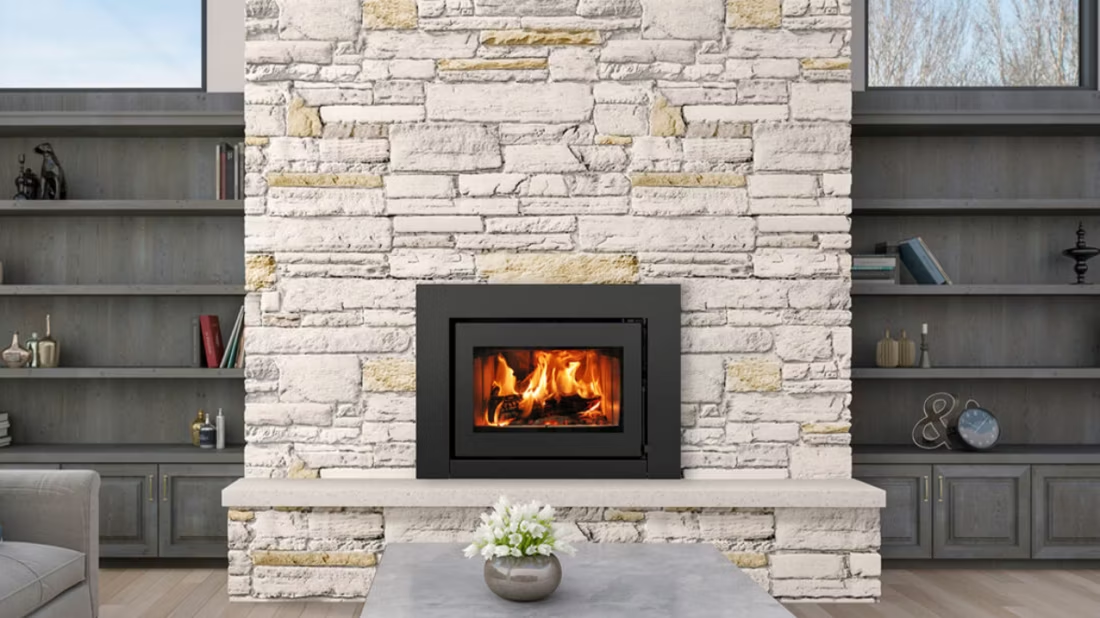
Open fireplaces suck—literally. As the fire burns, it consumes air your furnace already paid to heat and pulls it out through the chimney, so the house is actually colder after the fire goes out than before you lit it. An insert fixes this: it seals the chimney, puts fixed glass across the front, and turns that hole in your house into a real heat source.
Can I install a fireplace myself?
If you're putting a fire in your house on purpose, it's best to work with an expert. Unless you're genuinely experienced in framing, gas line, vent pipe, and the national code on clearances to combustibles, have a professional do it—and ideally the same company that sells you the fireplace, so warranty, service, and liability all live under one roof.
How much should I budget for a fireplace?
For an average home—covering the fireplace, the vent pipe, and basic installation—a budget between $3,900 and $5,500 gives you a lot of options across wood, gas, and pellet. By the time you add finish work, gas line, and electrical, the average complete installation lands between $5,000 and $12,000 all-in. In a remodel or new build, a good rule is to put about 2.5% of the total project cost toward the fireplace.
Stove and Fireplace Dealers in DeKalb County
Listings include WhyFire partner dealers, dealers we have verified as authorized for the brands we recommend, and established local businesses that carry hearth products. Every listing shows which one it is. The ones marked Preferred run on WhyFire's software, so they can show you real pricing and book your appointment right here. No manufacturer pays for placement. How we verify dealers →
Middle Tn Natural Gas - Smithville
Middle Tn Natural Gas - Woodbury
Middle Tn Natural Gas - Gordonsville
Spar Gas Inc.
Middle Tn Natural Gas - Sparta
Spar-Gas
Middle Tn Natural Gas - McMinnville
Ap Hearth LLC
All Gas
Get matched with a wood stove dealer in DeKalb County.
Tell us about your home—farmhouse, lake cabin, or new build—and we'll match you with a trusted local dealer and send over a free Project Guide & Parts List for your wood stove or insert project, including the vent kit.
Find Your Fireplace →