
Find the right hearth for your DeKalb County home.
Wood, gas, pellet, and electric fireplace resources for Smithville, Alexandria, Liberty, Dowelltown, and the cabins and lake homes around Center Hill Lake. Find the right unit and connect with a trusted local hearth retailer.
Every Project Starts From One of These Five Situations
Mild winters, hardwood forests, and a lake full of cabins in DeKalb County, Tennessee.
DeKalb County sits in the Highland Rim foothills of Middle Tennessee, wrapped around Center Hill Lake, with Smithville as the county seat. Winters here are moderate compared to much of the country—Climate Zone 4A, an average winter low around 26°F, and a heating season that's less than half as demanding as what a place like Duluth, Minnesota logs in a typical winter. That doesn't mean wood heat is an afterthought: the county's oak, hickory, maple, and pine forests have supplied firewood for generations, and dense hardwoods like oak and hickory burn hot and long, which matters on the occasional hard-freeze night. There's no non-attainment designation or wood-burning advisory here, so unlike some Western basins, burning wood in DeKalb County doesn't come with air-quality curtailment days to plan around.
What you'll find on this hub: hearth retailers, service technicians, and fuel suppliers covering the county—from Smithville out to Alexandria, Liberty, and Dowelltown, and around the shoreline communities of Center Hill Lake where second homes and cabins often run on propane or electric rather than piped gas. Pick your fuel below to see local dealers, installation costs, and recommended units for your specific project—whether that's a full-time farmhouse heating with a wood insert or a lake cabin that just needs supplemental electric heat for weekend use.
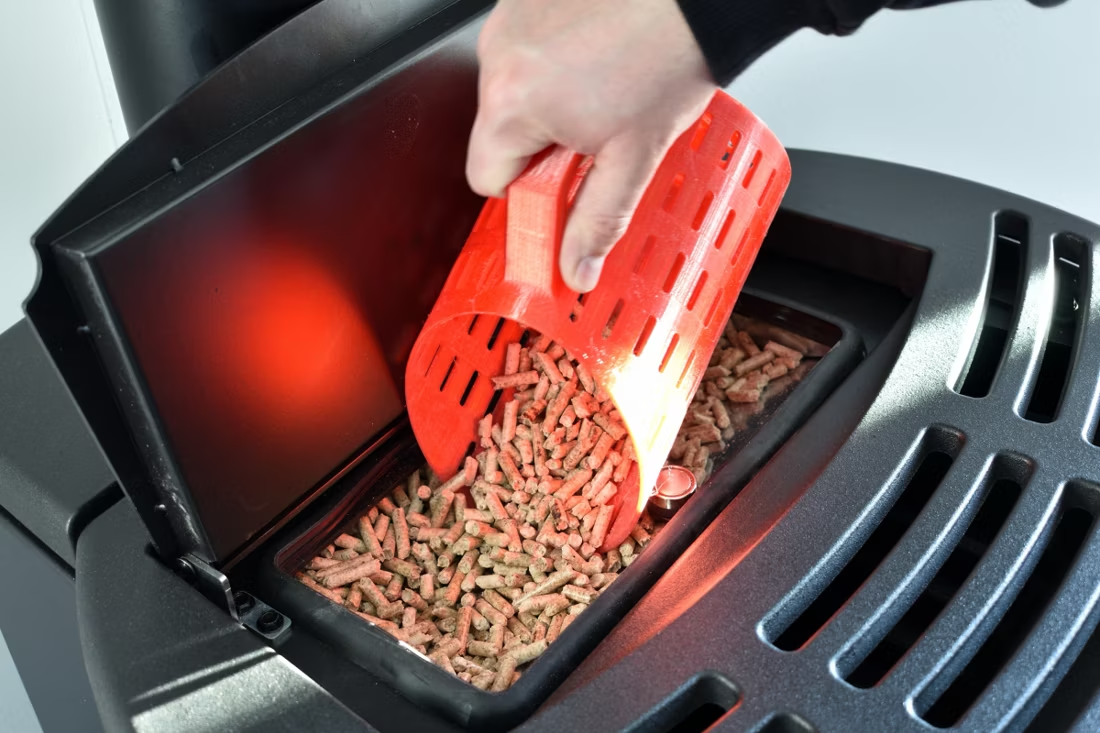
Four fuels. One honest answer for DeKalb County.
Three steps. No salesperson until you're ready.
Tell us about your project
Your zip code, your situation, and the fuel you're leaning toward—or let the answers point you to one.
See what's actually available
The brands dealers within 100 miles genuinely carry—real options, never a catalog mirage.
Get your dealer & Project Guide
A trusted local dealer, plus the free Project Guide & Parts List that names every component of the job.
Frequently Asked Questions
Which fuel works best in DeKalb County?
It depends on the home and how it's used. Wood is a strong default here—oak and hickory are plentiful, burn hot and long, and there are no air-quality curtailment days to work around, unlike in some Western basin counties. Gas is mostly a propane conversation in DeKalb County, since piped natural gas service is limited outside town; propane fireplaces and inserts give instant, thermostat-controlled heat without a woodpile. Pellet is a solid middle ground—Lignetics and Hamer Pellet Fuel are both regionally distributed, so supply isn't a concern, and pellet stoves handle the county's moderate winters (26°F average low, a heating season that's on the mild side by national standards) without needing to be run around the clock. Electric works well as a supplemental option, especially for the seasonal cabins around Center Hill Lake where full-time wood or gas infrastructure doesn't make sense. Most full-time DeKalb County homes end up with wood or pellet as the primary heat source and something electric in a bedroom or den.
Do I need a permit to install a fireplace in DeKalb County?
Generally, yes, for anything beyond a plug-in electric unit. New wood stoves, wood inserts, gas fireplaces, gas inserts, and pellet stoves typically require a building permit through the county codes/building department, and gas installations need a licensed gas-fitter to handle the line and connection work—whether it's a propane tank hookup or, in areas with service, a natural gas tap. Electric fireplaces usually skip the permit process unless the installation involves a built-in unit with new wiring or a dedicated circuit. Most local hearth retailers pull the permit as part of the installation quote, so you typically aren't filing paperwork yourself—worth confirming with whichever dealer you choose, especially for lake-area cabins where the jurisdiction can be less familiar with permit history on the property.
Are there air quality restrictions on wood burning in DeKalb County?
No. DeKalb County isn't a non-attainment area and doesn't have winter inversion issues the way some geographic basins do, so there are no voluntary or mandatory burn-curtailment days to track here. That's a real advantage if you're comparing wood heat options against a county with active air-quality advisories—you can plan to run a wood stove or insert on cold nights without checking a daily air-quality bulletin first. New wood-burning appliances still need to meet current EPA emissions standards, which most retailers only carry anyway, but there's no local ordinance layered on top of that.
Can one local hearth retailer handle all four fuel types in DeKalb County?
Some can, though with a county population under 7,000, DeKalb County has fewer standalone hearth showrooms than a larger metro area, and several retailers serving Smithville and the lake area are based out of Cookeville or McMinnville and cover DeKalb County as part of a wider service territory. Multi-fuel dealers are worth seeking out if you're still deciding between, say, a wood insert and a pellet stove—they can show working displays of each and talk through real trade-offs for your specific home, including whether propane or electric makes more sense for a Center Hill Lake cabin that only sees weekend use.
How does fireplace service work for a small, rural county like DeKalb?
Most technicians covering DeKalb County travel in from Smithville or from nearby regional hubs, and the Center Hill Lake shoreline adds a seasonal wrinkle—cabins that sit empty much of the winter often get serviced in a single pre-season pass rather than on-demand mid-winter. Expect a modest travel fee for service calls out to Alexandria, Liberty, or Dowelltown, and book chimney sweeps or pellet-stove cleanings in late summer or early fall if you want to avoid the pre-winter scheduling rush. For full-time homes running wood or pellet as primary heat, annual service before the first cold snap—typically by late October given the county's 26°F average winter low—keeps things running through the season.
What's the typical cost range for fireplace installation across all fuel types in DeKalb County?
Wood stove or insert installation typically runs $3,500–$7,500, with hardwood-heavy chimney setups and full masonry work pushing toward the higher end. Gas fireplace, insert, or stove installation runs roughly $4,000–$9,000, with propane tank and line work factored in for homes outside piped-gas service areas. Pellet stove or insert installation is usually $4,000–$6,500. Electric fireplace costs range from $200–$2,500 for the unit itself, plus $300–$1,000 in labor for anything beyond a simple plug-in—which covers most wall-mount and insert installs in lake cabins around Center Hill. Costs run somewhat lower here than in higher cost-of-living metro markets, but exact numbers depend on your home's existing venting and electrical setup—see the county + fuel pages above for more detail tied to local retailer pricing.
Wood, gas, pellet, or electric—how do I choose?
Match the fuel to your life, not the other way around. Wood: lowest fuel cost and total power-outage independence, but you're hauling and stacking. Gas: press a button, set a thermostat, no maintenance to speak of. Pellet: wood economics with automatic feeding, in exchange for weekly cleaning and a need for electricity. Electric: plugs in anywhere with honest supplemental heat. Nobody regrets the fuel that fits how they actually live.
Can a fireplace actually lower my heating bill?
Yes—by creating a comfort zone. A furnace heats every square foot of the house just to warm the one room you're in; a gas fireplace on low burns roughly a sixth of the gas a typical furnace does. Set the furnace around 55–60 degrees as a baseline, then heat the rooms your family actually uses. Families who heat this way commonly save $20–$60 a month.
Can I install a fireplace myself?
If you're putting a fire in your house on purpose, it's best to work with an expert. Unless you're genuinely experienced in framing, gas line, vent pipe, and the national code on clearances to combustibles, have a professional do it—and ideally the same company that sells you the fireplace, so warranty, service, and liability all live under one roof.
I know I want a fireplace—where do I actually start?
Do two things today: snap a photo of the wall or fireplace you want to transform, and take a tape measure to the space—width, height, depth. Those two artifacts answer most of a hearth professional's first questions. Then settle fuel (wood, gas, pellet, or electric) and set a realistic budget: $3,900–$5,500 covers fireplace, vent, and basic install for most homes.
Stove and Fireplace Dealers in DeKalb County
Listings include WhyFire partner dealers, dealers we have verified as authorized for the brands we recommend, and established local businesses that carry hearth products. Every listing shows which one it is. The ones marked Preferred run on WhyFire's software, so they can show you real pricing and book your appointment right here. No manufacturer pays for placement. How we verify dealers →
Middle Tn Natural Gas - Smithville
Middle Tn Natural Gas - Woodbury
Middle Tn Natural Gas - Gordonsville
Spar Gas Inc.
Middle Tn Natural Gas - Sparta
Spar-Gas
Middle Tn Natural Gas - McMinnville
Ap Hearth LLC
All Gas
Find your fireplace in DeKalb County.
Pick your fuel below to see local dealers and typical installation costs, and get a free Project Guide & Parts List—the exact parts, vent kit, and recommended local dealer for your DeKalb County project.
Find Your Fireplace →