
Find the right pellet stove for Cumberland County's plateau climate.
Steady, low-maintenance heat for Crossville, Fairfield Glade, Lake Tansi, and the rest of the Cumberland Plateau—no woodpile, no cutting permits. Get matched with a trusted local dealer who can size and install the right unit.
Every Project Starts From One of These Five Situations
Convenient warmth for plateau winters.
Cumberland County sits atop the Cumberland Plateau at roughly 1,800 feet, which keeps winters noticeably cooler here than in the valleys around Knoxville or Nashville just down the escarpment. At 4,394 heating degree days and average winter lows around 26°F, it's a real but manageable heating season—climate zone 4A, not the sub-zero grind of a place like Duluth, MN, but cold enough that a lot of Crossville, Fairfield Glade, and Lake Tansi households run supplemental heat from October into March. Many of those homes are second homes or retirement properties, and pellet stoves fit that profile well: load the hopper, set it, and go, without hauling or splitting wood.
Because Cumberland County has no air quality non-attainment issues or winter burn curtailment periods, pellet stoves here run without the operating restrictions that some western counties place on wood-burning appliances. Bagged pellets from regional producers like Lignetics, Hamer Pellet Fuel (based in Middle Tennessee), and Greenway Renewable Energy are sold through local hardware stores and hearth dealers, so there's no need to deal with a Cherokee National Forest cutting permit or a truckload of oak and hickory rounds—pellet owners skip that part of plateau life entirely while still getting a real flame and genuine heat output.
Three steps. No salesperson until you're ready.
Tell us about your project
Your zip code, your situation, and the fuel you're leaning toward—or let the answers point you to one.
See what's actually available
The brands dealers within 100 miles genuinely carry—real options, never a catalog mirage.
Get your dealer & Project Guide
A trusted local dealer, plus the free Project Guide & Parts List that names every component of the job.
Frequently Asked Questions
How much does a pellet stove installation cost in Cumberland County?
A typical pellet stove or insert installation in Cumberland County runs roughly $3,500 to $6,500, depending on the unit, whether it's a freestanding stove or an insert going into an existing fireplace, and how much venting work is required. Pellet stoves vent through a smaller-diameter pipe than wood stoves and can often exit through an exterior wall rather than requiring a full chimney, which keeps costs down compared to wood installations. Homes in Fairfield Glade or Lake Tansi with existing masonry fireplaces are usually on the lower end since the chimney chase is already in place; new construction or homes without an existing flue run a bit higher once wall penetration and venting are added.
What size pellet stove do I need for my Cumberland County home?
Sizing depends on square footage, insulation, and whether the stove is your primary heat or a supplemental unit for a den or great room. With winter lows averaging around 26°F on the plateau, most Cumberland County homes do well with a mid-size pellet stove rated for 1,200 to 2,000 square feet, though larger open-concept homes around Fairfield Glade sometimes call for a bigger hopper and higher BTU output. Hopper capacity matters as much as BTU rating here—a 40 to 60-pound hopper will typically run 24 to 40 hours on a low setting, which matters if you're heating a second home you don't visit daily. A local dealer can size this correctly during an in-home visit rather than guessing off a square-footage chart.
Where can I find certified pellet stove installers near me?
Look for installers with NFI (National Fireplace Institute) pellet-specialist certification, which covers the electrical, venting, and clearance requirements specific to pellet appliances. Hearth dealers serving Crossville and the surrounding plateau communities typically handle both the sale and the install, which keeps warranty coverage and code compliance under one roof. Because pellet stoves rely on an electric auger, igniter, and combustion blower, proper installation also means running a dedicated outlet where needed—not something a general handyman install should skip.
What's the difference between a pellet stove and a pellet insert?
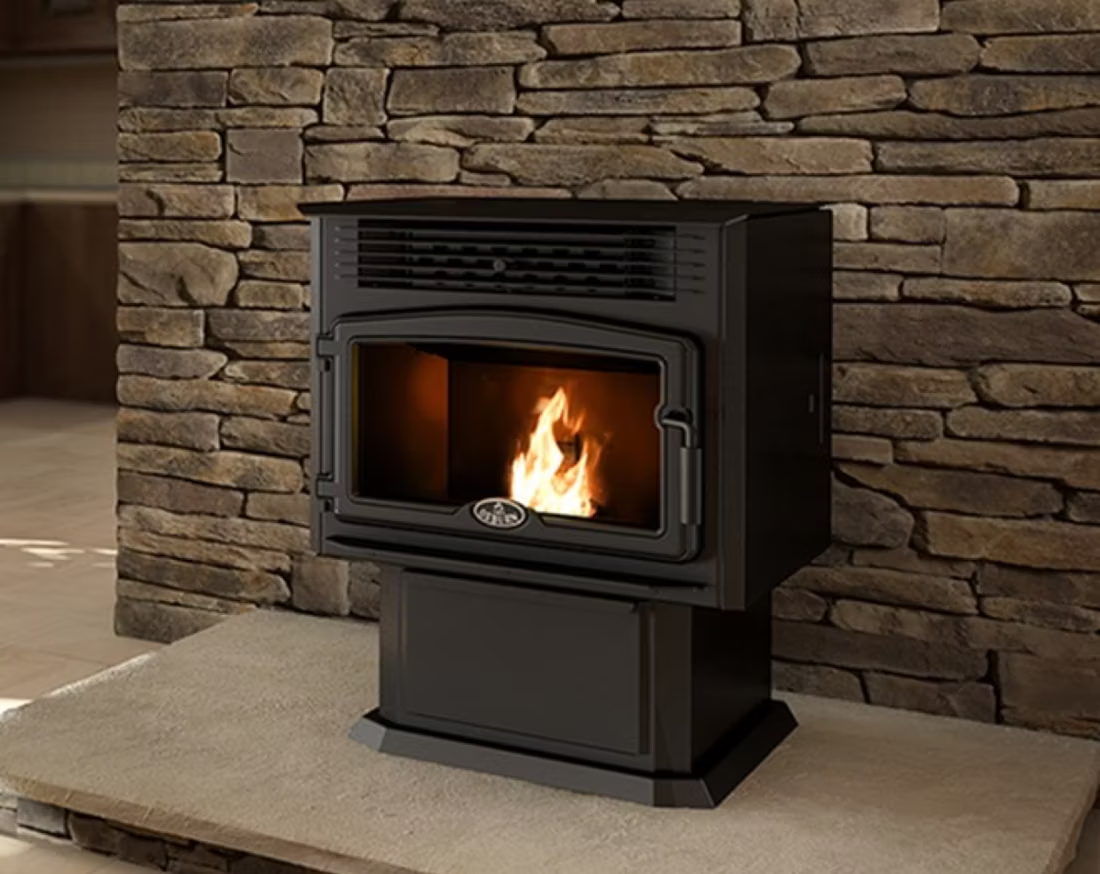
A pellet stove is a freestanding unit that sits on its own hearth pad and vents through a wall or existing chimney—it can go almost anywhere with the right clearances. A pellet insert is built to slide into an existing masonry fireplace opening, which is common in older Crossville homes and many Fairfield Glade properties with a traditional wood-burning fireplace that's rarely used. For homes with an existing fireplace, an insert is usually the more cost-effective route since it reuses the chimney chase; homes without one are better suited to a freestanding stove.
Do I need a permit to install a pellet stove in Cumberland County?
Yes—a building permit through the Cumberland County Building and Codes Department is typically required for a new pellet stove or insert installation, covering the venting path and any electrical work for the unit. Most local dealers handle this paperwork as part of the install. Unlike wood-burning stoves, pellet units don't require a Cherokee National Forest cutting permit or any fuel-sourcing permit at all—bagged pellets are simply purchased from a local retailer, which is one of the appeals of pellet heat for county residents who don't want to deal with the May-through-October cutting season.
What's the best pellet stove for Cumberland County's climate?
For a 4A climate with moderate but real winter heating demand, mid-size pellet stoves from brands commonly stocked by regional dealers—including units designed to pair with Lignetics or Hamer Pellet Fuel bags—cover most Cumberland County homes well. Look for a stove with a large-capacity hopper if the home is a weekend or vacation property in Fairfield Glade or Lake Tansi, since a bigger hopper means fewer refills between visits. For full-time residences on the plateau where winters run longer than in the valley towns below, a stove with a wider BTU range gives you more flexibility between shoulder-season and hard-cold settings.
How often does a pellet stove need to be serviced?
Pellet stoves need more frequent attention than wood stoves but far less than a full chimney sweep. Plan on cleaning the burn pot and ash traps every few days during regular heating-season use, a deeper cleaning of the exhaust vent and hopper monthly, and a full professional service annually—checking the auger motor, combustion blower, gaskets, and igniter. Local dealers who sell pellet units in Cumberland County typically offer this annual service, and it's worth scheduling before the plateau's cold stretch sets in each fall.
Where can I buy pellet fuel in Cumberland County?
Bagged pellets from Lignetics, Hamer Pellet Fuel, and Greenway Renewable Energy are the regional standards, sold through local hardware stores and hearth dealers serving Crossville and the surrounding plateau. Prices generally run in the $250 to $300 per ton range in Middle Tennessee, though it's worth buying a season's supply early—pellet availability can tighten during unusually cold stretches when demand spikes across the region. Hamer Pellet Fuel is produced within a few hours of the county, which tends to keep transportation costs and pricing more stable than pellets shipped in from farther away.
Pellet stove vs. wood stove—which is right for my Cumberland County home?
Wood stoves burn free or low-cost fuel if you're willing to cut your own—a Cherokee National Forest permit runs about $20 per cord during the May-through-October season, and the plateau's oak, hickory, maple, and pine make for good local firewood. Wood also keeps working without electricity, which matters during winter storm outages. Pellet stoves trade that self-sufficiency for convenience: load the hopper, set a thermostat, and let the auger do the work, with cleaner burns and less ash—but they need electricity to run the auger and blower, so they're not a backup heat source if the power goes out. For full-time Cumberland County residents who want low-maintenance daily heat, pellet usually wins; for those who want an off-grid backup or don't mind the woodpile, wood remains the better fit.
What's the difference between an insert and a zero-clearance fireplace?
An insert is a fireplace that slides into a pre-existing wood-burning fireplace—if you don't have one, there's nothing to insert it into. A zero-clearance fireplace is built into a framed wall, which makes it the answer for remodels and new construction. Simple test: existing masonry fireplace means insert; blank or framed wall means zero-clearance.
Why is my open fireplace making my house colder?
Open fireplaces suck—literally. As the fire burns, it consumes air your furnace already paid to heat and pulls it out through the chimney, so the house is actually colder after the fire goes out than before you lit it. An insert fixes this: it seals the chimney, puts fixed glass across the front, and turns that hole in your house into a real heat source.
Can I install a fireplace myself?
If you're putting a fire in your house on purpose, it's best to work with an expert. Unless you're genuinely experienced in framing, gas line, vent pipe, and the national code on clearances to combustibles, have a professional do it—and ideally the same company that sells you the fireplace, so warranty, service, and liability all live under one roof.
How much should I budget for a fireplace?
For an average home—covering the fireplace, the vent pipe, and basic installation—a budget between $3,900 and $5,500 gives you a lot of options across wood, gas, and pellet. By the time you add finish work, gas line, and electrical, the average complete installation lands between $5,000 and $12,000 all-in. In a remodel or new build, a good rule is to put about 2.5% of the total project cost toward the fireplace.
Stove and Fireplace Dealers in Cumberland County
Listings include WhyFire partner dealers, dealers we have verified as authorized for the brands we recommend, and established local businesses that carry hearth products. Every listing shows which one it is. The ones marked Preferred run on WhyFire's software, so they can show you real pricing and book your appointment right here. No manufacturer pays for placement. How we verify dealers →
Spar-Gas
Volunteer Hearth & Home
Middle Tn Natural Gas - Crossville
Middle Tennessee Natural Gas
Pellet Brands Stocked Around Cumberland County
Manufacturers will point you to the nearest stocking dealer.
Find your pellet stove in Cumberland County.
Tell us about your home and we'll put together a free Project Guide & Parts List—the right pellet stove or insert for your space, the vent kit it needs, and a trusted local dealer in Cumberland County to install it.
Find Your Fireplace →