
Find the right hearth for your home on the Cumberland Plateau.
Wood, gas, pellet, and electric fireplace resources for every town across Cumberland County—from Crossville to Fairfield Glade and Lake Tansi. Find the right unit and get matched with a trusted local hearth retailer.
Every Project Starts From One of These Five Situations
Moderate winters, hardwood forests, and a lot of second homes on the Cumberland Plateau.
Cumberland County sits atop the Cumberland Plateau at roughly 1,800 to 2,000 feet, which gives it noticeably cooler summers and colder winters than the valleys below—part of why Crossville has long marketed itself as a retirement and vacation destination. Winters are moderate rather than extreme: average lows sit around 26°F and the county logs about 4,394 heating degree days a year, a fraction of what places like Burlington, VT or Madison, WI see, but still enough to keep chimneys, gas lines, and pellet hoppers busy from November into March. Local hardwood forests—oak, hickory, and maple, with pine mixed in—supply most of the wood burned in the county, and Cherokee National Forest issues personal-use cutting permits for residents who want to source their own firewood.
What you'll find on this hub: hearth retailers, service technicians, and fuel suppliers serving every corner of the county—Crossville and Crab Orchard along the I-40 corridor, the rural farmland around Grassy Cove and Pleasant Hill, and the large retirement and second-home communities at Fairfield Glade and Lake Tansi, where fireplaces are often as much about ambiance as they are about heat. Pick your fuel below for specifics on local dealers, installation costs, and recommended units. Whether you're heating a year-round farmhouse or a weekend cabin at Fairfield Glade, this is the place to start.
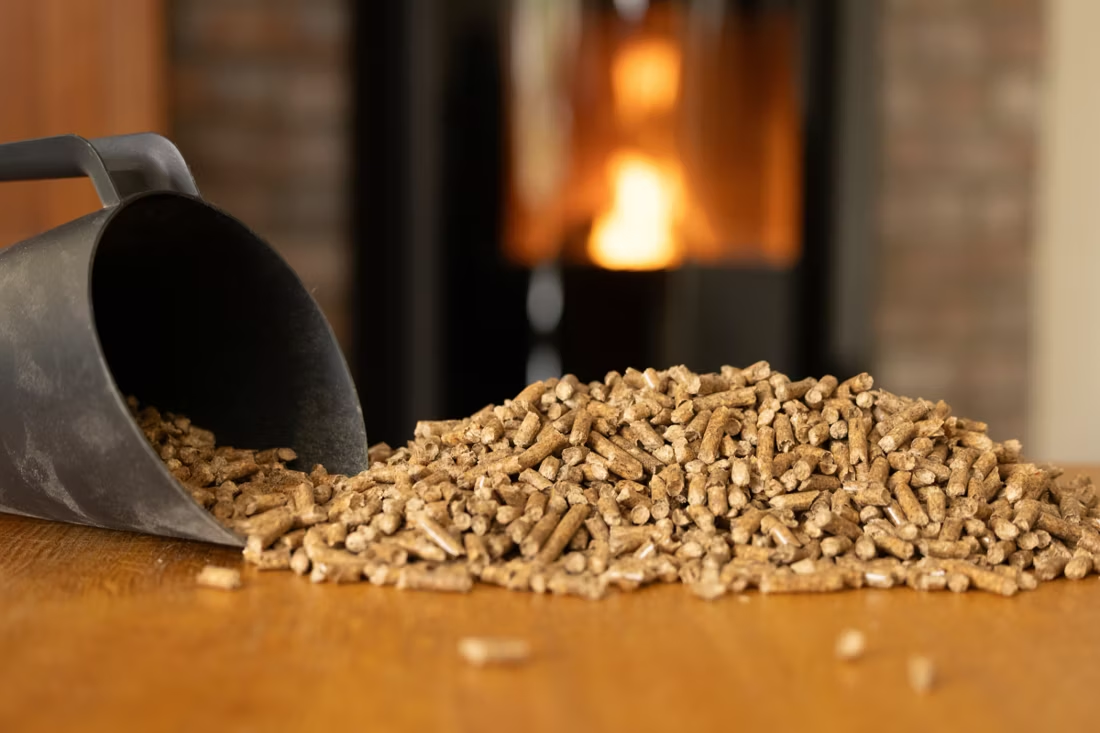
Four fuels. One honest answer for Cumberland County.
Three steps. No salesperson until you're ready.
Tell us about your project
Your zip code, your situation, and the fuel you're leaning toward—or let the answers point you to one.
See what's actually available
The brands dealers within 100 miles genuinely carry—real options, never a catalog mirage.
Get your dealer & Project Guide
A trusted local dealer, plus the free Project Guide & Parts List that names every component of the job.
Frequently Asked Questions
Which fuel works best in Cumberland County?
It depends on the home and how it's used. Wood is deeply rooted here—oak, hickory, and maple from the plateau's own forests burn hot and long, and Cherokee National Forest personal-use permits keep fuel costs down for year-round residents. Gas is popular in Crossville and in the retirement communities at Fairfield Glade and Lake Tansi, where homeowners want instant heat without hauling wood—most rural gas installs run on propane rather than piped natural gas. Pellet stoves are a solid middle ground for second-home owners who want wood-style ambiance without splitting and stacking a woodpile between visits, and Lignetics and Hamer Pellet Fuel both distribute locally. Electric fireplaces show up most in condos and lake-community homes where a supplemental heat source and low-maintenance ambiance matter more than raw BTU output. Plenty of Cumberland County homes run two fuels—wood or gas as the primary heater, electric in a bedroom or den.
Do I need a permit to install a fireplace in Cumberland County?
In most cases, yes. New wood stoves, wood inserts, gas fireplaces, gas inserts, gas stoves, and pellet stoves typically require a building permit through the Cumberland County Building & Codes Department, and gas installations need a licensed gas-fitter for the line work in addition to the appliance permit. Wood-burning appliances sold and installed today must meet the EPA's 2020 NSPS emissions standard. Electric fireplaces generally skip the permit process unless you're doing a built-in install that involves new wiring or a dedicated circuit. Most local retailers handle the permitting as part of the installation quote, so you typically aren't filing paperwork yourself.
Are there wood-burning restrictions in Cumberland County?
No—Cumberland County isn't a non-attainment area and doesn't have the winter inversion problems that trigger burn bans in some western basins. That said, new installations still need to meet the EPA 2020 NSPS emissions standard, and a properly sized, correctly installed stove burns cleaner and safer regardless of local air quality rules. If you're near Fairfield Glade or Lake Tansi, some HOAs have their own rules on outdoor wood storage or visible smoke, so it's worth checking your community's covenants alongside the county permit requirements.
Can one local hearth retailer handle all four fuel types?
Several Cumberland County retailers carry three or four fuel types, since the customer base ranges from year-round farmhouses that want wood to lake-community second homes that lean gas or electric. A dealer that stocks wood, gas, and pellet appliances side by side lets you compare a catalytic wood stove against a direct-vent gas insert in the same showroom visit, which matters if you're not sure which fuel fits your home yet. Firewood and pellet suppliers are usually separate businesses from hearth retailers—they sell fuel, not appliances—so don't expect a stove dealer to also be your seasoned-oak source.
How does service work out in Fairfield Glade, Lake Tansi, and other rural parts of the county?
Most chimney sweeps and gas techs serving Cumberland County are based near Crossville and drive out to the outlying areas—Fairfield Glade, Lake Tansi, Crab Orchard, Grassy Cove, and Pleasant Hill. Expect a modest trip fee for calls outside the immediate Crossville area, and know that pre-season scheduling in late summer and early fall books up faster than emergency mid-winter calls, especially around the holidays when Fairfield Glade and Lake Tansi see an influx of part-time residents opening up their fireplaces for the season. If your home sits empty part of the year, an annual service call timed before your first visit each fall is the easiest way to avoid a cold surprise.
What's the typical cost range for fireplace installation across all fuel types in Cumberland County?
Wood stove or insert installation: roughly $3,500–$8,000 for a typical retrofit, more if new chimney construction is involved. Gas fireplace, insert, or stove: roughly $4,000–$9,500, with propane tank or line setup adding to the cost for homes without existing gas service. Pellet stove or insert: roughly $3,800–$6,500 for most installs. Electric fireplace: $200–$2,800 for the unit itself, plus $300–$1,000 in labor for anything beyond a simple plug-and-play placement. Exact pricing depends on your home's venting situation and the specific retailer—the county + fuel pages above break down cost ranges by fuel in more detail.
What is an in-home preview and do I need one?
It's a visit where a hearth professional measures your space, confirms the model you picked actually works in your home, and walks the specs—framing, gas line, venting, finish work—before anything is ordered. Some details you just can't know until you see the house. Never make a down payment without one; it's the single most-skipped step that burns buyers.
Does a fireplace add value to my home?
On average, a fireplace adds back to the home about the same amount you spent installing it. Add the monthly savings from heating the rooms you actually use instead of the whole house—often hundreds of dollars a year—and the value case is strong before you even count what a fire does for how your family uses the room.
How much should I budget for a fireplace?
For an average home—covering the fireplace, the vent pipe, and basic installation—a budget between $3,900 and $5,500 gives you a lot of options across wood, gas, and pellet. By the time you add finish work, gas line, and electrical, the average complete installation lands between $5,000 and $12,000 all-in. In a remodel or new build, a good rule is to put about 2.5% of the total project cost toward the fireplace.
Should the dealer who sells my fireplace also install it?
Ideally, yes. A fireplace project involves vent pipe, gas line, electrical, and often tile or stone. Hire three or four separate trades and you own the liability and the game of telephone between them. One company selling and installing means one accountable party, start to finish—ask about factory training, on-time completion records, and what happens if an inspection fails.
Stove and Fireplace Dealers in Cumberland County
Listings include WhyFire partner dealers, dealers we have verified as authorized for the brands we recommend, and established local businesses that carry hearth products. Every listing shows which one it is. The ones marked Preferred run on WhyFire's software, so they can show you real pricing and book your appointment right here. No manufacturer pays for placement. How we verify dealers →
Spar-Gas
Volunteer Hearth & Home
Middle Tn Natural Gas - Crossville
Middle Tennessee Natural Gas
Get matched with a Cumberland County hearth retailer.
Tell us about your home and fuel preference, and we'll match you with a trusted local dealer and send over a free Project Guide & Parts List—the exact parts, including the vent kit, and the retailer we recommend for your project.
Find Your Fireplace →