
Keep Your Family Warm and Safe—No Matter What
Crossville's newer homes run on heat pumps and gas—but on older farmhouses and rural Cumberland Plateau properties, a handful of homeowners still burn oak and hickory. If that's you, we'll connect you with a local dealer who actually installs solid-fuel stoves here.
Every Project Starts From One of These Five Situations
A Cumberland Plateau town built on heat pumps, not woodpiles.
Crossville sits at 1,845 feet on the Cumberland Plateau, with a winter low average of 26°F and a moderate winter heating season—noticeably milder than places like Bozeman, MT or Duluth, MN where wood heat is a survival tool. Much of the area's recent growth has come from retirement and vacation communities like Fairfield Glade and Lake Tansi, where homes are newer, built with central electric heat pumps through Volunteer Electric Cooperative, and often finished with a gas fireplace for ambiance rather than a wood stove for necessity.
That said, wood heat hasn't disappeared from Cumberland County. Older farmhouses, rural acreage, and off-grid cabins scattered around the plateau still burn wood—oak, hickory, maple, and pine are all common locally, and hickory in particular throws serious BTUs for a long winter night. Cherokee National Forest issues cutting permits for $20 a cord during the May-to-October season, and with no air quality non-attainment issues in the area, there's nothing stopping a rural homeowner from running a wood stove as their primary or backup heat source. It's just no longer the default choice it once was.
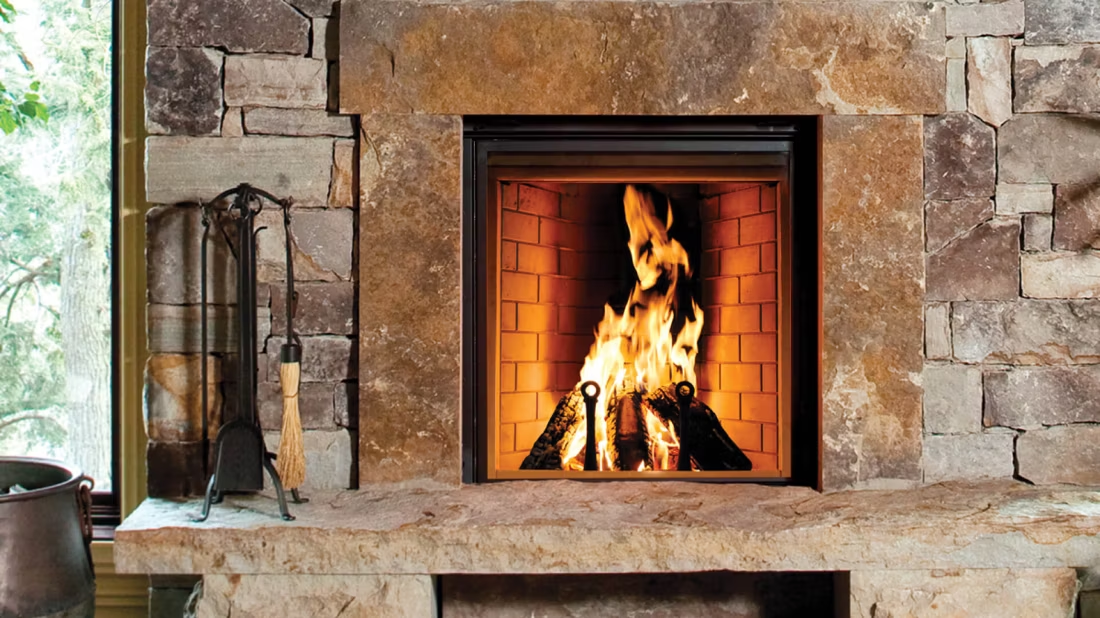
Firewood Cutting Permits Near Crossville
Three steps. No salesperson until you're ready.
Tell us about your project
Your zip code, your situation, and the fuel you're leaning toward—or let the answers point you to one.
See what's actually available
The brands dealers within 100 miles genuinely carry—real options, never a catalog mirage.
Get your dealer & Project Guide
A trusted local dealer, plus the free Project Guide & Parts List that names every component of the job.
Frequently Asked Questions
Is wood heat common in Crossville?
Not really, and it's worth being upfront about that. Crossville's growth has been driven heavily by retirement communities like Fairfield Glade and Lake Tansi, where homes are built with central electric heat pumps and often a gas fireplace for looks. Wood stoves show up more on older farmhouses, rural acreage outside the planned developments, and cabins where a backup heat source that doesn't depend on the grid still matters. If you're in one of those situations, wood is a legitimate option—it's just not the neighborhood standard here the way it might be in a colder market like Bozeman, MT or Burlington, VT.
How much does a wood stove installation cost in Crossville?
Because wood stoves are a smaller share of the local market, pricing here tends to track general Southeast averages rather than a deep local baseline: expect roughly $3,500 to $8,500 for a stove or insert, including a hearth pad, Class A chimney pipe, and labor. Homes without an existing masonry chimney sit toward the higher end once full through-roof venting is added. Because fewer local dealers stock wood units compared to gas or electric, it's worth getting a quote from someone who installs solid-fuel appliances regularly rather than a general HVAC contractor.
Where can I get a permit to cut my own firewood near Crossville?
Cherokee National Forest issues personal-use firewood permits for $20 per cord, valid during the May-through-October cutting season. That timing lines up well with drying wood before it's needed—a cord cut in summer has a real chance of being seasoned by the time cold weather arrives in December or January. Oak and hickory cut in Cumberland County take the longest to season properly (plan on 9-12 months), while pine dries faster but burns hotter and dirtier, so it's better suited to shoulder-season fires than deep winter heat.
What firewood species are available around Crossville?
Oak and hickory are the workhorses on the Cumberland Plateau—dense, high-BTU woods that burn long and hot once properly seasoned, which matters if a wood stove is your backup heat during an ice storm outage. Maple is also common and burns cleaner with less spitting. Pine is plentiful but resinous and burns fast with more creosote buildup, so it's better as kindling or shoulder-season fuel than a primary winter wood. Most local firewood sellers mix species, so ask specifically for oak or hickory if you're buying rather than cutting your own.
Do I need a permit to install a wood stove in Crossville?
Yes—new solid-fuel appliance installations require a building permit through the Cumberland County Building Department (or the City of Crossville's building office if you're inside city limits), and the unit itself needs to meet current EPA emissions standards. Most dealers who install wood stoves in this area handle the permit paperwork as part of the job. Because wood installs are less frequent here than gas or electric, confirm your installer has pulled solid-fuel permits before—it's a smaller pool of contractors than you'd find in a heavier wood-heat market.
Should I get a wood stove, or go with gas or electric instead?
For most Crossville homes, gas or electric is the more practical call—natural gas and propane fireplaces give instant, thermostat-controlled heat, and Volunteer Electric Cooperative's residential rate (around $0.122/kWh) makes electric heat pumps and zone heaters cost-effective for day-to-day use. Wood makes the most sense if you're on rural acreage with access to your own timber or a Cherokee National Forest cutting permit, want a heat source that works with the power out, or you're heating an older farmhouse or cabin without existing ductwork. If none of that describes your situation, gas or electric will likely serve you better and cost less to install.
Can I install a wood stove in a retirement community like Fairfield Glade or Lake Tansi?
Check your HOA or POA covenants before buying anything. Many of Crossville's planned retirement communities restrict exterior modifications, including new chimneys or flue penetrations through the roof, and some prohibit solid-fuel appliances outright in favor of the gas and electric systems the homes were built with. This is one of the most common reasons wood stove installs get put on hold locally—not the building permit, but the community association rules. A local dealer can tell you quickly whether a given install is realistic in your subdivision before you spend money on a quote.
How often should a wood stove chimney be inspected in Crossville?
The Chimney Safety Institute of America recommends an annual inspection for any wood-burning appliance, and that holds true here even though Crossville's mild winters (average low around 26°F) mean most local wood stoves see lighter, more occasional use than they would in a harder-heating climate. Lighter use doesn't mean no creosote—infrequent, lower-temperature fires can actually build up more creosote than a stove run hot and steady all winter. Plan on a sweep and inspection each late summer before burning season, especially if the stove sat unused much of the previous year.
Where can I buy firewood in Crossville if I'd rather not cut my own?
Several small operators and farm-based sellers around Cumberland County sell seasoned oak, hickory, and mixed hardwood by the rick or cord, generally in the $180-$275 per cord range depending on species and delivery distance. Because wood heat is a smaller niche market here than in colder regions, supply is less consistent than you'd find in a place like Duluth, MN—it's worth lining up a supplier before the first cold snap in November or December rather than waiting until you actually need a load delivered.
Why is my open fireplace making my house colder?
Open fireplaces suck—literally. As the fire burns, it consumes air your furnace already paid to heat and pulls it out through the chimney, so the house is actually colder after the fire goes out than before you lit it. An insert fixes this: it seals the chimney, puts fixed glass across the front, and turns that hole in your house into a real heat source.
Why won't my new wood stove get going like my old one?
New wood stoves are 70%+ efficient, so far less heat goes up the flue—which also means less draft to get a fire established. The rule: build a genuinely hot fire for about 45 minutes before you choke it down. Skip that and you get smoke in the room, creosote in the chimney, and a fire that never takes off. Most performance complaints trace straight back to this.
Does a fireplace add value to my home?
On average, a fireplace adds back to the home about the same amount you spent installing it. Add the monthly savings from heating the rooms you actually use instead of the whole house—often hundreds of dollars a year—and the value case is strong before you even count what a fire does for how your family uses the room.
Can I install a fireplace myself?
If you're putting a fire in your house on purpose, it's best to work with an expert. Unless you're genuinely experienced in framing, gas line, vent pipe, and the national code on clearances to combustibles, have a professional do it—and ideally the same company that sells you the fireplace, so warranty, service, and liability all live under one roof.
Nearby Dealers
Hearth shops serving Crossville and the surrounding area. Every listing shows whether it is a WhyFire partner, a dealer we have verified as authorized for the brands we recommend, or a local business carrying hearth products. No manufacturer pays for placement. How we verify dealers →
Spar-Gas
Volunteer Hearth & Home
Middle Tn Natural Gas - Crossville
Middle Tennessee Natural Gas
Find your wood stove in Crossville.
Tell us about your home and whether you're on rural acreage or inside an HOA, and we'll match you with a trusted local dealer and send over a free Project Guide & Parts List—the exact parts, including the vent kit, for your Crossville wood stove project.
Find Your Fireplace →