
Keep Your Family Warm and Safe—No Matter What
Most homes here run on electric heat pumps or natural gas, but Putnam County's oak and hickory country still supports wood stoves for ice-storm backup, a den fireplace, or a cabin outside town. We'll help you find the right unit and a trusted local dealer.
Every Project Starts From One of These Five Situations
A supplemental choice in electric and gas territory.
Cookeville sits at about 1,090 feet on the western edge of the Cumberland Plateau, in a 4A climate zone with a moderate heating season and winter lows averaging 27°F. That's a real but moderate heating season—nothing close to Duluth MN's brutal, months-long winters. Because of that, the default heating systems in Putnam County housing stock are electric heat pumps served by Upper Cumberland EMC or the City of Cookeville's own utility, plus natural gas where available. Wood isn't the backbone of local heating the way it is in colder, more remote markets.
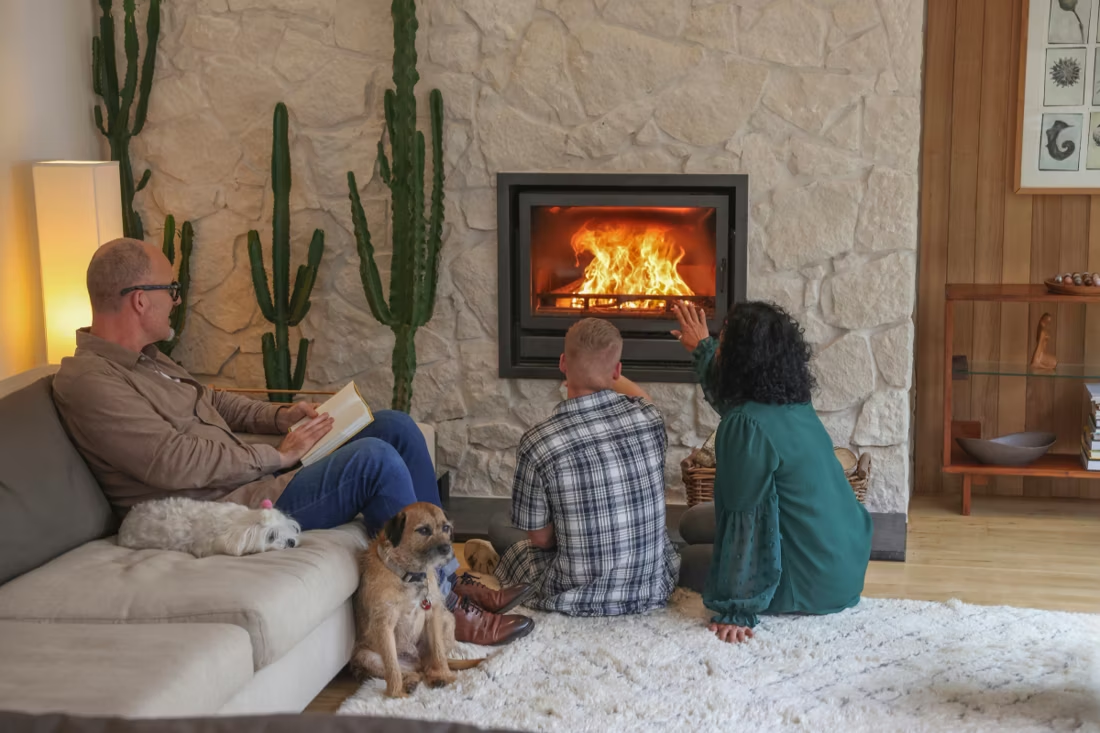
That doesn't mean wood is out of place here. The hardwood forests surrounding Cookeville—oak, hickory, maple, and pine—make firewood cheap and plentiful for anyone who wants it, and the region has a real history of ice storms that can knock out power across Putnam County for days at a stretch. A lot of local wood stove and insert purchases are driven by that: homeowners who want a heat source that doesn't depend on the grid, or who simply want a real fire in the living room rather than a heat pump vent. If that's you, a properly sized and vented stove is a legitimate, worthwhile project—it's just a supplemental one for most households here, not a primary heating replacement.
Three steps. No salesperson until you're ready.
Tell us about your project
Your zip code, your situation, and the fuel you're leaning toward—or let the answers point you to one.
See what's actually available
The brands dealers within 100 miles genuinely carry—real options, never a catalog mirage.
Get your dealer & Project Guide
A trusted local dealer, plus the free Project Guide & Parts List that names every component of the job.
Frequently Asked Questions
Is wood heat actually common in Cookeville, or is it unusual?
It's a minority choice. Most Cookeville homes heat primarily with electric heat pumps or natural gas, and new construction almost never includes a wood-burning system as the primary heat source. Where wood stoves and inserts do show up is as backup heat for ice storms, supplemental heat in a den or basement, or in older farmhouses and cabins on the outskirts of Putnam County where a fireplace was already part of the house. If you're considering wood heat here, it's worth going in clear-eyed: you're adding a second heat source, not replacing your HVAC system.
How much does a wood stove or insert installation cost in Cookeville?
Because wood isn't a primary fuel in this market, pricing here tracks closer to national averages than to the aggressive wood-heat pricing you'd see in a place like Bozeman MT where nearly every dealer stocks wood exclusively. Expect roughly $3,000 to $8,000 for a mid-size freestanding stove with new Class A chimney venting, or $3,500 to $7,000 for an insert into an existing masonry fireplace using a stainless liner. Costs move up if your home has no existing chimney or if a hearth pad rebuild is needed for clearance. Get a firm number from a local dealer after an in-home look—this isn't a market with a lot of installers competing on price, so estimates can vary more than in wood-heavy regions.
What size wood stove makes sense for a Cookeville home?
Given the region's moderate 4A climate and winter lows that average around 27°F rather than sub-zero, most Cookeville households don't need the largest catalytic stoves built for 20-hour burns in brutal cold. A small to mid-size stove—rated for 1,000 to 1,800 square feet—is usually plenty to supplement a heat pump or gas furnace in a den, living room, or basement. If you're heating a genuinely off-grid cabin outside town with wood as the only source, size up and talk through insulation and layout with a local dealer, since that's a different sizing problem than backup heat in an already-conditioned home.
Should I get a wood stove or a wood-burning insert?
If your Cookeville home already has a working masonry fireplace, an insert is almost always the better move—it uses the chimney you have, seals up the drafty open hearth, and turns a decorative fireplace into a real heat source. A freestanding stove makes more sense if you don't have an existing fireplace, or if you're setting up wood heat in a basement, garage, or outbuilding. Because wood is a supplemental system for most households here rather than a whole-house heat source, the smaller footprint and easier venting of an insert is often the practical answer.
Do I need a permit to install a wood stove in Cookeville?
Most likely yes—new wood-burning installations typically require a building permit, and any work tying into an existing chimney or adding new Class A pipe should be inspected for clearance and venting compliance. Check with the Putnam County Building Department or City of Cookeville codes office depending on which side of the city line you're on, since requirements and fees can differ inside versus outside city limits. In practice, most local hearth dealers who install wood stoves handle the permitting as part of the job, so it's worth asking upfront whether that's included in your quote.
What's the best wood stove for Cookeville's climate?
You don't need an extreme cold-climate catalytic stove built for Fargo ND winters—Cookeville's milder 4A climate and 27°F average winter low mean a solid mid-efficiency non-catalytic stove is usually enough. Buck Stove, manufactured just down the road in Spring City, TN, is a common regional pick and easy to get serviced locally. Pacific Energy and Drolet also show up frequently in Middle Tennessee installs and hold up well for supplemental or backup use. If you're planning to burn 24/7 as a primary heat source in an outlying cabin, a catalytic model from Blaze King is worth the upgrade for longer burn times.
How often should a wood stove or chimney be inspected in Cookeville?
Annually, per CSIA guidance, and that holds whether you're burning wood as backup heat a dozen nights a winter or running it more regularly. Because most Cookeville installations get lighter, seasonal use rather than the daily burns of a primary-heat household in a colder climate, creosote buildup tends to be slower—but it still happens, especially if you're burning unseasoned wood or running the stove low and slow for long overnight backup burns. Schedule the sweep in late summer or early fall before the first cold snap and before an ice storm forces you to rely on it.
Where can I get firewood in Cookeville?
The hardwoods around Putnam County make this easy—oak, hickory, and maple are the standard local firewood species, with some pine mixed in for kindling and shoulder-season burns. Several small operators and farm sellers around Cookeville deliver split, seasoned cordwood, typically running $150 to $250 per cord depending on species and how well-seasoned it is. Oak and hickory burn hotter and longer than pine, which matters if you're counting on the stove for real backup heat during a multi-day power outage rather than just weekend ambiance.
Does a wood stove make more sense than just running my heat pump or gas furnace?
For everyday heating, no—your electric heat pump through Upper Cumberland EMC or the City of Cookeville utility (residential rates run roughly $0.11 to $0.13 per kWh) or a gas furnace will heat your whole house more evenly and with less labor than a wood stove ever will. Where wood earns its keep is resilience: it keeps working when an ice storm takes down power lines across Putnam County, and it lets you heat one room without running the whole system. Most homeowners who add a wood stove here aren't replacing their primary heat—they're buying insurance against the outages this region sees most winters, plus the ambiance of a real fire.
Why is a fireplace insert so efficient?
An insert does two things: it seals the chimney completely, so you stop losing air you already paid to heat, and it radiates warmth into the room through the firebox and glass. Most add a heat-exchange fan that pulls cool room air underneath, wraps it around the hot firebox, and pushes it back out warm. Your home is more efficient before you've even lit the first fire.
What's the difference between an insert and a zero-clearance fireplace?
An insert is a fireplace that slides into a pre-existing wood-burning fireplace—if you don't have one, there's nothing to insert it into. A zero-clearance fireplace is built into a framed wall, which makes it the answer for remodels and new construction. Simple test: existing masonry fireplace means insert; blank or framed wall means zero-clearance.
What is an in-home preview and do I need one?
It's a visit where a hearth professional measures your space, confirms the model you picked actually works in your home, and walks the specs—framing, gas line, venting, finish work—before anything is ordered. Some details you just can't know until you see the house. Never make a down payment without one; it's the single most-skipped step that burns buyers.
How much should I budget for a fireplace?
For an average home—covering the fireplace, the vent pipe, and basic installation—a budget between $3,900 and $5,500 gives you a lot of options across wood, gas, and pellet. By the time you add finish work, gas line, and electrical, the average complete installation lands between $5,000 and $12,000 all-in. In a remodel or new build, a good rule is to put about 2.5% of the total project cost toward the fireplace.
Nearby Dealers
Hearth shops serving Cookeville and the surrounding area.
Find your wood fireplace in Cookeville.
Tell us a bit about your home and whether you're after backup heat or just a real fire in the living room. We'll match you with a trusted local dealer and send over a free Project Guide & Parts List for your Cookeville wood project—sizing, venting, and the exact parts needed, no big-box guesswork.
Find Your Fireplace →