
Find the right fireplace for your Putnam County home.
Wood, gas, pellet, and electric fireplace resources for every town in Putnam County—from Cookeville and Algood to Baxter, Monterey, and Silver Point. Find the right unit and connect with a trusted local hearth retailer.
Every Project Starts From One of These Five Situations
Moderate winters, real heating needs across Putnam County, Tennessee.
Putnam County sits on the Cumberland Plateau in Middle Tennessee's Upper Cumberland region, anchored by Cookeville and Tennessee Tech University. Winters here are moderate by national standards—climate zone 4A, an average winter low of 27°F, and a winter heating load less than half what a place like Minneapolis, MN logs in a typical winter. Still, the heating season runs a solid five months, roughly November through March, and the hardwood forests covering the plateau and surrounding hills produce some of the best firewood species around—oak, hickory, and maple burn long and hot, with pine useful for kindling and quick shoulder-season fires. That local wood supply, paired with genuinely cold nights that rarely turn brutal, is why wood, gas, pellet, and electric heat all have a real role to play here depending on the home.
This hub rolls up everything in one place: hearth retailers, service technicians, and fuel suppliers serving every community in the county—Cookeville, Algood, Baxter, Monterey, Silver Point, and the unincorporated areas in between. Pick your fuel below for local dealers, installation costs, and unit recommendations specific to that fuel. Whether you're heating a Cookeville subdivision home or a farmhouse out toward Buffalo Valley, this is the starting point.
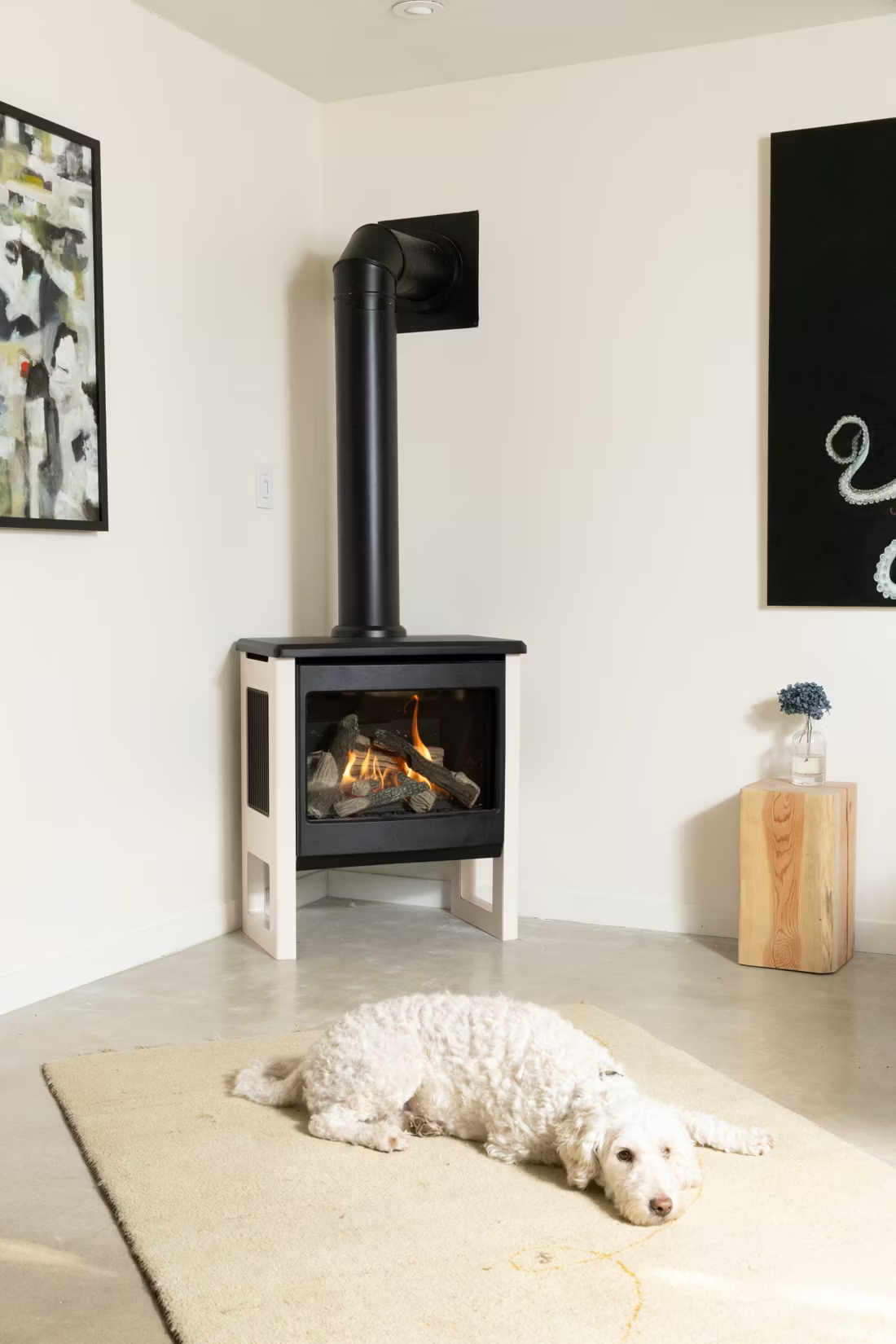
Four fuels. One honest answer for Putnam County.
Three steps. No salesperson until you're ready.
Tell us about your project
Your zip code, your situation, and the fuel you're leaning toward—or let the answers point you to one.
See what's actually available
The brands dealers within 100 miles genuinely carry—real options, never a catalog mirage.
Get your dealer & Project Guide
A trusted local dealer, plus the free Project Guide & Parts List that names every component of the job.
Frequently Asked Questions
Which fireplace fuel is most common in Putnam County?
There's no single default here—Putnam's moderate climate zone 4A winters support all four fuels reasonably well. Wood is popular in rural areas outside Cookeville because oak, hickory, and maple grow abundantly on the plateau and burn long and hot; a mid-size wood stove or insert is often enough given the 27°F average winter low. Gas is common in and around Cookeville, where Cookeville Gas Department service makes gas fireplaces and inserts a low-maintenance option; propane fills the gap in outlying areas without gas lines. Pellet stoves have grown in popularity thanks to steady regional supply from Lignetics, Hamer Pellet Fuel, and Greenway Renewable Energy—good for homeowners who want wood-style heat without splitting and stacking. Electric fireplaces show up mostly as supplemental or ambiance units in bedrooms and living rooms rather than primary heat, since Putnam's winters, while real, aren't severe enough to demand it. Most homes end up mixing fuels—wood or pellet for primary heat, gas or electric for convenience rooms.
Do I need a permit to install a wood stove or gas fireplace in Putnam County?
In most cases, yes. Inside Cookeville city limits, permits for wood stoves, inserts, gas fireplaces, and pellet stoves run through the City of Cookeville Codes and Compliance Department; in unincorporated Putnam County, the county building codes office handles it. Gas installations also require a separate gas line permit and a licensed gas fitter for the connection itself—that applies whether you're on Cookeville Gas Department service or running propane. Wood-burning appliances installed new should meet current EPA emissions standards, which most retailers only stock anyway. Electric fireplaces are usually permit-free unless you're doing a built-in installation that involves new wiring or a dedicated circuit. Most local hearth retailers handle the permitting paperwork as part of the installation, so it's rarely something you have to navigate on your own.
Are there any wood-burning restrictions in Putnam County?
No—Putnam County has no EPA nonattainment designation and no winter burn advisories like counties in inversion-prone basins out West. There's no mandatory or voluntary curtailment program here, so wood stoves and fireplaces can run through the winter without air-quality-driven limits. That said, it's still worth choosing an EPA-certified stove: it burns local oak and hickory more efficiently, produces less creosote buildup in the chimney, and can matter for homeowners insurance, which increasingly asks about certification and installation documentation. If you're buying or selling a home with an older, uncertified wood stove, budget for a possible upgrade—not because of a legal mandate, but because it affects resale and insurability.
Can one local retailer handle wood, gas, pellet, and electric fireplaces?
Many hearth retailers serving Putnam County carry at least three of the four fuel types, and several carry all four with working showroom displays of each. That's useful if you're still deciding—you can compare a wood insert, a gas log set, and a pellet stove side by side and talk through trade-offs with the same dealer rather than shopping four separate stores. Some smaller shops specialize—focusing heavily on wood and pellet, for instance, given the strong regional hardwood and pellet supply—so it's worth checking each retailer's listed fuel coverage on this hub before you drive out. If you want a firm apples-to-apples comparison, a multi-fuel dealer is usually the faster route.
How does fireplace service and repair work in rural parts of the county, like Monterey or Silver Point?
Most service technicians covering Putnam County are based in or near Cookeville and travel out to Monterey, Baxter, Silver Point, Buffalo Valley, and other outlying communities for annual sweeps, gas inspections, and pellet stove cleaning. Expect a modest travel fee for calls outside the immediate Cookeville area—often $30 to $75 depending on distance. Late-summer and early-fall booking (August through October) is easier than trying to get a same-week appointment once cold weather hits in November. If you're well outside town, it's worth scheduling your annual chimney sweep or gas checkup before the first cold snap rather than waiting for a mid-winter breakdown.
What does fireplace installation typically cost across the different fuel types in Putnam County?
Costs vary by fuel and by how much venting or gas line work is involved. Wood stove or insert installation: roughly $3,800 to $8,000 for a typical retrofit, more if new masonry chimney work is required. Gas fireplace, insert, or stove: roughly $4,000 to $9,500, with cost driven mostly by whether a new gas line has to be run—homes already on Cookeville Gas Department service tend to land on the lower end. Pellet stove or insert: roughly $4,000 to $7,000 for a standard install, with ongoing fuel costs kept reasonable by regional suppliers like Lignetics and Hamer Pellet Fuel. Electric fireplace: $200 to $2,500 for the unit itself, plus $300 to $1,000 in labor for anything beyond a simple plug-in install. For dealer-specific pricing, see the county-plus-fuel pages linked above.
How much should I budget for a fireplace?
For an average home—covering the fireplace, the vent pipe, and basic installation—a budget between $3,900 and $5,500 gives you a lot of options across wood, gas, and pellet. By the time you add finish work, gas line, and electrical, the average complete installation lands between $5,000 and $12,000 all-in. In a remodel or new build, a good rule is to put about 2.5% of the total project cost toward the fireplace.
Does a fireplace add value to my home?
On average, a fireplace adds back to the home about the same amount you spent installing it. Add the monthly savings from heating the rooms you actually use instead of the whole house—often hundreds of dollars a year—and the value case is strong before you even count what a fire does for how your family uses the room.
Can a fireplace actually lower my heating bill?
Yes—by creating a comfort zone. A furnace heats every square foot of the house just to warm the one room you're in; a gas fireplace on low burns roughly a sixth of the gas a typical furnace does. Set the furnace around 55–60 degrees as a baseline, then heat the rooms your family actually uses. Families who heat this way commonly save $20–$60 a month.
Should the dealer who sells my fireplace also install it?
Ideally, yes. A fireplace project involves vent pipe, gas line, electrical, and often tile or stone. Hire three or four separate trades and you own the liability and the game of telephone between them. One company selling and installing means one accountable party, start to finish—ask about factory training, on-time completion records, and what happens if an inspection fails.
Stove and Fireplace Dealers in Putnam County
Listings include WhyFire partner dealers, dealers we have verified as authorized for the brands we recommend, and established local businesses that carry hearth products. Every listing shows which one it is. The ones marked Preferred run on WhyFire's software, so they can show you real pricing and book your appointment right here. No manufacturer pays for placement. How we verify dealers →
Ap Hearth LLC
Middle Tn Natural Gas - Sparta
Spar Gas Inc.
Colligan Group Dba Frugal Mick
Find your fireplace in Putnam County.
Pick your fuel below to see local dealers, installation costs, and recommended units, then get matched with a trusted Putnam County retailer and a free Project Guide & Parts List for your specific home.
Find Your Fireplace →