
Pellet Stoves Are a Niche Choice in Chattanooga's Mild Climate.
With winter lows averaging 32°F and a fairly short, mild winter heating season, Chattanooga doesn't need the long, hopper-fed burns pellet stoves are built for—but a small number of local homes still use them well. Here's an honest look at where they fit, and how to connect with a dealer who actually carries them.
Every Project Starts From One of These Five Situations
Chattanooga winters rarely call for a hopper-fed stove.
Chattanooga sits at about 695 feet in the Tennessee River Valley, tucked between Lookout Mountain and Signal Mountain, in climate zone 4A with a fairly short, mild winter heating season. Compare that to a genuinely cold-climate market like Duluth, Minnesota, which faces months of relentless cold, and it's clear why pellet stoves—designed to feed a hopper for 24+ hours through weeks of sub-freezing weather—haven't caught on here the way they have in the upper Midwest or New England. Hamilton County winters are short, and the coldest stretches rarely justify the investment.
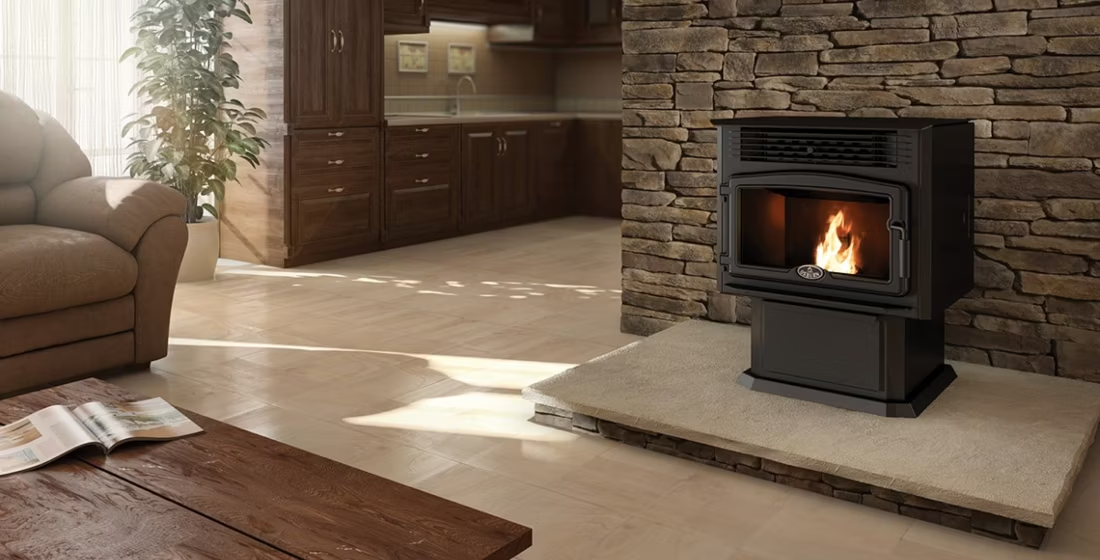
Most Chattanooga homes heat with natural gas or electric heat pumps served by the City of Chattanooga's municipal utility, and that infrastructure covers the vast majority of heating needs without a hopper appliance in the mix. That said, pellet stoves haven't disappeared entirely—some homeowners in wooded foothill neighborhoods around Signal Mountain or Ooltewah install a small pellet insert for a finished basement, a detached studio, or simply for the clean, low-maintenance ambiance of a real flame without hauling and stacking cordwood. If that's your situation, a local dealer can tell you honestly whether it makes sense for your space, and if it does, what's actually available to install.
Three steps. No salesperson until you're ready.
Tell us about your project
Your zip code, your situation, and the fuel you're leaning toward—or let the answers point you to one.
See what's actually available
The brands dealers within 100 miles genuinely carry—real options, never a catalog mirage.
Get your dealer & Project Guide
A trusted local dealer, plus the free Project Guide & Parts List that names every component of the job.
Frequently Asked Questions
How much does a pellet stove installation cost in Chattanooga?
Because pellet stoves are a low-volume product in this market compared to gas fireplaces or heat pump systems, there isn't a well-established local price band the way there is in colder states. Nationally, a pellet stove installation with venting and labor typically runs $3,000 to $6,000, and Chattanooga installs tend to land in that range too—but with fewer dealers stocking pellet units locally, get a firm in-home quote rather than assuming a number. Ask specifically whether the quote includes the vent kit, since that's where niche installs sometimes get underquoted.
Does a pellet stove even make sense in Chattanooga's climate?
For most homes, no—not as a primary heat source. With winter lows averaging around 32°F and a fairly short, mild winter heating season, Chattanooga's heating season is short and mild compared to places like Bozeman, Montana or Burlington, Vermont, where pellet stoves earn their keep running nonstop for months. Where a pellet stove does make sense here is as supplemental heat for a specific room, a finished basement, or a detached space that isn't well served by your central system—not as the reason you heat the whole house.
Where can I actually buy pellets in the Chattanooga area?
Pellets aren't stocked on every hardware store shelf here the way they are in the Northeast or Great Lakes region, simply because demand is lower. Regional brands like Lignetics, Hamer Pellet Fuel (produced in Erwin, TN), and Greenway Renewable Energy do supply the Tennessee Valley, but you may need to order ahead or buy a season's worth at once rather than grabbing a bag on your way home. A local dealer who sells pellet stoves will usually also point you to their preferred pellet supplier and delivery schedule.
Will a pellet stove work during a power outage?
No—and this matters more in Chattanooga's decision-making than it might elsewhere. Pellet stoves rely on an electric auger and blower to feed fuel and circulate heat, so when the power goes out, the stove stops, full hopper or not. The City of Chattanooga's electric grid (via EPB) is generally reliable, but if backup heat during outages is your priority, a wood-burning unit or a battery-backed gas fireplace is a more dependable choice than a pellet stove.
What's the difference between a pellet stove and a wood stove for a home like mine?
Both are considered niche appliances in Chattanooga's mild climate, but they solve different problems. A wood stove burns cordwood—locally, oak, hickory, maple, and pine are common species, and Cherokee National Forest sells cutting permits for about $20 a cord during the May-to-October season for homeowners who want to cut their own. A pellet stove burns compressed pellets, needs no chimney (just a simple vent), produces almost no ash, and runs on a thermostat—but it needs electricity to operate and pellets must be purchased rather than gathered. For most Chattanooga homes considering either, gas fireplaces remain the more mainstream choice; pellet and wood are really about a specific room, aesthetic, or off-grid preference.
Do I need a permit to install a pellet stove in Chattanooga?
Generally yes—a new solid-fuel appliance install typically requires a building permit through the City of Chattanooga's Development Resource Center if you're inside city limits, or through Hamilton County if you're outside them. Because pellet installs are uncommon here, not every general contractor is familiar with the venting requirements, so it's worth confirming your installer has pulled permits for a pellet appliance before, not just gas or electric units.
What size pellet stove do I need for a Chattanooga home?
Given how mild the heating season is here, most Chattanooga pellet installs are sized for a single room or zone rather than whole-house heating—think 1,000 to 1,500 square feet at most, and often less. A stove sized for a Minneapolis or Fargo winter would be oversized and inefficient for a Tennessee Valley basement or den. A local dealer will size the unit to the specific room and its insulation rather than the house as a whole.
Pellet vs. gas—which is right for my Chattanooga home?
For the vast majority of homes here, gas wins on convenience and infrastructure—natural gas service is standard across much of Chattanooga, installation is well understood by local contractors, and it delivers instant, thermostat-controlled heat without any fuel storage. Pellet stoves offer a live-flame look and don't require a gas line, but they need a dedicated fuel supply that isn't as readily available locally, plus electricity to run. Unless you specifically want the pellet-burning experience—the visible flame, the wood-adjacent aesthetic, freedom from a gas hookup—gas is the more practical fit for this climate and market.
Is pellet fuel reliably available year-round in Chattanooga, or should I stock up?
Because pellet stoves are uncommon here, supply isn't as deep or as competitively priced as in pellet-heavy markets like the Northeast. Regional producers such as Hamer Pellet Fuel and Greenway Renewable Energy do serve Tennessee, but local retail stock can be thin, especially outside the coldest months. Most pellet stove owners in the area buy a season's supply in fall rather than relying on restocking mid-winter—your dealer can advise on how many tons to store and where to source them close to Hamilton County.
Why is a fireplace insert so efficient?
An insert does two things: it seals the chimney completely, so you stop losing air you already paid to heat, and it radiates warmth into the room through the firebox and glass. Most add a heat-exchange fan that pulls cool room air underneath, wraps it around the hot firebox, and pushes it back out warm. Your home is more efficient before you've even lit the first fire.
Can a pellet stove heat a whole house?
It genuinely can. I burned a pellet stove as my only heat source for years after a furnace died, and it kept the entire house warm. Pellets feed automatically from a hopper, so you get wood-heat economics with thermostat-style control. Two honest caveats: it needs weekly cleaning during the season, and most models need electricity to run—ask about battery backup if outages are a concern.
Does a fireplace add value to my home?
On average, a fireplace adds back to the home about the same amount you spent installing it. Add the monthly savings from heating the rooms you actually use instead of the whole house—often hundreds of dollars a year—and the value case is strong before you even count what a fire does for how your family uses the room.
Can a fireplace actually lower my heating bill?
Yes—by creating a comfort zone. A furnace heats every square foot of the house just to warm the one room you're in; a gas fireplace on low burns roughly a sixth of the gas a typical furnace does. Set the furnace around 55–60 degrees as a baseline, then heat the rooms your family actually uses. Families who heat this way commonly save $20–$60 a month.
Nearby Dealers
Hearth shops serving Chattanooga and the surrounding area. Every listing shows whether it is a WhyFire partner, a dealer we have verified as authorized for the brands we recommend, or a local business carrying hearth products. No manufacturer pays for placement. How we verify dealers →
Therm-Con, Llc
America's Hearth & Patio Warehouse
Hearthside Fireplace Patio & Barbeque Center
Smith's Ace Hardware
Blossman Gas And Appliance
Neal's Heating & Air D/b/a Fireside Hearth & Patio
Pellet Brands Stocked Around Chattanooga
Manufacturers will point you to the nearest stocking dealer.
Find your pellet stove in Chattanooga.
Tell us about your space and we'll match you with a trusted local Chattanooga dealer who actually carries pellet appliances—and send you a free Project Guide & Parts List with the exact parts, including the vent kit, for your project.
Find Your Fireplace →