
Find your fireplace anywhere in Hamilton County.
From downtown Chattanooga out to the ridges near the Cherokee National Forest, this hub rolls up hearth retailers, service techs, and fuel suppliers for the whole county. Pick a fuel and get matched with a local dealer who actually installs it here.
Every Project Starts From One of These Five Situations
Mild Chattanooga winters, 3,029 heating degree days, and a hearth market built around gas and electric.
Hamilton County stretches from downtown Chattanooga along the Tennessee River east into the ridges of the Cherokee National Forest, sitting in Climate Zone 4A with average winter lows around 32°F. At 3,029 heating degree days, the heating season here is short and mild compared with the cold-climate belt—Duluth, Minnesota logs more than double that number in a typical winter—which is the single biggest reason gas and electric fireplaces dominate rather than wood or pellet units. Oak, hickory, maple, and pine are the hardwoods you'll find at local firewood yards and along Forest Service roads in the Cherokee National Forest, but with heating loads this light, few households burn them as a primary winter heat source.
That doesn't mean wood is absent—it just plays a different role. Plenty of Hamilton County homeowners still put in a wood-burning fireplace or factory-built unit for the ambiance of a fire on a cold snap, and since the county has no air-quality attainment issues or winter burn restrictions, there's nothing stopping occasional use the way there is in inversion-prone Western counties. Pellet stoves are rarer still; regional brands like Lignetics, Hamer Pellet Fuel, and Greenway Renewable Energy keep fuel available for households that already own a unit, but the mild climate rarely justifies installing one new today. Gas is the practical workhorse across Chattanooga, East Ridge, Red Bank, and Soddy-Daisy, and electric fireplaces have found a strong niche in newer builds and condos where running a gas line isn't worth the cost. Pick your fuel below for local dealers and install costs specific to your town.
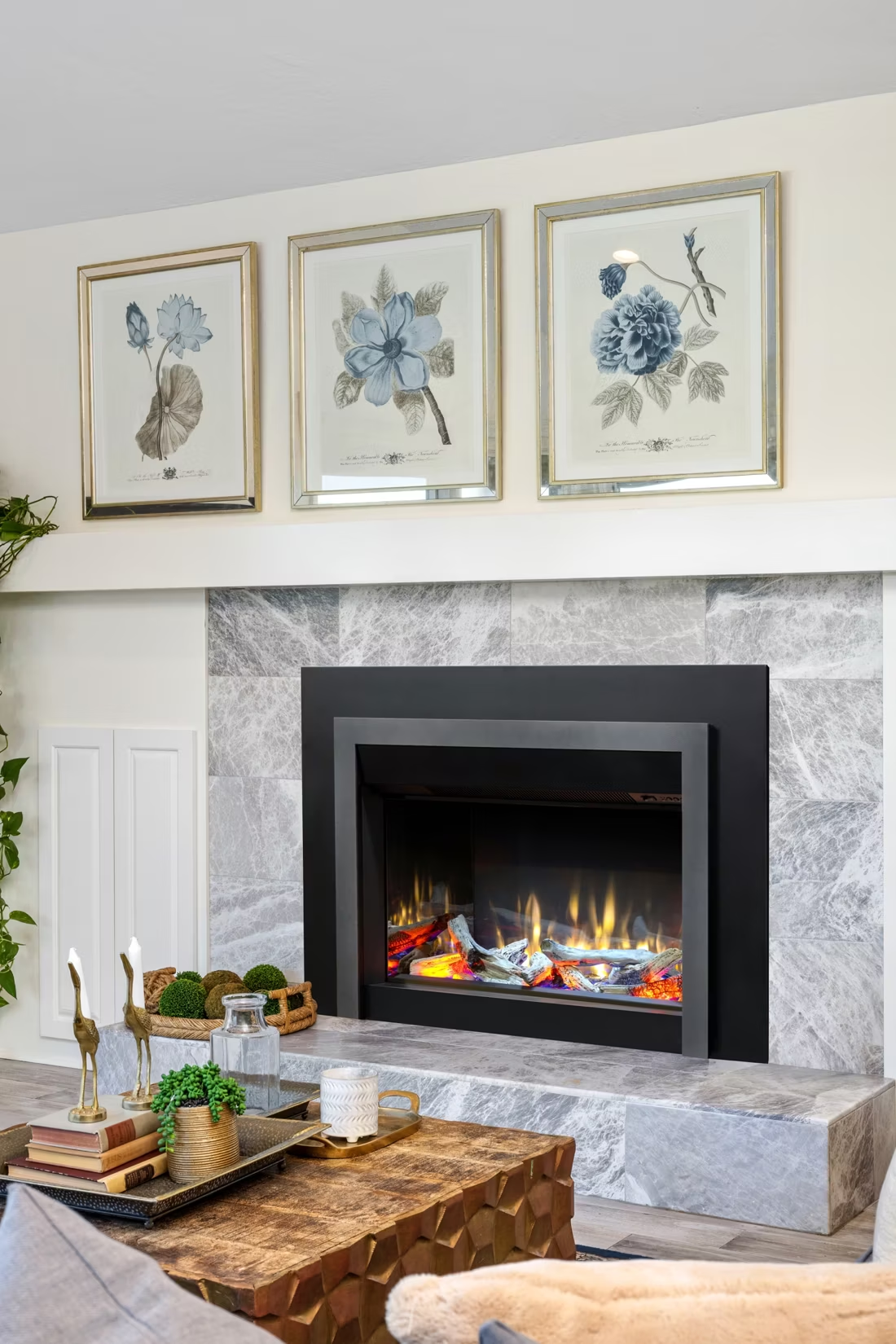
Four fuels. One honest answer for Hamilton County.
Three steps. No salesperson until you're ready.
Tell us about your project
Your zip code, your situation, and the fuel you're leaning toward—or let the answers point you to one.
See what's actually available
The brands dealers within 100 miles genuinely carry—real options, never a catalog mirage.
Get your dealer & Project Guide
A trusted local dealer, plus the free Project Guide & Parts List that names every component of the job.
Frequently Asked Questions
Which fireplace fuel makes the most sense in Hamilton County?
Gas and electric are the standard choices for most Hamilton County homes. With only 3,029 heating degree days and average winter lows around 32°F, the heating load here is far lighter than a cold-climate market like Burlington, Vermont, so gas fireplaces and inserts are popular for efficient supplemental warmth wherever natural gas service reaches, while electric units fit newer builds and condos where extending a gas line isn't practical. Wood-burning fireplaces still get installed, but almost always for the look and crackle of a fire on a cold night rather than as a primary heat source—oak and hickory are the local favorites. Pellet stoves are the rarest of the four; a few households running existing units still source bags from Lignetics or Hamer Pellet Fuel, but the mild climate rarely justifies a new pellet install.
Do I need a permit for a gas or electric fireplace install in Hamilton County?
Yes for gas, usually yes for a hardwired electric built-in. Gas fireplace, insert, or log-set installs require a permit through your local building codes office—Hamilton County's or the City of Chattanooga's, depending on where the property sits—plus a licensed gas fitter to make the line connection and pass inspection. Electric fireplaces that plug into an existing outlet typically skip the permit process, but a built-in electric unit that needs a dedicated circuit usually requires an electrical permit. Most retailers we match homeowners with handle this paperwork as part of the installation.
Is a wood-burning fireplace still worth installing given how mild the winters are here?
It depends on what you want it for. With a heating season this short, a wood stove or fireplace won't do much to lower your gas or electric bill, and almost nobody in Hamilton County relies on wood as primary heat the way homeowners do in colder parts of the country. But a factory-built or masonry wood fireplace still makes sense for ambiance and the occasional cold night—oak, hickory, and pine are all readily available locally, and homeowners near the Cherokee National Forest can pursue permits for personal-use deadfall. Because the county has no air-quality attainment concerns, there are no seasonal burn restrictions to plan around either, unlike Western counties that deal with winter inversion curtailment days.
Can I still find pellet fuel locally if I already own a pellet stove?
Yes, even though new pellet stove installs are uncommon here, fuel supply isn't a problem for households with an existing unit. Lignetics, Hamer Pellet Fuel, and Greenway Renewable Energy all distribute pellets in the region, and local hardware and farm-supply stores typically stock bags through the winter. If you're using a pellet stove for supplemental heat in a garage, workshop, or older home that already has one installed, sourcing fuel is straightforward—it's just not a fuel type most Hamilton County retailers are actively selling new systems for.
What does a fireplace installation typically cost in Hamilton County?
Costs track closely with fuel type and how much gas-line or electrical work is involved. Gas fireplaces, inserts, and stoves generally run $4,000–$9,000 depending on whether you're extending a gas line or converting an existing masonry fireplace. Electric fireplaces are the most affordable option—$200–$3,000 for the unit, plus $400–$1,200 in labor if it needs a dedicated circuit or built-in framing. A new factory-built wood fireplace typically runs $3,000–$7,000 installed. Pellet stove installs, when they do happen, land in a similar $4,000–$7,000 range. The county + fuel pages above break these numbers down further with local retailer pricing.
Where can I get a fireplace serviced or a chimney inspected in Hamilton County?
Service techs cover Chattanooga and the surrounding towns—East Ridge, Red Bank, Soddy-Daisy, Collegedale, and Signal Mountain all have regular service routes. Gas fireplaces should get an annual inspection to check the pilot, gas line, and venting; electric units occasionally need control-board or circuit troubleshooting rather than routine service. Wood-burning fireplaces used only a handful of nights a winter don't need the aggressive annual sweeping you'd see in a heavy-burning climate, but a sweep every year or two still keeps the flue clear and safe.
How much should I budget for a fireplace?
For an average home—covering the fireplace, the vent pipe, and basic installation—a budget between $3,900 and $5,500 gives you a lot of options across wood, gas, and pellet. By the time you add finish work, gas line, and electrical, the average complete installation lands between $5,000 and $12,000 all-in. In a remodel or new build, a good rule is to put about 2.5% of the total project cost toward the fireplace.
Can a fireplace actually lower my heating bill?
Yes—by creating a comfort zone. A furnace heats every square foot of the house just to warm the one room you're in; a gas fireplace on low burns roughly a sixth of the gas a typical furnace does. Set the furnace around 55–60 degrees as a baseline, then heat the rooms your family actually uses. Families who heat this way commonly save $20–$60 a month.
Does a fireplace add value to my home?
On average, a fireplace adds back to the home about the same amount you spent installing it. Add the monthly savings from heating the rooms you actually use instead of the whole house—often hundreds of dollars a year—and the value case is strong before you even count what a fire does for how your family uses the room.
Can I install a fireplace myself?
If you're putting a fire in your house on purpose, it's best to work with an expert. Unless you're genuinely experienced in framing, gas line, vent pipe, and the national code on clearances to combustibles, have a professional do it—and ideally the same company that sells you the fireplace, so warranty, service, and liability all live under one roof.
Stove and Fireplace Dealers in Hamilton County
Listings include WhyFire partner dealers, dealers we have verified as authorized for the brands we recommend, and established local businesses that carry hearth products. Every listing shows which one it is. The ones marked Preferred run on WhyFire's software, so they can show you real pricing and book your appointment right here. No manufacturer pays for placement. How we verify dealers →
Hearthside Fireplace Patio & Barbeque Center
Therm-Con, Llc
America's Hearth & Patio Warehouse
Smith's Ace Hardware
Get matched with a local Hamilton County dealer.
Tell us your address and fuel preference and we'll put together a free Project Guide & Parts List—the right unit, the vent or gas-line work it needs, and the local Hamilton County dealer we recommend for your project.
Find Your Fireplace →