
Pellet Heat Is Uncommon Here, But Not Impossible.
Arlington's mild Mid-South winters don't push most homeowners toward pellet heat—but if you're one of the few who wants it, we'll connect you with a dealer who can actually get it installed correctly.
Every Project Starts From One of These Five Situations
A mild winter climate that rarely asks for a pellet stove.
Arlington sits at 290 feet elevation in Shelby County, in climate zone 3A, with an average winter low around 30°F and roughly 3,352 heating degree days a year. That's a fraction of what a place like Duluth, MN or Fargo, ND sees in a single season—the kind of climate where pellet stoves become a genuine primary heat source. Here, most homes are built around gas and electric heat, and a solid-fuel appliance like a pellet stove is more of a specialty purchase than a heating necessity.
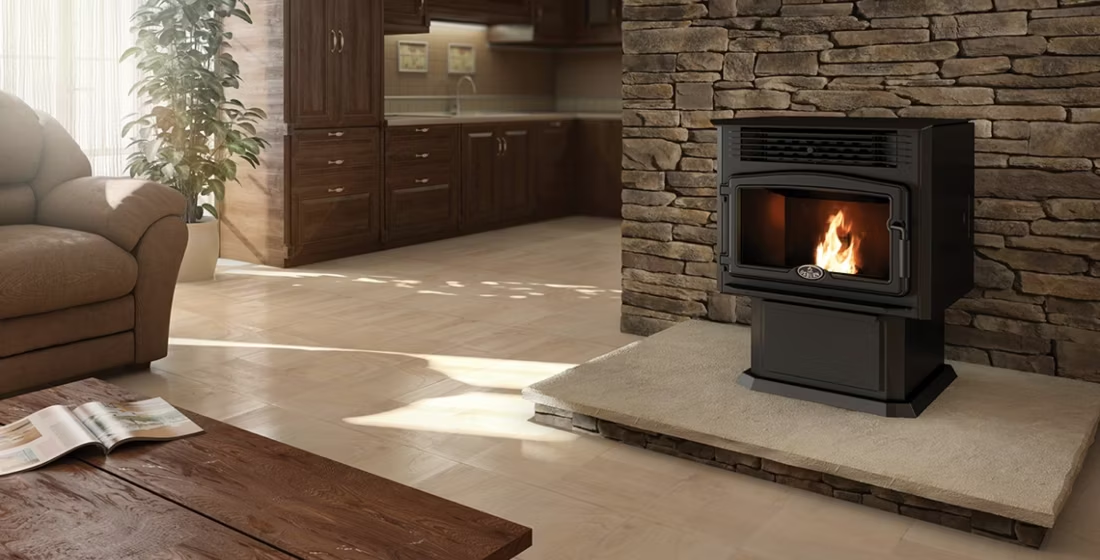
That said, pellet fuel does show up regionally—brands like Lignetics, Hamer Pellet Fuel, and Greenway Renewable Energy distribute through the Mid-South, so pellets themselves aren't hard to find if you know where to look. The homeowners who do install a pellet stove in Arlington usually want a specific look and feel (glass-front fire without a chimney), a controllable, thermostat-driven heat source for a workshop or bonus room, or supplemental warmth for the occasional hard freeze. It's a smaller, more deliberate category of buyer than in colder states, and we'll be straight with you about that rather than oversell it.
Three steps. No salesperson until you're ready.
Tell us about your project
Your zip code, your situation, and the fuel you're leaning toward—or let the answers point you to one.
See what's actually available
The brands dealers within 100 miles genuinely carry—real options, never a catalog mirage.
Get your dealer & Project Guide
A trusted local dealer, plus the free Project Guide & Parts List that names every component of the job.
Frequently Asked Questions
Are pellet stoves actually common in Arlington, TN?
No, and we won't pretend otherwise. With about 3,352 heating degree days and average winter lows near 30°F, Arlington's climate is mild compared to pellet-heavy markets in the upper Midwest or Rocky Mountain states. Most Shelby County homes rely on central gas or electric heat, and pellet stoves here tend to be chosen for a specific reason—a bonus room, a garage, a design preference for a clean glass-front fire—rather than as the primary way a family stays warm through winter.
What does a pellet stove installation cost in Arlington?
Because pellet stoves are a niche request here, there isn't the deep local pricing history you'd find in a colder pellet market. Nationally, a pellet stove or insert installation typically runs $3,000 to $6,500 depending on the unit, venting path, and whether an existing fireplace opening is being converted. In Arlington specifically, expect the labor side to lean toward the higher end of that range simply because fewer local installers specialize in pellet venting day to day—a certified hearth dealer will give you a firm number after seeing your home.
Where can I buy pellet fuel in Arlington?
Regional suppliers like Lignetics, Hamer Pellet Fuel, and Greenway Renewable Energy distribute through the Mid-South, so bagged pellets are available—but don't expect to find pallets stocked at every hardware store the way you would in Minnesota or Wisconsin. Farm and feed stores, along with hearth dealers who sell pellet stoves, are your best bet, and you may need to special-order or plan ahead of a cold snap rather than buying on demand.
Will a pellet stove keep my house warm during an ice storm power outage?
This is the honest catch with pellet stoves in Arlington: they need electricity to run the auger and combustion blower, so a standard pellet stove goes dark the moment the power does—and Shelby County does see ice storms that knock out power for days at a time. If backup heat during outages is your goal, a battery-backup system or small generator can keep a pellet stove running, but a wood-burning or vent-free gas appliance is generally a more reliable outage solution in this climate. Talk to a local dealer about pairing a pellet unit with battery backup if that's a priority for you.
Do I need a permit to install a pellet stove in Arlington?
Yes—a new solid-fuel appliance installation typically requires a building permit through your local Shelby County or Town of Arlington building department, covering the venting, hearth clearances, and gas or electrical connections involved. Arlington has no air quality non-attainment status or wood-smoke curtailment rules like you'd see in parts of the West, so the permitting process here is generally straightforward. A local installer who regularly pulls these permits will handle the paperwork as part of the install.
What pellet stove brands should I look at?
National manufacturers like Harman, Englander, and US Stove Company are common choices you'll find carried by hearth dealers serving the Mid-South, even in a market like Arlington where demand is lower. Because so few homes here run pellet as a primary heat source, it's worth asking your local dealer directly which models they actually stock parts and service for—a stove with no nearby service support is a bigger headache in a low-demand market than in a place where every hearth shop works on them daily.
Should I get a pellet stove or a gas fireplace instead?
For most Arlington homes, gas is the more natural fit. Natural gas and propane appliances are standard here, require no fuel storage or hopper refilling, and pair easily with the central heating systems most Shelby County homes already have. Pellet stoves make more sense if you specifically want the visual and ambient qualities of a real flame with pellet fuel's convenience over cordwood, or if you're heating a detached space like a shop or garage where running a gas line isn't practical. Either way, a local dealer can walk you through both given your specific room and venting situation.
Does wood heat make more sense than pellet in Arlington?
Given the local mix of oak, hickory, maple, and pine, firewood is certainly available in Shelby County—but like pellet, wood-burning appliances are also a specialty rather than a mainstream category here, since Arlington's mild winters and 30°F average low don't create the sustained cold that makes solid-fuel heat a practical daily necessity. If you're drawn to a real wood fire for ambiance or occasional cold snaps, a wood stove or insert is worth comparing against pellet, but expect both to be smaller-volume categories for local dealers compared to gas and electric.
How does electricity cost factor into a pellet stove or the alternatives?
Arlington homes are served by the City of Memphis utility system, with residential electric rates around $0.1216 per kWh—reasonably affordable by national standards. That matters two ways: a pellet stove's auger and blower add a modest amount to your electric bill (typically a few dollars a month in regular use), and it also means straightforward electric fireplaces or heaters are a genuinely economical option in this climate if you don't want to deal with pellet bags or venting at all. A local dealer can run the numbers on operating cost for your specific situation.
What's the difference between an insert and a zero-clearance fireplace?
An insert is a fireplace that slides into a pre-existing wood-burning fireplace—if you don't have one, there's nothing to insert it into. A zero-clearance fireplace is built into a framed wall, which makes it the answer for remodels and new construction. Simple test: existing masonry fireplace means insert; blank or framed wall means zero-clearance.
Why is a fireplace insert so efficient?
An insert does two things: it seals the chimney completely, so you stop losing air you already paid to heat, and it radiates warmth into the room through the firebox and glass. Most add a heat-exchange fan that pulls cool room air underneath, wraps it around the hot firebox, and pushes it back out warm. Your home is more efficient before you've even lit the first fire.
Can a fireplace actually lower my heating bill?
Yes—by creating a comfort zone. A furnace heats every square foot of the house just to warm the one room you're in; a gas fireplace on low burns roughly a sixth of the gas a typical furnace does. Set the furnace around 55–60 degrees as a baseline, then heat the rooms your family actually uses. Families who heat this way commonly save $20–$60 a month.
How much should I budget for a fireplace?
For an average home—covering the fireplace, the vent pipe, and basic installation—a budget between $3,900 and $5,500 gives you a lot of options across wood, gas, and pellet. By the time you add finish work, gas line, and electrical, the average complete installation lands between $5,000 and $12,000 all-in. In a remodel or new build, a good rule is to put about 2.5% of the total project cost toward the fireplace.
Nearby Dealers
Hearth shops serving Arlington and the surrounding area. Every listing shows whether it is a WhyFire partner, a dealer we have verified as authorized for the brands we recommend, or a local business carrying hearth products. No manufacturer pays for placement. How we verify dealers →
Acme Brick Company
31w - Mason, Tn
The Chimney Doctor
Bishop Hearth And Home, Inc.
Wells Building Supply
eFireplaceStore.com
Southern Hearth
Installed Building Products Of Memphis
Quality Grills
Pellet Brands Stocked Around Arlington
Manufacturers will point you to the nearest stocking dealer.
Find your pellet stove option in Arlington.
Tell us about your space and we'll put together a free Project Guide & Parts List—the right pellet unit, the vent kit it needs, and a trusted local Arlington-area dealer who can install it correctly.
Find Your Fireplace →