
Pellet Heat Is Rare in Yankton—Here's What Still Makes Sense.
Yankton winters push toward 10°F lows and nearly 6,900 heating degree days, but most homes here run on propane or electric—not pellets. Here's an honest look at what's actually available, and how to connect with a local dealer if a pellet stove still makes sense for your property.
Every Project Starts From One of These Five Situations
Pellet stoves are the exception in Yankton, not the rule.
Yankton sits along the Missouri River in southeastern South Dakota, at just over 1,200 feet elevation, where winter lows average around 10°F and the region racks up roughly 6,900 heating degree days a year—genuinely cold, on par with places like Fargo, ND. Despite that, pellet stoves haven't taken hold here the way they have in the wildfire-prone West or the Northeast. Most Yankton-area homes heat with propane or natural gas service, supplemented by electric from NorthWestern Energy or the Bon Homme Yankton Electric Association, and the dealer network carrying pellet appliances in this part of the state is thin.
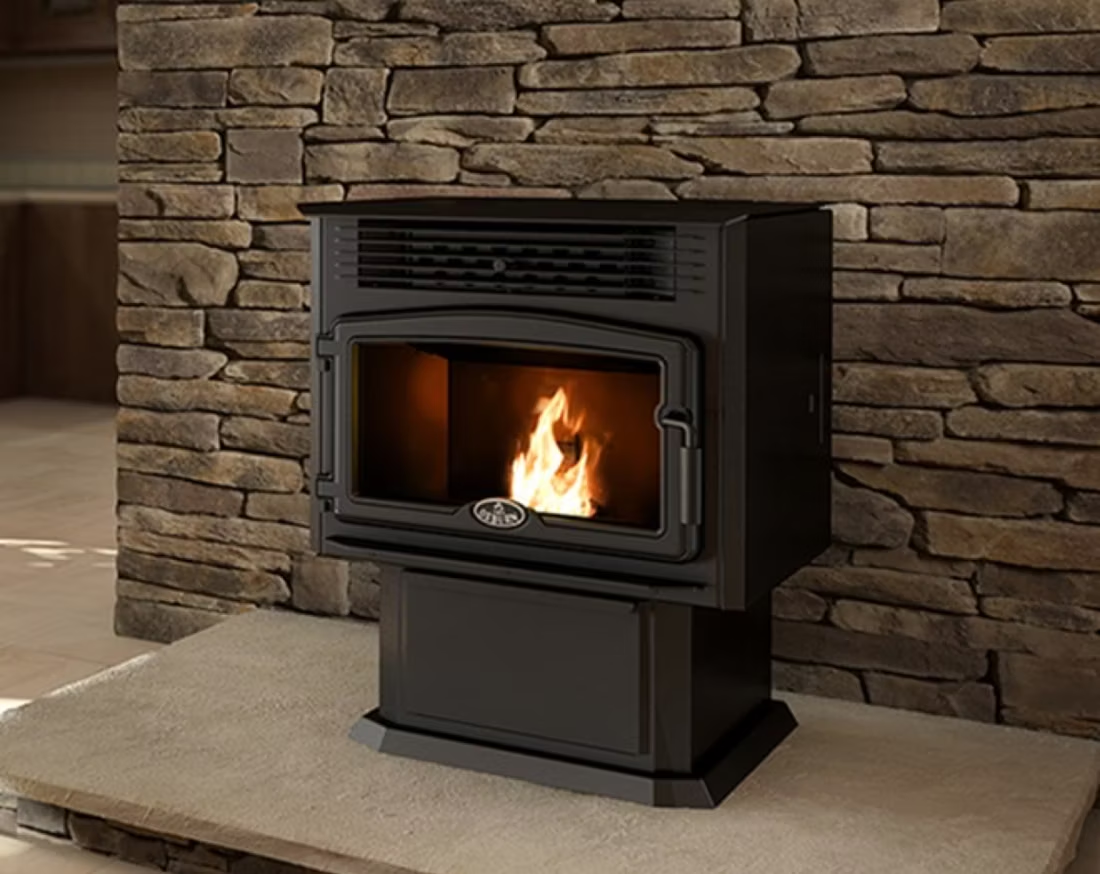
That doesn't mean pellet heat is off the table—it means it's a niche choice here. A handful of Yankton County homeowners run a pellet stove in a Missouri River cabin, a detached shop, or an older home the gas main never reached, often sourcing bags from regional producers like Lignetics or Indeck Energy Services through farm and ag supply stores rather than a dedicated hearth shop. If that's your situation, my job is to match you with a local dealer who genuinely carries and installs pellet equipment—not just whoever's closest—and hand you a free Project Guide & Parts List so you know exactly what the job requires, vent kit included.
Three steps. No salesperson until you're ready.
Tell us about your project
Your zip code, your situation, and the fuel you're leaning toward—or let the answers point you to one.
See what's actually available
The brands dealers within 100 miles genuinely carry—real options, never a catalog mirage.
Get your dealer & Project Guide
A trusted local dealer, plus the free Project Guide & Parts List that names every component of the job.
Frequently Asked Questions
Are pellet stoves actually available in Yankton, SD?
In limited numbers. Pellet fuel relevance for Yankton is low compared to propane and electric heat, which dominate the local market, so you won't find pellet stoves stocked at every hardware store the way you would in Minnesota or the Pacific Northwest. A small number of dealers serving the Yankton area can order and install pellet stoves and inserts, but expect a longer lead time and fewer floor models to see in person. If a pellet stove is the right fit for your situation—a cabin, a shop, or a home without gas service—I can match you with one of the dealers who actually handles this equipment rather than one who'll try to talk you into something else.
How much does a pellet stove installation cost in Yankton?
There isn't a well-established local price benchmark the way there is for propane or electric work, because so few installs happen here. Nationally, a pellet stove or insert install typically runs $3,500 to $6,500 depending on the unit, venting, and whether you need a new hearth pad—Yankton installs tend to land in that range too, but plan on getting a firm quote from a local dealer rather than assuming a number, since sourcing equipment and travel time can add to the bid in a low-volume market like this one.
Why aren't pellet stoves more common in Yankton if winters are this cold?
Cold winters alone don't drive pellet adoption—infrastructure does. Yankton and Yankton County are well served by propane and electric, through NorthWestern Energy and the Bon Homme Yankton Electric Association, at a residential rate around 12.5 cents per kWh. With reliable propane delivery and no air quality restrictions pushing homeowners toward alternative fuels, most people default to what's already easy to get serviced locally. Pellet stoves end up being a specialty purchase for people who specifically want a stove-fed fire without cutting and stacking cordwood.
Where do I buy pellet fuel near Yankton?
Bagged pellets aren't sold on every corner here the way they are in states with heavier pellet adoption. Regional producers like Lignetics and Indeck Energy Services supply pellets to farm and ag supply retailers and some hardware stores across southeastern South Dakota, and a few of those carry them seasonally. If you go with a pellet stove, ask your installing dealer where they source their own pellets—they'll usually know the most reliable local supply chain, since they don't want you calling mid-January because you can't find fuel.
Do I need a permit to install a pellet stove in Yankton?
Yes, in most cases—new solid-fuel appliance installations typically require a building permit through the City of Yankton Building Department, or Yankton County if you're outside city limits. Because pellet installs are infrequent here, it's worth confirming requirements directly rather than assuming your installer will handle it automatically the way they might for a routine furnace swap. A dealer who's actually installed pellet equipment in the county before will know the process.
Will my pellet stove work if the power goes out?
No—pellet stoves rely on an electric auger to feed fuel and a blower to distribute heat, so they shut down when the power does. That's a real consideration in Yankton County, where prairie ice storms occasionally knock out service from NorthWestern Energy or the local electric co-op for extended stretches. Some homeowners pair a pellet stove with a small backup generator or battery inverter specifically to keep it running during outages. If outage-proof heat is the priority, a propane unit with a standing pilot is a more dependable choice.
Pellet stove vs. propane—which makes more sense in Yankton?
Propane is the more established choice here, with reliable delivery infrastructure and service technicians throughout Yankton County, and it keeps working during a power outage if you have a standing-pilot unit. A pellet stove offers a real, visible flame and doesn't require a propane tank or delivery contract, but it needs a steady bag supply that isn't always easy to find locally and it stops running without electricity. For most primary-heat decisions in Yankton, propane wins on convenience; pellet tends to work better as a secondary or ambiance-driven choice than a whole-home strategy.
What pellet stove brands should I look at?
Because the local dealer network is thin, I'd lean toward brands with strong nationwide parts and service support rather than a boutique line that might be hard to get serviced two winters from now—think Harman, Quadra-Fire, or Englander, all of which have dealers scattered across the Midwest who can order parts even without carrying floor models in Yankton itself. Ask any dealer you're considering how they'd handle a warranty repair, since that's the real test of whether a brand is well-supported in a low-volume market like this one.
Pellet stove vs. electric heat—which is better for a Yankton home?
Electric heat, through NorthWestern Energy or the Bon Homme Yankton Electric Association at roughly 12.5 cents per kWh, is simple, requires no fuel storage, and is already the backbone of most homes here. A pellet stove offers real flame and can supplement or trim electric heating costs during the coldest stretches of a Yankton winter, but it adds fuel storage, hopper-loading, and maintenance that electric baseboard or a heat pump doesn't require. For most homeowners, electric handles the everyday load and a pellet stove—if you choose one—becomes a zone-heating or ambiance addition rather than a full replacement.
What does it take to replace an existing fireplace?
Fireplaces are like icebergs—bigger behind the wall than in front of it. Replacement means removing the surrounding tile or stone (the finish material laps onto the fireplace face), pulling the old unit, setting the new one in the same enclosure, and re-finishing the wall. A hearth professional can determine what's behind your wall without demolition during an in-home preview.
What's the difference between an insert and a zero-clearance fireplace?
An insert is a fireplace that slides into a pre-existing wood-burning fireplace—if you don't have one, there's nothing to insert it into. A zero-clearance fireplace is built into a framed wall, which makes it the answer for remodels and new construction. Simple test: existing masonry fireplace means insert; blank or framed wall means zero-clearance.
How much should I budget for a fireplace?
For an average home—covering the fireplace, the vent pipe, and basic installation—a budget between $3,900 and $5,500 gives you a lot of options across wood, gas, and pellet. By the time you add finish work, gas line, and electrical, the average complete installation lands between $5,000 and $12,000 all-in. In a remodel or new build, a good rule is to put about 2.5% of the total project cost toward the fireplace.
Can I install a fireplace myself?
If you're putting a fire in your house on purpose, it's best to work with an expert. Unless you're genuinely experienced in framing, gas line, vent pipe, and the national code on clearances to combustibles, have a professional do it—and ideally the same company that sells you the fireplace, so warranty, service, and liability all live under one roof.
Nearby Dealers
Hearth shops serving Yankton and the surrounding area. Every listing shows whether it is a WhyFire partner, a dealer we have verified as authorized for the brands we recommend, or a local business carrying hearth products. No manufacturer pays for placement. How we verify dealers →
Larry's Heating & Cooling
Kaiser Heating & Cooling
Pellet Brands Stocked Around Yankton
Manufacturers will point you to the nearest stocking dealer.
Find your pellet fireplace in Yankton.
Pellet heat is a niche choice in Yankton, but if it's the right one for your home, I'll match you with a local dealer who genuinely stocks and installs pellet equipment—and send you a free Project Guide & Parts List with the exact parts, including the vent kit, for your project.
Find Your Fireplace →