
Every fuel type, every town in Yankton County.
Gas and electric fireplaces do most of the work through a Missouri River winter here, with wood and pellet units reserved for the rare acreage property that wants one. Pick a fuel and get matched with a local dealer who installs it correctly for this climate.
Every Project Starts From One of These Five Situations
Missouri River winters, 6,884 heating degree days, and a county that heats primarily with gas.
Yankton County sits along the Missouri River in southeastern South Dakota, home to about 16,424 residents in and around the city of Yankton—the first capital of Dakota Territory. Average winter lows near 10°F and 6,884 heating degree days put the county's heating load in the same range as Fargo, North Dakota: a long, hard winter that runs from October into April. Cottonwood, oak, and ponderosa pine grow naturally along the river bottoms and bluffs here, but with no air-quality nonattainment issues and well-established gas infrastructure reaching Yankton, Volin, Utica, and the surrounding towns, most households never need a stack of firewood to get through January—natural gas and propane furnaces do the heavy lifting.
That's why wood stoves and pellet stoves are genuinely uncommon in Yankton County. When we do match a homeowner with a wood-burning setup, it's almost always someone with a farmhouse or acreage outside the city who wants a supplemental heat source or wants to burn the cottonwood and oak already coming down on their property, not a family relying on it to survive a Missouri River winter. Gas is the default here, and electric fireplaces fill in for ambiance and zone heat in bedrooms, basements, and additions. This hub pulls together hearth retailers, service techs, and fuel suppliers across the whole county—from Yankton itself out through Gayville, Irene, Lesterville, and Mission Hill—organized by the fuel that actually fits your home.
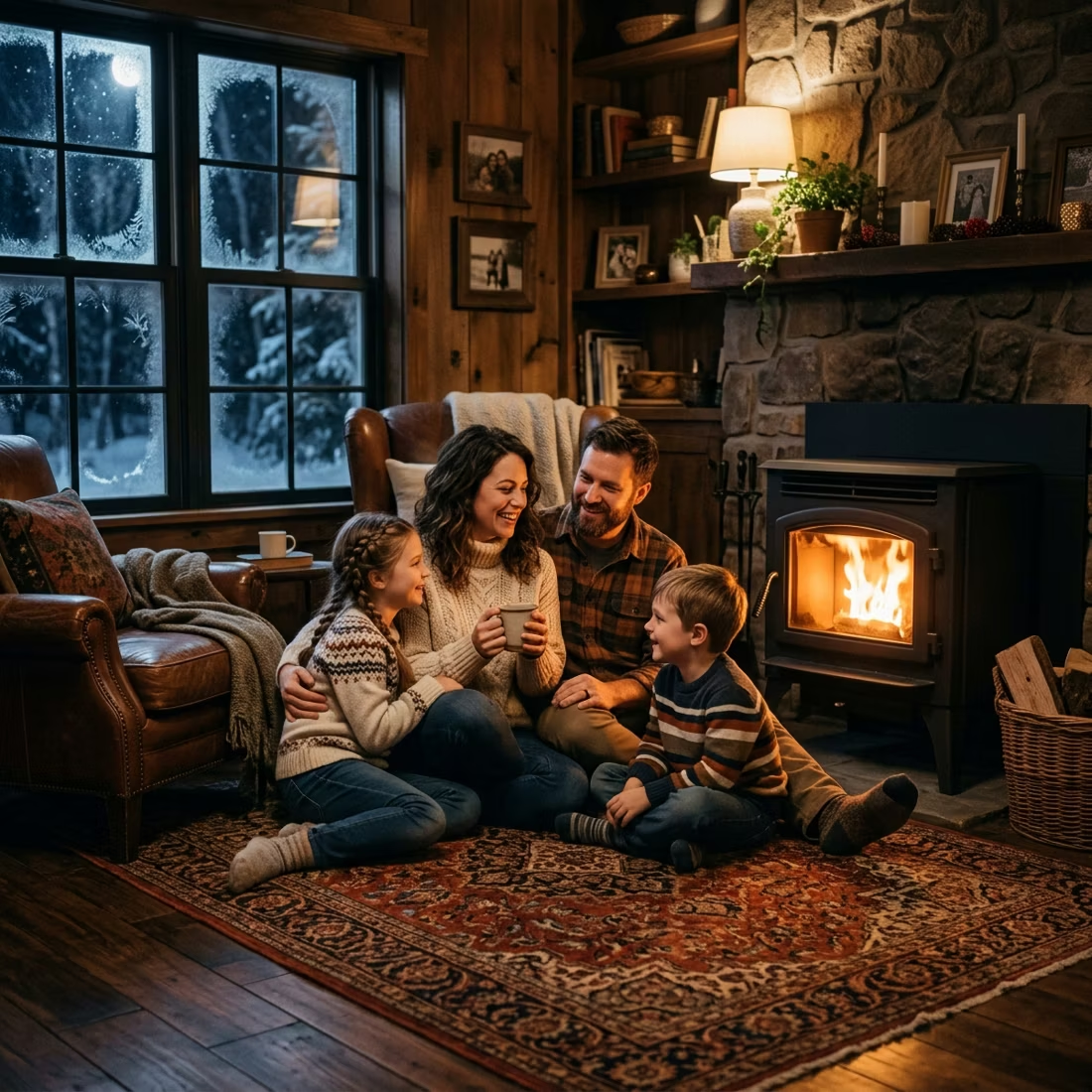
Four fuels. One honest answer for Yankton County.
Three steps. No salesperson until you're ready.
Tell us about your project
Your zip code, your situation, and the fuel you're leaning toward—or let the answers point you to one.
See what's actually available
The brands dealers within 100 miles genuinely carry—real options, never a catalog mirage.
Get your dealer & Project Guide
A trusted local dealer, plus the free Project Guide & Parts List that names every component of the job.
Frequently Asked Questions
Which fireplace fuel makes the most sense in Yankton County?
For most homes here, it's gas. Yankton County sees 6,884 heating degree days and winter lows averaging around 10°F—heating-load territory similar to Fargo, North Dakota—and natural gas or propane furnaces carry that load in the vast majority of homes, with a gas fireplace or insert added as a secondary, high-visibility heat source. Electric fireplaces are common as a supplemental option in bedrooms, basements, and additions where running a gas line doesn't make sense. Wood and pellet stoves are genuinely rare here; cottonwood, oak, and ponderosa pine all grow along the river bottoms, but with no air-quality restrictions pushing people toward cleaner-burning units and gas infrastructure already in most towns, there's little practical reason for most households to install one. When we do match someone with a wood stove, it's usually an acreage property outside Yankton city limits that wants to burn wood already coming down on the land.
Do I need a permit to install a gas or electric fireplace in Yankton County?
Yes, in most cases. Gas fireplace and insert installations need a permit through the City of Yankton Building Inspection Department if you're inside city limits, or through Yankton County zoning if you're out in Gayville, Irene, Lesterville, or another unincorporated area—plus a licensed gas fitter to make the line connection safely. Electric fireplace installs usually skip the permit process for plug-in units, but a built-in electric fireplace that needs its own dedicated circuit typically requires an electrical permit. If you're one of the rare households installing a wood stove, that also needs a building permit and has to meet current EPA emissions standards for new units. Most retailers we match homeowners with pull these permits as part of the installation.
Why don't more people in Yankton County burn wood, given all the cottonwood and oak along the river?
It comes down to convenience and infrastructure. Cottonwood, oak, and ponderosa pine are genuinely common along the Missouri River bottoms and bluffs, and a handful of acreage owners do burn what comes down on their property. But Yankton County has no wood-smoke air quality restrictions the way some western basins do, so there's no regulatory push toward alternative fuels, and natural gas or propane already reaches most homes in Yankton, Volin, Utica, and the other towns. With a 6,884-HDD winter to get through, most households would rather set a thermostat than manage a woodpile, which is why wood stoves here are the exception, not the rule.
What does installing a gas or electric fireplace typically cost in Yankton County?
Gas fireplace, insert, or stove installations generally run $4,500–$11,000 depending on whether an existing gas line reaches the install location or a new one has to be run. Electric fireplaces are the more affordable route—$200–$3,000 for the unit itself, plus $400–$1,200 in labor if it's a built-in requiring a dedicated circuit rather than a plug-and-play insert. If you're one of the rare households pursuing a wood stove, expect $4,500–$9,000 for a fully vented, code-compliant install; pellet stove parts and installers are limited enough here that pricing usually has to be quoted directly by the one or two retailers who carry them.
How does installation and service work outside the city of Yankton?
Most hearth retailers and service techs are based in Yankton, but they routinely travel out to Gayville, Irene, Lesterville, Mission Hill, Utica, and Volin for both installs and annual service. Gas fireplace inspections are the most common seasonal call, and booking yours in late summer or early fall—before the first real cold snap arrives—keeps you off the waitlist that builds up once temperatures drop toward that 10°F average low. If you're on an acreage property with a wood stove, ask your installer about their service radius specifically, since wood chimney sweeps are less common here and not every tech who handles gas also covers solid fuel.
Are there rebates or efficiency incentives for fireplaces in Yankton County?
It's worth checking directly with Yankton Municipal Utilities and your propane or gas provider each year, since efficiency rebate programs change and aren't always well publicized locally. High-efficiency gas fireplaces and inserts sometimes qualify for federal energy tax credits based on their AFUE or thermal efficiency rating, and that's usually the more reliable incentive to plan around rather than a local utility rebate. We don't sell or install anything ourselves, but the local dealer we match you with can tell you which units in your price range currently qualify for any credit or rebate that's active.
How much should I budget for a fireplace?
For an average home—covering the fireplace, the vent pipe, and basic installation—a budget between $3,900 and $5,500 gives you a lot of options across wood, gas, and pellet. By the time you add finish work, gas line, and electrical, the average complete installation lands between $5,000 and $12,000 all-in. In a remodel or new build, a good rule is to put about 2.5% of the total project cost toward the fireplace.
I know I want a fireplace—where do I actually start?
Do two things today: snap a photo of the wall or fireplace you want to transform, and take a tape measure to the space—width, height, depth. Those two artifacts answer most of a hearth professional's first questions. Then settle fuel (wood, gas, pellet, or electric) and set a realistic budget: $3,900–$5,500 covers fireplace, vent, and basic install for most homes.
Does a fireplace add value to my home?
On average, a fireplace adds back to the home about the same amount you spent installing it. Add the monthly savings from heating the rooms you actually use instead of the whole house—often hundreds of dollars a year—and the value case is strong before you even count what a fire does for how your family uses the room.
Can a fireplace actually lower my heating bill?
Yes—by creating a comfort zone. A furnace heats every square foot of the house just to warm the one room you're in; a gas fireplace on low burns roughly a sixth of the gas a typical furnace does. Set the furnace around 55–60 degrees as a baseline, then heat the rooms your family actually uses. Families who heat this way commonly save $20–$60 a month.
Stove and Fireplace Dealers in Yankton County
Listings include WhyFire partner dealers, dealers we have verified as authorized for the brands we recommend, and established local businesses that carry hearth products. Every listing shows which one it is. The ones marked Preferred run on WhyFire's software, so they can show you real pricing and book your appointment right here. No manufacturer pays for placement. How we verify dealers →
Larry's Heating & Cooling
Kaiser Heating & Cooling
Get matched with a local Yankton County dealer.
Pick your fuel below and we'll put together a free Project Guide & Parts List—the right unit, the vent kit it needs, and the local dealer we recommend for your project.
Find Your Fireplace →