
Find the right pellet stove for Perkins County's long, hard winters.
Consistent, thermostat-controlled heat for the wind-scoured plains around Bison and Lemmon—matched to a trusted local dealer who handles the venting and the permit.
Every Project Starts From One of These Five Situations
Steady heat for a county where the wind never really stops.
Perkins County sits in South Dakota's Climate Zone 6A, out on the open plains near the North Dakota border, where wind-driven cold settles in for months and ranch homes are often spread far apart. With a population under 1,600 spread across Bison, Lemmon, and the rural sections in between, most homeowners here already understand what it means to keep a house warm when the nearest hardware store is a 30-minute drive. Ponderosa pine, oak, and cottonwood grow locally and remain the traditional wood-burning standby, but a growing number of Perkins County households are turning to pellet stoves for a cleaner, more hands-off way to heat a room or a whole house.
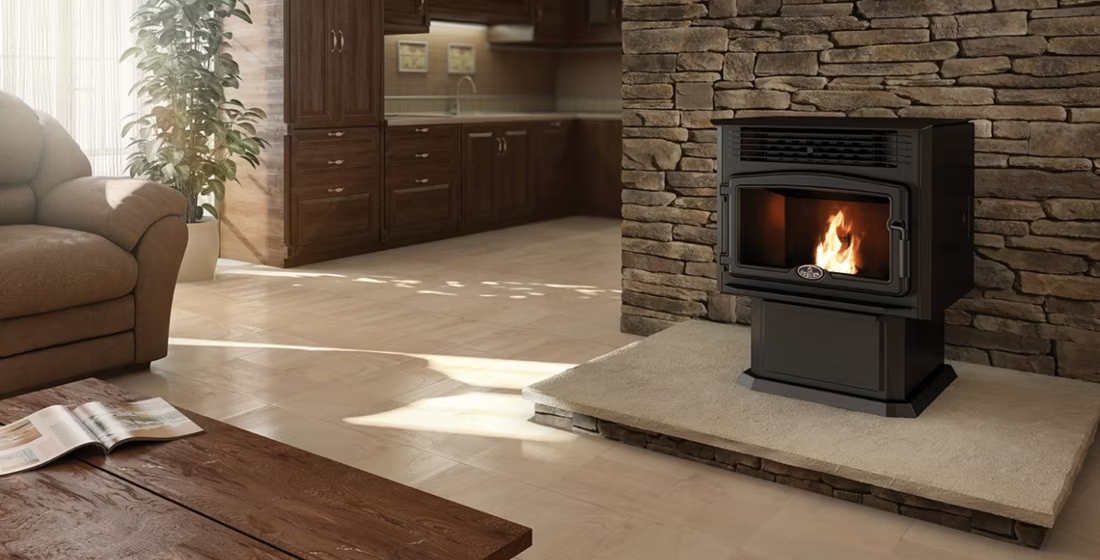
A pellet stove's real advantage out here is consistency: load the hopper, set the thermostat, and get even heat for 24 to 60 hours without tending a fire—useful on the nights when a ground blizzard makes even a short trip to the woodpile miserable. Bulk pellets from regional suppliers like Lignetics and Indeck Energy Services are generally easier to source and store than they were a decade ago, and with no local air quality non-attainment concerns, there's no seasonal burning restriction to plan around. A trusted local dealer will size the unit to your home, confirm the venting path, and make sure the install is done right the first time—not guessed at from a big-box manual.
Three steps. No salesperson until you're ready.
Tell us about your project
Your zip code, your situation, and the fuel you're leaning toward—or let the answers point you to one.
See what's actually available
The brands dealers within 100 miles genuinely carry—real options, never a catalog mirage.
Get your dealer & Project Guide
A trusted local dealer, plus the free Project Guide & Parts List that names every component of the job.
Frequently Asked Questions
How much does a pellet stove installation cost in Perkins County?
Pricing varies by unit size, whether you're installing into an existing fireplace opening or placing a freestanding stove fresh, and how much venting work is required to get through an exterior wall. In a rural county like Perkins, expect the quote to also reflect some travel time for the installer, since dealers typically cover a wide service radius from Lemmon or nearby towns. A local dealer will give you a firm number after walking the space and confirming the vent run—that's the only way to get an accurate figure for your specific home.
Will a pellet stove keep up with Perkins County's cold?
A properly sized pellet stove holds its own in Zone 6A conditions, especially as supplemental or zone heat in a well-insulated ranch home. The thermostat-controlled auger feed means the stove adjusts output automatically rather than requiring you to add fuel every few hours, which matters on the kind of sustained sub-zero stretches Perkins County sees most winters. For homes relying on pellet heat as a primary source through the coldest months, sizing matters—an undersized unit will run constantly and still fall behind. A local dealer can walk through your square footage and insulation level to recommend the right output.
Do pellet stoves need electricity to run?
Yes—pellet stoves depend on electricity to run the auger that feeds fuel and the blower that circulates heat, which is worth weighing carefully in a county where winter storms can knock out rural power lines for hours or longer. Some models accept a battery backup or small generator to bridge an outage, but that's an add-on to plan for, not something built in. Homeowners in Perkins County who want heat that works with the power out often keep a wood stove as backup alongside a pellet unit for everyday convenience.
Where can I buy pellets in or near Perkins County?
Regional brands like Lignetics and Indeck Energy Services supply much of the pellet fuel available in this part of South Dakota, typically sold in 40-pound bags by the ton through farm supply stores and hearth dealers. Because Perkins County is rural, it's worth asking your dealer about bulk-ton pricing and whether they deliver, since hauling a full winter's supply—often 2 to 3 tons for a primary-heat household—is easier arranged in one delivery than several store runs from Bison or Lemmon.
What's the difference between a pellet stove and a pellet insert?
A pellet stove is a freestanding unit that sits on its own hearth pad and vents through a wall or existing chimney—it can go almost anywhere with the right clearances. A pellet insert is built to slide into an existing masonry fireplace opening, which is a common retrofit in older Perkins County farmhouses that already have a functioning chimney but want better efficiency than an open hearth provides. For homes without an existing fireplace, the freestanding stove is usually the simpler and less expensive path.
Do I need a permit to install a pellet stove in Perkins County?
Most pellet stove installations require a building permit, and the process is typically straightforward in a rural South Dakota county—your local dealer or installer can usually confirm the requirement and handle the paperwork as part of the job. Because Perkins County has no local air quality non-attainment designation, there are no seasonal burning curtailments to navigate here the way there are in some Western states, which simplifies things for pellet and wood burners alike.
How often does a pellet stove need to be cleaned or serviced?
Plan on cleaning the burn pot and ash area every few days during heavy winter use, and a full annual service—checking the auger, gaskets, and venting—before each burning season starts. For a household running the stove as a primary heat source through a Perkins County winter, that annual service matters more than it might in a milder climate, since the unit is doing far more total run-hours. Ash disposal is minimal compared to wood, which is part of why many local homeowners appreciate the lower-maintenance trade-off.
Is pellet heat a good fit for an older Perkins County farmhouse?
Often, yes—particularly as a supplemental heat source in a drafty older home where central heat struggles to keep every room even. A pellet insert into an existing masonry fireplace is a common retrofit for exactly this situation, delivering steadier, more controllable heat than an open hearth ever could. The main consideration is electrical access near the install location, since the stove needs a standard outlet for the auger and blower—something worth flagging with your dealer during the initial walkthrough.
Pellet vs. wood—which makes more sense in Perkins County?
Wood—using locally available ponderosa pine, oak, or cottonwood—remains the go-to for homeowners who want heat that works even when the power is out, plus lower long-term fuel costs if you're cutting or buying cordwood locally. Pellet stoves trade that off for convenience: no splitting, less ash, and even, thermostat-set heat that doesn't need tending through the night. In a county this rural, plenty of households run both—wood as the resilient backup, pellet for the day-to-day ease of a hopper you fill once every day or two instead of a firebox you're feeding every few hours.
Why is a fireplace insert so efficient?
An insert does two things: it seals the chimney completely, so you stop losing air you already paid to heat, and it radiates warmth into the room through the firebox and glass. Most add a heat-exchange fan that pulls cool room air underneath, wraps it around the hot firebox, and pushes it back out warm. Your home is more efficient before you've even lit the first fire.
What's the difference between an insert and a zero-clearance fireplace?
An insert is a fireplace that slides into a pre-existing wood-burning fireplace—if you don't have one, there's nothing to insert it into. A zero-clearance fireplace is built into a framed wall, which makes it the answer for remodels and new construction. Simple test: existing masonry fireplace means insert; blank or framed wall means zero-clearance.
What is an in-home preview and do I need one?
It's a visit where a hearth professional measures your space, confirms the model you picked actually works in your home, and walks the specs—framing, gas line, venting, finish work—before anything is ordered. Some details you just can't know until you see the house. Never make a down payment without one; it's the single most-skipped step that burns buyers.
Can a fireplace actually lower my heating bill?
Yes—by creating a comfort zone. A furnace heats every square foot of the house just to warm the one room you're in; a gas fireplace on low burns roughly a sixth of the gas a typical furnace does. Set the furnace around 55–60 degrees as a baseline, then heat the rooms your family actually uses. Families who heat this way commonly save $20–$60 a month.
Pellet Brands Stocked Around Perkins County
Manufacturers will point you to the nearest stocking dealer.
Get your Perkins County pellet stove Project Guide & Parts List.
Tell us about your home and we'll match you with a trusted local dealer and send a free plan for your pellet project—the right unit, the vent kit, and the parts list, sized for your space.
Find Your Fireplace →