
Warm, Reliable Heat for Perkins County's Wide-Open Winters.
Wood, gas, pellet, and electric fireplace resources for Bison, Lemmon, Prairie City, and the ranches scattered across Perkins County. Find the right unit and get matched with a hearth dealer who actually covers your zip code.
Every Project Starts From One of These Five Situations
Ranch country heating in South Dakota's far northwest corner.
Perkins County sits against the North Dakota line in South Dakota's northwest corner—nearly 2,900 square miles of open grassland and cattle ranches with a population under 1,600. Zone 6A winters here rival Bismarck, ND for wind chill and duration: sub-zero nights, ground blizzards, and a heating season that can start in October and hang on into April. Wood heat has deep roots in this country—ponderosa pine off the buttes, cottonwood cut from the Grand River bottoms, and oak from the draws are all common firewood species, and many ranch families still cut their own under permits from the Grand River National Grassland, part of the Dakota Prairie Grasslands with its ranger district office headquartered right in Lemmon.
What you'll find on this hub: hearth retailers, service technicians, and fuel suppliers covering the whole county—from the county seat in Bison to the larger trade center of Lemmon on the North Dakota border, out to Prairie City, Meadow, and Reva. Because there's no natural gas mainline out here, most 'gas' fireplaces in Perkins County run on propane from a farm tank, and pellet supply comes in through regional distributors carrying brands like Lignetics and Indeck Energy Services. Pick your fuel below for local dealers, install costs, and unit recommendations specific to ranch-country conditions.
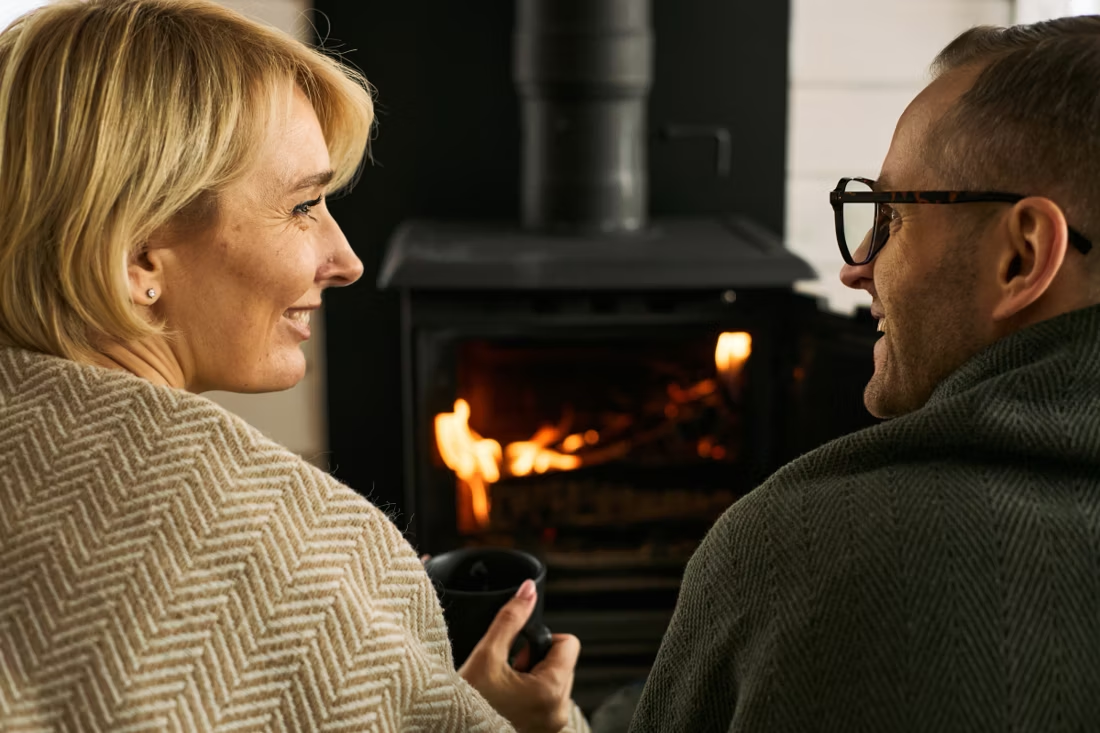
Four fuels. One honest answer for Perkins County.
Three steps. No salesperson until you're ready.
Tell us about your project
Your zip code, your situation, and the fuel you're leaning toward—or let the answers point you to one.
See what's actually available
The brands dealers within 100 miles genuinely carry—real options, never a catalog mirage.
Get your dealer & Project Guide
A trusted local dealer, plus the free Project Guide & Parts List that names every component of the job.
Frequently Asked Questions
Which fuel works best in Perkins County?
It depends on how remote your place is and what you're set up for. Wood remains the backbone fuel for a lot of Perkins County ranches—ponderosa pine off the buttes, cottonwood from the river bottoms, and oak from the draws are all locally available, and a wood stove keeps working when a blizzard takes out the power line, which matters more out here than it does in town. Gas is really propane in this county—there's no natural gas mainline, so a 'gas fireplace' means a propane tank and a licensed installer running the line; it's the convenience choice for a ranch house or a line shack. Pellet is a solid middle ground if you want wood-style heat without splitting and hauling—Lignetics and Indeck Energy Services both supply this region through regional distributors, though you'll want to plan deliveries around winter road conditions. Electric works well as supplemental heat for a bedroom, shop office, or outbuilding, but with Zone 6A winters and the real risk of extended power outages during ground blizzards, it's not something most Perkins County households rely on as a primary heat source.
Do I need a permit to install a fireplace in Perkins County?
Generally yes, though the process is simpler here than in a larger jurisdiction. New wood stoves, wood inserts, propane fireplaces, propane inserts, and pellet stoves typically need a building permit through the county, and any new propane line or tank hookup needs to go through a licensed propane installer separately from the appliance permit. Wood-burning appliances installed new should meet current EPA emissions standards to qualify for permitting and insurance purposes. Electric fireplaces are usually exempt unless you're doing a built-in installation with new wiring. Given how spread out Perkins County is, most local retailers and installers handle the permit paperwork themselves as part of the install—worth confirming that up front when you get a quote.
Are there air quality restrictions on wood burning in Perkins County?
No—Perkins County doesn't have the kind of geographic bowl or population density that produces winter inversion problems, and there are no non-attainment designations or mandatory burn curtailment days here the way there are in some western basins. Wind moves through the open plains too consistently for smoke to pool the way it can in a mountain valley. That said, an EPA-certified stove still burns cleaner and more efficiently per cord than an old uncertified unit, which matters when you're hauling and splitting your own wood off the buttes or the river bottom and want to get the most heat out of every load.
Can one local retailer handle all four fuel types?
With a population under 1,600 spread across nearly 2,900 square miles, Perkins County itself doesn't support a large multi-fuel showroom the way a bigger trade center would. Most households end up working with a dealer based in Lemmon or driving to a regional hub like Belle Fourche, Dickinson, or Bismarck for a full side-by-side comparison of wood, propane, pellet, and electric units. What we do is match you with whichever trusted dealer—local or regional—actually carries and installs the fuel type that fits your home, rather than sending you to whoever's closest on a map.
How does fireplace service work in a county this rural?
Plan ahead. Chimney sweeps and propane techs serving Perkins County are usually based out of Lemmon or travel in from a neighboring trade center, and a single service call can mean an hour or more of driving each way once you're out past Bison or Prairie City. Booking your annual chimney sweep or propane system check in late summer or early fall—before the first ground blizzard closes county roads—is a lot easier than trying to get someone out during a January cold snap. If you're on wood or pellet as a primary heat source, keeping a wood backup or a battery bank for an IPI propane unit isn't a bad idea given how long outages can run after a bad storm.
What's the typical cost range for fireplace installation across all fuel types in Perkins County?
Costs run close to regional norms for rural South Dakota, with travel factored into most quotes. Wood stove or insert installation: roughly $4,000–$8,500, depending on chimney work and whether it's new construction or a retrofit. Propane fireplace, insert, or stove: roughly $4,000–$10,000, with tank setup and gas line work as the biggest cost swing. Pellet stove or insert: roughly $4,200–$7,000 for a typical install. Electric fireplace: $200–$2,800 for the unit itself, plus $300–$1,000 in labor for anything beyond a plug-and-play wall unit. Because so few dealers cover this county, get a written quote before you commit—travel distance can shift these numbers more here than in a denser market.
How much should I budget for a fireplace?
For an average home—covering the fireplace, the vent pipe, and basic installation—a budget between $3,900 and $5,500 gives you a lot of options across wood, gas, and pellet. By the time you add finish work, gas line, and electrical, the average complete installation lands between $5,000 and $12,000 all-in. In a remodel or new build, a good rule is to put about 2.5% of the total project cost toward the fireplace.
Wood, gas, pellet, or electric—how do I choose?
Match the fuel to your life, not the other way around. Wood: lowest fuel cost and total power-outage independence, but you're hauling and stacking. Gas: press a button, set a thermostat, no maintenance to speak of. Pellet: wood economics with automatic feeding, in exchange for weekly cleaning and a need for electricity. Electric: plugs in anywhere with honest supplemental heat. Nobody regrets the fuel that fits how they actually live.
Does a fireplace add value to my home?
On average, a fireplace adds back to the home about the same amount you spent installing it. Add the monthly savings from heating the rooms you actually use instead of the whole house—often hundreds of dollars a year—and the value case is strong before you even count what a fire does for how your family uses the room.
What is an in-home preview and do I need one?
It's a visit where a hearth professional measures your space, confirms the model you picked actually works in your home, and walks the specs—framing, gas line, venting, finish work—before anything is ordered. Some details you just can't know until you see the house. Never make a down payment without one; it's the single most-skipped step that burns buyers.
Get matched with a Perkins County hearth dealer.
Tell us your fuel and your town, and we'll send you a free Project Guide & Parts List—the exact parts, including the vent kit, and the local dealer we recommend for a Perkins County install. No big-box guesswork, no venting sized wrong for a plains winter.
Find Your Fireplace →