
Warm up fast, even when Lincoln County drops below zero.
Instant, dependable heat for the growing communities of Canton, Harrisburg, Tea, and Lennox—natural gas through Xcel Energy where the lines reach, propane everywhere else. Find the right unit and get matched with a trusted local dealer.
Every Project Starts From One of These Five Situations
Fast growth, flat plains, and winters that mean business.
Lincoln County is the fastest-growing county in South Dakota, and it shows—Harrisburg and Tea have added subdivisions by the hundreds over the past decade, while Canton remains the county seat and Lennox and Worthing anchor the county's farm-town roots. All of it sits in climate zone 6A, with roughly 7,684 heating degree days a year and average winter lows around 6 degrees—numbers that put Lincoln County in the same cold-climate territory as Minneapolis. There's little in the way of trees or terrain to break the wind coming across the open plains, so wind chill matters as much as the thermometer here.
Unlike a lot of the state, wood and pellet stoves see almost no traction in Lincoln County—most of the housing stock is newer construction without a masonry chimney, and Xcel Energy's natural gas lines already reach most of Harrisburg, Tea, and the Sioux Falls-adjacent parts of the county, making gas the practical default. Outside the utility's service footprint—in more rural stretches near Canton and Lennox—propane fills the gap. Either way, a direct-vent gas fireplace or insert gives you heat at the flip of a switch, no wood to split or stack, and (with the right ignition system) a source of warmth that keeps working even when a January ice storm takes down the power lines.
Three steps. No salesperson until you're ready.
Tell us about your project
Your zip code, your situation, and the fuel you're leaning toward—or let the answers point you to one.
See what's actually available
The brands dealers within 100 miles genuinely carry—real options, never a catalog mirage.
Get your dealer & Project Guide
A trusted local dealer, plus the free Project Guide & Parts List that names every component of the job.
Frequently Asked Questions
How much does a gas fireplace installation cost in Lincoln County?
Most gas fireplace and insert installations in Lincoln County run somewhere between $3,500 and $9,500, depending on the unit and how much gas line and venting work is involved. If your home already has a gas line nearby and a straightforward exterior wall for direct venting—common in newer Harrisburg and Tea subdivisions—you'll land on the lower end. Installations in older Canton or Lennox homes that need a new gas line run from the meter, or a propane tank set for homes outside the Xcel Energy service area, tend to push toward the higher end. A local dealer will give you a firm number after seeing the space.
Can I convert an existing wood-burning fireplace to gas?
If your home has an older masonry fireplace—more common in the established parts of Canton or Lennox than in Harrisburg's newer subdivisions—yes, a gas insert can typically be fit into that opening using the existing chimney as a liner path for venting. Wood-burning fireplaces are genuinely rare across most of Lincoln County's newer housing stock, so this conversion mostly comes up in older farmhouses and historic in-town properties. Expect the job to run in a similar range to a standalone install, with cost depending on whether the chimney needs a new stainless liner and whether a gas line already reaches that wall.
Should I choose natural gas or propane for my fireplace?
It comes down to where you live in the county. Xcel Energy provides natural gas service through most of Harrisburg, Tea, and the Sioux Falls-adjacent parts of Lincoln County, so if you already have gas appliances there, adding a fireplace is a simple tie-in. Once you're out past the utility's lines—which covers a fair amount of the county around Canton, Worthing, and Lennox—propane is the standard, either from an existing tank or a new one set by a regional propane supplier. Nearly every gas fireplace on the market can be configured for either fuel; your installer sets the orifice and regulator to match.
Will a gas fireplace still work if the power goes out?
Most will, which matters on the open plains of Lincoln County where an ice storm or a hard prairie wind can take down power lines for hours. Units with intermittent pilot ignition (IPI) run on a small battery backup that kicks in automatically, so the fireplace still lights on demand. Valor fireplaces go a step further—their pilot assembly generates its own electricity through the thermocouple, so there are no batteries to remember at all. If backup heat during outages matters to you, ask your dealer specifically about the ignition system on any model you're considering, not just the look of the unit.
What's the difference between a gas fireplace, insert, and stove?
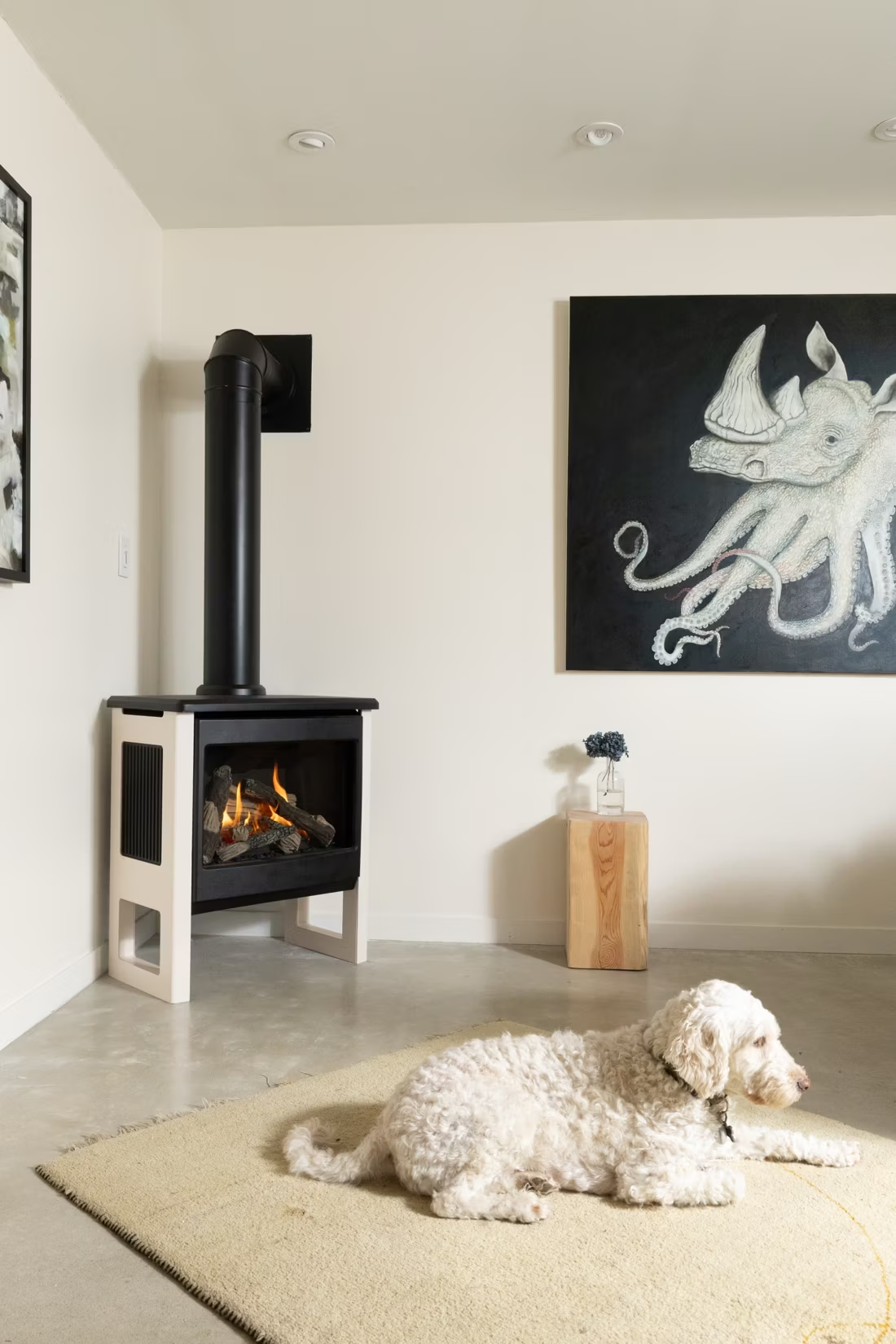
A gas fireplace is a built-in unit framed into a wall—the standard choice for new construction, which describes a lot of what's going up in Harrisburg and Tea right now. A gas insert is sized to slide into an existing masonry fireplace opening, which fits the older housing stock around Canton and Lennox. A gas stove is a freestanding cabinet-style unit that sits on the floor and doesn't require an existing fireplace at all. For most Lincoln County homeowners building or remodeling, a built-in fireplace or insert covers the two most common scenarios; a freestanding stove is a good fit for a bonus room, garage, or shop that doesn't have a chimney.
Do I need a permit to install a gas fireplace in Lincoln County?
Yes. New gas fireplace installations require a building permit and a gas line permit, and the gas work itself has to be done by a licensed gas-fitter. Within Harrisburg, Tea, Canton, and Lennox, permits are pulled through each city's own building department; in unincorporated parts of the county, it runs through the Lincoln County Planning & Zoning office. A reputable local dealer coordinates the permitting, venting, and inspection as part of the install, so you're not left managing separate trades yourself.
Are vent-free gas fireplaces allowed in South Dakota?
South Dakota doesn't prohibit vent-free (unvented) gas fireplaces, but they come with real limitations—strict room-size minimums, oxygen depletion sensors, and rules against installing them in bedrooms. Direct-vent units, by contrast, draw combustion air from outside and exhaust it back outside through sealed venting, so there's no debate about indoor air quality. With no local air quality restrictions in Lincoln County and reliable natural gas or propane supply nearly everywhere, most dealers steer homeowners toward direct-vent models for the better heat output and cleaner indoor air, reserving vent-free for narrow cases like a finished basement without an exterior wall.
How often does a gas fireplace need servicing?
Plan on an annual inspection, ideally before the heating season ramps up in October or November. A technician checks the burner, pilot assembly, venting, and gas connections, and cleans the glass and interior—a much quicker job than a wood-stove chimney sweep, but just as important for safe operation. Local gas appliance service providers in the Sioux Falls-Lincoln County area typically charge $150 to $250 for a standard annual visit.
Why don't more homes in Lincoln County use wood or pellet stoves?
It's mostly a function of how the county has grown. Harrisburg and Tea's rapid expansion has been almost entirely new construction, and new homes here are built around forced-air furnaces and gas fireplaces rather than masonry chimneys. Combine that with reliable, relatively affordable natural gas and propane infrastructure, and wood heat just never became the default the way it has in more forested parts of South Dakota. Wood stoves aren't unheard of—a handful of older Canton and Lennox properties still have working masonry fireplaces—but for the vast majority of Lincoln County homeowners, gas is the practical, code-friendly path to real heat without the wood supply, storage, and chimney maintenance that come with burning cordwood.
Why is a fireplace insert so efficient?
An insert does two things: it seals the chimney completely, so you stop losing air you already paid to heat, and it radiates warmth into the room through the firebox and glass. Most add a heat-exchange fan that pulls cool room air underneath, wraps it around the hot firebox, and pushes it back out warm. Your home is more efficient before you've even lit the first fire.
Is my gas fireplace wasting gas?
If it was installed more than 15 years ago, probably. Older gas fireplaces keep a standing pilot light burning all the time, and that little flame can cost a couple hundred dollars a year. Newer models use pilot-on-demand ignition—the pilot lights only when you use the fireplace and goes out when you turn it off.
Does a fireplace add value to my home?
On average, a fireplace adds back to the home about the same amount you spent installing it. Add the monthly savings from heating the rooms you actually use instead of the whole house—often hundreds of dollars a year—and the value case is strong before you even count what a fire does for how your family uses the room.
Can a fireplace actually lower my heating bill?
Yes—by creating a comfort zone. A furnace heats every square foot of the house just to warm the one room you're in; a gas fireplace on low burns roughly a sixth of the gas a typical furnace does. Set the furnace around 55–60 degrees as a baseline, then heat the rooms your family actually uses. Families who heat this way commonly save $20–$60 a month.
Stove and Fireplace Dealers in Lincoln County
Listings include WhyFire partner dealers, dealers we have verified as authorized for the brands we recommend, and established local businesses that carry hearth products. Every listing shows which one it is. The ones marked Preferred run on WhyFire's software, so they can show you real pricing and book your appointment right here. No manufacturer pays for placement. How we verify dealers →
Hjellming Construction
Fireplace Professionals, Inc
Find the right gas fireplace for your Lincoln County home.
Tell us about your home and heating goals, and we'll match you with a trusted local dealer and put together a free Project Guide & Parts List—the exact components, including the vent kit, for your gas fireplace project.
Find Your Fireplace →