
Find the Right Fireplace for Lincoln County's Cold Winters.
Fireplace resources for the fast-growing towns of Lincoln County—from Canton to Harrisburg to Tea. Units are uncommon here; find out why below, and connect with a trusted local hearth retailer for the fuels that actually fit this county.
Every Project Starts From One of These Five Situations
Prairie growth and cold winters in Lincoln County, South Dakota.
Lincoln County sits along the Big Sioux River in southeastern South Dakota, in the fast-growing corridor south of Sioux Falls. Winters here are genuinely cold—Climate Zone 6A, an average winter low of 6°F, and roughly 7,684 heating degree days a year, putting the county in the same heating-load range as Fargo, North Dakota. But unlike a lot of cold-climate counties, this isn't wood country. There's no national forest here for firewood permits, and the ponderosa pine, oak, and cottonwood you'll see around the county are mostly shelterbelt plantings and riverbank trees rather than a working woodlot. Air quality here isn't a limiting factor either—there are no local burn restrictions—but the housing stock and geography simply don't push people toward wood or pellet heat the way a forested mountain county would.
What you'll find on this hub: gas and electric hearth retailers, service technicians, and fuel suppliers serving the towns of Lincoln County—Canton, Tea, Harrisburg, Worthing, Lennox, and Hudson among them. Most homes here are newer construction in subdivisions that already have gas service piped to the house, which is a big part of why gas fireplaces and inserts dominate the local market, with electric units filling in as supplemental heat in bedrooms, basements, and additions. Pick your fuel below for local dealers, installation costs, and the resources tied to your specific project.
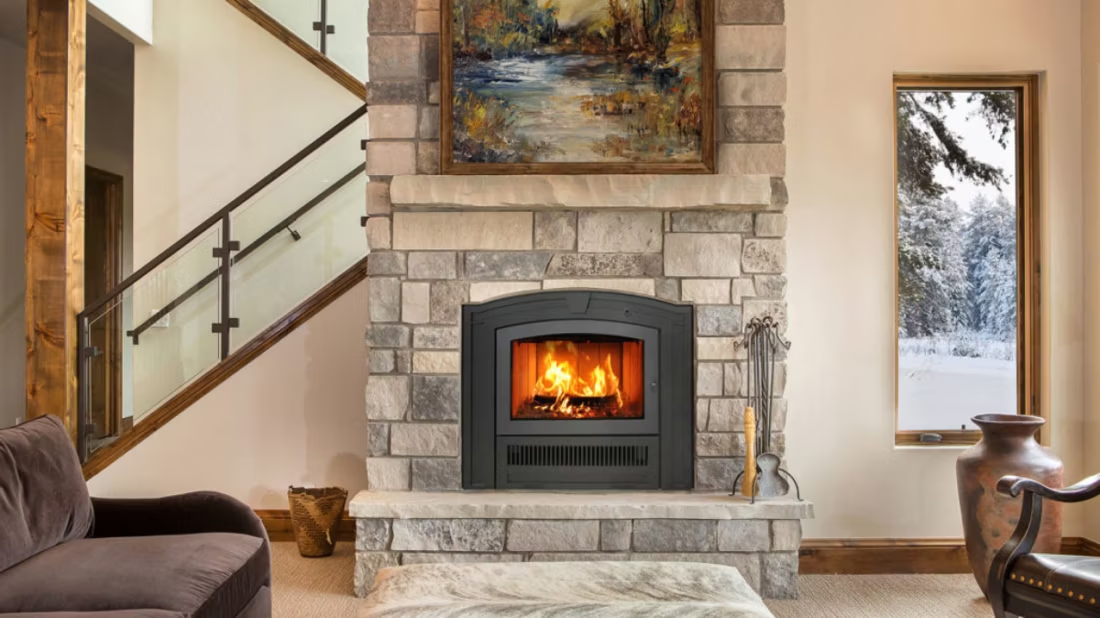
Four fuels. One honest answer for Lincoln County.
Three steps. No salesperson until you're ready.
Tell us about your project
Your zip code, your situation, and the fuel you're leaning toward—or let the answers point you to one.
See what's actually available
The brands dealers within 100 miles genuinely carry—real options, never a catalog mirage.
Get your dealer & Project Guide
A trusted local dealer, plus the free Project Guide & Parts List that names every component of the job.
Frequently Asked Questions
Why aren't wood and pellet stoves more common in a county this cold?
It's a fair question given the climate—Lincoln County runs about 7,684 heating degree days a year, on par with Fargo, North Dakota, and a winter low averaging just 6°F. But the county doesn't have the wood-heat infrastructure that colder forested regions do. There's no national forest here to pull a firewood cutting permit from, and most of Lincoln County's growth over the past two decades has been new-construction subdivisions in Tea, Harrisburg, and Canton that were built with natural gas service already run to the house. Pellet stoves see the same pattern—even though regional pellet supply exists through brands like Lignetics, there's little local retail infrastructure built around residential pellet appliances here. A handful of older farmhouses on rural acreage still burn wood or run a pellet stove as backup heat, but for most homeowners in the county, gas or electric is the practical starting point.
Do I need a permit to install a gas or electric fireplace in Lincoln County?
In most cases, yes, for gas. New gas fireplace, insert, or stove installations typically require a building permit through your city or county building department, plus a separate gas line permit handled by a licensed gas fitter for the fuel line connection. If you're converting an existing wood-burning masonry fireplace to gas logs or a gas insert, the venting work usually still needs a permit even if the gas line already exists. Electric fireplaces are simpler—plug-in units generally don't require a permit, but built-in electric units that need a new dedicated circuit or hardwiring should go through an electrician and may require an electrical permit. Most local retailers handle the permitting as part of the installation quote.
What's the typical cost range for a fireplace installation in Lincoln County?
Gas fireplace, insert, or stove installations typically run $4,500–$10,500 depending on whether new gas line work and venting are required—costs land on the lower end for homes that already have a gas line run near the install location, which is common in Lincoln County's newer subdivisions. Electric fireplace installs are the most affordable option: $200–$2,800 for the unit itself, with $300–$1,000 in labor for anything beyond a simple plug-and-play wall mount, such as a built-in with a dedicated circuit. Because wood and pellet units are uncommon here, most retailers don't stock a wide range of them, so pricing for those fuels tends to run higher and installation timelines longer if you do want one—it's worth asking upfront about lead time.
Can one local retailer handle both gas and electric fireplace installs?
Yes—most hearth retailers serving Lincoln County carry both gas and electric lines, since those are the two fuels that actually move here. That's convenient if you're weighing a gas insert against an electric built-in for a basement remodel, since the same dealer can walk you through both and show working displays. A smaller number of retailers also carry a limited wood or pellet selection for the rural acreage market, but don't expect the same depth of options you'd find in a forested part of the country—if wood heat is a priority, ask specifically about what's in stock rather than assuming it's the retailer's main focus.
How does service and installation work for rural properties outside Canton, Tea, or Harrisburg?
Most gas and electric service technicians covering Lincoln County are based in the Sioux Falls metro and travel out to rural acreages and the smaller towns like Worthing, Lennox, and Hudson. Expect a modest trip fee for service calls further from the metro core, and know that homes on rural acreage without a gas main nearby will typically need a propane tank installed for a gas fireplace, which adds both cost and a supplier relationship with a local propane company. Scheduling ahead of the heating season—ideally August through October—gets you a service or install appointment more easily than waiting until the first cold snap in November.
Is electric heat enough on its own for a Lincoln County winter?
Generally, no—not as a whole-home primary heat source. With an average winter low of 6°F and nearly 7,700 heating degree days a year, Lincoln County's heating load is too high for electric resistance heat to carry a home efficiently on its own; most homeowners here pair an electric fireplace with a furnace as the primary heat source, using the fireplace for supplemental warmth and ambiance in a specific room. Gas fireplaces and inserts can run closer to a genuine secondary heat source, since they put out real BTU output and don't depend on the furnace running. If you're deciding between the two for a room that actually gets cold, a local retailer can walk you through BTU sizing for your specific space.
What is an in-home preview and do I need one?
It's a visit where a hearth professional measures your space, confirms the model you picked actually works in your home, and walks the specs—framing, gas line, venting, finish work—before anything is ordered. Some details you just can't know until you see the house. Never make a down payment without one; it's the single most-skipped step that burns buyers.
Does a fireplace add value to my home?
On average, a fireplace adds back to the home about the same amount you spent installing it. Add the monthly savings from heating the rooms you actually use instead of the whole house—often hundreds of dollars a year—and the value case is strong before you even count what a fire does for how your family uses the room.
Wood, gas, pellet, or electric—how do I choose?
Match the fuel to your life, not the other way around. Wood: lowest fuel cost and total power-outage independence, but you're hauling and stacking. Gas: press a button, set a thermostat, no maintenance to speak of. Pellet: wood economics with automatic feeding, in exchange for weekly cleaning and a need for electricity. Electric: plugs in anywhere with honest supplemental heat. Nobody regrets the fuel that fits how they actually live.
How much should I budget for a fireplace?
For an average home—covering the fireplace, the vent pipe, and basic installation—a budget between $3,900 and $5,500 gives you a lot of options across wood, gas, and pellet. By the time you add finish work, gas line, and electrical, the average complete installation lands between $5,000 and $12,000 all-in. In a remodel or new build, a good rule is to put about 2.5% of the total project cost toward the fireplace.
Stove and Fireplace Dealers in Lincoln County
Listings include WhyFire partner dealers, dealers we have verified as authorized for the brands we recommend, and established local businesses that carry hearth products. Every listing shows which one it is. The ones marked Preferred run on WhyFire's software, so they can show you real pricing and book your appointment right here. No manufacturer pays for placement. How we verify dealers →
Hjellming Construction
Fireplace Professionals, Inc
Find your fireplace in Lincoln County.
Pick your fuel below to see local dealers, installation costs, and get matched with a trusted retailer who'll put together a free Project Guide & Parts List for your home.
Find Your Fireplace →