
Instant, ventless heat for Lincoln County's coldest nights.
With winter lows averaging 6°F and 7,684 heating degree days a year, Lincoln County homes need serious primary heat—but for finished basements, additions, and rooms without a chimney, an electric fireplace adds real supplemental warmth with no venting at all. I'll match you with a trusted local dealer who knows which unit and circuit your space actually needs.
Every Project Starts From One of These Five Situations
No chimney, no gas line, just an outlet or a dedicated circuit.
Lincoln County is one of the fastest-growing counties in South Dakota, with Harrisburg, Tea, Canton, and Lennox filling in as bedroom communities on the edge of Sioux Falls. Most homes here rely on propane or natural gas furnaces for primary heat, and for good reason: 7,684 heating degree days and a 6°F average winter low put this county in territory closer to Fargo, ND than to most of the Midwest. Wood heat is uncommon as a serious heat source here—cottonwood and oak along the Big Sioux River near Canton get burned recreationally more than for warmth, and pellet stoves see little local demand—so when homeowners want a supplemental heat source or a focal point in a finished basement or new addition, electric is usually the fuel that makes sense, precisely because it doesn't need a flue, a gas line, or a wood supply to work.
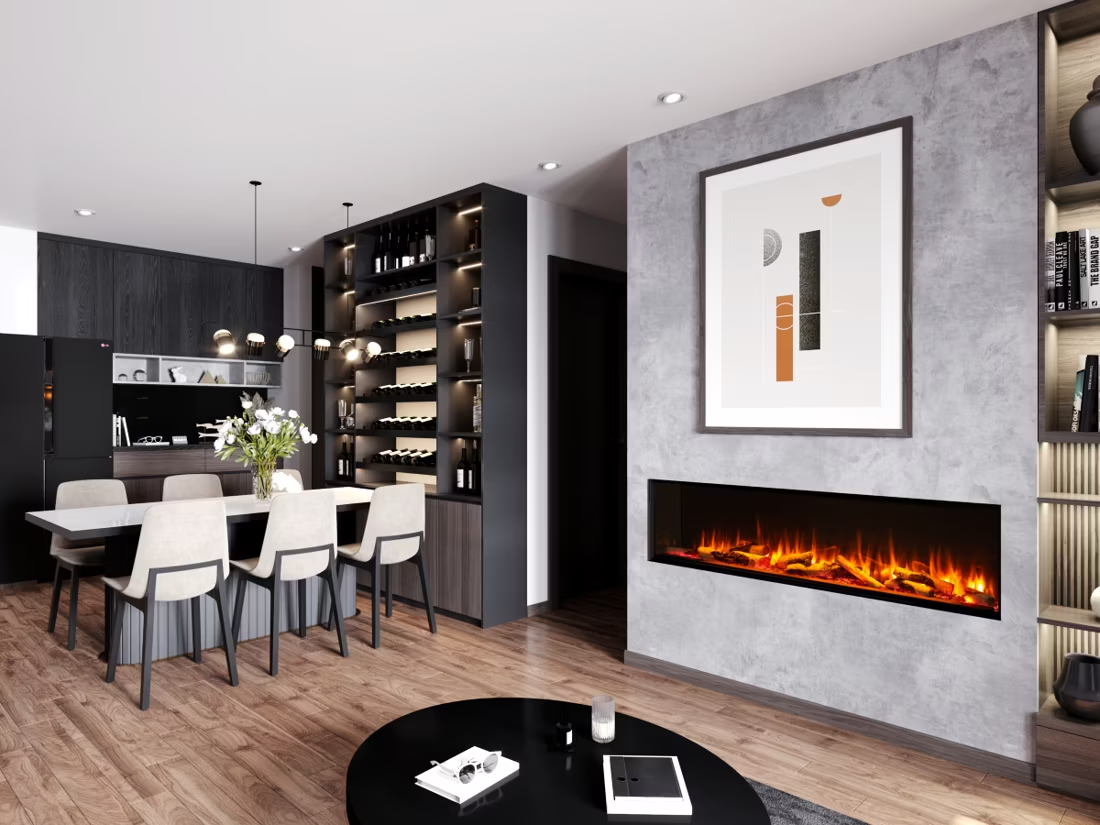
Electric fireplaces won't replace a furnace in a Lincoln County winter, and no honest dealer will tell you otherwise, but as zone heat for a single room they're hard to beat: no combustion byproducts to worry about (this is a clean-air county with no non-attainment concerns), no annual chimney sweep, and installation that ranges from plugging in a freestanding unit to having an electrician run a dedicated 20-amp circuit for a built-in wall unit. In a county where new construction and finished-basement remodels are common—Harrisburg and Tea in particular have seen steady residential growth—that flexibility matters more than raw BTU output.
Three steps. No salesperson until you're ready.
Tell us about your project
Your zip code, your situation, and the fuel you're leaning toward—or let the answers point you to one.
See what's actually available
The brands dealers within 100 miles genuinely carry—real options, never a catalog mirage.
Get your dealer & Project Guide
A trusted local dealer, plus the free Project Guide & Parts List that names every component of the job.
Frequently Asked Questions
How much does an electric fireplace installation cost in Lincoln County?
Most projects in Lincoln County run $300 to $2,500. A freestanding or mantel-style unit that plugs into an existing outlet sits at the low end and often doesn't require a licensed electrician at all. A built-in wall unit or linear insert—the more common choice for new construction and finished-basement projects in Harrisburg, Tea, and Canton—typically needs a dedicated circuit run by a licensed electrician, plus any surround or mantel carpentry, which pushes the cost toward the middle and upper end of that range. There's no venting, chimney, or gas line to budget for either way, which is a big part of why electric tends to be the cheapest hearth option in the county.
Do I need a permit to install an electric fireplace in Lincoln County?
A simple plug-in freestanding or mantel unit generally doesn't trigger a permit through the Lincoln County Planning & Zoning Department, since there's no structural or gas work involved. Where a permit does come into play is a built-in wall unit that requires a new dedicated circuit, altered framing, or work inside a wall cavity—that electrical work should be pulled as a permit and inspected, whether you're inside Canton or Lennox city limits or in unincorporated parts of the county. A local dealer who handles installs regularly will know exactly when the county requires sign-off and can coordinate the electrician.
Does an electric fireplace need a chimney or venting?
No, and that's the main reason electric fireplaces work so well in Lincoln County's newer housing stock. Finished basements in Harrisburg and Tea, additions without an existing flue, and condos or townhomes with no masonry chimney at all can still get a real fireplace look and genuine supplemental heat without cutting a hole in the roof or running Class A pipe. That said, an electric unit still needs either a standard outlet or a dedicated circuit depending on wattage, so the electrical side isn't entirely optional—it's just far simpler and cheaper than venting a gas or wood appliance.
What size electric fireplace do I need for my room?
Electric fireplaces are zone heaters, not whole-home furnaces, so sizing is about the specific room, not the house. A standard 1,500-watt unit puts out roughly 5,000 BTU, enough to meaningfully warm a 150 to 300 square foot room depending on ceiling height and insulation—a good fit for a basement family room or a primary bedroom addition. In a county averaging 7,684 heating degree days, don't expect a single electric unit to keep a whole level of the house comfortable through a stretch of single-digit lows; pair it with your existing furnace rather than trying to replace it for that room.
What does it cost to run an electric fireplace in Lincoln County?
Most of Lincoln County is served by Xcel Energy near the Sioux Falls edge—Tea and Harrisburg in particular—with Sioux Valley Energy Cooperative covering more rural stretches around Canton and Lennox. At typical residential rates, running a 1,500-watt electric fireplace on high for an evening costs somewhere in the range of 20 to 35 cents an hour, though most owners run them on a lower heat setting or flame-only mode most of the time, which cuts that cost substantially. It's inexpensive supplemental heat, but it's not free, and running one as a primary heat source through a full South Dakota winter would show up on the bill.
How much maintenance does an electric fireplace need?
Very little compared to a wood or gas appliance. There's no chimney to sweep and no gas line or pilot assembly to service. Maintenance is mostly dusting the interior, occasionally cleaning the glass front, and eventually replacing the LED ember bed or heater element after years of regular use, which is typically a straightforward part swap rather than a service call. For a Lincoln County household that's already juggling furnace maintenance ahead of a long heating season, that low upkeep is part of the appeal.
Should I get an electric fireplace or a gas fireplace in Lincoln County?
For most Lincoln County homes, the two solve different problems. Gas fireplaces and inserts, run on natural gas where available or propane in more rural parts of the county, can genuinely contribute to heating a room during a real cold snap and will keep working through most power outages with the right ignition system. Electric fireplaces are better suited to spaces where running a gas line isn't practical—a finished basement, a condo, a room addition—and where the goal is ambiance plus modest supplemental warmth rather than serious heat output during a 6°F night. Wood and pellet appliances see little local demand here, so the real decision most homeowners face is electric versus gas, and it usually comes down to whether the room already has gas service nearby.
Will my electric fireplace work during a winter power outage?
No—unlike a battery-backed gas unit or a wood stove, an electric fireplace stops working the moment the power drops, flame effect and heat both. That's worth factoring in for rural Lincoln County properties around Worthing or the edges of the county where ice storms and blizzards occasionally take out power for hours at a time. If backup heat during an outage is a real priority for your household, a gas unit or a generator plan makes more sense as your primary cold-weather backup, with electric reserved for everyday supplemental use.
What electric fireplace brands are available through local dealers in Lincoln County?
Hearth dealers serving the Sioux Falls and Lincoln County area typically carry Dimplex, Napoleon, Touchstone, and SimpliFire, covering everything from wall-mount linear units to full mantel packages and furniture-style inserts. Availability and lead times vary by model and time of year, which is exactly why we match you with a local dealer rather than pointing you at a big-box listing—they'll know current stock, what fits your wall and circuit situation, and whether a factory-built surround or a custom mantel makes more sense for your room.
Does an electric fireplace need a vent or chimney?
No—that's its superpower. An electric fireplace needs a wall and an outlet, period. No vent pipe, no gas line, no clearances to design around, which is why it works in bedrooms, offices, apartments, and walls where venting a gas or wood unit would be impractical or impossible. Installation is typically the simplest and least expensive of any fireplace type.
Do electric fireplaces actually produce heat?
Yes—most put out around 4,800–5,000 BTUs from a standard outlet, which comfortably warms a bedroom, office, or den as a comfort-zone heater. What they won't do is carry a whole house the way wood, gas, or pellet can. Think of electric as ambiance-first with honest supplemental heat: flames on with no heat in July, flames plus warmth in January.
Does a fireplace add value to my home?
On average, a fireplace adds back to the home about the same amount you spent installing it. Add the monthly savings from heating the rooms you actually use instead of the whole house—often hundreds of dollars a year—and the value case is strong before you even count what a fire does for how your family uses the room.
Can a fireplace actually lower my heating bill?
Yes—by creating a comfort zone. A furnace heats every square foot of the house just to warm the one room you're in; a gas fireplace on low burns roughly a sixth of the gas a typical furnace does. Set the furnace around 55–60 degrees as a baseline, then heat the rooms your family actually uses. Families who heat this way commonly save $20–$60 a month.
Stove and Fireplace Dealers in Lincoln County
Listings include WhyFire partner dealers, dealers we have verified as authorized for the brands we recommend, and established local businesses that carry hearth products. Every listing shows which one it is. The ones marked Preferred run on WhyFire's software, so they can show you real pricing and book your appointment right here. No manufacturer pays for placement. How we verify dealers →
Hjellming Construction
Fireplace Professionals, Inc
Get your free Project Guide & Parts List for an electric fireplace in Lincoln County.
Tell me about your room, your electrical setup, and how you plan to use the fireplace, and I'll match you with a trusted local Lincoln County dealer and send a free Project Guide & Parts List—the exact unit, circuit requirements, and recommended installer for your project.
Find Your Fireplace →