
Steady pellet heat built for Black Hills winters.
From Spearfish Canyon to the ridgelines above Lead and Deadwood, Lawrence County winters run cold and long. Find the right pellet stove or insert and get matched with a trusted local dealer who can size it, vent it, and install it correctly.
Every Project Starts From One of These Five Situations
Convenience that keeps up with a cold, snowy county.
Lawrence County sits in the northern Black Hills, with elevations ranging from Spearfish's canyon floor near 3,650 feet up to Lead's ridgeline neighborhoods above 5,300 feet. The county logs about 7,218 heating degree days a year—more than Bozeman, Montana—with winter lows averaging 16°F and stretches of subzero nights common when Black Hills cold fronts settle in. Ponderosa pine dominates the surrounding forest, with oak and cottonwood along the creek bottoms near Whitewood and Belle Fourche River drainages, and the Black Hills National Forest wraps much of the county on public land.
Pellet heat fits well here because it trades the labor of splitting and hauling cordwood for a hopper you fill and a thermostat you set—appealing in a county where a lot of homes are older mining-era structures in Deadwood and Lead with tight, tricky chimney chases. Regional pellet supply comes through Lignetics and Indeck Energy Services, both of which serve this part of the Black Hills, so residents aren't relying on pellets trucked in from across the country. There's no regional air quality non-attainment status or burn restriction driving the choice here the way there is in some Western basins—for most Lawrence County homeowners, pellet heat is simply about consistent, low-maintenance BTUs through a long heating season.
Three steps. No salesperson until you're ready.
Tell us about your project
Your zip code, your situation, and the fuel you're leaning toward—or let the answers point you to one.
See what's actually available
The brands dealers within 100 miles genuinely carry—real options, never a catalog mirage.
Get your dealer & Project Guide
A trusted local dealer, plus the free Project Guide & Parts List that names every component of the job.
Frequently Asked Questions
How much does a pellet stove installation cost in Lawrence County?
Most pellet stove and insert installations that local Black Hills-area retailers quote fall in the $3,000 to $6,500 range, depending on the unit, whether you're installing into an existing masonry fireplace opening or as a new freestanding stove, and what venting work is required. Pellet units need a dedicated electrical outlet for the auger and blower motor along with a smaller-diameter vent than a wood stove, which usually keeps labor costs down compared to a full wood-burning install. Homes in the older mining-era neighborhoods of Deadwood or Lead sometimes see costs run higher if the existing chase or wall cavity needs modification to route the vent kit. Ask a local dealer for a firm number after an in-home walkthrough.
What size pellet stove do I need for my Lawrence County home?
With 7,218 heating degree days and winter lows averaging 16°F, most Lawrence County homes need more heating capacity than a stove sized for a milder climate. As a starting point, small units (under 1,000 sq ft) suit a single room or cabin, medium units (1,000–2,000 sq ft) cover most main living areas, and larger units (2,000+ sq ft) can serve as primary heat in a well-insulated home. Homes at Lead's higher elevation or in exposed spots along the canyon rim near Spearfish often need to size up compared to a similar-sized home down in Whitewood. A local retailer will factor in your square footage, insulation, and elevation during a free in-home consult rather than relying on square footage alone.
Where can I find certified pellet stove installers near me?
Look for installers with NFI (National Fireplace Institute) pellet-specialist certification, which covers the electrical, venting, and clearance requirements specific to pellet appliances—different from wood stove certification since pellet units run an auger and blower off household power. The hearth retailers serving Lawrence County generally cover Deadwood, Lead, Spearfish, and Whitewood without a travel surcharge, though more remote rural properties may see a small trip charge added. Because pellet stoves require a dedicated 120V circuit near the install point, it's worth confirming your installer coordinates any needed electrical work rather than leaving you to hire a separate electrician.
What's the difference between a pellet stove and a pellet insert?
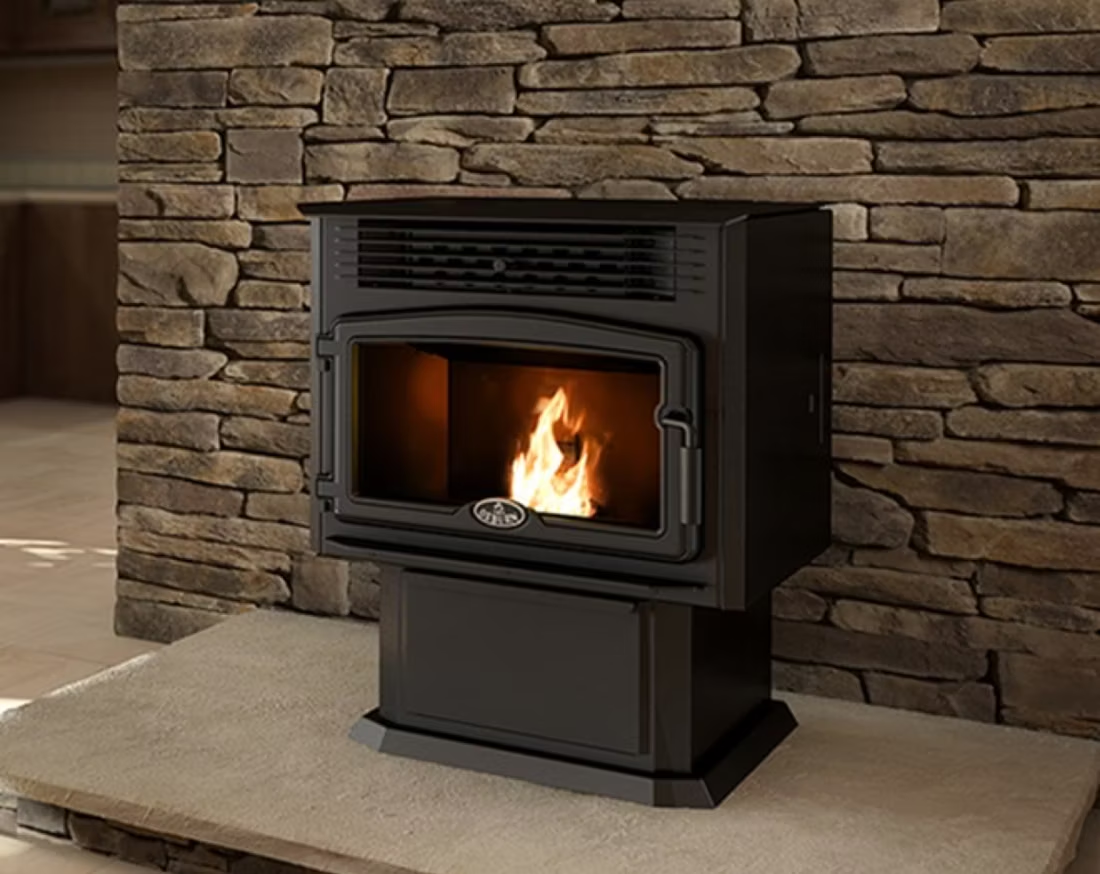
A pellet stove is a freestanding unit that sits on a hearth pad and vents through a wall or existing chimney chase—it can go almost anywhere in a room with the right clearances. A pellet insert is built to slide into an existing masonry fireplace opening, which is common in Lawrence County's older homes in Deadwood and Lead where a wood-burning fireplace already exists but sees little use. For those homes, an insert usually makes more sense since it reuses the existing masonry opening and improves heat output dramatically compared to an open hearth. Newer homes or rooms without an existing fireplace are typically better suited to a freestanding stove.
Do I need a permit to install a pellet stove in Lawrence County?
Yes—a building permit is required for a new pellet stove or insert installation, and most local installers handle the permitting as part of the job. One wrinkle specific to this county: Deadwood is a National Historic Landmark, so exterior venting changes on homes within the historic district may need sign-off from the Deadwood Historic Preservation Commission in addition to the standard county building permit. Homes in Lead, Spearfish, and Whitewood typically go through the standard county process without that extra step. Your installer should flag this during the initial site visit if your property falls inside Deadwood's historic boundary.
What's the best pellet stove for Lawrence County's climate?
For a climate running 7,218 heating degree days with regular subzero stretches, a stove with a larger hopper—in the 80- to 120-pound range—is worth prioritizing, since it can run 24 to 30 hours between refills during the coldest Black Hills cold snaps rather than needing to be fed every 12 hours. Homes at higher elevation around Lead should size up slightly compared to similar square footage down in Spearfish or Whitewood. Since pellet units depend on electricity for the auger and combustion blower, ask your local dealer about models with battery backup options or a compatible UPS setup—useful given the occasional winter power interruptions that come with heavy Black Hills snow loads.
Where does pellet fuel come from for Lawrence County homes?
Lignetics and Indeck Energy Services both supply this region, so pellets aren't typically shipped in from distant mills—most local hearth retailers and farm supply stores stock bagged pellets seasonally, with pricing and availability fluctuating through the winter. Buying early in the fall, before the first hard cold snap drives up regional demand, is the standard local advice. A local dealer can tell you current per-ton pricing and whether they offer bulk or seasonal delivery, since pricing shifts throughout the heating season.
Pellet stove vs. wood stove—which is right for my Lawrence County home?
Wood stoves work without electricity, which matters when winter storms knock out power in the Black Hills, and they pair well with self-cut firewood—Black Hills National Forest cutting permits run $5 to $20 per cord through a May-to-October season, a popular option for county residents with the equipment and time to process their own ponderosa pine or oak. Pellet stoves trade that self-sufficiency for convenience: no splitting, no stacking, more consistent heat output, and less ash—but they need household power to run the auger and blower, so they're not a stand-alone option during an extended outage unless paired with a battery backup or generator. Many Lawrence County homeowners land on pellet for daily convenience and keep a wood stove or fireplace as backup heat for storm season.
Will my pellet stove work during a power outage?
Not without a backup power source. Pellet stoves rely on an electric auger to feed fuel and a blower to circulate combustion air, so a standard unit shuts down the moment the power drops—a real consideration in a county where heavy Black Hills snow can occasionally take out power for hours at a time. Some homeowners pair their pellet stove with a small battery backup or a portable generator sized to handle the stove's low draw, which keeps the unit running through most outages. If backup heat during storms is a top priority regardless of power status, ask your local dealer to compare a pellet unit against a wood-burning option that doesn't depend on electricity at all.
How often does a pellet stove need cleaning?
A clean pellet stove is a happy pellet stove. Plan on cleaning the burn pot about once a week when you're burning regularly—ash and clinkers gum up the air holes just like a pellet barbecue. Most pellet stove problems trace back to skipped cleaning that nobody explained up front. Some designs make it easy with a trapdoor burn pot: pull a lever and the gunk drops into the ash pan.
Why is a fireplace insert so efficient?
An insert does two things: it seals the chimney completely, so you stop losing air you already paid to heat, and it radiates warmth into the room through the firebox and glass. Most add a heat-exchange fan that pulls cool room air underneath, wraps it around the hot firebox, and pushes it back out warm. Your home is more efficient before you've even lit the first fire.
Can a fireplace actually lower my heating bill?
Yes—by creating a comfort zone. A furnace heats every square foot of the house just to warm the one room you're in; a gas fireplace on low burns roughly a sixth of the gas a typical furnace does. Set the furnace around 55–60 degrees as a baseline, then heat the rooms your family actually uses. Families who heat this way commonly save $20–$60 a month.
What is an in-home preview and do I need one?
It's a visit where a hearth professional measures your space, confirms the model you picked actually works in your home, and walks the specs—framing, gas line, venting, finish work—before anything is ordered. Some details you just can't know until you see the house. Never make a down payment without one; it's the single most-skipped step that burns buyers.
Stove and Fireplace Dealers in Lawrence County
Listings include WhyFire partner dealers, dealers we have verified as authorized for the brands we recommend, and established local businesses that carry hearth products. Every listing shows which one it is. The ones marked Preferred run on WhyFire's software, so they can show you real pricing and book your appointment right here. No manufacturer pays for placement. How we verify dealers →
Knecht Home Center-Spearfish
Builders First Source - Spearfish
Pellet Brands Stocked Around Lawrence County
Manufacturers will point you to the nearest stocking dealer.
Find your pellet stove in Lawrence County.
Tell us a bit about your home and we'll match you with a trusted local dealer and send over a free Project Guide & Parts List—sized for your space, with the vent kit and parts your Lawrence County installer will need.
Find Your Fireplace →