
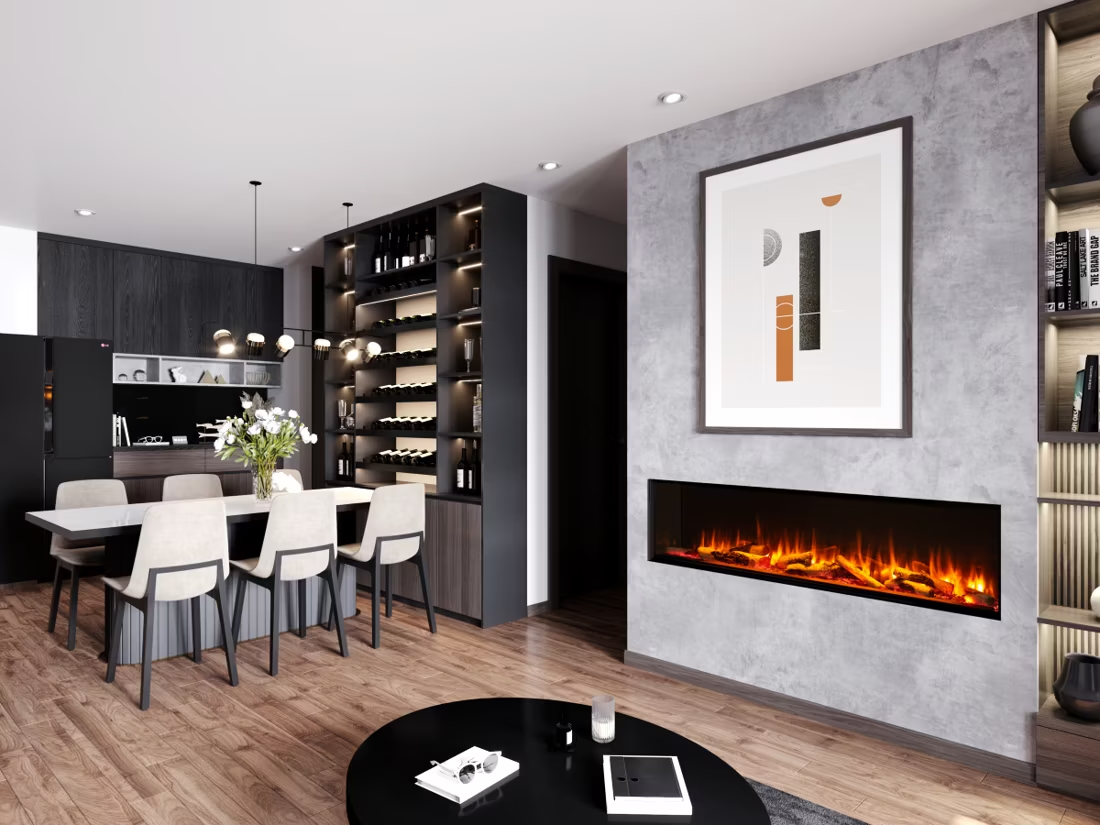
Add electric warmth to your Black Hills home.
From the historic storefronts of Deadwood to the mountainside homes of Lead and the canyon edges of Spearfish, electric fireplaces give Lawrence County homeowners flexible warmth with no chimney, no gas line, and no permit hassle. Find the right unit and connect with a trusted local dealer.
Every Project Starts From One of These Five Situations
Instant warmth without the venting, in a climate that demands backup.
Lawrence County sits in the northern Black Hills, where elevation swings from roughly 3,650 feet in Spearfish to over 5,200 feet in Lead—and where winter shows up hard. With 7,218 heating degree days and an average winter low of 16°F, the county runs a climate closer to Helena, Montana than to most of the Great Plains. Many homes here, especially the century-old mining and boomtown structures around Deadwood and Lead, were never built with masonry chimneys or gas infrastructure, which is exactly where electric fireplaces earn their place—dropping into a bedroom, den, or basement retrofit with a simple 120V plug-in unit or a 240V hardwired insert and no structural work at all.
Electric service throughout Lawrence County runs through Black Hills Energy, and that reliability matters for how homeowners think about electric fireplaces here: they're an excellent source of zone heat and ambiance, but given the county's HDD load, most local installers position electric units as a supplement to a home's furnace or baseboard system rather than a stand-alone primary heat source. The appeal is speed and simplicity—no Black Hills National Forest cutting permit, no chimney sweep, no gas-fitter, just a unit that heats a single room the moment you flip it on, which is exactly what a lot of Deadwood and Lead retrofit projects call for.
Three steps. No salesperson until you're ready.
Tell us about your project
Your zip code, your situation, and the fuel you're leaning toward—or let the answers point you to one.
See what's actually available
The brands dealers within 100 miles genuinely carry—real options, never a catalog mirage.
Get your dealer & Project Guide
A trusted local dealer, plus the free Project Guide & Parts List that names every component of the job.
Frequently Asked Questions
How much does an electric fireplace installation cost in Lawrence County?
Plug-in electric fireplaces and freestanding stoves are the least expensive option, often installed for the cost of the unit itself since they run on a standard 120V outlet with no electrician required. Built-in electric fireplaces, wall-mount units, and inserts that require a dedicated 240V circuit typically run $800 to $2,500 installed in Lawrence County once you factor in an electrician for the circuit and any surround or mantel carpentry. Retrofits into an existing masonry opening in older Deadwood or Lead homes usually land in the middle of that range, since the insert has to be sized to the existing firebox rather than built into new framing.
Can an electric fireplace actually heat a room in a Lawrence County winter, or is it just for looks?
Most electric fireplaces put out real heat—typically 4,000 to 5,000 BTU, enough to comfortably warm a single room of 300 to 400 square feet. That's meaningful supplemental heat, and useful for cutting the load on your furnace on the coldest days. But with the county averaging 7,218 heating degree days and winter lows around 16°F, electric units alone aren't sized to serve as a home's sole heat source the way a wood stove or gas insert can. Local installers generally recommend electric fireplaces as zone heat for a specific room—a bedroom, a finished basement, a sunroom—paired with your existing central heat for the rest of the house.
Do I need a permit to install an electric fireplace in Lawrence County?
In most cases, no. A plug-in electric fireplace or freestanding stove requires no permit at all since it uses a standard outlet and involves no structural or gas work. If you're having a hardwired 240V unit installed, the electrical work itself may require a permit through your local building jurisdiction depending on whether you're in Deadwood, Lead, Spearfish, or unincorporated Lawrence County—most licensed electricians handle that paperwork as part of the job. Either way, electric fireplaces skip the building permit, chimney inspection, and EPA emissions requirements that come with wood or gas installs.
Electric fireplace vs. wood stove—which makes more sense for an older Deadwood or Lead home?
It depends on what you're solving for. Many of Lawrence County's historic homes, particularly the tight-lot Victorians and miners' cottages around Deadwood and Lead, don't have a masonry chimney or the clearance for one, which makes electric a far simpler retrofit—no venting, no structural changes, often just an outlet or a short electrical run. Wood, on the other hand, is deeply rooted in this region: ponderosa pine, oak, and cottonwood are all common locally, Black Hills National Forest cutting permits run just $5 to $20 per cord during the May-through-October season, and a wood stove keeps working during a power outage, which electric units can't. If your priority is easy installation and zero maintenance, electric wins. If you want real primary heat and backup during a winter power outage, wood is usually the better call.
Will my electric fireplace work if the power goes out?
No—and this is the main tradeoff to understand before you buy. Electric fireplaces, by definition, require grid power (or a generator) to operate, so during a Black Hills Energy outage, an electric unit goes dark along with everything else in the house. In a climate with 7,218 heating degree days, that's worth weighing seriously if you're in a rural part of Lawrence County where outage restoration can take longer. Homeowners who want both convenience and outage-proof backup heat often pair an electric fireplace for daily zone heat with a wood stove or a battery-backed gas unit elsewhere in the house.
What size electric fireplace or insert do I need?
Sizing an electric fireplace is mostly about the space you're heating and the opening you're filling, since output is fairly standardized across the industry at 4,000 to 5,000 BTU regardless of unit size. For a single bedroom or den in the 200 to 400 square foot range, a standard 30 to 50 inch wall-mount or insert covers it. For open-concept living areas, homeowners often use the electric unit purely for ambiance and supplemental warmth rather than expecting it to heat the whole space—the elevation and cold-soak of a Lead or Lawrence County winter night calls for more BTU than any single electric unit provides. A local dealer can measure your opening and room and recommend a model that fits both the aesthetic and the heating need.
Can I put an electric insert into my existing wood-burning fireplace?
Yes, and it's a common project in Lawrence County's older housing stock. An electric insert slides into the existing masonry firebox, and because it doesn't burn fuel or produce exhaust, it doesn't need the chimney to be functional or even swept—some homeowners cap the flue afterward. This is a popular option in Deadwood and Lead homes with a decorative but unused fireplace, since it restores the look and adds real supplemental heat without any chimney repair, relining, or venting work that a wood or gas conversion would require.
How much does it cost to run an electric fireplace on Black Hills Energy rates?
Running cost depends on wattage and hours of use, but a typical electric fireplace drawing around 1,500 watts on high heat costs roughly 15 to 25 cents per hour to run at current Black Hills Energy residential rates—noticeably cheaper per hour than most homeowners expect. Many units let you run the flame effect without heat, which draws only a fraction of that. For supplemental heat in a single room during Lawrence County's coldest stretches, that's generally less expensive than running electric baseboard heat across a whole floor, which is part of why zone heating with an electric fireplace appeals to homeowners trying to manage a winter utility bill.
Electric vs. pellet stove—which is the better fit for my Lawrence County home?
Pellet stoves burn compressed wood pellets—regional brands like Lignetics and Indeck Energy Services are both available in the area—and put out significantly more heat than an electric unit, making them viable as a primary or near-primary heat source in a climate with 7,218 heating degree days. They do require a hopper to load, periodic ash cleanup, and electricity to run the auger and blower, so they're not outage-proof either. Electric fireplaces trade that heat output for simplicity: no fuel to store or haul, no venting, and installation that's a fraction of the cost and hassle. If you want serious supplemental or primary heat and don't mind maintenance, pellet is worth a look. If you want low-maintenance ambiance and modest zone heat for a specific room, electric is the simpler answer.
Do electric fireplaces actually produce heat?
Yes—most put out around 4,800–5,000 BTUs from a standard outlet, which comfortably warms a bedroom, office, or den as a comfort-zone heater. What they won't do is carry a whole house the way wood, gas, or pellet can. Think of electric as ambiance-first with honest supplemental heat: flames on with no heat in July, flames plus warmth in January.
Can I put a TV above my fireplace?
Yes—with an asterisk. Fireplaces are hot and TVs don't like heat. Either put a mantel between them to deflect rising warmth, or choose a fireplace with heat-management technology that creates a cool zone on the wall above—the wall stays around 125 degrees, barely warm, while the room still gets full heat. If you like clean lines and don't want a mantel, heat management is the answer.
Can I install a fireplace myself?
If you're putting a fire in your house on purpose, it's best to work with an expert. Unless you're genuinely experienced in framing, gas line, vent pipe, and the national code on clearances to combustibles, have a professional do it—and ideally the same company that sells you the fireplace, so warranty, service, and liability all live under one roof.
Does a fireplace add value to my home?
On average, a fireplace adds back to the home about the same amount you spent installing it. Add the monthly savings from heating the rooms you actually use instead of the whole house—often hundreds of dollars a year—and the value case is strong before you even count what a fire does for how your family uses the room.
Stove and Fireplace Dealers in Lawrence County
Listings include WhyFire partner dealers, dealers we have verified as authorized for the brands we recommend, and established local businesses that carry hearth products. Every listing shows which one it is. The ones marked Preferred run on WhyFire's software, so they can show you real pricing and book your appointment right here. No manufacturer pays for placement. How we verify dealers →
Knecht Home Center-Spearfish
Builders First Source - Spearfish
Find your electric fireplace in Lawrence County.
Tell us a bit about your home and we'll match you with the right electric fireplace, insert, or wall unit—plus a free Project Guide & Parts List with the exact parts and a trusted local Lawrence County dealer to install them.
Find Your Fireplace →