
Steady heat for Haakon County's open-plains winters.
Consistent, thermostat-controlled warmth for ranch homes scattered across Haakon County—where the nearest hardware store might be forty minutes away. Get matched with a real local dealer who installs pellet appliances and knows the wind, the cold, and the terrain.
Every Project Starts From One of These Five Situations
Consistent, hands-off heat on the wide-open prairie.
Haakon County sits in west-central South Dakota along the Bad River, with the county seat of Philip anchoring a landscape of cattle ranches and open range that stretches across nearly 1,800 square miles for a population of only 641. Climate zone 6A means genuinely cold winters here, and the wide-open plains add wind exposure that can make a still-air 10 degrees feel a good deal colder—conditions not far off from what Bismarck, ND deals with most winters. There are no air quality restrictions or wood-burning curtailment days in Haakon County, so heating decisions here come down to practicality, reliability, and how much attention a homeowner has to spare during calving season or a hard winter.
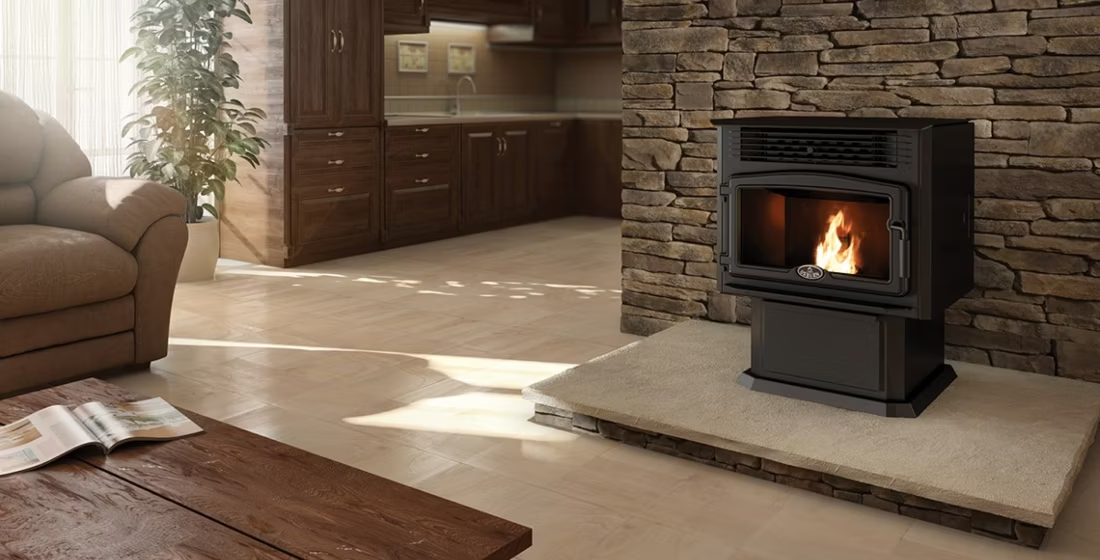
That practicality is exactly where pellet appliances earn their place on Haakon County ranches. A hopper-fed pellet stove can run for a day or more without reloading, which matters when you're out checking cattle at daylight and again at dusk and don't have time to babysit a wood fire. Pellets from regional suppliers like Lignetics and Indeck Energy Services are sold in stackable 40-pound bags that store cleanly in a machine shed or mudroom—no cordwood to split, season, or haul in from a shelterbelt. For a county this rural, where the nearest big-box store is a real drive, a pellet stove's automated feed and thermostat control is less a luxury and more a way to keep the house warm on the days ranch work doesn't leave room for anything else.
Three steps. No salesperson until you're ready.
Tell us about your project
Your zip code, your situation, and the fuel you're leaning toward—or let the answers point you to one.
See what's actually available
The brands dealers within 100 miles genuinely carry—real options, never a catalog mirage.
Get your dealer & Project Guide
A trusted local dealer, plus the free Project Guide & Parts List that names every component of the job.
Frequently Asked Questions
How much does a pellet stove installation cost in Haakon County?
Most pellet stove installations in this part of South Dakota run in the $3,000 to $6,000 range, depending on the unit, whether it's a freestanding stove or an insert into an existing masonry fireplace, and how much venting work is involved. Because Haakon County is sparsely populated and installers are based out of larger towns like Rapid City or Pierre, expect a trip charge folded into the estimate—it's a real cost of doing business out here, not an upsell. Ask any dealer for a firm, itemized quote before committing, and factor in that ranch homes with older, uninsulated additions sometimes need extra venting work to meet clearance requirements.
Will my pellet stove still work if the power goes out?
Not without help. Pellet stoves rely on an electric auger to feed fuel and a blower to distribute heat, so a power outage stops the stove cold—a real consideration in a county served by West Central Electric Cooperative's rural lines, where a bad ice storm or a downed line during calving season can mean an outage that stretches for hours. Many Haakon County homeowners pair a pellet stove with a small battery backup or a portable generator sized to keep the auger and blower running, or they keep a wood stove or fireplace as a no-electricity backup. If reliable off-grid heat during outages is your top priority, it's worth discussing both options with a local dealer before you commit to pellet alone.
Where can I buy pellets in Haakon County?
There's no pellet mill inside Haakon County itself, so most homeowners buy through farm and ranch supply retailers in Philip or Kadoka, or arrange bulk delivery from dealers based in Pierre or Rapid City who stock regional brands like Lignetics and Indeck Energy Services. Pricing across the Northern Plains typically falls in the $250 to $300 per ton range, though remote delivery can add a per-trip fee—buying a full winter's supply (roughly 2 to 3 tons for an average ranch house) in one delivery usually beats multiple smaller trips. Stocking up before the first hard freeze is common practice here, since road conditions can make deliveries unpredictable once winter sets in.
Do I need a permit to install a pellet stove in Haakon County?
Building permit requirements for hearth appliances in Haakon County run through the county zoning and building office at the courthouse in Philip. Many freestanding ag and residential structures outside city limits fall under looser rural code enforcement than you'd see in a larger South Dakota town, but that doesn't mean permitting is optional—check with the county office before installation, especially if you're adding new venting through an exterior wall or converting an existing wood fireplace to a pellet insert. Most established dealers who install pellet units in this region know the local requirements and will handle the paperwork as part of the job.
Pellet stove vs. wood stove—which makes more sense for a Haakon County ranch?
Wood is genuinely accessible here—ponderosa pine comes down from the Black Hills to the west, and cottonwood and oak grow along the Bad River and in local shelterbelts, so self-cut firewood is a real option for ranchers with the time and equipment to process it. But time is exactly the tradeoff: pellet stoves need no splitting, seasoning, or daily reloading, just bagged fuel and an outlet. For a working ranch where daylight hours go to livestock rather than a woodpile, pellet's low-maintenance burn is often the more practical fit. For homes with an existing wood fireplace and a household member who has time to tend it, wood remains a solid, power-independent choice—some Haakon County households run both, one for daily convenience and one for backup.
What size pellet stove do I need for a Haakon County home?
Older ranch houses in this county tend to run larger and draftier than a typical suburban home, and climate zone 6A's cold, wind-exposed winters push sizing upward compared to milder regions. A mid-size pellet stove (rated for 1,200 to 2,000 square feet) covers most farmhouse living areas, but homes with high ceilings, additions, or minimal insulation often do better sized up rather than down—an undersized stove will run constantly and still leave cold corners on a windy January night. A local dealer can size your specific home based on square footage, ceiling height, and insulation, which matters more out here than a generic size chart.
What's the best pellet stove for a ranch schedule like this?
Look for models with a large hopper capacity—60 to 80 pounds—so the stove can run 24 hours or more between reloads, which fits a schedule built around early mornings and late evenings checking cattle rather than tending a fire midday. Automatic ignition and a programmable thermostat also matter here, since you want the house holding steady temperature whether you're home or out on the section. Dealers stocking pellets from Lignetics and Indeck Energy Services in this region typically carry compatible stove lines from major manufacturers—ask specifically about hopper size and burn-time-per-load when comparing models for a ranch setting like Haakon County's.
How often does a pellet stove need cleaning and servicing?
Plan on emptying the ash pan every few days during regular winter use and giving the burn pot a quick clean weekly to keep the stove burning efficiently—pellet stoves produce far less ash than wood, but they still need this basic upkeep. A full annual service, ideally before the season starts, should include cleaning the exhaust venting, checking the auger and blower motors, and inspecting gaskets and seals. Given the driving distance to a certified technician from most points in Haakon County, scheduling that annual service early in the fall—before the roads and the calendar get complicated—is worth doing rather than waiting until something goes wrong mid-winter.
Pellet vs. propane—which is the better bet in Haakon County?
Propane is the dominant heating fuel across most of rural South Dakota, and it remains the right call for whole-house central heat in a county without natural gas infrastructure. But propane prices can spike hard during a cold, high-demand winter—South Dakota ranchers still remember the propane shortages of past hard winters—and a pellet stove gives a household a second heat source that isn't tied to the same fuel market. Many Haakon County homeowners run propane for the furnace and add a pellet stove in the main living area, both to cut propane use during the coldest stretches and to have a backup if propane deliveries get delayed by weather.
How often does a pellet stove need cleaning?
A clean pellet stove is a happy pellet stove. Plan on cleaning the burn pot about once a week when you're burning regularly—ash and clinkers gum up the air holes just like a pellet barbecue. Most pellet stove problems trace back to skipped cleaning that nobody explained up front. Some designs make it easy with a trapdoor burn pot: pull a lever and the gunk drops into the ash pan.
What's the difference between an insert and a zero-clearance fireplace?
An insert is a fireplace that slides into a pre-existing wood-burning fireplace—if you don't have one, there's nothing to insert it into. A zero-clearance fireplace is built into a framed wall, which makes it the answer for remodels and new construction. Simple test: existing masonry fireplace means insert; blank or framed wall means zero-clearance.
Can I install a fireplace myself?
If you're putting a fire in your house on purpose, it's best to work with an expert. Unless you're genuinely experienced in framing, gas line, vent pipe, and the national code on clearances to combustibles, have a professional do it—and ideally the same company that sells you the fireplace, so warranty, service, and liability all live under one roof.
Can a fireplace actually lower my heating bill?
Yes—by creating a comfort zone. A furnace heats every square foot of the house just to warm the one room you're in; a gas fireplace on low burns roughly a sixth of the gas a typical furnace does. Set the furnace around 55–60 degrees as a baseline, then heat the rooms your family actually uses. Families who heat this way commonly save $20–$60 a month.
Stove and Fireplace Dealers in Haakon County
Listings include WhyFire partner dealers, dealers we have verified as authorized for the brands we recommend, and established local businesses that carry hearth products. Every listing shows which one it is. The ones marked Preferred run on WhyFire's software, so they can show you real pricing and book your appointment right here. No manufacturer pays for placement. How we verify dealers →
Repair My Flame
Builders First Source - Rapid City
Knecht Home Center - Rapid City
Hebron Brick
Pellet Brands Stocked Around Haakon County
Manufacturers will point you to the nearest stocking dealer.
Find your pellet stove in Haakon County.
Tell us a bit about your home and we'll match you with a trusted local dealer and send over your free Project Guide & Parts List—sized for your space, with the venting and hopper capacity that make sense for Haakon County winters.
Find Your Fireplace →