
Dependable gas heat for Haakon County's ranch country winters.
Instant, controllable heat for the ranches and homes scattered across Haakon County—from Philip to Milesville to the open range near the Badlands. Find the right gas unit and connect with a trusted local dealer.
Every Project Starts From One of These Five Situations
Steady heat against the prairie wind.
Haakon County sits in IECC climate zone 6A, the same cold-climate band that reaches north into central North Dakota near Bismarck—long, wind-driven winters with sustained sub-zero wind chills and heating seasons that stretch from October into April. With only about 641 people spread across roughly 1,800 square miles of ranch land, most homes here sit far apart, often on gravel roads well outside Philip or Milesville, which changes how homeowners think about backup heat and fuel logistics.
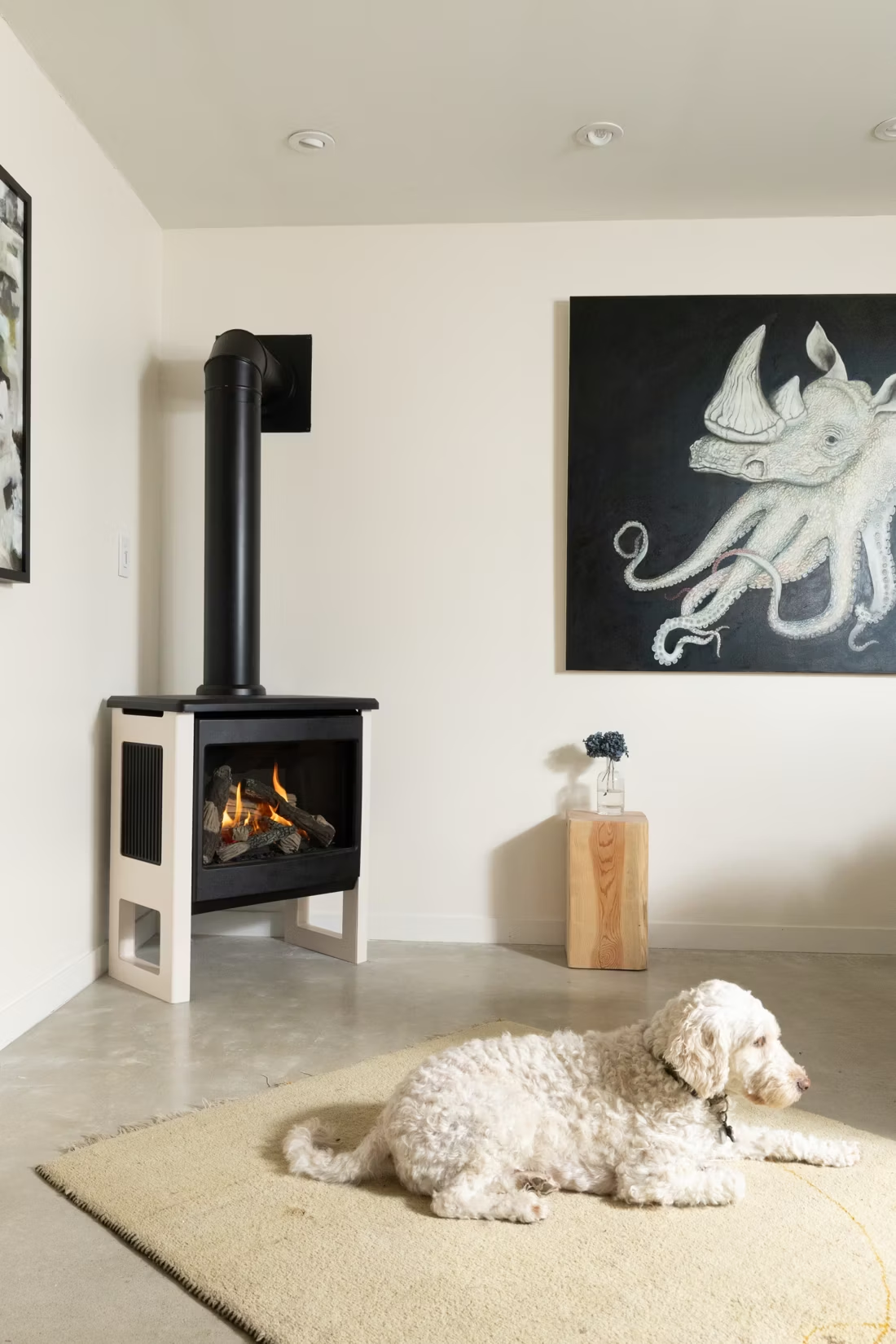
There's no municipal natural gas system serving most of Haakon County, so propane is the fuel of choice for the vast majority of gas fireplace installations—supplied by regional propane dealers who already serve ranch tanks and farm equipment across the county. A direct-vent propane fireplace or insert gives a ranch house or a home on the edge of the Badlands instant, thermostat-controlled heat without hauling wood, and select models keep running during the ice-storm power outages that aren't rare on the open plains.
Three steps. No salesperson until you're ready.
Tell us about your project
Your zip code, your situation, and the fuel you're leaning toward—or let the answers point you to one.
See what's actually available
The brands dealers within 100 miles genuinely carry—real options, never a catalog mirage.
Get your dealer & Project Guide
A trusted local dealer, plus the free Project Guide & Parts List that names every component of the job.
Frequently Asked Questions
How much does a gas fireplace installation cost in Haakon County?
Because Haakon County has no natural gas mains outside a handful of in-town connections, most installations here are propane-fueled, and pricing runs similarly to natural gas units once a tank and line are in place. A direct-vent propane insert into an existing masonry fireplace typically lands on the lower end of the range; a new built-in unit with fresh venting, framing, and a propane line run from the tank runs higher. Because dealers serving this part of west-central South Dakota are often based out of Pierre or Rapid City, expect a modest travel charge folded into the estimate for installs around Philip or Milesville—your local retailer will give a firm number after an in-home visit.
Should I use propane or natural gas for my gas fireplace?
For the overwhelming majority of Haakon County homes, the answer is propane. Natural gas distribution simply doesn't extend to most of the county's ranch and rural properties, and even homes closer to Philip should confirm service before assuming a hookup is available. Propane requires either an existing farm or home tank—common on ranch properties already using propane for a furnace or water heater—or a new tank set by a regional supplier. Nearly every gas fireplace and insert on the market today can be configured for propane, so fuel choice rarely limits which unit you can get.
Can I convert my existing wood fireplace to gas?
Yes, and it's a common request in a county where ponderosa pine, oak, and cottonwood have heated ranch houses for generations. A propane insert can usually be set into your existing masonry opening, running a stainless liner up your current chimney for venting. The appeal for Haakon County homeowners is straightforward—no more hauling and stacking cordwood on a property that might be a half-hour from the nearest town, while keeping the look of the original hearth. Your local dealer will confirm your chimney's condition and liner needs before quoting the conversion.
Will my gas fireplace still work if the power goes out?
Most direct-vent propane fireplaces will, which matters on the open plains around Haakon County where ice storms and high wind events can knock out power for hours at a stretch. Units with intermittent pilot ignition (IPI) run on a small battery backup that kicks in automatically when the power drops, so the fireplace lights on demand just like normal. Valor fireplaces take a different approach—their pilot's thermocouple generates its own electricity, so there's no battery to remember at all. Ask your local dealer about the ignition system on any unit before you buy, especially for a property that's a long drive from help if something goes wrong.
What's the difference between a gas fireplace, gas insert, and gas stove?
A gas fireplace is a fully built-in unit framed into a wall, best suited to new construction or a remodel. A gas insert slides into an existing masonry fireplace opening and uses the chimney as its vent path, which is the common upgrade for older ranch houses around Haakon County that already have a wood-burning hearth. A gas stove is freestanding, sitting on its own hearth pad, and works well in a home without an existing fireplace or in an outbuilding or shop that needs supplemental heat. For most homeowners here with an existing fireplace, the insert is the simplest and most cost-effective path.
Do I need a permit to install a gas fireplace in Haakon County?
Building and gas line work generally requires a permit, handled through the Haakon County building office. Outside the incorporated limits of Philip and Midland, code enforcement in this part of South Dakota tends to be less formalized than in a larger jurisdiction, but most reputable installers still pull permits as standard practice, particularly for the gas line work, which should be done by a licensed gas-fitter regardless of how strictly it's enforced locally. Working with a certified hearth dealer means the gas line, venting, and any inspection get coordinated together instead of you managing separate trades.
What's the difference between vented and vent-free gas fireplaces?
Vented (direct-vent) units draw combustion air from outside and exhaust it back outside through sealed venting—they're the safer, more universally recommended choice and the standard for most installs in this region. Vent-free units burn fuel directly into the room without external venting; they're legal in South Dakota but come with strict room-sizing and ventilation rules, and they release some combustion byproducts indoors. For a ranch house that may be tightly sealed against Haakon County's winter winds, a direct-vent unit is generally the better call for indoor air quality. Ask your local dealer to walk through both if you're weighing the choice.
How often does a gas fireplace need to be serviced?
An annual inspection is recommended for any gas appliance, checking the burner, pilot assembly, gas connections, and venting, along with a cleaning of the glass and interior. In a county as sparsely populated as Haakon, service techs typically travel from Pierre or Rapid City, so it's worth scheduling service in late summer before the coldest stretch hits and combining it, if possible, with other maintenance calls to the property. Expect to pay in the neighborhood of $150 to $250 for a standard annual visit.
Gas vs. wood—which makes more sense for a Haakon County property?
Wood has heated ranch homes here for generations, using locally available ponderosa pine, oak, and cottonwood, and it keeps working with zero electricity during a blizzard-driven outage. Gas—almost always propane in this county—offers instant, thermostat-controlled heat with no hauling, splitting, or ash cleanup, and modern units with battery-backup ignition still work through most power outages. Pellet stoves using regional brands like Lignetics or Indeck Energy Services split the difference on convenience but do need electricity to run the auger and blower. Many Haakon County households end up with both: propane for daily comfort in the main living space, wood as the fallback when the lights go out.
Can I put a TV above my fireplace?
Yes—with an asterisk. Fireplaces are hot and TVs don't like heat. Either put a mantel between them to deflect rising warmth, or choose a fireplace with heat-management technology that creates a cool zone on the wall above—the wall stays around 125 degrees, barely warm, while the room still gets full heat. If you like clean lines and don't want a mantel, heat management is the answer.
What's the difference between radiant and convective fireplace heat?
Most fireplaces are a thin metal box—they heat fine, but you rely on the fan to move the warmth into the room. Radiant models use a thick cast-ceramic firebox, about an inch and a quarter thick, that soaks up the fire's heat and radiates roughly 25–30% more warmth into the room with no fan running. If you watch TV in the same room or want heat in a power outage, radiant is worth asking about.
How much should I budget for a fireplace?
For an average home—covering the fireplace, the vent pipe, and basic installation—a budget between $3,900 and $5,500 gives you a lot of options across wood, gas, and pellet. By the time you add finish work, gas line, and electrical, the average complete installation lands between $5,000 and $12,000 all-in. In a remodel or new build, a good rule is to put about 2.5% of the total project cost toward the fireplace.
Does a fireplace add value to my home?
On average, a fireplace adds back to the home about the same amount you spent installing it. Add the monthly savings from heating the rooms you actually use instead of the whole house—often hundreds of dollars a year—and the value case is strong before you even count what a fire does for how your family uses the room.
Stove and Fireplace Dealers in Haakon County
Listings include WhyFire partner dealers, dealers we have verified as authorized for the brands we recommend, and established local businesses that carry hearth products. Every listing shows which one it is. The ones marked Preferred run on WhyFire's software, so they can show you real pricing and book your appointment right here. No manufacturer pays for placement. How we verify dealers →
Repair My Flame
Builders First Source - Rapid City
Knecht Home Center - Rapid City
Hebron Brick
Find your gas fireplace in Haakon County.
Tell us about your home and we'll match you with the right propane fireplace, insert, or stove—plus a free Project Guide & Parts List with the exact parts, vent kit, and a recommended local dealer for your Haakon County project.for Haakon County.} 04:1
Find Your Fireplace →