
Keep Your Family Warm and Safe—No Matter What
Sumter's mild Midlands winters rarely demand wood heat, but a well-chosen stove or fireplace still earns its keep—for ambiance, ice-storm backup, or a hunting cabin outside town. We'll connect you with a local dealer who can tell you straight whether it makes sense.
Every Project Starts From One of These Five Situations
Sumter's mild winters rarely call for a wood stove.
At 152 feet elevation in South Carolina's Midlands, Sumter sits in climate zone 3A with an average winter low around 33°F and a short, mild heating season—just a fraction of the winter heating load a place like Duluth, MN sees. Most winters here bring a handful of frosty mornings and maybe one or two nights near freezing, not the sustained cold that makes a wood stove a household necessity. That's why wood fuel isn't a mainstream heating category in Sumter the way it is in the mountain West or the upper Midwest.
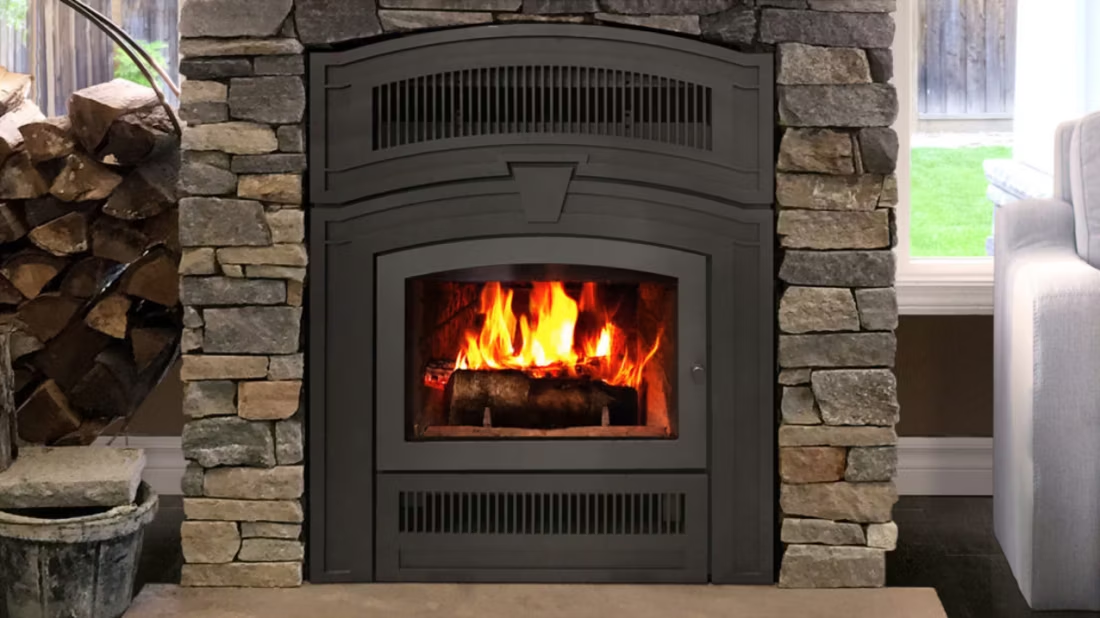
That doesn't mean wood is absent—it just plays a different role. Some Sumter homeowners install a wood-burning fireplace or small stove for the atmosphere of a real fire on the rare cold snap, as backup heat when ice storms knock out power to Duke Energy Progress or Black River Electric Cooperative service areas, or on rural and hunting properties scattered through Sumter County's longleaf pine and hardwood bottoms, where oak, pine, and hickory are already on the land. If you're weighing wood against the area's more common options, a local dealer can walk you through what actually fits your property, rather than sell you on a category that doesn't fit the climate.
Three steps. No salesperson until you're ready.
Tell us about your project
Your zip code, your situation, and the fuel you're leaning toward—or let the answers point you to one.
See what's actually available
The brands dealers within 100 miles genuinely carry—real options, never a catalog mirage.
Get your dealer & Project Guide
A trusted local dealer, plus the free Project Guide & Parts List that names every component of the job.
Frequently Asked Questions
Is a wood stove or fireplace actually common in Sumter, SC?
Not especially. Sumter's winter low averages around 33°F and the area has a short, mild heating season, so most homes rely on heat pumps powered by Duke Energy Progress or Black River Electric Cooperative rather than wood. Where wood shows up, it's usually a supplemental fireplace in a living room, a small stove on a rural property, or a hunting cabin outside the city limits—not a primary heat source. If you're set on one, it's still available through local dealers, just a smaller slice of the local hearth market than in colder states.
If Sumter's winters are mild, why would anyone install a wood stove here?
The most common reasons are ambiance, backup heat, and rural land use. South Carolina's Midlands are prone to occasional ice storms that can knock out power for days, and a wood stove keeps running with no electricity at all—a real advantage for homes served by rural cooperatives like Black River Electric. Others want a wood-burning fireplace purely for the look and feel of a real fire on the handful of genuinely cold nights each winter. And Sumter County has a lot of hunting land and weekend cabins tucked into pine and hardwood tracts, where a simple wood stove makes practical sense even though it wouldn't in a typical in-town house.
What kind of firewood is available locally in Sumter?
Oak, pine, and hickory are the species you'll find most easily around Sumter County, whether from your own land, a neighbor clearing timber, or a local firewood seller. Oak and hickory season well and burn hot and long, making them good choices if you do install a stove for backup heat. Pine is more common as kindling or shoulder-season wood since it burns faster and leaves more resin buildup in a chimney if used exclusively—worth mentioning to your installer if pine is your main supply.
Do I need a permit to install a wood stove in Sumter?
Most jurisdictions in South Carolina require a building permit for a new wood-burning appliance, particularly if it involves new chimney or hearth construction, and Sumter is no exception. Because wood installs are relatively uncommon here, it's worth confirming directly with your local building department before work starts rather than assuming your installer's other, more common gas or electric projects follow the same process. A reputable local dealer will know the current requirements and can handle the paperwork as part of the install.
How much does a wood stove or fireplace cost to install in Sumter?
Because wood installs are less common in Sumter than gas or electric projects, pricing tends to vary more by specific home and unit than by a tight regional benchmark. A freestanding stove with straightforward venting will cost less than a masonry fireplace conversion requiring new Class A chimney pipe through a roof. The honest answer is that a local dealer needs to see your home—chimney access, wall type, ceiling height—before giving you a real number, and that in-home look is free with most retailers in the area.
Would gas or electric heat make more sense than wood for my Sumter home?
For most Sumter homes, yes. Natural gas fireplaces are a standard, well-supported option locally, and electric heat pumps from Duke Energy Progress or Black River Electric Cooperative already handle the bulk of home heating at rates around 13.5 to 15.5 cents per kWh. Wood makes the most sense as a supplemental or backup option—something to have running during an ice storm outage or to enjoy on the coldest nights—rather than as your only heat source. A local dealer can walk you through gas, electric, and wood side by side for your specific situation.
Are there any air quality restrictions on burning wood in Sumter?
No—Sumter doesn't have the winter inversion or non-attainment air quality issues that trigger burn curtailment periods in some Western cities. There are no local restrictions on wood-burning appliance use tied to air quality here. That said, any new installation should still use an EPA-certified stove or insert, both because it burns more efficiently and because it's increasingly the standard installers and insurers expect, even where it isn't legally mandated.
Can a wood stove keep my house warm if the power goes out during an ice storm?
Yes, and this is one of the more practical reasons Sumter homeowners install one. Unlike a heat pump or a gas furnace with an electric-ignition blower, a basic wood stove needs no electricity to produce heat—you can keep a room warm through a multi-day outage, which does happen in the Midlands during ice storms. If backup heat during outages is your main motivation, tell your local dealer that upfront; it affects which stove size and features make sense for your home.
Where can I buy firewood in Sumter if I don't have my own supply?
Local firewood sellers and landscaping suppliers around Sumter County typically sell oak, pine, and hickory by the truckload or rick rather than the standardized cord pricing you'd see in a heavier wood-heat market. Because demand is lower here than in colder states, availability and pricing can vary by season—it's worth asking a seller how their wood is measured before you buy. Many rural Sumter County landowners also sell or trade firewood informally, especially after storm cleanup.
What's the difference between an insert and a zero-clearance fireplace?
An insert is a fireplace that slides into a pre-existing wood-burning fireplace—if you don't have one, there's nothing to insert it into. A zero-clearance fireplace is built into a framed wall, which makes it the answer for remodels and new construction. Simple test: existing masonry fireplace means insert; blank or framed wall means zero-clearance.
Why is my open fireplace making my house colder?
Open fireplaces suck—literally. As the fire burns, it consumes air your furnace already paid to heat and pulls it out through the chimney, so the house is actually colder after the fire goes out than before you lit it. An insert fixes this: it seals the chimney, puts fixed glass across the front, and turns that hole in your house into a real heat source.
What is an in-home preview and do I need one?
It's a visit where a hearth professional measures your space, confirms the model you picked actually works in your home, and walks the specs—framing, gas line, venting, finish work—before anything is ordered. Some details you just can't know until you see the house. Never make a down payment without one; it's the single most-skipped step that burns buyers.
Can a fireplace actually lower my heating bill?
Yes—by creating a comfort zone. A furnace heats every square foot of the house just to warm the one room you're in; a gas fireplace on low burns roughly a sixth of the gas a typical furnace does. Set the furnace around 55–60 degrees as a baseline, then heat the rooms your family actually uses. Families who heat this way commonly save $20–$60 a month.
Nearby Dealers
Hearth shops serving Sumter and the surrounding area.
Get your wood project plan for Sumter.
Tell us about your home and we'll put together a free Project Guide & Parts List for your wood stove or fireplace project—the exact parts, including the vent kit, and the local Sumter-area dealer we'd recommend for the install.
Find Your Fireplace →