
A Warm Accent for Sumter's Mild Winters.
Pellet heat isn't the default in the South Carolina Midlands, but for the right home—a lake house, a sunroom, a backup for ice-storm outages—it can still make sense. Find a trusted local dealer who'll tell you straight whether it's the right fit.
Every Project Starts From One of These Five Situations
Sumter winters rarely call for a primary wood-pellet furnace.
Sumter sits in climate zone 3A at just 152 feet of elevation on South Carolina's coastal plain, with an average winter low of 33°F and a light overall winter heating load. That's a fraction of what a place like Duluth, MN sees—Duluth's winter heating load runs several times higher in a typical winter, which is the kind of cold that makes a hopper-fed pellet stove worth running around the clock. In Sumter, most homes lean on heat pumps and natural gas for the handful of genuinely cold nights each winter, and central heat handles the rest without much complaint.
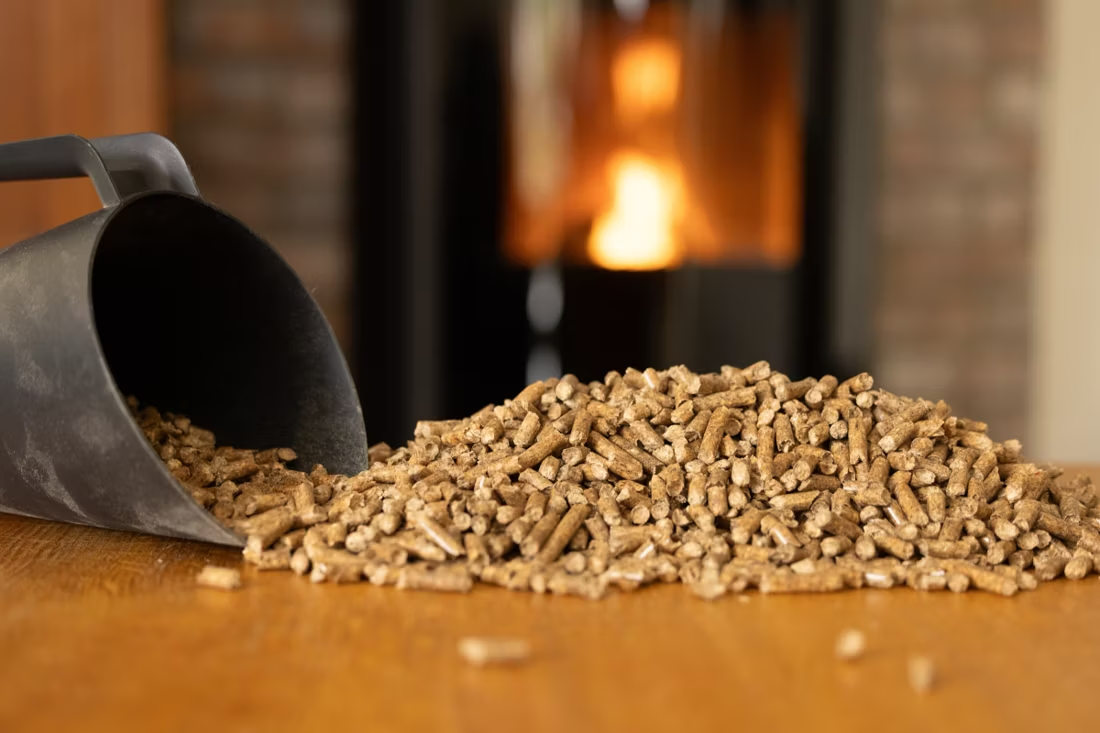
That doesn't mean pellet stoves are unheard of here—they're just uncommon, and mostly chosen for specific reasons rather than as a primary heat source. Owners of lake houses near Lake Marion or hunting camps in Sumter County sometimes install one for occasional-use warmth in an uninsulated or seasonally-occupied structure. Others want a backup heat source for the ice storms that occasionally knock out power to Duke Energy Progress and Black River Electric Cooperative service areas—though it's worth knowing upfront that most pellet stoves need household electricity to run their auger and blower, so they're not a true off-grid backup without a battery or generator setup. Regional pellet suppliers like Lignetics, Hamer Pellet Fuel, and Greenway Renewable Energy do serve the broader Carolinas market, so fuel isn't the obstacle—it's simply that pellet heat solves a problem most Sumter homes don't have most winters.
Three steps. No salesperson until you're ready.
Tell us about your project
Your zip code, your situation, and the fuel you're leaning toward—or let the answers point you to one.
See what's actually available
The brands dealers within 100 miles genuinely carry—real options, never a catalog mirage.
Get your dealer & Project Guide
A trusted local dealer, plus the free Project Guide & Parts List that names every component of the job.
Frequently Asked Questions
Are pellet stoves actually common in Sumter, SC?
Not really, and it's worth being upfront about that. With an average winter low around 33°F and a mild overall heating season, Sumter's climate rarely demands the kind of sustained, high-output heat a pellet stove is built for. Most homes here rely on heat pumps from Duke Energy Progress or Black River Electric Cooperative, or natural gas where it's available, and treat any secondary heat source as supplemental rather than essential. Pellet stoves do get installed occasionally—usually in lake houses, hunting camps, sunrooms, or homes where someone specifically wants the pellet-stove aesthetic and convenience—but you won't find the density of dealers or installers here that you'd see in a colder-climate market.
What does a pellet stove installation cost in Sumter?
Because pellet stoves are a niche request locally, there isn't a deep bench of Sumter-specific installation data the way there is for gas or electric units. As a general planning number, a pellet stove or insert install typically runs $3,000 to $6,500 nationally, depending on the unit, whether venting already exists, and whether you need a dedicated electrical circuit for the auger and blower motor. In Sumter, expect the estimate to lean toward the lower end for a straightforward freestanding stove with simple through-wall venting, and higher if you're converting a masonry fireplace or running new wiring. A local dealer can give you a firm number after seeing the space.
Will a pellet stove keep my house warm if the power goes out?
Not on its own. Pellet stoves rely on an electric auger to feed fuel and a blower to circulate heat, so a standard unit shuts down the moment power drops—which matters in Sumter, where ice storms occasionally take down lines served by Duke Energy Progress and Black River Electric Cooperative. If backup heat during an outage is your actual goal, a generator or battery backup sized for the stove's draw is the workaround, or you may want to compare a pellet stove against a wood-burning option or a battery-backed gas fireplace, both of which can run without grid power. A local dealer can walk through the tradeoffs based on how often you actually lose power.
Where can I buy pellet fuel near Sumter?
Regional brands like Lignetics, Hamer Pellet Fuel, and Greenway Renewable Energy distribute through the Carolinas, and you'll typically find bagged pellets at farm-and-feed retailers, home improvement stores, or through a hearth dealer who sells the stove. Because demand is lower here than in colder markets, stock can be seasonal or limited compared to what you'd find in a place like Fargo, ND, where pellet fuel is a year-round staple on store shelves. If you're planning to run a pellet stove regularly, it's worth asking your dealer about reliable local sourcing before you commit, or planning to buy a season's supply in advance each fall.
Do I need a permit to install a pellet stove in Sumter?
Most likely yes—new solid-fuel appliance installations, including pellet stoves, typically require a building permit through the applicable Sumter city or Sumter County building department, along with an electrical permit if a new dedicated circuit is needed for the auger and blower. Because these installs are infrequent locally, it's worth confirming current requirements directly with the building department rather than assuming, since staff may not process this permit type often. A hearth dealer experienced with pellet installs can usually manage the permitting process for you.
Pellet stove vs. gas fireplace—which makes more sense in Sumter?
For most Sumter homes, gas is the more practical choice. Natural gas and propane infrastructure is well established locally, gas fireplaces run on demand with no fuel storage or ash cleanup, and installation and service networks are far more developed here than for pellet appliances. Pellet stoves make more sense in specific situations: a detached structure without a gas line, a homeowner who specifically wants the visual and radiant qualities of a pellet flame, or someone supplementing an electric-heat home with a lower-cost fuel source. If convenience and easy service are the priority, gas is the safer bet in this market.
Pellet stove vs. electric heat pump—do I need both?
Given Sumter's mild winters—average lows around 33°F and a light overall heating season—a heat pump from Duke Energy Progress or Black River Electric Cooperative already handles most homes' heating load efficiently at typical residential rates of about 13.5 to 15.5 cents per kWh. A pellet stove on top of that is usually a lifestyle choice rather than a necessity: some homeowners like having a visible flame and radiant zone heat in a den or sunroom, or want a secondary source for the coldest handful of nights each year. Very few Sumter homes need both for basic warmth; it comes down to preference and how you use the space.
What size pellet stove works for a Sumter home or lake house?
Because pellet stoves here are usually supplemental rather than whole-home heat, smaller units in the 40,000–50,000 BTU range are typically sufficient for a single large room, open-concept living space, or a lake house at Lake Marion used seasonally. A well-insulated 1,500-square-foot home would rarely need more than a mid-size unit even on the coldest nights of a South Carolina winter. Oversizing is the more common mistake locally—since the climate rarely demands sustained high output, a smaller stove run more efficiently usually serves better than a large one that's constantly turned down.
How much maintenance does a pellet stove need?
Pellet stoves need more routine attention than a gas unit but less than a wood stove's annual chimney sweep. Plan on daily or every-few-days ash pan emptying during regular use, a monthly cleaning of the burn pot and heat exchanger tubes, and an annual professional service to check the auger motor, blower, and venting. Given how infrequently pellet stoves run in a typical Sumter home compared to a cold-climate market, many owners find a single thorough cleaning at the start and end of the burning season is enough—a local dealer or service tech can set the right schedule based on how much you actually use it.
Why is my open fireplace making my house colder?
Open fireplaces suck—literally. As the fire burns, it consumes air your furnace already paid to heat and pulls it out through the chimney, so the house is actually colder after the fire goes out than before you lit it. An insert fixes this: it seals the chimney, puts fixed glass across the front, and turns that hole in your house into a real heat source.
Why is a fireplace insert so efficient?
An insert does two things: it seals the chimney completely, so you stop losing air you already paid to heat, and it radiates warmth into the room through the firebox and glass. Most add a heat-exchange fan that pulls cool room air underneath, wraps it around the hot firebox, and pushes it back out warm. Your home is more efficient before you've even lit the first fire.
What is an in-home preview and do I need one?
It's a visit where a hearth professional measures your space, confirms the model you picked actually works in your home, and walks the specs—framing, gas line, venting, finish work—before anything is ordered. Some details you just can't know until you see the house. Never make a down payment without one; it's the single most-skipped step that burns buyers.
Does a fireplace add value to my home?
On average, a fireplace adds back to the home about the same amount you spent installing it. Add the monthly savings from heating the rooms you actually use instead of the whole house—often hundreds of dollars a year—and the value case is strong before you even count what a fire does for how your family uses the room.
Nearby Dealers
Hearth shops serving Sumter and the surrounding area.
Pellet Brands Stocked Around Sumter
Manufacturers will point you to the nearest stocking dealer.
Find your pellet fireplace in Sumter.
Tell us about your space and how you plan to use it, and we'll match you with a trusted local dealer and a free Project Guide & Parts List—including the vent kit—for your pellet stove project in Sumter.
Find Your Fireplace →