
Clean, Efficient Heat for North Augusta's Mild Winters.
North Augusta doesn't need a furnace running around the clock—a pellet stove gives you zone heat, ambiance, and backup warmth without the wood-splitting. Find the right unit and a trusted local dealer.
Every Project Starts From One of These Five Situations
A supplemental heat source built for the Savannah River Valley's mild winters.
North Augusta sits at just 465 feet in the CSRA, across the Savannah River from Augusta, in climate zone 3A. With a mild winter climate and winter lows averaging around 40°F, this isn't a place that needs a wood stove running 24/7 through a five-month winter the way Duluth or Burlington does. What it does need—a handful of times each cold snap when temperatures drop into the 20s, or during the ice storms that occasionally knock out power in Aiken County—is a reliable, efficient supplemental heat source. That's exactly where a pellet stove earns its keep.
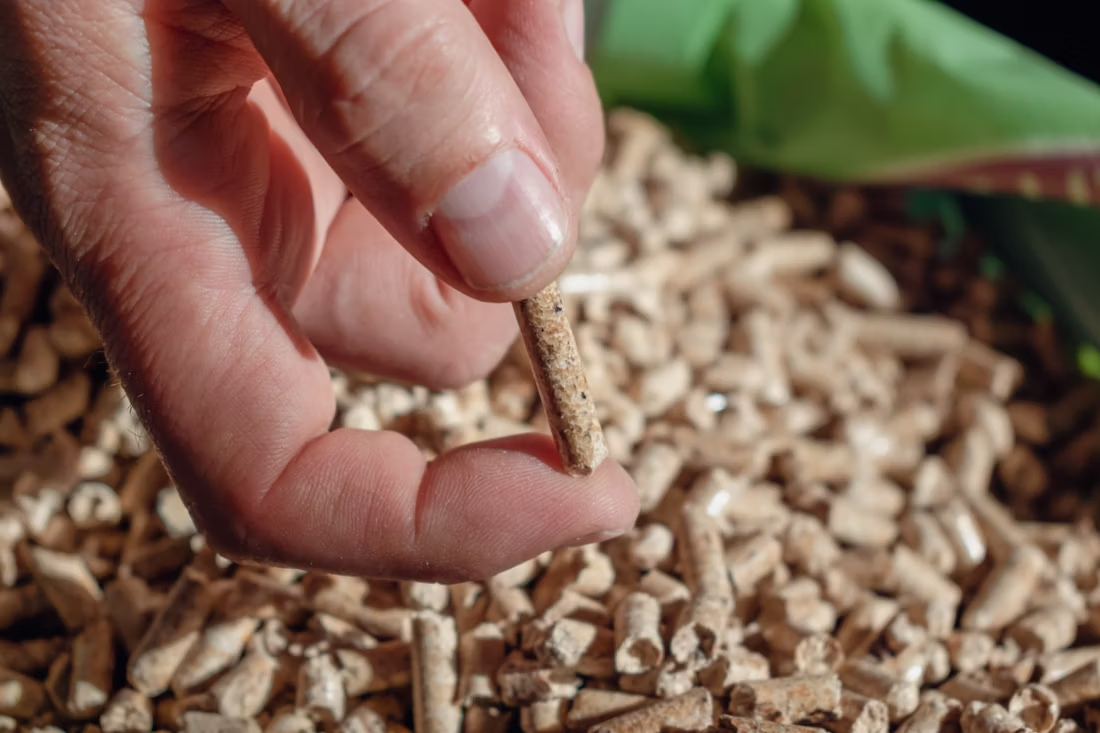
North Augusta has no local air quality restrictions or burn bans on wood-burning appliances, which means a pellet stove or insert can run whenever you want it to, without worrying about curtailment days. Regional pellet fuel from suppliers like Lignetics, Hamer Pellet Fuel, and Greenway Renewable Energy is sold through local hardware stores and hearth dealers throughout the CSRA, so fuel supply isn't the challenge it can be in more remote parts of the country. For homeowners who like the idea of a real flame and steady radiant warmth but don't want to deal with splitting oak, pine, or hickory, a pellet stove is often the easiest path to a working fireplace.
Three steps. No salesperson until you're ready.
Tell us about your project
Your zip code, your situation, and the fuel you're leaning toward—or let the answers point you to one.
See what's actually available
The brands dealers within 100 miles genuinely carry—real options, never a catalog mirage.
Get your dealer & Project Guide
A trusted local dealer, plus the free Project Guide & Parts List that names every component of the job.
Frequently Asked Questions
How much does a pellet stove installation cost in North Augusta?
A freestanding pellet stove installation in North Augusta typically runs $3,500 to $6,500, depending on the unit and whether venting has to be run through an exterior wall or up through the roof. A pellet insert going into an existing masonry fireplace tends to land in the same range, since most of the cost is the appliance itself plus a simple 3-inch or 4-inch PL vent run—pellet venting is far less involved than a masonry chimney rebuild. Homes without an existing fireplace or chase will run toward the higher end once wall penetration and exterior venting caps are added.
Do I really need a pellet stove in a climate this mild?
North Augusta's mild winter climate and 40°F average winter low mean most homes here are fine on a heat pump or central HVAC for the bulk of the season. A pellet stove isn't a necessity the way it would be in a colder climate zone—it's a supplemental heat source. Homeowners install them to zone-heat a den or bonus room without running the whole system, to cut electric bills during the coldest weeks, and to have a working heat source when an ice storm knocks out power to Dominion Energy South Carolina or Aiken Electric Coop service lines. Most local buyers treat it as a comfort and backup investment rather than a primary heating replacement.
What size pellet stove do I need for my North Augusta home?
Because winters here are mild, most North Augusta homeowners don't need a large-capacity unit rated for whole-home heating. A small to mid-size pellet stove (40,000–50,000 BTU) comfortably heats an open living area or great room, which covers the vast majority of installs in this climate. Larger units are really only worth considering if you're planning to heat an entire single-story home during extended outages or you have an unusually drafty older house. A local dealer can size the unit correctly during an in-home visit—oversizing a pellet stove in a mild climate like this just means you'll run it on low most of the time.
Pellet stove vs. wood stove—which makes more sense here?
Oak, pine, and hickory are all common and easy to source locally, so a wood stove is a perfectly viable option in North Augusta. But pellet stoves have real advantages for a mild climate: no cutting, splitting, or seasoning firewood, no chimney creosote buildup to worry about, and a hopper that can run 24–48 hours on a fill without tending. Wood still wins on off-grid, no-electricity backup heat, since pellet stoves need power to run the auger and combustion blower. If reliable electric service isn't a concern and you mostly want convenient, set-and-forget supplemental heat, pellet is usually the easier choice for this area.
What permits do I need to install a pellet stove in North Augusta?
You'll need a building permit through the City of North Augusta (or Aiken County if you're outside city limits), which covers the appliance installation and venting work. Because pellet stoves vent through a simple wall or roof penetration rather than a full masonry chimney, the inspection is generally quicker than a wood stove install. There's no cutting permit to worry about since pellet fuel is purchased bagged, and there's no local wood-burning curtailment program to navigate—North Augusta doesn't have the winter inversion or non-attainment issues some regions do.
Where do I buy pellets locally, and what do they cost?
Regional brands including Lignetics, Hamer Pellet Fuel, and Greenway Renewable Energy are widely available at hardware stores and hearth retailers throughout the CSRA. Typical bagged softwood pellets run in the $5–$7 per 40-lb bag range, or roughly $220–$300 per ton if you buy by the pallet, which is the more economical route for regular users. Given North Augusta's mild winters, most homeowners burn far less fuel per season than someone in a colder climate zone—a pallet or two often covers an average winter of supplemental use.
Will my pellet stove work during a power outage?
Not on its own—pellet stoves rely on electricity to run the auger that feeds fuel and the blower that pushes heat into the room, so a standard unit will shut down when Dominion Energy South Carolina or Aiken Electric Coop power drops. With residential rates in the area running roughly $0.146–$0.155 per kWh, running the stove itself is inexpensive, but backup power is the real consideration. Many North Augusta homeowners pair a pellet stove with a small battery backup unit or portable generator specifically to keep it running through the ice storms that occasionally take out power in Aiken County. If outage-proof heat is your top priority, a wood stove is worth comparing.
How much maintenance does a pellet stove need?
Less than a wood stove, but it's not zero. Expect to empty the ash pan every few days of regular use, clean the burn pot and glass weekly, and vacuum out the hopper and auger area periodically. An annual professional service—checking the exhaust blower, gaskets, and venting—is recommended and typically costs $150–$250 through a local hearth dealer. Because North Augusta's mild winters mean lighter overall usage than a colder climate, most units here need less frequent deep cleaning than they would running as a primary heat source further north.
Pellet vs. gas fireplace—which fits a North Augusta home better?
Gas offers instant on-off convenience and no fuel storage at all, which appeals to a lot of homeowners in a climate where you might only run the fireplace a few dozen nights a year. Pellet stoves require storing bags or a pallet of fuel and periodic hopper refills, but they burn a renewable fuel, often cost less to operate than propane, and give you a real flame with visible fire. If you already have natural gas service to the house, a gas insert is usually the simpler retrofit. If you don't have gas nearby or you like the idea of a self-contained heat source that doesn't depend on a gas line, pellet is the more practical option for most North Augusta homes.
Why is a fireplace insert so efficient?
An insert does two things: it seals the chimney completely, so you stop losing air you already paid to heat, and it radiates warmth into the room through the firebox and glass. Most add a heat-exchange fan that pulls cool room air underneath, wraps it around the hot firebox, and pushes it back out warm. Your home is more efficient before you've even lit the first fire.
How often does a pellet stove need cleaning?
A clean pellet stove is a happy pellet stove. Plan on cleaning the burn pot about once a week when you're burning regularly—ash and clinkers gum up the air holes just like a pellet barbecue. Most pellet stove problems trace back to skipped cleaning that nobody explained up front. Some designs make it easy with a trapdoor burn pot: pull a lever and the gunk drops into the ash pan.
How much should I budget for a fireplace?
For an average home—covering the fireplace, the vent pipe, and basic installation—a budget between $3,900 and $5,500 gives you a lot of options across wood, gas, and pellet. By the time you add finish work, gas line, and electrical, the average complete installation lands between $5,000 and $12,000 all-in. In a remodel or new build, a good rule is to put about 2.5% of the total project cost toward the fireplace.
Can I install a fireplace myself?
If you're putting a fire in your house on purpose, it's best to work with an expert. Unless you're genuinely experienced in framing, gas line, vent pipe, and the national code on clearances to combustibles, have a professional do it—and ideally the same company that sells you the fireplace, so warranty, service, and liability all live under one roof.
Nearby Dealers
Hearth shops serving North Augusta and the surrounding area.
Pellet Brands Stocked Around North Augusta
Manufacturers will point you to the nearest stocking dealer.
Find your pellet stove in North Augusta.
Tell us about your home and we'll put together a free Project Guide & Parts List—sized right for North Augusta's climate—and match you with a trusted local dealer who can install it.
Find Your Fireplace →