
Find the right fireplace for Aiken County's short, mild winters.
Wood, gas, pellet, and electric fireplace resources for every city and rural community in Aiken County—from downtown Aiken to Wagener and Salley. Find the right unit and connect with a trusted local hearth retailer.
Every Project Starts From One of These Five Situations
Sandhills, horse country, and real cold snaps in Aiken County, South Carolina.
Aiken County sits in the Central Savannah River Area, a rolling sandhills landscape of pine plantations, oak-lined equestrian estates, and the industrial footprint of the Savannah River Site along its southern edge. Winters here are mild by national standards—the average winter low sits around 32°F and the county has a light overall winter heating load, a fraction of what a place like Duluth, Minnesota racks up in a single season. Most years bring only a handful of hard freezes and the occasional ice storm rolling through on an Arctic front, but those cold snaps are enough to make a working fireplace matter. Oak, pine, and hickory are the dominant local firewoods—hickory in particular is prized here as much for its heat output as for its use in the county's barbecue tradition.
What you'll find on this hub: hearth retailers, service technicians, and fuel suppliers serving every community in the county—from Aiken and North Augusta down to Wagener and Salley, east toward New Ellenton and Jackson, and west along the river to Beech Island and Langley. Pick your fuel below to drill into specifics—local dealers, installation costs, recommended units, and the resources that match your project. Whether you're outfitting a horse-country farmhouse or a North Augusta townhome, this is the starting point.
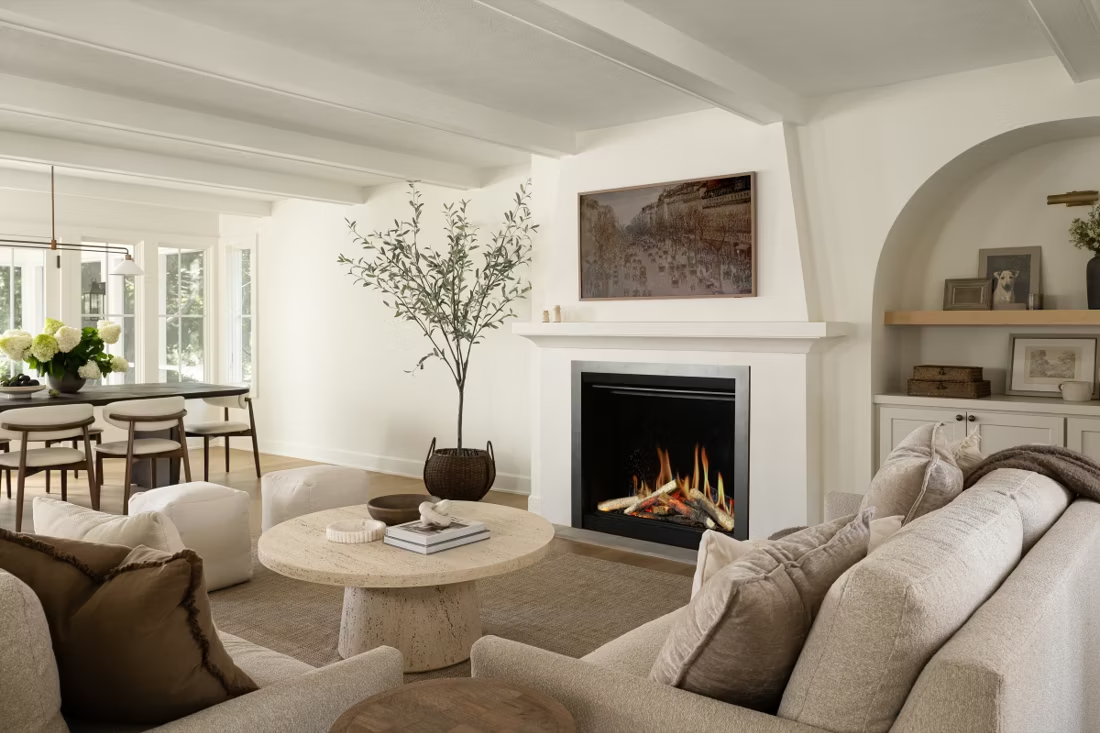
Four fuels. One honest answer for Aiken County.
Three steps. No salesperson until you're ready.
Tell us about your project
Your zip code, your situation, and the fuel you're leaning toward—or let the answers point you to one.
See what's actually available
The brands dealers within 100 miles genuinely carry—real options, never a catalog mirage.
Get your dealer & Project Guide
A trusted local dealer, plus the free Project Guide & Parts List that names every component of the job.
Frequently Asked Questions
Which fuel works best in Aiken County?
It depends more on what you want a fireplace to do here than on surviving harsh winters. With an average winter low around 32°F and only a light overall winter heating load each year, Aiken County doesn't need a fireplace as a primary heat source the way a place like Burlington, Vermont does—but plenty of homeowners still run wood stoves and inserts hard during the county's periodic hard freezes and ice storms, especially with oak and hickory readily available locally. Gas fireplaces and inserts are popular for their instant, thermostat-controlled heat and clean startup, good for the shoulder-season chill common in the CSRA. Pellet stoves offer wood-style ambiance without splitting and stacking, and are well supported by regional suppliers like Lignetics and Hamer Pellet Fuel. Electric fireplaces do well here precisely because the climate is mild—they're often all the supplemental heat a bedroom or sunroom needs, with none of the venting requirements. Many Aiken County homes choose based on aesthetics and lifestyle as much as heating need.
Do I need a permit to install a fireplace in Aiken County?
In most cases, yes. New wood stoves, wood inserts, gas fireplaces, gas inserts, gas stoves, and pellet stoves typically require a building permit, and gas installations usually need a separate permit and licensed gas technician for the line connection. Within the city limits of Aiken or North Augusta, permits go through the respective city building and codes department; in unincorporated parts of the county, they're handled through Aiken County's building codes office. Electric fireplaces are usually permit-free unless the installation involves new wiring or a dedicated circuit for a built-in unit. Most local hearth retailers pull the permit as part of the installation quote, so it's worth asking upfront whether that's included in your price.
Are there air quality restrictions on wood burning in Aiken County?
No—Aiken County isn't a designated non-attainment area and doesn't have winter inversion issues or burn-ban ordinances the way some Western basin communities do. That said, common-sense practice still applies: seasoned oak, pine, or hickory (moisture content under 20%) burns cleaner and produces less creosote buildup than green wood, and an EPA-certified stove will always put out less visible smoke than an older, uncertified unit. If you're replacing an old pre-1990s stove, newer EPA 2020 NSPS-compliant models burn noticeably more efficiently on the same cord of wood.
Can one local hearth retailer handle all four fuel types?
Many Aiken County hearth retailers carry three or four fuel types, since local demand spans everything from wood-burning heritage properties in Wagener and Salley to newer gas and electric installs in North Augusta subdivisions. A dealer that stocks wood, gas, pellet, and electric units side by side is worth visiting if you're still deciding between fuels—you can see working displays and compare real installed costs before committing. Smaller dealers may specialize in one or two fuels, often wood and gas, so it's worth confirming coverage before you drive out for a showroom visit.
How does service work in the rural parts of Aiken County?
Most chimney sweeps and hearth technicians are based in Aiken or North Augusta and travel out to the more rural stretches of the county—Wagener, Salley, Monetta, and the areas near New Ellenton and the Savannah River Site. Expect a modest travel fee for calls beyond a 20-mile radius. Because the heating season here is short and often triggered by a specific cold front, service calls can spike right before a hard freeze is forecast—scheduling your annual chimney sweep or gas inspection in early fall, before the first cold snap, is the easiest way to avoid a wait.
What's the typical cost range for fireplace installation across all fuel types in Aiken County?
Ranges vary by fuel and by how much venting or gas line work is involved. Wood stove or insert installation: roughly $3,500–$7,500 for a typical retrofit into an existing masonry fireplace, since new chimney chases are less common in this climate than in colder regions. Gas fireplace, insert, or stove: about $4,000–$9,000 depending on whether propane or natural gas service is already run to the home. Pellet stove or insert: typically $4,000–$6,500. Electric fireplace: $200–$2,500 for the unit itself, with $300–$1,000 in labor for anything beyond a plug-and-play wall mount. See the county + fuel pages above for cost detail tied to specific local retailers.
Can a fireplace actually lower my heating bill?
Yes—by creating a comfort zone. A furnace heats every square foot of the house just to warm the one room you're in; a gas fireplace on low burns roughly a sixth of the gas a typical furnace does. Set the furnace around 55–60 degrees as a baseline, then heat the rooms your family actually uses. Families who heat this way commonly save $20–$60 a month.
Can I install a fireplace myself?
If you're putting a fire in your house on purpose, it's best to work with an expert. Unless you're genuinely experienced in framing, gas line, vent pipe, and the national code on clearances to combustibles, have a professional do it—and ideally the same company that sells you the fireplace, so warranty, service, and liability all live under one roof.
What is an in-home preview and do I need one?
It's a visit where a hearth professional measures your space, confirms the model you picked actually works in your home, and walks the specs—framing, gas line, venting, finish work—before anything is ordered. Some details you just can't know until you see the house. Never make a down payment without one; it's the single most-skipped step that burns buyers.
Wood, gas, pellet, or electric—how do I choose?
Match the fuel to your life, not the other way around. Wood: lowest fuel cost and total power-outage independence, but you're hauling and stacking. Gas: press a button, set a thermostat, no maintenance to speak of. Pellet: wood economics with automatic feeding, in exchange for weekly cleaning and a need for electricity. Electric: plugs in anywhere with honest supplemental heat. Nobody regrets the fuel that fits how they actually live.
Stove and Fireplace Dealers in Aiken County
Listings include WhyFire partner dealers, dealers we have verified as authorized for the brands we recommend, and established local businesses that carry hearth products. Every listing shows which one it is. The ones marked Preferred run on WhyFire's software, so they can show you real pricing and book your appointment right here. No manufacturer pays for placement. How we verify dealers →
Fireside Outdoor Kitchens
Holley Heating & Air
Thompson Gas
Augusta Overhead
Advanced Chimney Sweep, LLC
Find your fireplace in Aiken County.
Pick your fuel below to find the right unit, see installation costs, and connect with a trusted local hearth retailer.
Find Your Fireplace →