
A Pellet Stove Isn't the Default in Hartsville—But It Still Has a Place.
Hartsville's Pee Dee winters rarely demand full-time biomass heat, but pellet stoves still show up here for supplemental warmth, storm-season backup, and the ambiance of a low-maintenance fire. We'll help you figure out if one makes sense for your home.
Every Project Starts From One of These Five Situations
Mild Winters Mean Pellet Heat Plays a Supporting Role, Not the Lead.
Hartsville sits in climate zone 3A at just 221 feet of elevation, with a winter low averaging 32°F and a mild, short heating season—roughly a third of the heating load a place like Bozeman, Montana sees. Most Darlington County homes are built and heated around that reality: central heat pumps from Duke Energy Progress or Pee Dee Electric Coop territory do the bulk of the work, and a hard freeze that lasts more than a few nights is the exception, not the rule. That's a very different climate than the ones where pellet stoves become a household's main heat source.
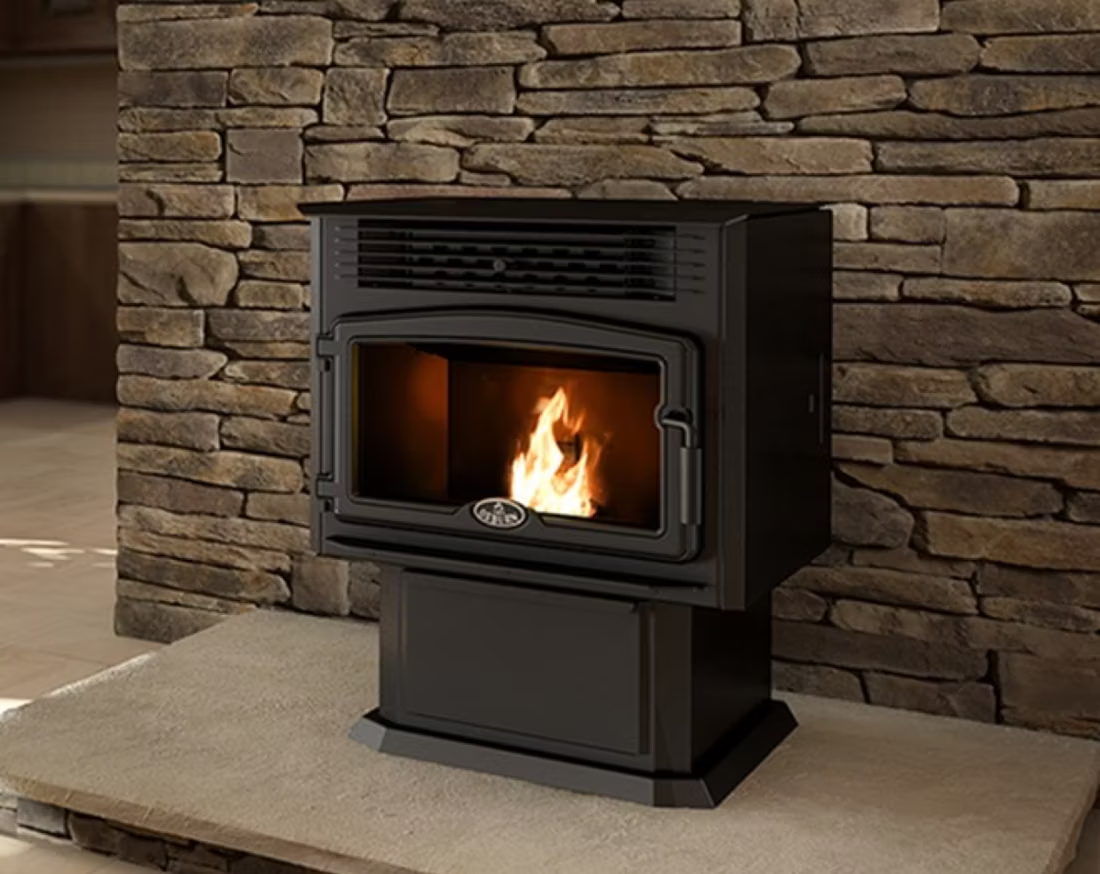
That doesn't mean pellet stoves are absent here—they just serve a narrower purpose. Homeowners in Hartsville who install one are usually after supplemental heat for the occasional January cold snap or ice storm, a clean-burning alternative to seasoning local oak, pine, or hickory in humid Pee Dee air, or simply the low-maintenance convenience of a thermostat-controlled fire without the ash and creosote of a wood stove. Fuel is sourced through regional suppliers like Lignetics, Hamer Pellet Fuel out of nearby Hamer, and Greenway Renewable Energy, so pellets aren't hard to find even though the appliances themselves are a niche choice locally.
Three steps. No salesperson until you're ready.
Tell us about your project
Your zip code, your situation, and the fuel you're leaning toward—or let the answers point you to one.
See what's actually available
The brands dealers within 100 miles genuinely carry—real options, never a catalog mirage.
Get your dealer & Project Guide
A trusted local dealer, plus the free Project Guide & Parts List that names every component of the job.
Frequently Asked Questions
Are pellet stoves actually common in Hartsville?
Not really, and it's worth being upfront about that. With Hartsville's mild winters—a 32°F average low and a short, light heating season—most homes rely on heat pumps for primary heat, and a biomass appliance built to run around the clock doesn't pay for itself the way it would in a colder region. Where pellet stoves do show up in Darlington County, it's almost always as a secondary heat source: a den or bonus room, a farmhouse with drafty spots, or a household that wants backup warmth for the occasional ice storm that knocks out power for a day or two. If that's your situation, a pellet stove can still be the right call—it's just not the default heating appliance here the way it is farther north.
How much does a pellet stove installation cost in Hartsville?
Because pellet stoves aren't a high-volume product in the Pee Dee, local pricing isn't as standardized as it is in colder markets, but a typical installed cost runs in the $3,500 to $6,500 range nationally—covering the stove, a hearth pad if needed, and the vent kit. Homes without an existing masonry chimney (common in Hartsville's newer construction) usually vent directly through an exterior wall, which keeps costs toward the lower end. A trusted local dealer will size the job to your actual home and give you a firm number rather than a stab-in-the-dark estimate from a big-box store.
Where do I buy pellets in Hartsville, and will I run out mid-winter?
Regional brands like Lignetics, Hamer Pellet Fuel (produced not far away in Hamer, SC), and Greenway Renewable Energy supply the Pee Dee area, so pellets are generally easy to find at hearth retailers and farm supply stores. Because demand is lower here than in colder states, some smaller outlets may not carry pellets year-round, so it's worth buying a season's supply—usually a few dozen 40-lb bags for a supplemental-heat setup—before cold weather hits rather than assuming you can restock in January.
Do I need a permit to install a pellet stove in Darlington County?
Most jurisdictions in South Carolina require a building permit for a new fuel-burning appliance and its venting, and Darlington County's building codes office is the place to check before work starts. In practice, a certified local installer will usually pull the permit as part of the job, since it covers the wall or roof penetration for the vent pipe and confirms clearances to combustibles. Pellet stoves are exempt from the kind of wood-smoke air quality restrictions you'd see in a non-attainment area, and Hartsville doesn't have any air quality advisories on the books, so permitting here is mostly a straightforward inspection process.
Will a pellet stove keep my house warm during a power outage?
This is the one place pellet stoves fall short as emergency heat: the auger that feeds pellets and the fan that distributes heat both run on electricity, so a standard pellet stove goes dark the moment Duke Energy Progress or Pee Dee Electric Coop service drops—which does happen during Pee Dee ice storms and hurricane-season outages. Some models offer a battery backup option that can keep the auger running for a limited time, and it's worth asking a local dealer about that feature specifically if outage resilience is a priority. If uninterrupted heat during outages is the main goal, a wood stove or a battery-backed gas unit is generally a more reliable choice in this climate.
Pellet stove or wood stove—which makes more sense for a Hartsville home?
Wood is genuinely abundant here—oak, pine, and hickory are all common locally—but South Carolina's humidity means green wood takes six months to a year to season properly, and a lot of homeowners don't want to manage a woodpile for a heating need that's really just a few weeks a year. Pellet stoves solve that problem: bagged pellets are ready to burn, produce far less ash, and don't require splitting or stacking. The tradeoff is the electricity dependence noted above. For a household that wants low-maintenance supplemental heat and has reliable power most of the year, pellet is often the more practical fit; for anyone prioritizing off-grid resilience during storms, wood remains the more traditional Pee Dee answer.
How do I store pellets so they don't degrade in Hartsville's humidity?
Humidity is the real enemy of pellet fuel, and it's a bigger factor in Hartsville than in drier climates. Pellets absorb moisture readily and will swell, crumble, or jam an auger if stored improperly. Keep bags off a concrete garage or shed floor (moisture wicks up through slabs), stack them on pallets, and avoid outdoor storage even under a tarp—condensation inside plastic bagging is a common culprit. A dry interior closet or a sealed storage bin is the safer bet during the Pee Dee's humid summers and fall hurricane season.
What size pellet stove do I actually need for a mild climate like Hartsville's?
Given the area's short heating season, most Hartsville installs are sized for supplemental heat in a specific room or open living area rather than whole-home output—typically a small to mid-size unit rated for 1,000 to 1,800 square feet is plenty, even in an older, less-insulated Darlington County farmhouse. Oversizing a pellet stove in a mild climate like this one just means it runs on low settings most of the time, which is less efficient and harder on the auger. A local dealer can walk through your floor plan and insulation to land on the right BTU output.
Should I just stick with my heat pump instead of adding a pellet stove?
For most Hartsville homes, the heat pump—whether served by Duke Energy Progress or Pee Dee Electric Coop, at a residential rate around 15.5 cents per kWh—is genuinely sufficient for the area's mild, short heating season, and a pellet stove won't lower your bills enough to justify the install cost on efficiency alone. Where a pellet stove earns its keep is comfort and resilience in specific situations: a chilly back room the heat pump struggles to reach, a desire for visible flame and radiant heat instead of forced air, or wanting a heat source that isn't entirely dependent on the grid's cooling and heating cycle. If none of those apply to your household, the heat pump alone is a perfectly reasonable choice here.
What's the difference between an insert and a zero-clearance fireplace?
An insert is a fireplace that slides into a pre-existing wood-burning fireplace—if you don't have one, there's nothing to insert it into. A zero-clearance fireplace is built into a framed wall, which makes it the answer for remodels and new construction. Simple test: existing masonry fireplace means insert; blank or framed wall means zero-clearance.
How often does a pellet stove need cleaning?
A clean pellet stove is a happy pellet stove. Plan on cleaning the burn pot about once a week when you're burning regularly—ash and clinkers gum up the air holes just like a pellet barbecue. Most pellet stove problems trace back to skipped cleaning that nobody explained up front. Some designs make it easy with a trapdoor burn pot: pull a lever and the gunk drops into the ash pan.
Does a fireplace add value to my home?
On average, a fireplace adds back to the home about the same amount you spent installing it. Add the monthly savings from heating the rooms you actually use instead of the whole house—often hundreds of dollars a year—and the value case is strong before you even count what a fire does for how your family uses the room.
How much should I budget for a fireplace?
For an average home—covering the fireplace, the vent pipe, and basic installation—a budget between $3,900 and $5,500 gives you a lot of options across wood, gas, and pellet. By the time you add finish work, gas line, and electrical, the average complete installation lands between $5,000 and $12,000 all-in. In a remodel or new build, a good rule is to put about 2.5% of the total project cost toward the fireplace.
Nearby Dealers
Hearth shops serving Hartsville and the surrounding area. Every listing shows whether it is a WhyFire partner, a dealer we have verified as authorized for the brands we recommend, or a local business carrying hearth products. No manufacturer pays for placement. How we verify dealers →
West Propane
Thomlinson & McWhite Inc
Battle Lp Gas
Pellet Brands Stocked Around Hartsville
Manufacturers will point you to the nearest stocking dealer.
Find your pellet stove in Hartsville.
Tell us about your home and heating goals, and we'll match you with a trusted local dealer and send over a free Project Guide & Parts List—sized to your space, with the exact parts, vent kit, and installer recommendation for your Hartsville project.
Find Your Fireplace →