
A gas fireplace built for Hartsville's mild winters.
Reliable flame-on-demand heat for the Pee Dee region—whether you're converting an old masonry fireplace or adding one to a newer home. Find the right unit and connect with a trusted local dealer.
Every Project Starts From One of These Five Situations
Ambiance and backup heat, sized for the Pee Dee.
Hartsville sits in the Pee Dee region of northeastern South Carolina at just 221 feet of elevation, in climate zone 3A. Winter lows average around 32°F and the area logs only about 2,867 heating degree days a year—a fraction of what a place like Duluth, MN or Burlington, VT racks up in a single hard winter. That's why wood stoves and pellet appliances are rare here; there simply isn't enough sustained cold to justify them as a primary heat source. Gas fireplaces fill a different role—supplemental warmth on the handful of nights that dip near freezing, and a dependable backup when storms take out power.
Natural gas service in Hartsville is limited to portions of the city, and many homes—especially outside city limits in rural Darlington County—run on propane instead, delivered and tanked by regional suppliers. Electric service comes from Duke Energy Progress or Pee Dee Electric Cooperative depending on where you sit, and both grids can go down for days after a hurricane remnant or ice storm moves through the Carolinas. Many of Hartsville's older homes, some dating to the town's Sonoco and Coker mill-era growth, still have the original masonry fireplace sitting cold and unused—a strong candidate for a gas insert that brings it back to life without the hassle of wood.
Three steps. No salesperson until you're ready.
Tell us about your project
Your zip code, your situation, and the fuel you're leaning toward—or let the answers point you to one.
See what's actually available
The brands dealers within 100 miles genuinely carry—real options, never a catalog mirage.
Get your dealer & Project Guide
A trusted local dealer, plus the free Project Guide & Parts List that names every component of the job.
Frequently Asked Questions
How much does a gas fireplace installation cost in Hartsville?
Most gas fireplace installations in the Hartsville area run somewhere between $3,500 and $9,000, with the spread driven mainly by whether you're on natural gas or propane and how much venting or gas line work is needed. A direct-vent insert going into an existing masonry fireplace with gas already run nearby sits at the lower end. A new freestanding unit in a room without existing gas service—which may require a propane tank set and a new line run—lands toward the higher end. A local dealer will walk your home before quoting a firm number.
Can I convert my existing wood fireplace to gas?
Yes, and it's a common project in Hartsville's older neighborhoods, where many homes built during the town's textile-mill era still have a brick, wood-burning fireplace that rarely if ever gets used given how mild the winters are here. A gas insert typically installs into that existing masonry opening using a stainless liner run up the original chimney, and the job usually runs $4,000 to $8,000 depending on the insert and whether you're hooking to a propane tank or an existing gas line. The conversion keeps the look of the original hearth while giving you heat at the flip of a switch.
Do I need natural gas, or should I plan on propane?
It depends on where you live. Natural gas service only reaches certain parts of the city of Hartsville, so plenty of homeowners—particularly those outside city limits in Darlington County—run on propane instead. Propane requires either an existing tank or a new tank set by a local supplier, and most gas fireplace models can be configured for either fuel with the right orifice kit. If your home already has natural gas for a water heater or range, adding a fireplace is usually the simpler and cheaper path.
Will my gas fireplace work if the power goes out?
Most will, which matters in this part of South Carolina—Duke Energy Progress and Pee Dee Electric Cooperative lines both take hits during hurricane remnants and the occasional ice storm, sometimes for several days at a stretch. Units with IPI (intermittent pilot ignition) run on AA battery backup that kicks in automatically when power drops, so the fireplace lights and operates just like normal. Valor fireplaces go a step further—their pilot's thermocouple generates its own electricity, so there's no battery to remember at all. Either option gives you heat and light in the living room even when the grid is down.
What's the difference between a gas fireplace, gas insert, and gas stove?
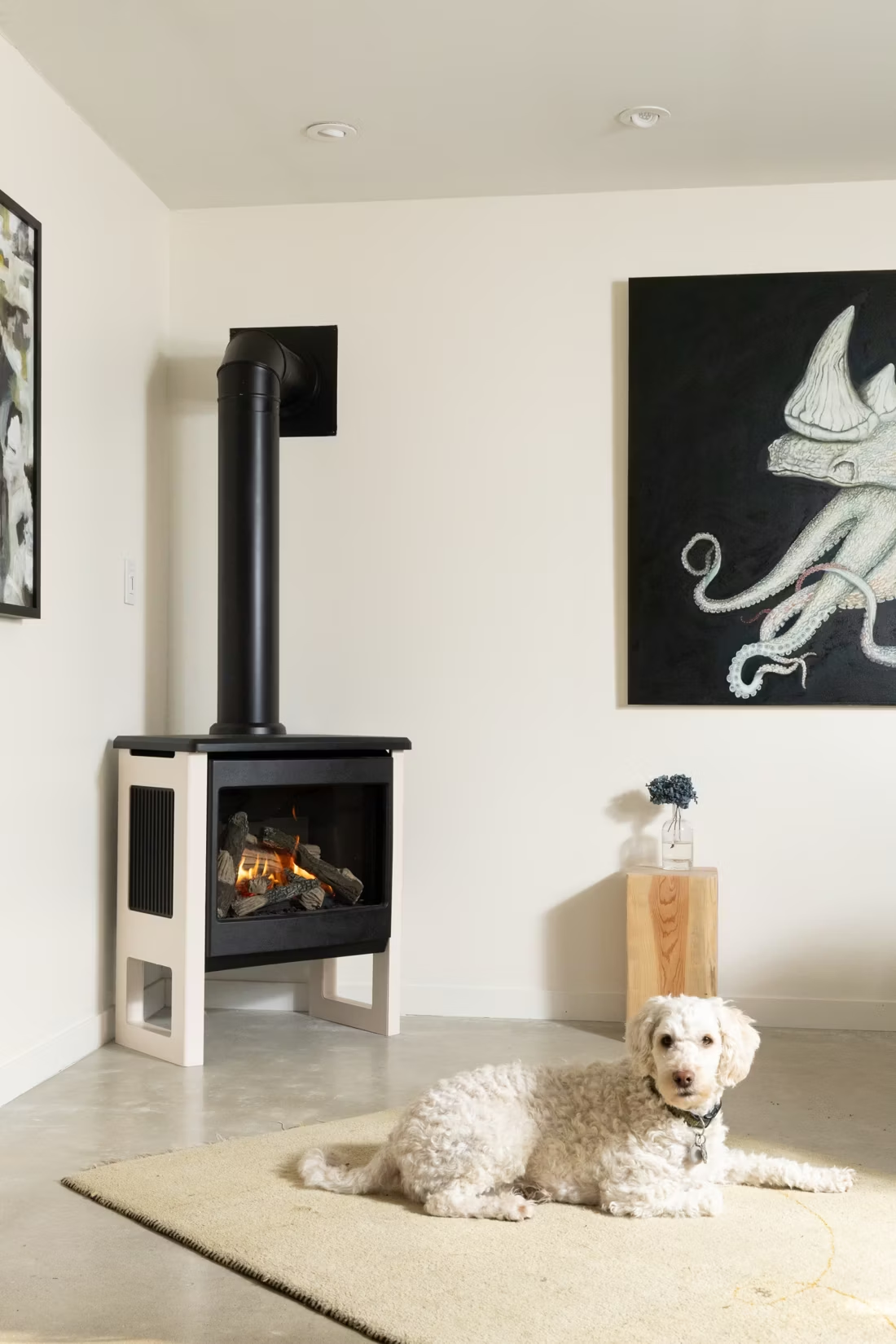
A gas fireplace is a fully built-in unit framed into a wall, typically chosen for new construction or a remodel. A gas insert slides into an existing masonry fireplace opening and uses the current chimney as its vent path—the natural choice for Hartsville's older homes with an unused wood-burning hearth. A gas stove is a freestanding cabinet-style unit that sits on the floor and can go almost anywhere with the right clearances, which works well in a den or sunroom addition that never had a fireplace to begin with.
Do I need a permit to install a gas fireplace in Hartsville?
Yes. Depending on whether your address falls inside city limits, permitting runs through the City of Hartsville or Darlington County's building department, and any new gas line work requires a licensed gas contractor separate from the general installation permit. Most established local hearth dealers coordinate the building permit, the gas line, and the final inspection together, so you're not left managing multiple trades and two sets of paperwork on your own.
Should I get a vented or vent-free gas fireplace?
Vented (direct-vent) units draw combustion air from outside and exhaust it back outside through a sealed pipe—they're the safer, more universally recommended choice and put out real heat. Vent-free units burn directly into the room with no external venting, which some homeowners in Hartsville consider for a den addition or sunroom given how mild the climate is here and how little full-time heat is actually needed. Vent-free is legal in South Carolina but comes with strict room-size and ventilation requirements, and it's not a fit for a primary living space you use daily. For most homes, a direct-vent unit is still the better long-term choice.
How often does a gas fireplace need to be serviced?
Plan on an annual inspection, ideally before the first cool snap in late fall. A technician checks the burner, pilot assembly, gas connections, and any venting, and cleans the glass and interior components. It's a much shorter visit than a wood chimney sweep—most Hartsville-area service providers charge somewhere in the $125 to $200 range for a standard annual check, and it's worth keeping current even on a unit that only runs occasionally.
Gas vs. electric—which fits my home better?
Given Hartsville's mild winters and modest heating load, both are reasonable options, and the right call often comes down to budget and whether you want a real flame. Electric fireplaces install for $400 to $1,200, need no venting or gas line, and cost very little to run for occasional ambiance—though at the local Duke Energy Progress or Pee Dee Electric rate of roughly 15.5 cents per kWh, running one as a steady heat source adds up faster than gas. Gas units cost more upfront but deliver a genuine flame, more heat output, and—with battery-backup ignition—a source of warmth and light during storm-related outages, which electric units can't offer once the power's out.
Why is a fireplace insert so efficient?
An insert does two things: it seals the chimney completely, so you stop losing air you already paid to heat, and it radiates warmth into the room through the firebox and glass. Most add a heat-exchange fan that pulls cool room air underneath, wraps it around the hot firebox, and pushes it back out warm. Your home is more efficient before you've even lit the first fire.
Can I put a TV above my fireplace?
Yes—with an asterisk. Fireplaces are hot and TVs don't like heat. Either put a mantel between them to deflect rising warmth, or choose a fireplace with heat-management technology that creates a cool zone on the wall above—the wall stays around 125 degrees, barely warm, while the room still gets full heat. If you like clean lines and don't want a mantel, heat management is the answer.
Does a fireplace add value to my home?
On average, a fireplace adds back to the home about the same amount you spent installing it. Add the monthly savings from heating the rooms you actually use instead of the whole house—often hundreds of dollars a year—and the value case is strong before you even count what a fire does for how your family uses the room.
Can a fireplace actually lower my heating bill?
Yes—by creating a comfort zone. A furnace heats every square foot of the house just to warm the one room you're in; a gas fireplace on low burns roughly a sixth of the gas a typical furnace does. Set the furnace around 55–60 degrees as a baseline, then heat the rooms your family actually uses. Families who heat this way commonly save $20–$60 a month.
Nearby Dealers
Hearth shops serving Hartsville and the surrounding area. Every listing shows whether it is a WhyFire partner, a dealer we have verified as authorized for the brands we recommend, or a local business carrying hearth products. No manufacturer pays for placement. How we verify dealers →
West Propane
Thomlinson & McWhite Inc
Battle Lp Gas
Find your gas fireplace in Hartsville.
Tell us a bit about your home and we'll put together a free Project Guide & Parts List—the right gas fireplace or insert, the exact venting components, and a trusted local Hartsville-area dealer to install it.
Find Your Fireplace →