
Warm Evenings, Modern Convenience, Right Here in Florence.
Florence winters rarely demand serious heat, but a gas fireplace still earns its keep—as backup warmth during Pee Dee ice storms and as the centerpiece of a room. Find the right unit and connect with a trusted local dealer.
Every Project Starts From One of These Five Situations
Comfort heat for Pee Dee's mild winters.
Florence sits at just 124 feet in South Carolina's Pee Dee region, in climate zone 3A, where the average winter low hovers around 36°F and the city has a fairly light, mild winter heating load. Compare that to a place like Fargo, ND, which racks up nine times that heating load, and it's clear Florence homeowners aren't fighting for survival heat. Gas fireplaces here do a different job: they add ambiance to a living room, take the edge off a cold snap, and—critically—keep working when winter storms take down power lines across the Pee Dee.
Duke Energy Progress and Pee Dee Electric Cooperative keep the lights on for most of Florence and the surrounding county, but ice storms have knocked out power across this part of South Carolina before, sometimes for days. A gas fireplace with battery-backup ignition is one of the few heat sources that keeps running when the grid doesn't. Wood heat, by contrast, is genuinely rare here—Florence's humid, short winters mean local oak, pine, and hickory get burned more often in a smoker than a hearth. For homeowners weighing a real heat source that works without relying entirely on the grid, gas is the practical choice in this climate.
Three steps. No salesperson until you're ready.
Tell us about your project
Your zip code, your situation, and the fuel you're leaning toward—or let the answers point you to one.
See what's actually available
The brands dealers within 100 miles genuinely carry—real options, never a catalog mirage.
Get your dealer & Project Guide
A trusted local dealer, plus the free Project Guide & Parts List that names every component of the job.
Frequently Asked Questions
How much does a gas fireplace installation cost in Florence?
A gas insert installed into an existing masonry fireplace—common in Florence's older neighborhoods with brick hearths built in the 1950s through 1970s—typically runs $3,000 to $7,000, depending on whether a chimney liner and new gas line are needed. A built-in direct-vent gas fireplace for new construction or a remodel, where framing and fresh venting have to be run, usually falls between $6,500 and $12,000. Homes already plumbed for gas land on the lower end of either range. A local dealer will give you a firm number after seeing your fireplace or framing in person.
Can I convert my existing wood-burning fireplace to gas?
Yes, and it's a common project in Florence's older housing stock, where many homes still have an open masonry fireplace that rarely gets used because wood heat isn't much of a draw in this climate. A gas insert typically drops into that opening using a stainless liner run through the existing chimney, and the job usually runs $3,500 to $8,000 depending on the insert and whether new gas line work is required. It keeps the look of your original fireplace while giving you an on-demand flame instead of a fireplace that just collects dust nine months a year.
Do I need natural gas, or should I plan on propane?
It depends on where in Florence County you're located. Parts of the city proper have natural gas service, and if your home already runs a gas water heater or range, adding a fireplace onto that line is usually straightforward. Outside city limits and in more rural stretches of the Pee Dee, propane is the standard, supplied by regional companies like Blossman Gas. Most gas fireplace models can be set up for either fuel—your installer configures the orifice and regulator for whichever you have. If you're on propane and don't have a tank yet, your supplier handles that as a separate arrangement.
Will my gas fireplace still work if the power goes out?
Most will, which matters in a region where Duke Energy Progress and Pee Dee Electric Cooperative customers have both seen multi-day outages after winter ice storms. Units with intermittent pilot ignition (IPI) run on AA battery backup that kicks in automatically when the power drops, so the fireplace lights and operates normally off the batteries. Valor takes it a step further—their units generate their own electricity from the pilot's thermocouple, so there are no batteries to remember to replace. For a Florence home that might lose power for a day or two after an ice event, that's a meaningful difference. Ask your local dealer about the ignition system before you buy.
What's the difference between a gas fireplace, gas insert, and gas stove?
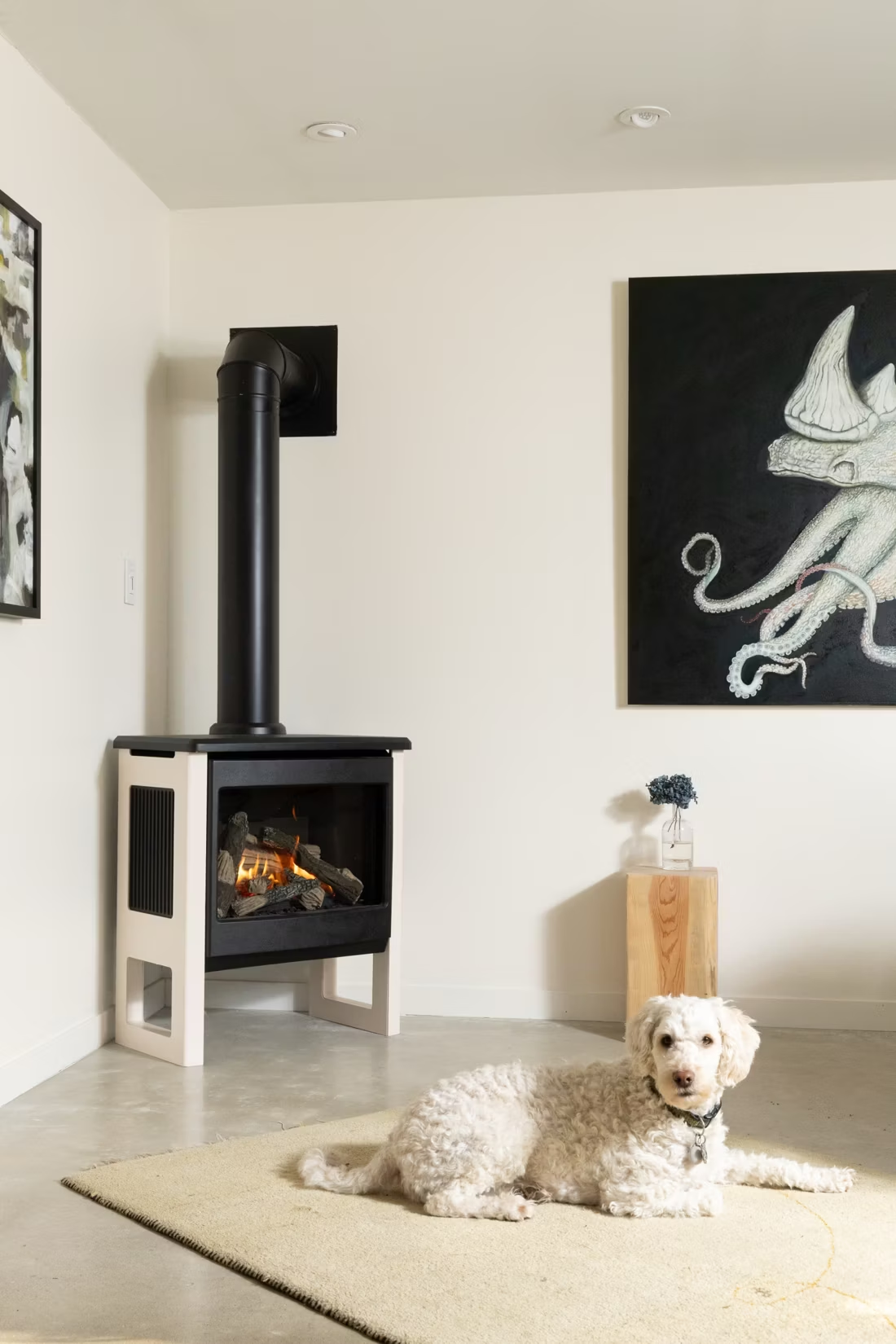
A gas fireplace is a fully built-in unit, framed into a wall—the right call for new construction or a remodel without an existing hearth. A gas insert slides into an existing masonry fireplace opening and uses the chimney as its vent path, which fits a lot of Florence's older brick-and-mortar homes. A gas stove is a freestanding cabinet unit that sits on the floor and doesn't require an existing fireplace opening at all, which makes it a flexible option for a den or sunroom addition. Most Florence homeowners with an existing fireplace go with an insert; newer builds usually go built-in.
Do I need a permit to install a gas fireplace in Florence?
Yes. Inside city limits, that's the City of Florence Building & Codes Enforcement Division; in unincorporated parts of the county, it's the Florence County Building Codes Department. Both require a building permit for the appliance and separate sign-off on the gas line, which has to be run by a licensed gas fitter. Most hearth dealers in the area handle the permitting and coordinate the gas line and inspection as part of the installation, so you're not managing multiple trades yourself.
Are vent-free gas fireplaces legal in South Carolina?
Yes, South Carolina permits vent-free (unvented) gas fireplaces, but they come with strict room-sizing requirements and must include an oxygen depletion sensor. Vented direct-vent units, which draw combustion air from outside and exhaust it back outside, remain the more common and more universally recommended choice—they don't put any combustion byproducts into your living space and there's no debate about code compliance. For most Florence installations, direct-vent is the default; vent-free comes up mainly in smaller supplemental spaces like a converted sunroom or den.
How often does a gas fireplace need to be serviced?
An annual inspection is still recommended even in a mild climate like Florence's, where a gas fireplace might only see heavy use from December through February. A technician checks the burner, pilot assembly, gas connections, and venting, and cleans the glass and interior—usually $125 to $200. Scheduling it in early fall, before the first cold snap, means you're not waiting on a service call once the weather actually turns.
Should I even consider wood instead of gas?
For most Florence homes, no—wood heat is genuinely uncommon here. With such a light winter heating load and winter lows averaging 36°F, there's rarely enough sustained cold to justify a wood-burning setup, and local oak, pine, and hickory get used far more often for smoking barbecue than heating a house. A small number of rural properties near the Pee Dee River still run a wood stove for backup heat or atmosphere, but if you're deciding between fuels for a typical Florence home, gas wins on convenience, instant on-off operation, and—with battery-backup ignition—reliable heat during the ice storms that occasionally knock out power in this part of the state.
Can I put a TV above my fireplace?
Yes—with an asterisk. Fireplaces are hot and TVs don't like heat. Either put a mantel between them to deflect rising warmth, or choose a fireplace with heat-management technology that creates a cool zone on the wall above—the wall stays around 125 degrees, barely warm, while the room still gets full heat. If you like clean lines and don't want a mantel, heat management is the answer.
Why is my open fireplace making my house colder?
Open fireplaces suck—literally. As the fire burns, it consumes air your furnace already paid to heat and pulls it out through the chimney, so the house is actually colder after the fire goes out than before you lit it. An insert fixes this: it seals the chimney, puts fixed glass across the front, and turns that hole in your house into a real heat source.
Can I install a fireplace myself?
If you're putting a fire in your house on purpose, it's best to work with an expert. Unless you're genuinely experienced in framing, gas line, vent pipe, and the national code on clearances to combustibles, have a professional do it—and ideally the same company that sells you the fireplace, so warranty, service, and liability all live under one roof.
Can a fireplace actually lower my heating bill?
Yes—by creating a comfort zone. A furnace heats every square foot of the house just to warm the one room you're in; a gas fireplace on low burns roughly a sixth of the gas a typical furnace does. Set the furnace around 55–60 degrees as a baseline, then heat the rooms your family actually uses. Families who heat this way commonly save $20–$60 a month.
Nearby Dealers
Hearth shops serving Florence and the surrounding area.
Find your gas fireplace in Florence.
Tell us a bit about your home and we'll put together a free Project Guide & Parts List—the right gas fireplace or insert, the vent kit it needs, and a trusted local Florence dealer to install it.
Find Your Fireplace →