
Comfortable heat for Florence County's mild winters.
Gas and electric fireplace resources for every city and community in Florence County—the two fuels that actually fit this mild, short-winter climate—plus wood and pellet options for the rare homeowner who wants them.
Every Project Starts From One of These Five Situations
Mild-climate heating across Florence County, South Carolina.
Florence County sits in climate zone 3A, with an average winter low of 36°F and just 2,334 heating degree days a year—a heating season that's a fraction of what a place like Duluth, Minnesota (over 10,000 HDD) sees. That translates to short, mild winters where a furnace runs for a few months, not six. For hearth choices, that reality matters: gas fireplaces and inserts deliver quick supplemental warmth on the occasional 30-degree night, and electric fireplaces cover ambiance and safe secondary heat in bedrooms or sunrooms without any venting at all.
Wood-burning fireplaces do exist in older Florence County homes, and local oak, pine, and hickory firewood is easy to find—but with a heating season this short, wood is rarely anyone's primary heat source; it's more often kept for ambiance during a cold snap. Pellet stoves are even rarer here: regional pellet brands like Lignetics, Hamer Pellet Fuel, and Greenway Renewable Energy are available if you want one, but few local homes rely on pellet heat given how mild the county's winters run. What you'll find on this hub: hearth retailers, service technicians, and fuel suppliers serving Florence and the smaller communities across the county, organized by fuel type so you can see what's genuinely common here versus what's a special-order.
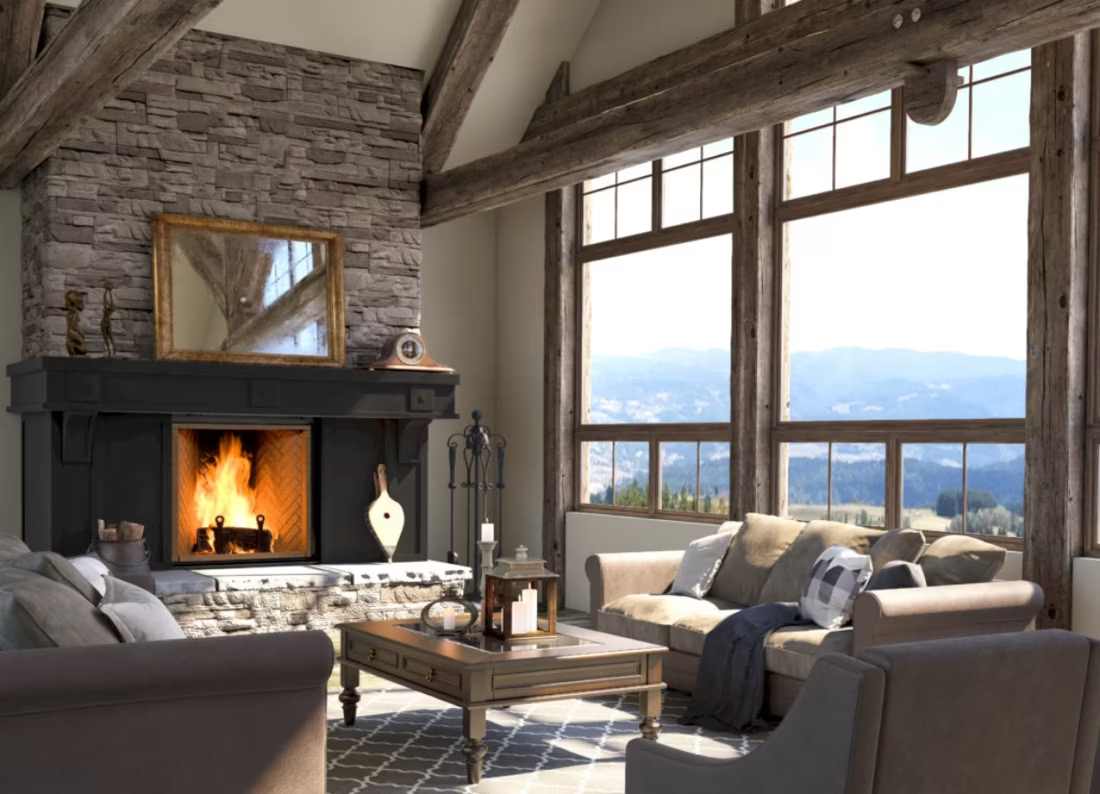
Four fuels. One honest answer for Florence County.
Three steps. No salesperson until you're ready.
Tell us about your project
Your zip code, your situation, and the fuel you're leaning toward—or let the answers point you to one.
See what's actually available
The brands dealers within 100 miles genuinely carry—real options, never a catalog mirage.
Get your dealer & Project Guide
A trusted local dealer, plus the free Project Guide & Parts List that names every component of the job.
Frequently Asked Questions
Which fuel works best in Florence County?
Given 2,334 heating degree days and an average winter low of 36°F, Florence County's heating demand is modest—nowhere close to a six-month heating season like Duluth, Minnesota sees. Gas fireplaces and inserts are the most practical choice for instant, controllable supplemental heat, whether on natural gas or propane. Electric fireplaces are popular for ambiance and safe secondary heat in bedrooms and sunrooms, with zero venting required. Wood-burning fireplaces exist in older homes and local oak, pine, and hickory firewood is easy to source, but wood isn't a common primary heat source here—it's kept mostly for ambiance during a cold snap. Pellet stoves are rarer still; regional brands like Lignetics and Hamer Pellet Fuel are available, but few households rely on pellet heat given how short the county's winters run.
Do I need a permit to install a fireplace in Florence County?
In most cases, yes. Gas fireplace, insert, and stove installations in Florence County typically require both a mechanical/building permit and a licensed gas line hookup, whether you're on natural gas or propane. Electric fireplace installs usually don't need a permit unless you're hardwiring a built-in unit into a new circuit. Wood-burning fireplace inserts, though uncommon in this climate, still require a permit and inspection to confirm proper venting and clearances. Most local retailers who install gas or electric units handle the permitting as part of the job, so you typically aren't filing it yourself.
Are there air quality restrictions on wood burning in Florence County?
No. Florence County has no reported air quality concerns—no non-attainment status, no winter inversion pattern, and no seasonal burn curtailment periods like you'd find in a mountain basin. Wood-burning fireplace owners here face no local burn restrictions; wood simply isn't a heavily used fuel in the county given how short and mild the heating season is, so the demand for burn-day advisories never really materialized.
Can one local hearth retailer handle all four fuel types?
Most hearth retailers in Florence County concentrate on gas fireplaces, inserts, and log sets, plus electric fireplace lines, since those two fuels genuinely fit the county's mild climate. Fewer dealers carry a deep wood-stove or pellet-stove inventory, because demand for those fuels is low. If you're after a wood-burning masonry fireplace update or one of the less common pellet inserts, ask specifically—most gas- and electric-focused shops can special-order the unit or point you to a specialist who handles it.
How does service work in the smaller towns around Florence County?
Outside the city of Florence, technicians covering the county's smaller towns typically build in a modest trip charge for gas fireplace inspections or electric fireplace troubleshooting. Because so few homes in the county run wood or pellet stoves, chimney sweep and pellet-service visits are less common than in colder-climate counties and may take longer to schedule—booking ahead of the first cold snap in November is a good idea if you have one of the county's less common wood-burning setups.
What's the typical cost range for fireplace installation across all fuel types in Florence County?
Ranges vary by fuel and reflect how much venting and structural work is involved. Gas fireplace, insert, or stove: roughly $3,500–$8,000, with simpler direct-vent installs on the lower end since the mild climate rarely calls for extensive chimney retrofits. Electric fireplace: $200–$3,000 for the unit, plus $400–$1,200 in labor for anything beyond plug-and-play. Wood-burning fireplace or insert: $4,000–$8,000, though uncommon here and typically found in older-home renovations. Pellet stove or insert: roughly $4,000–$6,500, limited by the small number of installers who regularly work with the fuel in this county. See the county + fuel pages above for more detail tied to local retailer pricing.
Can I install a fireplace myself?
If you're putting a fire in your house on purpose, it's best to work with an expert. Unless you're genuinely experienced in framing, gas line, vent pipe, and the national code on clearances to combustibles, have a professional do it—and ideally the same company that sells you the fireplace, so warranty, service, and liability all live under one roof.
What is an in-home preview and do I need one?
It's a visit where a hearth professional measures your space, confirms the model you picked actually works in your home, and walks the specs—framing, gas line, venting, finish work—before anything is ordered. Some details you just can't know until you see the house. Never make a down payment without one; it's the single most-skipped step that burns buyers.
Does a fireplace add value to my home?
On average, a fireplace adds back to the home about the same amount you spent installing it. Add the monthly savings from heating the rooms you actually use instead of the whole house—often hundreds of dollars a year—and the value case is strong before you even count what a fire does for how your family uses the room.
How much should I budget for a fireplace?
For an average home—covering the fireplace, the vent pipe, and basic installation—a budget between $3,900 and $5,500 gives you a lot of options across wood, gas, and pellet. By the time you add finish work, gas line, and electrical, the average complete installation lands between $5,000 and $12,000 all-in. In a remodel or new build, a good rule is to put about 2.5% of the total project cost toward the fireplace.
Stove and Fireplace Dealers in Florence County
Listings include WhyFire partner dealers, dealers we have verified as authorized for the brands we recommend, and established local businesses that carry hearth products. Every listing shows which one it is. The ones marked Preferred run on WhyFire's software, so they can show you real pricing and book your appointment right here. No manufacturer pays for placement. How we verify dealers →
Battle Lp Gas
West Propane
Thomlinson & McWhite Inc
Thomlinson & McWhite Inc
Palmetto Gas
Thomlinson & McWhite Inc
Mishoe Oil And Propane
Find your fireplace in Florence County.
Get matched with a trusted local Florence County dealer and receive a free Project Guide & Parts List—the exact parts, vent kit, and recommended installer for your project.
Find Your Fireplace →