
Keep Your Family Warm and Safe—No Matter What
Duncan's winters are mild enough that wood isn't anyone's primary heat source here—but for the occasional cold snap or ice-storm outage, the right stove still earns its keep. We'll connect you with a dealer who carries what actually makes sense for this climate.
Every Project Starts From One of These Five Situations
A supplement, not a strategy, in Spartanburg County's mild winters.
Duncan sits in the rolling Piedmont of upstate South Carolina at about 850 feet, in climate zone 3A, with an average winter low around 32°F and roughly 3,019 heating degree days a year. For comparison, a place like Burlington, VT sees closer to 7,800—Duncan's heating season is short, mild, and handled almost entirely by central heat pumps run on Duke Energy Carolinas power. Wood-burning isn't a common or particularly practical primary heat strategy here, and most local homes get through winter without ever lighting a stove.
That said, a small number of Duncan homeowners still install a wood stove or fireplace insert—for the ambiance of a real fire, as backup heat when Piedmont ice storms knock out power for a day or two, or because they grew up with wood heat and want it in the den. The upstate's hardwood forests supply plenty of oak, hickory, and pine locally, though most residents buy split, seasoned wood from area sellers rather than cut their own—the nearest public cutting permits are through the Nantahala-Pisgah National Forests near Asheville, a fair drive west of Spartanburg County. If wood heat is genuinely what you want here, it's worth working with a dealer who's honest about the fact that it's a niche choice in this climate, not a mainstream one.
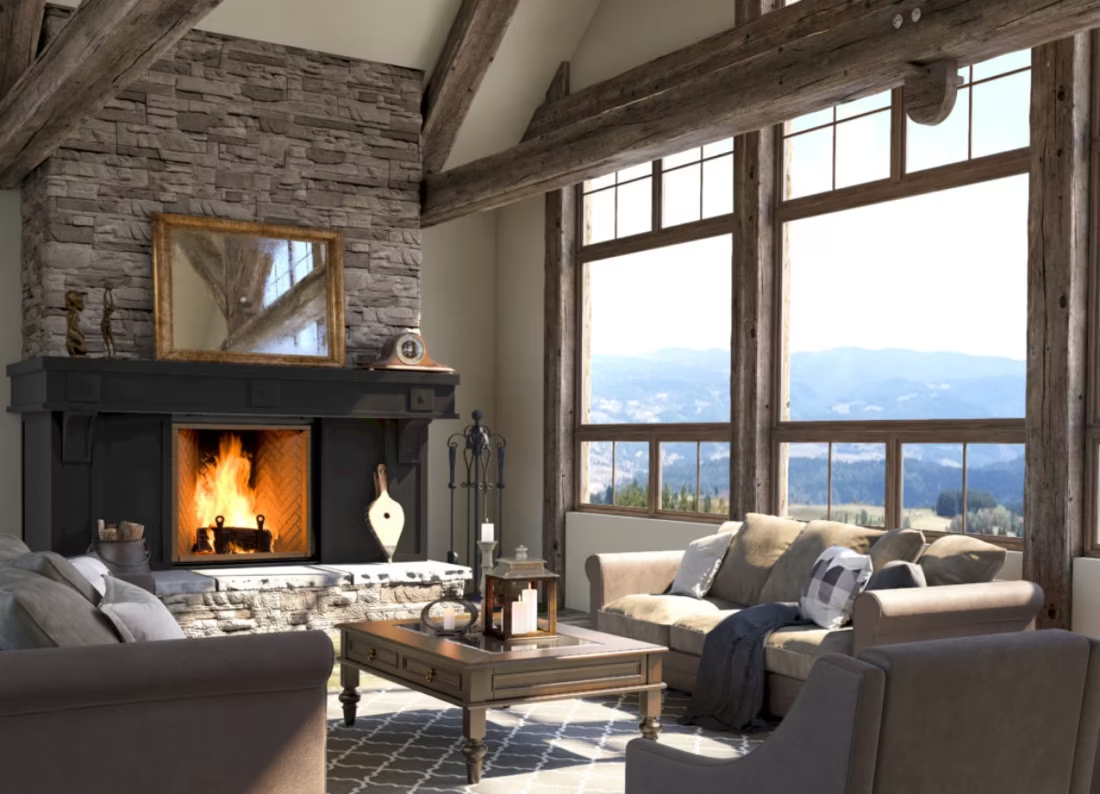
Firewood Cutting Permits Near Duncan
Three steps. No salesperson until you're ready.
Tell us about your project
Your zip code, your situation, and the fuel you're leaning toward—or let the answers point you to one.
See what's actually available
The brands dealers within 100 miles genuinely carry—real options, never a catalog mirage.
Get your dealer & Project Guide
A trusted local dealer, plus the free Project Guide & Parts List that names every component of the job.
Frequently Asked Questions
Is wood heat actually common in Duncan, SC?
Not really, and it's worth saying plainly: with only about 3,019 heating degree days a year and winter lows averaging around 32°F, most Duncan homes heat with electric heat pumps through Duke Energy Carolinas, sometimes paired with gas where it's available. Wood stoves show up in a minority of homes—usually for ambiance, occasional cold-snap supplemental heat, or as a backup during ice-storm power outages. If you're considering one, you're not chasing a mainstream local trend, and that's fine, but it does mean fewer local installers specialize in wood exclusively compared to gas or electric work.
What does a wood stove installation cost in Duncan?
Because wood is a low-volume category here, pricing tends to track regional Upstate SC / Greenville-area rates rather than a large local market: a freestanding wood stove with a new Class A chimney typically runs $3,500 to $8,000 installed, while a wood insert into an existing masonry fireplace often lands toward the lower half of that range if the chimney is already sound. Given how few Duncan homes install wood heat in a given year, expect your dealer to travel from Spartanburg or Greenville rather than have a shop in town—get a firm quote after an in-home visit rather than relying on a phone estimate.
What firewood is available locally, and is it any good for heating?
The Piedmont hardwood forests around Spartanburg County produce plenty of oak, hickory, and pine. Oak and hickory are the better choices for a wood stove—dense, high-BTU, and slow-burning once seasoned six months to a year. Pine is abundant and easy to find but burns hot and fast with more resin buildup in the flue, so it's better as a fire-starter or occasional-use wood than a steady heat source. Given Duncan's short heating season, even a modest wood supply—a cord or two—usually covers a typical year of occasional use.
Can I cut my own firewood near Duncan?
There isn't public cutting land immediately around Duncan—the closest option is a permit through the Nantahala-Pisgah National Forests, which run $20 per cord with a May-through-October cutting season, but that's a drive out toward the mountains near Asheville, not a quick trip from Spartanburg County. Most Duncan homeowners who burn wood buy it split and seasoned from local sellers instead, which given the small volume most households need each year is usually the more practical route anyway.
Does a wood stove make sense as backup heat during power outages?
This is actually the strongest local argument for wood heat in Duncan. Duke Energy Carolinas serves the area, and ice storms in the Piedmont periodically take down power lines for a day or more in a hard winter. A wood stove doesn't need electricity to run, so it can keep one room genuinely warm when the heat pump is offline. If backup heat is your main reason for considering wood, a simpler freestanding stove sized for one central room is usually more practical than trying to heat the whole house.
Are there air quality restrictions on wood stoves in Duncan?
No—Spartanburg County has no listed air quality non-attainment issues or winter inversion concerns, unlike some Western cities where wood smoke advisories restrict burning on bad-air days. That said, any new wood stove sold and installed still has to meet the EPA's 2020 New Source Performance Standards for particulate emissions, which is a manufacturing requirement rather than a local burn restriction. Practically, this just means buying a current-generation EPA-certified stove from a licensed dealer rather than an older secondhand unit.
Should I choose wood, gas, or electric heat in Duncan?
For most Duncan homes, gas or electric is the more sensible everyday choice—gas fireplaces offer instant, thermostat-controlled heat with none of the wood handling, and electric heat pumps already cover the bulk of the region's mild heating load efficiently at Duke Energy Carolinas' residential rate of about 13.9 cents per kWh. Wood makes sense specifically if you want a fuel source that works without power, enjoy the process of tending a fire, or have a den or sunroom where ambiance matters as much as heat output. Many homeowners here who add wood do it alongside an existing gas or electric system, not instead of one.
What size wood stove do I need for a Duncan home?
Because Duncan's heating season is short and mild, oversizing is a bigger risk than undersizing—a stove rated for a much colder climate will run too hot and force you to damper it down constantly, which leads to smoldering and creosote buildup. For a single room or open den in a typical Duncan home, a small-to-medium stove (rated for 1,000–1,500 square feet) is usually plenty, since you're supplementing an already-adequate heat pump system rather than replacing it. A local dealer can size this properly during an in-home visit rather than going off square footage alone.
Will adding a wood stove affect my home insurance or resale value in Duncan?
It can, mostly around documentation. Insurers typically want proof of a code-compliant installation—permitted through Spartanburg County, installed to manufacturer clearances, with a WETT or NFI-certified installer's signoff—before they'll cover a wood-burning appliance without a premium bump. On resale, an uncertified or older pre-2020 stove can be a point of negotiation for buyers unfamiliar with wood heat, since it's uncommon in this market; a newer EPA-certified unit installed by a licensed pro is far less likely to raise questions during an inspection.
Why won't my new wood stove get going like my old one?
New wood stoves are 70%+ efficient, so far less heat goes up the flue—which also means less draft to get a fire established. The rule: build a genuinely hot fire for about 45 minutes before you choke it down. Skip that and you get smoke in the room, creosote in the chimney, and a fire that never takes off. Most performance complaints trace straight back to this.
Why is my open fireplace making my house colder?
Open fireplaces suck—literally. As the fire burns, it consumes air your furnace already paid to heat and pulls it out through the chimney, so the house is actually colder after the fire goes out than before you lit it. An insert fixes this: it seals the chimney, puts fixed glass across the front, and turns that hole in your house into a real heat source.
Does a fireplace add value to my home?
On average, a fireplace adds back to the home about the same amount you spent installing it. Add the monthly savings from heating the rooms you actually use instead of the whole house—often hundreds of dollars a year—and the value case is strong before you even count what a fire does for how your family uses the room.
What is an in-home preview and do I need one?
It's a visit where a hearth professional measures your space, confirms the model you picked actually works in your home, and walks the specs—framing, gas line, venting, finish work—before anything is ordered. Some details you just can't know until you see the house. Never make a down payment without one; it's the single most-skipped step that burns buyers.
Nearby Dealers
Hearth shops serving Duncan and the surrounding area. Every listing shows whether it is a WhyFire partner, a dealer we have verified as authorized for the brands we recommend, or a local business carrying hearth products. No manufacturer pays for placement. How we verify dealers →
Chim Cheree Chimney Sweep
Superior Plus Propane D/b/a Freeman Gas - Spartanburg
Craft Stove Store And Patio
Viridien Patio + Fireplace
Carolina Hearth & Patio
Western Carolina Stone
Buchanan Fire And Outdoor
Prince Propane Gas
Diamond B Energies
Foothills Propane
Phillips-Lawing Fuel, Inc.
Find your wood fireplace in Duncan.
Tell us about your home and how you'd use a wood stove or insert, and we'll match you with a local dealer who carries it—plus a free Project Guide & Parts List covering the exact parts, venting, and install plan for your Duncan home.
Find Your Fireplace →