
Find your fireplace across Southern Saskatchewan.
Wood, gas, pellet, and electric fireplace resources for the whole region, from the grain-belt towns south of Regina to the parkland fringe up toward Nipawin. Pick a fuel and get matched with a local dealer who actually works this territory.
Every Project Starts From One of These Five Situations
Flat prairie, average lows near -20°C, and a heating season that runs nearly seven months.
Southern Saskatchewan stretches across open prairie and aspen parkland from the Manitoba border to the Alberta line, with the boreal forest fringe to the north, around Nipawin and Hudson Bay, supplying most of the cut-your-own firewood under permits issued through the Saskatchewan Ministry of Environment's Forest Service Branch. A climate zone 7B rating and average winter lows near -20.1°C put this region in the same heating-load class as Winnipeg: exposed, wind-driven cold with little relief from October through April. Trembling aspen, paper birch, jack pine, and white spruce are the wood species most local households actually burn, and a well-loaded catalytic stove holds a fire through a long overnight cold snap without much trouble.
What sets this region apart is how mainstream natural gas already is: SaskEnergy's mains reach Regina, Moose Jaw, Weyburn, Estevan, Yorkton, and most incorporated towns in between, which makes gas fireplace and insert conversions straightforward almost anywhere off a farm road. Rural acreages beyond those mains typically run on propane instead. Wood stove and insert installs fall under the CSA B365 code and go through your municipal building department, and most home insurers here won't cover a wood-burning appliance without a WETT inspection on file. Pellet stoves have a smaller but steady following, with La Crete Sawmills and Pinnacle Premium the two brands most regional dealers keep in stock, and electric units round things out as a supplemental heat source for basements and additions rather than a primary answer to a prairie winter. This hub rolls up retailers, service techs, and fuel suppliers across the whole region so you can pick a fuel and see what's actually available near you.
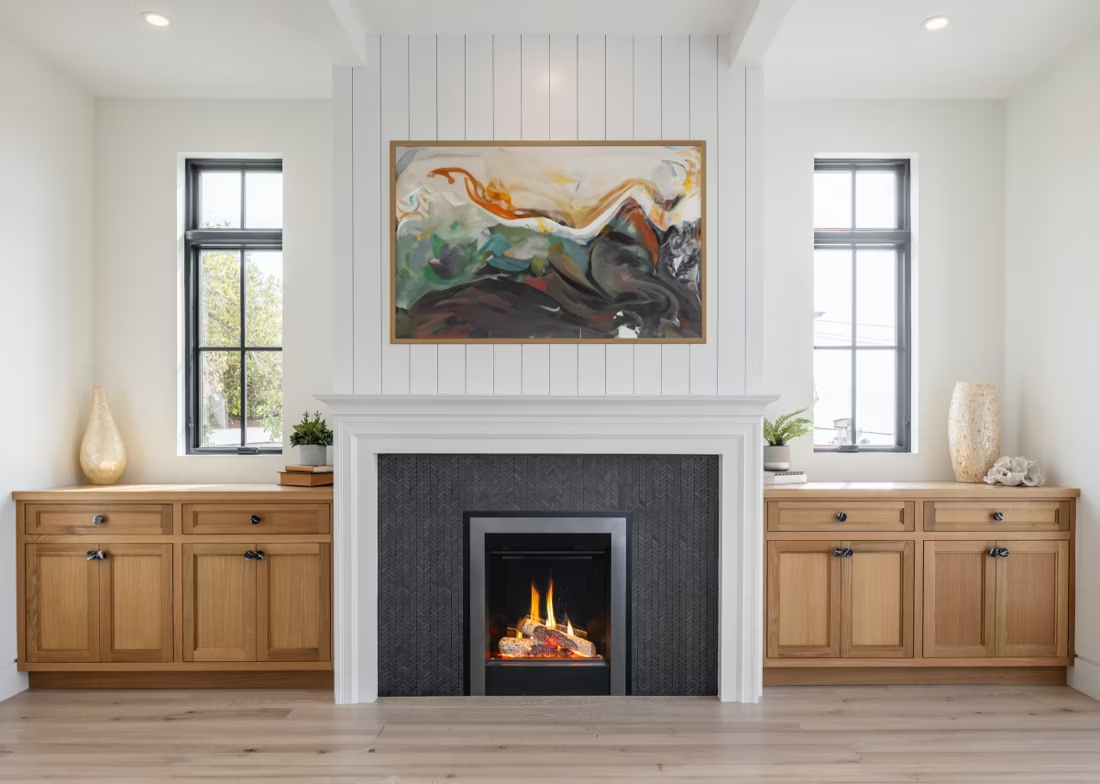
Four fuels. One honest answer for Southern Saskatchewan.
Wood
66 models available near Southern Saskatchewan.
Find your wood stove →Gas
24 models available near Southern Saskatchewan.
Find your gas fireplace →Pellet
See what's available near Southern Saskatchewan.
Find your pellet stove →Electric
See what's available near Southern Saskatchewan.
Find your electric fireplace →Three steps. No salesperson until you're ready.
Tell us about your project
Your postal code, your situation, and the fuel you're leaning toward—or let the answers point you to one.
See what's actually available
The brands dealers within 100 miles genuinely carry—real options, never a catalog mirage.
Get your dealer & Project Guide
A trusted local dealer, plus the free Project Guide & Parts List that names every component of the job.
Frequently Asked Questions
Which fireplace fuel makes the most sense in Southern Saskatchewan?
All four fuels have a real place here, and the right pick usually comes down to whether you're on a natural gas line or out on an acreage. In towns and cities served by SaskEnergy, gas is the low-maintenance choice for a primary hearth. On farms and rural properties beyond the mains, wood remains the workhorse fuel, and a catalytic stove burning trembling aspen or jack pine cut under a Forest Service Branch permit will hold overnight through a -20°C cold snap without needing a 2 a.m. reload. Pellet stoves fill a middle ground for households that want wood-like heat without the splitting and stacking; La Crete Sawmills and Pinnacle Premium are the two brands most regional dealers carry. Electric fireplaces are supplemental almost everywhere in this climate zone, they're not built to carry a home through a prairie winter, but they're a good fit for a basement or bonus room already heated another way.
Do I need a permit to install a wood stove or fireplace in Southern Saskatchewan?
Yes. New wood stove and insert installations fall under the CSA B365 code and go through your municipal building department for a permit, regardless of whether you're inside a city or in a rural municipality. Beyond the permit itself, most home insurers in this region require a WETT inspection before they'll write or renew coverage on a home with a wood-burning appliance, so budget for that as part of the project rather than an afterthought. Gas fireplace installs need a separate gas-fitting permit and a licensed technician for the SaskEnergy connection or propane line. Electric fireplaces typically skip permitting unless you're adding a dedicated circuit for a built-in unit. The dealers we match homeowners with generally handle this paperwork as part of the job.
What is a WETT inspection, and why does my insurer keep asking for one?
WETT stands for Wood Energy Technology Transfer, and it's the certification standard Canadian insurers lean on to confirm a wood-burning appliance was installed to code and is safe to operate. In a region where a large share of rural homes still burn aspen, birch, jack pine, or spruce as a primary or backup heat source, insurers treat an unwetted installation as a real liability, particularly after a chimney fire or a house sale. A WETT-certified inspector checks clearances, venting, and the chimney itself, and issues a report your insurance company will file alongside your policy. It's a normal, routine step that most local dealers coordinate as part of a wood stove or insert project, not something you need to chase down separately.
Is natural gas available everywhere in Southern Saskatchewan?
Not everywhere, but more broadly than a lot of homeowners expect. SaskEnergy's distribution network reaches Regina, Moose Jaw, Weyburn, Estevan, Yorkton, and most incorporated towns across the region, so a gas fireplace or insert conversion is usually a straightforward line-tap if you're inside town limits. The gap shows up on farms and acreages set back from those mains, where propane tanks are the standard workaround and gas appliances run just as well off a bottled supply. If you're not sure which side of that line your address falls on, it's worth confirming before you fall in love with a specific gas unit, since it changes both the install cost and which dealer makes sense for the job.
How does installation and service work across such a spread-out region?
Retailers and service crews are concentrated in Regina, Moose Jaw, and Yorkton but regularly drive out along the grid roads to smaller towns and rural acreages for both installs and annual service. Expect a modest trip charge for the farthest calls, and expect booking windows to shrink fast once the first hard frost hits, since everyone wants their chimney swept or gas unit inspected at the same time. Getting your WETT inspection, gas check, or pellet stove service done in late summer, well ahead of the cold, is the easiest way to avoid a multi-week wait in November.
What does a fireplace installation typically cost in Southern Saskatchewan?
Costs shift with fuel and how much venting or gas-line work the job needs. Wood stove or insert installs generally run $4,500 to $9,000 CAD, with a full new masonry chimney pushing higher; CSA B365 compliance and a WETT inspection are typically part of that quote. Gas fireplaces, inserts, and stoves run roughly $5,000 to $12,000 depending on whether the SaskEnergy line needs extending or you're converting an existing wood-burning hearth. Pellet stove or insert installs usually land between $4,500 and $8,000. Electric fireplaces are the low end of the range, from $300 to $3,500 for the unit itself, plus $500 to $1,500 in labour for anything beyond a simple plug-in placement. The region and fuel pages above break these numbers down further with local dealer pricing.
How many BTUs do I need in a fireplace?
Wrong question—and the industry's favorite way to confuse you. More BTUs isn't better if the fireplace cooks you out of the room you spent thousands to enjoy. Think in terms you can verify: how many square feet the unit heats, whether it's primary or backup heat, and whether you want it running overnight. Those three answers size a fireplace correctly every time.
Will we actually use a fireplace once we have one?
In my own home, the room with the fireplace has never been the same—it became the social hub. Game nights, holidays, date nights after the kids are down: the fire is where the house gathers. There's a reason people in this industry joke that we're really in the romance and entertainment business. You won't wonder whether you'll use it; you'll wonder how the room worked before.
Does a fireplace add value to my home?
On average, a fireplace adds back to the home about the same amount you spent installing it. Add the monthly savings from heating the rooms you actually use instead of the whole house—often hundreds of dollars a year—and the value case is strong before you even count what a fire does for how your family uses the room.
Can I install a fireplace myself?
If you're putting a fire in your house on purpose, it's best to work with an expert. Unless you're genuinely experienced in framing, gas line, vent pipe, and the national code on clearances to combustibles, have a professional do it—and ideally the same company that sells you the fireplace, so warranty, service, and liability all live under one roof.
Stove and Fireplace Dealers in Southern Saskatchewan
Listings include WhyFire partner dealers, dealers we have verified as authorized for the brands we recommend, and established local businesses that carry hearth products. Every listing shows which one it is. The ones marked Preferred run on WhyFire's software, so they can show you real pricing and book your appointment right here. No manufacturer pays for placement. How we verify dealers →
Timberstone Distribution Regina
Aquifer Distributing
Universal Plumbing & Heating Inc
Get matched with a local dealer in Southern Saskatchewan.
Pick your fuel below and we'll put together a free Project Guide & Parts List: the right unit, the vent kit it needs, and the local dealer we recommend for your project.
Find Your Fireplace →