
Instant warmth for Southern Saskatchewan's long, cold prairie winters.
With winter lows averaging -20.1°C across Regina, Moose Jaw, Weyburn, and Swift Current, most homes here lean on a gas furnace to survive the season and add electric heat where it actually earns its keep: a chilly basement, a condo with no chimney access, a sunroom that never quite warms up. I match you with a local dealer who knows which unit and which circuit your space needs.
Every Project Starts From One of These Five Situations
Zone heat that keeps up with a six-month heating season.
Southern Saskatchewan is flat, dry, and cold in the way Winnipeg residents would recognize instantly: climate zone 7B, a heating season that runs from October into April, and winter lows that average -20.1°C across the region's towns and farmsteads. Natural gas is widely available here and does most of the heavy lifting for whole-home heat, with wood still common on rural acreages near the northern forest fringe where trembling aspen, jack pine, and white spruce are cut for free under the Saskatchewan Ministry of Environment's own-use permit. Electric fireplaces fit into that picture as the fast, no-fuss upgrade: no chimney, no gas line, no combustion to inspect, just an appliance that plugs in or ties into a dedicated circuit and runs the same evening it's installed.
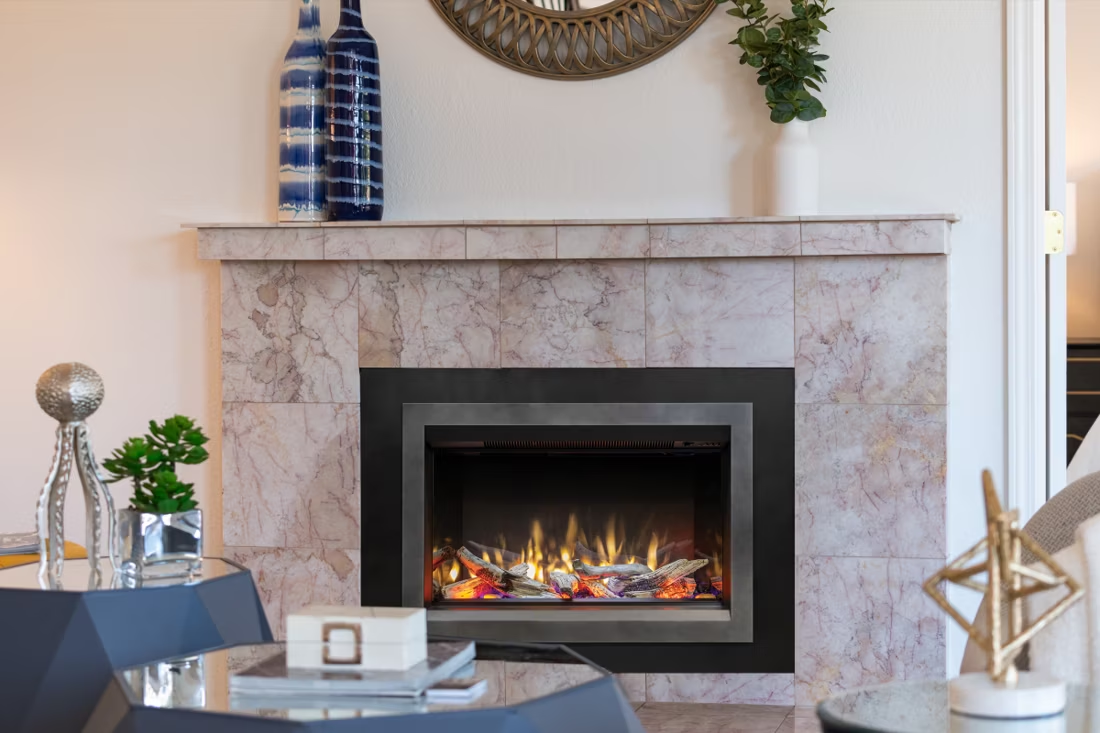
That simplicity is the real draw at a typical $500-$1,600 CAD installed cost. A basement or condo unit in downtown Regina often needs nothing more than an existing outlet, while a built-in wall unit with a trim kit usually calls for a dedicated circuit run by a licensed electrician and a permit through the municipal building department. Either way, you skip the WETT inspection that insurers commonly require for wood appliances and the gas-fitter sign-off a gas fireplace needs. For an acreage outside Estevan or Weyburn running a wood stove as primary heat, or a Swift Current home on natural gas, electric is the practical way to add heat and light to a room that the main system doesn't reach well.
Three steps. No salesperson until you're ready.
Tell us about your project
Your postal code, your situation, and the fuel you're leaning toward—or let the answers point you to one.
See what's actually available
The brands dealers within 100 miles genuinely carry—real options, never a catalog mirage.
Get your dealer & Project Guide
A trusted local dealer, plus the free Project Guide & Parts List that names every component of the job.
Frequently Asked Questions
How much does an electric fireplace installation cost in Southern Saskatchewan?
Most installations across the region run $500 to $1,600 CAD. A plug-in insert or freestanding unit that uses an existing outlet sits at the low end and can often be handled in an afternoon. A built-in wall unit or a linear fireplace set into new framing, which usually needs a dedicated 240V circuit and a licensed electrician, lands toward the top of that range once wiring and a finished surround are factored in. Rural properties around Estevan or Swift Current with older panels sometimes need a panel assessment first, which adds modestly to the total.
Do I need a permit to install an electric fireplace here?
It depends on the scope of the work. A standalone plug-in unit generally needs no permit at all since it's just an appliance in an outlet. A built-in unit that requires new wiring or a dedicated circuit does need an electrical permit, issued through your local municipal building department, and the wiring itself has to be done by a licensed electrician under the Saskatchewan Electrical Code. Unlike wood or gas appliances, there's no combustion venting to inspect, so the process is usually faster and less involved than either of those.
Will an electric fireplace actually heat a room when it's -20°C outside?
An electric fireplace will comfortably take the edge off a single room, but it is not designed to replace your furnace when overnight lows sit near -20.1°C, which is typical here for weeks at a stretch through January and February. Most electric units top out around 5,000 BTU of supplemental heat, enough for a bedroom, den, or finished basement with reasonable insulation, but not enough for a whole prairie-style bungalow in deep cold. Homes here almost always pair it with a gas furnace as the primary heat source and use the fireplace for zone heat and ambiance in the room it's installed.
Electric vs. gas vs. wood—which makes sense for my home?
Gas is the default whole-home heating choice across Southern Saskatchewan since natural gas service reaches most towns in the region, and a gas fireplace can double as backup heat during a power outage if it's on standing pilot. Wood remains common on acreages near the northern forest edge, where aspen, birch, jack pine, and spruce can be cut for free under a Forest Service own-use permit, and it works with no electricity at all. Electric fits a different job entirely: no venting, no fuel to store, and the lowest install cost of the three, but it's a supplement, not a primary heat source, in a climate this cold. Many households here run all three roles at once, just in different rooms.
Where can I actually put an electric fireplace in my home?
Pretty much anywhere with an outlet or the ability to run one, which is the main advantage over wood or gas. Basements, condos in Regina towers with no chimney access, bonus rooms above garages, and bedrooms all work, since there's no venting path to plan around and no clearance-to-combustibles rules as strict as a wood stove's. That flexibility is why electric is popular for finished basement projects on the prairies, where a masonry chimney was never built into the original house.
What does it cost to run an electric fireplace on SaskPower rates?
Most electric fireplaces draw around 1,500 watts on the heat setting, which works out to roughly a dollar or so per day of steady use at typical SaskPower residential rates, and less if you run it on ambiance-only mode without the heater engaged. That makes it an inexpensive way to warm one room through a cold snap compared to raising the thermostat on a gas furnace for the whole house. Actual cost varies with your specific rate plan and how many hours a day the unit runs.
How much maintenance does an electric fireplace need?
Very little. Wipe the glass front occasionally, vacuum dust out of the vent grilles once or twice a season, and check that the plug and cord show no wear if it's a portable unit. There's no chimney to sweep and no annual WETT inspection required the way there is for a wood-burning appliance in this region. If you notice the heater cycling oddly or tripping a breaker, that usually points to a circuit or connection issue worth having a licensed electrician look at rather than a fireplace problem itself.
Does my home insurance care about an electric fireplace installation?
Most insurers treat a CSA-certified electric fireplace as a low-risk addition, especially compared to wood appliances, which commonly require a WETT inspection for coverage in Saskatchewan. That said, if your installation involves a new dedicated circuit, keep the electrician's permit and inspection paperwork on file. It's a straightforward request if an adjuster ever asks, and it confirms the work was done to code rather than as a do-it-yourself wiring job.
What size electric fireplace do I need for my room?
For a typical bedroom or den in the 150 to 250 square foot range, a standard 1,500-watt unit rated for that footprint is usually enough to notice a real difference on a cold Southern Saskatchewan evening. Larger open-concept basements or great rooms may need either a higher-output unit or the acceptance that it's supplementing, not replacing, your furnace's work. A local dealer can walk through your room's dimensions, insulation, and window exposure and steer you away from an underpowered unit that runs constantly without ever quite catching up.
How much does an electric fireplace cost to run?
With the heater on, a typical unit draws about 1,500 watts—at average electric rates that's roughly 20 cents an hour. Run the flame effect alone and it costs pennies; the flames are LED-driven and use about as much power as a light bulb. There's no pilot light, no fuel delivery, and essentially no maintenance.
What fireplace styles should I know before shopping?
Four cover most of the market: screen-front traditional (mesh front, open feel, fits craftsman homes), traditional door set (the classic look you grew up with), modern linear (wide, low, the statement piece for entertaining), and clean face contemporary (no trim—your tile or stone runs right to the fire's edge). Walk in knowing those four terms and you're ahead of most buyers.
Can I put a TV above my fireplace?
Yes—with an asterisk. Fireplaces are hot and TVs don't like heat. Either put a mantel between them to deflect rising warmth, or choose a fireplace with heat-management technology that creates a cool zone on the wall above—the wall stays around 125 degrees, barely warm, while the room still gets full heat. If you like clean lines and don't want a mantel, heat management is the answer.
Do electric fireplaces actually produce heat?
Yes—most put out around 4,800–5,000 BTUs from a standard outlet, which comfortably warms a bedroom, office, or den as a comfort-zone heater. What they won't do is carry a whole house the way wood, gas, or pellet can. Think of electric as ambiance-first with honest supplemental heat: flames on with no heat in July, flames plus warmth in January.
Stove and Fireplace Dealers in Southern Saskatchewan
Listings include WhyFire partner dealers, dealers we have verified as authorized for the brands we recommend, and established local businesses that carry hearth products. Every listing shows which one it is. The ones marked Preferred run on WhyFire's software, so they can show you real pricing and book your appointment right here. No manufacturer pays for placement. How we verify dealers →
Timberstone Distribution Regina
Aquifer Distributing
Universal Plumbing & Heating Inc
Electric Service in Southern Saskatchewan
An electric fireplace's heater draws about 1,500 watts—pennies per hour at local rates.
SaskPower
Get your Southern Saskatchewan electric fireplace Project Guide & Parts List.
Tell me about your room, your electrical panel, and how you want to use the fireplace, and I'll match you with a trusted local dealer and send a free Project Guide & Parts List—the exact unit, circuit requirements, and recommended installer for your electric fireplace project in Southern Saskatchewan.placed_placeholder_do_not_use123
Find Your Fireplace →